
An insider’s view on being CID’s Executive Coordinator
Harvard’s Center for International Development is looking for an Executive Coordinator, someone who will be an integral part of the Center’s activities and become a liaison between the Center’s faculty, fellows, staff, students, and important contacts from around the world.
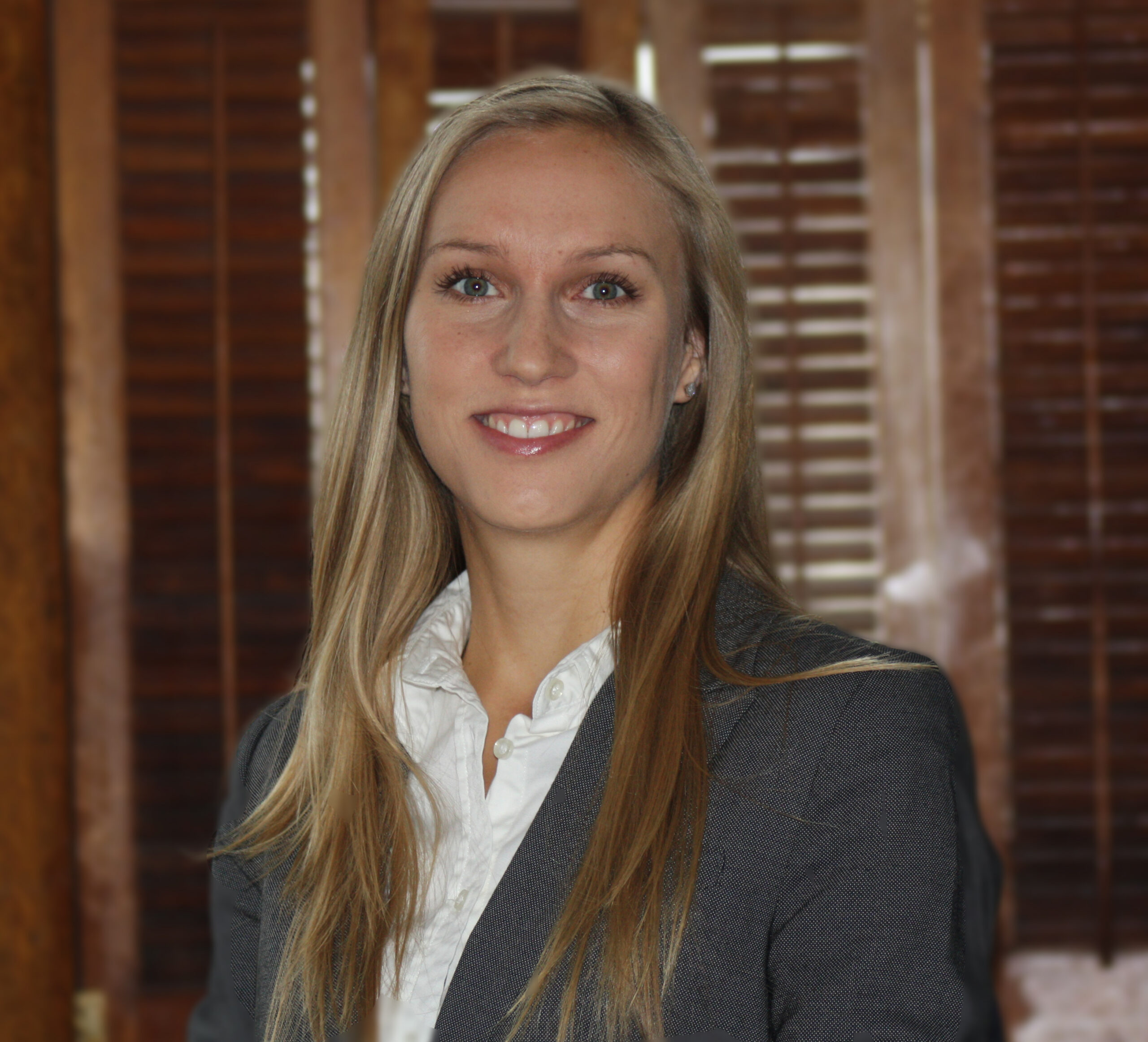
Are you interested in learning more about what this position has to offer and know if you would make a good fit? Who better than the person doing the job, Karen Vanderwillik, to tell you about the great advantages and challenges of being CID’s Executive Coordinator?
Karen has worked in the Center for almost 2 years and will be going on maternity leave very soon. In this interview, she provides an insider perspective on the job and shares details about her exciting experience at CID.
CID: So Karen, what attracted you to this position in the first place?
KV: I was attracted to the opportunity to work at a leading economic development think-tank at one of the world’s most renowned universities, in a position that would allow me to learn another side of academia – how research centers operate, how think-tanks get funding and how new research ideas are disseminated to larger audiences. At the time I was volunteering with CID in Albania and I could see the impact its research has on real public policy and economic issue. I was interested in supporting the center and its staff in continuing this work.
CID: What are the advantages of working alongside Harvard Kennedy School faculty, fellows and staff?
KV: HKS is a very dynamic school and there are plenty of opportunities to get involved and meet people from different research centers. The position gave me the opportunity to interact with high profile policy makers, like Albania’s Prime Minister and Mexico’s Minister of Finance. CID’s team is also very interdisciplinary, and it’s fascinating to see how they bring alternative perspectives to tackling development and policy challenges. The job itself is very time-consuming, which means I don’t have a lot of spare time to attend seminars and classes, but I have learned a lot from supporting staff and faculty in preparing publications and presentations, and from participating in CID events and talks.
CID: What would you say are the some of the key skills for someone in this role?
KV: This role definitely requires strong organizational skills, attention to detail, and effective time-management. But it also requires someone who can make effective judgment calls, maintain calm in a sometimes stressful and fast-paced environment, and someone who can see the big picture beyond the daily tasks of scheduling, coordinating and organizing. In this role it is important to be aware of CID’s key stakeholders and research projects so that you can help make important connections between faculty, fellows and students, maintain good relations with key donors, and identify new potential opportunities.
CID: What are the main challenges of a being in a position like yours?
KV: CID is a very busy place and there are a lot of people wishing to engage with the center and its directors. This position involves managing constant and often competing requests for support, for meetings, for interviews, and for assistance. It requires learning to prioritize, making effective judgment calls on what can and cannot be done, and balancing competing demands on your limited time.
CID: What are the main learnings you take from this position – and you believe are applicable to your professional future?
KV: The position involves a lot of scheduling and administrative work, but it also has allowed me to directly support important goals for CID’s ongoing growth. Working closely with the directors provides a unique opportunity to learn about the more strategic and operational aspects of a leading research center. I have learned a lot about effectively engaging with governments and donors, developing research and funding strategies, and disseminating complex research ideas to broader audiences.
CID: And finally, who would you recommend this position to?
KV: I would recommend this position to someone who is interested in the operational aspects of a research center or think-tank, someone who doesn’t mind dealing with constantly changing schedules, and someone who enjoys engaging with a wide variety people – students, faculty, government officials, researchers, and development practitioners. CID is one of the fastest-growing research centers at Harvard and is making a significant impact in development research and practice. Our team is highly-motivated and engaged, and they are great people to work with. Overall it’s a light and fun environment to work in and we do all sorts of team building activities throughout the year. Which reminds me: volleyball skills will come in handy as our summer tournament approaches!
An alternative index for economic development
By Andres Gomez and Juan Tellez
One of the highlights of this year’s World Economic Forum was the urgency of a new economic measure, able to capture adequately the economic situation of a country. Gross Domestic Product (GDP) is not rising up to the challenges of the 21st century.
In Davos, Nobel Prize winner Joseph Stiglitz, IMF Head Christine Lagarde, as well as MIT Professor Erik Brynjolfsson, agreed on this issue and emphasized the value of finding a better measure of progress. Even though this is not the first time this concern has been raised, the increase of inequality, the worldwide crisis on immigration, the susceptibility of emerging markets to the volatility of commodity prices, the economic slow-down of China, the imminent collapse of Venezuela, and Brexit among others, have called the attention of academics and practitioners around the world to put urgently the discussion back again in the world agenda. Several reasons are brought up in this debate, but we specifically want to point out the necessity of a better measure of the economy that allows understanding the dynamics of growth and elucidates economic differences between places (countries, cities, regions).
There is a general trend to suggest alternative measures for economic development using statistical techniques that aggregate various indicators with the idea that adding more information is better. Some problems arise due to the strong assumptions that some of these methods require or the difficulty to interpret the final value of the index. An example in which a community has steered away from this trend is the recent health literature, in which the hemoglobin level, as a single indicator, has been preferred over the mix of many factors because this one alone is a global representation of a general health status and its interpretation is clear and straightforward. The fact is that averages are mathematical operations that eliminate information. They give the illusion of understanding and can miss relevant information about how the system works. What we need in economics is not an indicator that summarizes several statistics, but one that measures the main driver behind economic progress.
Evidence that an economy’s diversity of know-how is a determinant of economic growth has started to accumulate. In particular, the notion of the division of labor, emphasized by Adam Smith, has started to be replaced by a notion stressing the division of information within a population. Crucially, this idea has not been limited to the empirical literature on economic development. It is an idea rooted in the latest advances in cultural anthropology and human evolutionary biology. These disciplines have established that the size and complexity of a society’s cultural repertoire are what have allowed them, and their individuals, to be best adapted to their environments.
When the bag of cultural know-how that a society has is large and complex, its individuals become smarter since more tools for problem solving become available. More possibilities for novel recombination of ideas emerge, innovation at a societal level is enabled, and the more opportunities for human flourishing are opened.
While anthropologists can only proxy the complexity of a culture’s know-how in ancient societies by counting the number of different tools they were able to manufacture, we now have much better access to the complete diversity of activities and know-how that workers, firms, and cities do and have. Know-how is relatively easy to track, and the effects of its diffusion easy to measure.
The Economic Complexity Index (ECI), developed at the Center for International Development at Harvard University, is a first step in quantifying the division of know-how in a society, and stands as a great alternative to GDP. It is a measure of the diversification of a country, which takes into account the complexity of the exported products. We believe an internationally organized program that investigates how to quantify the complexity of places should be installed. The number of industries, occupations, products and technologies a place has, and its impact on its economic progress should be carefully examined.
The ECI is easily constructed and has several interesting implications. It is interpreted as the underlying capabilities that a society possesses. In other words, it is the collective know-how that supports the economy of a country, city, or region. Besides, the index is the best growth predictor in the literature, better than standard education, institutional and political variables. Currently, ECI is to the health of economies what the hemoglobin level is to the health of human subjects.
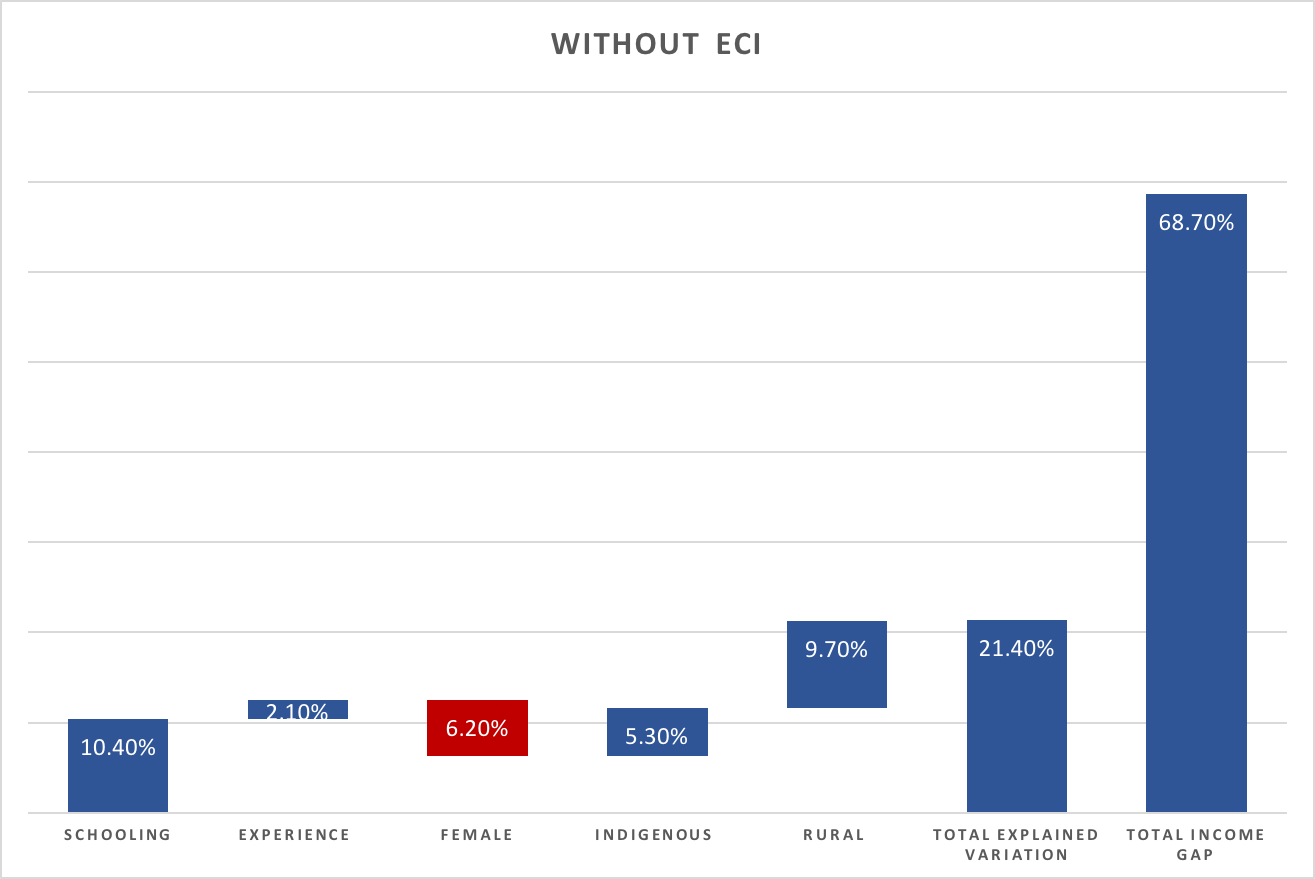
Source: Constructed from Table 4a in D. Levy, R. Hausmann, M.A. Santos, L. Espinoza and M. Flores, “Why is Chiapas Poor?”, CID Working Paper No. 300, July 2015.
A recent CID study of Chiapas, a state in Mexico, showed that a worker’s average income in the rest of the country is approximately 1.69 times higher than the average income in Chiapas. Education, gender, ethnicity and being rural account for 31% of this income difference (see Graph Without ECI). When the ECI is included in the analysis, this percentage rises to 53% (see Graph with ECI). ECI is not only explaining a lot, it is the factor that explains the most. These results indicate that economic complexity acts through channels that are not addressed by other variables such as years of schooling, professional experience, or other demographics.
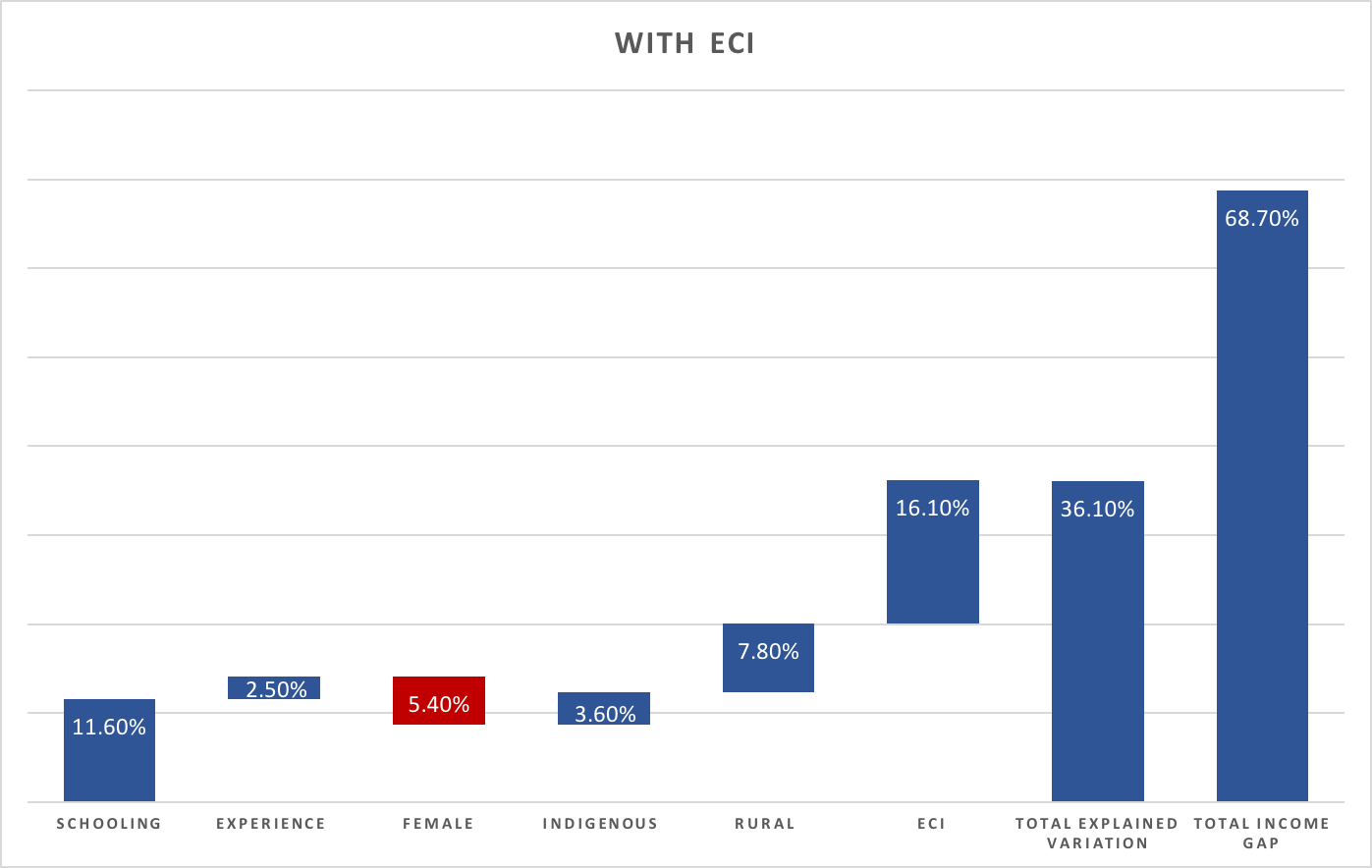
Source: Constructed from Table 4b in D. Levy, R. Hausmann, M.A. Santos, L. Espinoza and M. Flores, “Why is Chiapas Poor?”, CID Working Paper No. 300, July 2015.
Bottom line is that when it comes to the economic welfare of a society, and in a world that is increasingly connected, we need measures that capture collective properties. There are no perfect measures, and additional corrections to ECI, or perhaps complementary measures, should also be considered. For example, we hope similar efforts are put into developing measures that capture environmental degradation and intra-firm wage inequality.