
Academic Research
The Growth Lab’s research aims to uncover the mechanisms behind economic growth.
We approach this challenge from the perspective that economic development involves not just producing more of the same, but also upgrading the composition of what a place produces. For economies to grow, they must become more complex.
How do economies become more complex? We approach this question with a wide range of research that falls into roughly three categories – economic transformation, knowledge and technology diffusion, and the coordination of knowhow.
Jump To
Active Areas of Research
Economic Complexity
Economic Complexity is a measure of the amount of capabilities and knowhow that goes into the production of any given product. Products are made out of knowledge. To make a shirt, one needs to design it, make the fabric, cut it, sew it, pack it, brand it, market it, and distribute it. For a country to produce shirts, it needs people who have expertise in each of these areas. Each of these tasks involves many more capabilities than any one person can master. Only by combining knowhow from different people can any one product be made.
Researchers: Ricardo Hausmann, Muhammed A. Yildirim, and Sebastian Bustos.
Cities
Economic transformation is the process by which the structure of an economy changes. Different goods or services require different capabilities for production; the capabilities needed to manufacture a car, for example, differ from those needed to run a hospital.
The output of countries, cities, firms, and individuals, in turn, can be upgraded by acquiring new capabilities, whether by building new institutional arrangements and infrastructure or by developing new corporate routines or skills. In this area of research, we examine these processes, studying how countries change their export baskets, how cities develop new industries, how firms diversify, and how individuals move along their careers.
Researchers: Ricardo Hausmann, Muhammed A. Yildirim, Sebastian Bustos, Tim Cheston, Andres Fortunato, Eric Protzer, Kishan Shah, and Taimur Shah.
Green Growth
The world is rapidly transitioning to a lower-carbon economy. Decarbonization will radically transform global production by creating new industries, markets, and paths for economic development. This energy transition presents a defining opportunity for growth by redefining the comparative advantage of places. Countries and regions must act quickly and adopt a context-specific strategy for green growth: places that act first to carve out their role in a rapidly greening world will come out ahead; others will be left behind. The Growth Lab has pioneered methods to understand how economies adopt new technologies to evolve their comparative advantage and achieve greater prosperity. These methods offer unique insights into how to design green growth strategies, leveraging a place’s existing capabilities to take advantage of context-specific opportunities.
Researchers: Ricardo Hausmann, Ketan Ahuja, and Muhammed A. Yildirim
Innovation and Scientific Progress
Innovation and scientific progress are critical drivers of industrial competitiveness and sustained economic growth. Technological and scientific capabilities facilitate the emergence of novel ideas, which can translate into new and enhanced products. Innovation and scientific progress provide the foundations for developing and expanding these capabilities over time. A society that persistently excels at scientific and technological discoveries is more likely to continuously find creative and more complex ways of combining productive knowhow.
Researchers: Ricardo Hausmann, Muhammed A. Yildirim, Christian Chacua, Matte Hartog, and Shreyas Gadgin Matha.
Jobs, Skills and Migration
An impediment to economic development is that the knowledge to implement technologies does not move easily from place to place. As a consequence, many of the poorest parts of the world work with outdated technologies. One reason for this is that a crucial component of knowledge is deeply embedded in the skills of people and the routines of organizations. Thus, moving knowledge often requires moving skilled individuals and competent teams. To better understand this process, we study the movement of people and firms, shedding light on the role of migration, foreign direct investment, and business travel in economic development.
Researchers: Ricardo Hausmann, Alexia Lochmann, Ljubica Nedelkoska, and Muhammed A. Yildirim.
Remoteness
The “distance” between two economies imposes frictions on their productive interactions. Remote economies are those that are “far” from the rest of the World’s economy. Remoteness is bad for development and growth, in part because it hinders economic complexity. Remote economies grow from Locational Fundamentals, but windows of opportunity may be limited. Policies to circumvent remoteness: Industrial policies to stimulate your own “gold rush.” Policies to reduce remoteness: Place-based policies to improve connectivity to the World Economy. Policies to cope with remoteness: Stimulate a productive engagement with your nationals abroad.
Researchers: Ricardo Hausmann, Guillermo Arcay, Sebastian Bustos, Eric Protzer, Shreyas Gadgin Matha, and Muhammed A. Yildirim.
CONCEPTS
Secrets of Economic Growth
Knowledge, Prosperity and Economic Complexity
Prosperity is associated with technological progress, which is related to advances in scientific and productive knowledge. But where is that knowledge embedded and how is it put to use? In this lecture, Ricardo Hausmann sheds light on why the world is so unequal, why and how some lagging countries catch up and others fall further behind.
Economic Growth and Innovation
In this conversation, Professor Hausmann explains the crucial role that knowhow plays in promoting economic growth and development, shares what governments and private sector can do to foster knowledge networks and expand capabilities – thinking of economic complexity like a game of Scrabble.

“Scrabble” Theory
We often think of the logic of economic development using an analogy to the game of Scrabble. Like players in Scrabble, economies possess a set of capabilities – letters – that they can use to produce products – words. Different products require different letters. Accordingly, economic development involves finding out which products can be produced with a place’s current capabilities – what words it can write with the letters it currently has. It also involves finding out how new letters can be acquired.
More About Scrabble Logic
This model of the world has deep consequences, some of which are described in the Atlas of Economic Complexity, the urban scaling theory, and the network structure of economic output, and understanding other consequences drives much of our research agenda.
The Scrabble logic plays out on different scales: Countries export a certain mix of products, regions and cities host a variety of industries, firms are active on different markets, and people have a range of skills that enable them to work in specific jobs. This is one reason why our research spans many different fields, such as international trade, economic geography, strategic management, labor economics and migration, and uses a variety of analytical approaches, such as econometrics and economic modeling, computer science, complexity sciences, and network analysis.

Research Spotlight
INNOVATION AND SCIENTIFIC PROGRESS Research Agenda
Mapping Innovation Capabilities
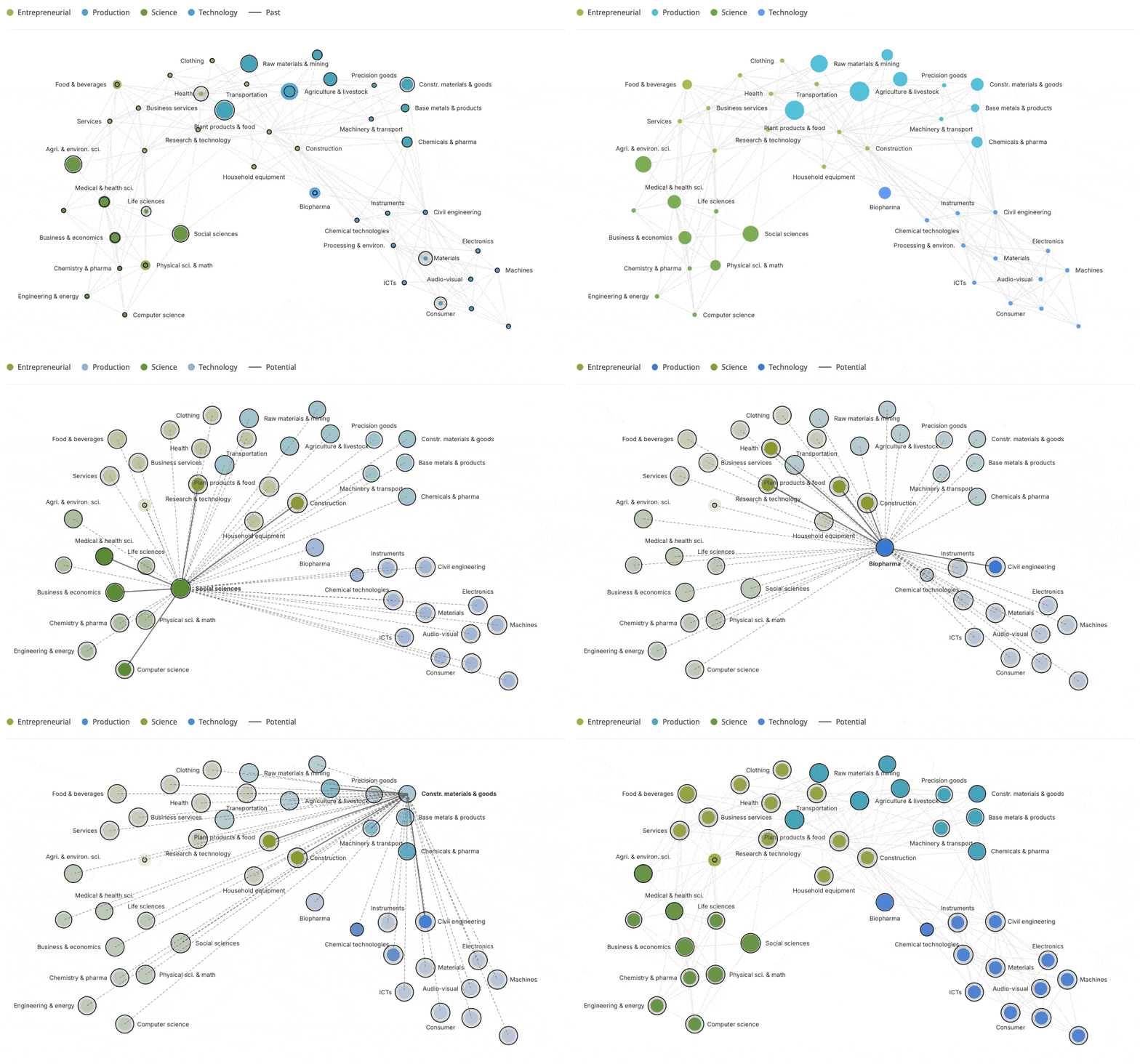
Developed in collaboration with the World Intellectual Property Organization, the Innovation Capabilities Outlook 2026 report maps over 2,500 innovation capabilities by analyzing hundreds of millions of data points from scientific publications, patents, trademarks and exports. These indicators provide a comprehensive picture of an economy’s strengths and opportunities across four key dimensions: science, technology, entrepreneurship, and production. The Innovation Capabilities Navigator – a new interactive dashboard – transforms the findings into practical, economy-specific insights for 193 countries.
Publications
Working Papers
Complexity: Hausmann-Hidalgo Economic Complexity
Economic complexity is an active field with a growing number of methodologies and applications. Among the different paradigms, the Hausmann-Hidalgo economic complexity framework offers a way to quantify the sophistication […]
Economic complexity is an active field with a growing number of methodologies and applications. Among the different paradigms, the Hausmann-Hidalgo economic complexity framework offers a way to quantify the sophistication and productive knowledge embedded in an economy. In this work, we provide an overview of its foundational concepts, empirical applications, policy uses, and directions for future research. We aim to equip readers with a basic understanding of this framework in simple words and to help them navigate the vast literature. We argue that the Hausmann-Hidalgo economic complexity serves as a flexible framework for understanding the dynamics of knowledge diversification across multiple economic domains and provides a starting point for the design of place-based policies.Working Papers
Japan’s Innovation Challenge: Escaping the Middle-Technology Trap
Japan remains one of the world’s most technologically sophisticated economies, yet its labor productivity has been stagnant for more than two decades. This paper investigates the apparent contradiction between Japan’s high R&D intensity and its weak productivity performance by examining the allocation, composition, and effectiveness of innovation across industries.
Japan remains one of the world’s most technologically sophisticated economies, yet its labor productivity has been stagnant for more than two decades. This paper investigates the apparent contradiction between Japan’s high R&D intensity and its weak productivity performance by examining the allocation, composition, and effectiveness of innovation across industries. Using industry-level data from the OECD, patent-level data linked across technology and industry classifications, and a set of nine technological taxonomies, we document that Japan disproportionately concentrates R&D in mid-technology manufacturing sectors—such as motor vehicles, electrical equipment, and chemicals—that generate relatively low productivity spillovers. High-technology sectors, including ICT, pharmaceuticals, scientific R&D, and advanced digital services, receive a significantly smaller share of investment and exhibit much higher productivity contributions in other countries. We further show that Japan’s indirect, tax-based system of R&D support reinforces this equilibrium by favoring large incumbents and under-supporting SMEs. We conclude by assessing the potential of Japan’s new 17-sector strategy to reorient the innovation system toward frontier technologies.Working Papers
AI Meets Trade: Global Linkages and the Cross-country Distribution of the Gains from AI
This paper provides estimates of expected per capita real income gains from AI over the next decade in OECD and G20 economies. It relies on a multi-country, multi-sector general equilibrium […]This paper provides estimates of expected per capita real income gains from AI over the next decade in OECD and G20 economies. It relies on a multi-country, multi-sector general equilibrium model to incorporate the role of international trade and considers different scenarios regarding AI adoption paths and AI capabilities. In our central scenario, AI-driven productivity gains vary widely across countries and are expected to raise per capita real income growth by 0.1–0.95 percentage points annually. The model’s dynamics reveal a key insight: while countries lagging in AI adoption can gain from cheaper, AI-intensive imports generated by global diffusion, maintaining competitiveness – especially in highly AI-exposed sectors – ultimately requires strong domestic AI adoption. As a further channel, the paper quantifies the welfare effects generated by international knowledge spillovers boosting AI adoption of countries with relatively lower AI adoption.
Working Papers
Mapping Economic Opportunities in Global Clean Energy Supply Chains
The energy transition offers countries that can manufacture clean energy technologies substantial opportunities for sustainable economic growth. This paper provides a framework for context-aware industrial policy by applying economic complexity […]
The energy transition offers countries that can manufacture clean energy technologies substantial opportunities for sustainable economic growth. This paper provides a framework for context-aware industrial policy by applying economic complexity theory to a newly constructed dataset of twelve key clean energy supply chains (CESCs). We find that CESCs are diverse but highly interdependent; they are also growing faster and are more concentrated than other industries. CESCs exhibit substantial entry, exit and competitive churn, and countries are more likely to enter CESC industries that are related to their existing productive capabilities. We also explore changing global competitiveness and country positioning in these industries, and draw out implications of these patterns for industrial policymakers.Reports
Innovation Capabilities Outlook 2026
Knowledge is expanding globally, yet most countries struggle to harness this growth effectively. Global innovation remains strikingly concentrated: a small number of leading economies account for the vast majority of […]Knowledge is expanding globally, yet most countries struggle to harness this growth effectively. Global innovation remains strikingly concentrated: a small number of leading economies account for the vast majority of scientific publications, patents, trademarks, and advanced exports, whereas most contribute less than 1 percent to any innovation dimension. Success does not require a big push in all fields, but instead lies in strategically diversifying into complex skills while at the same time maintaining intensity in high-value areas – a balancing act that only the most sophisticated innovation ecosystems have mastered.
Mapping the global innovation landscape
The Innovation Capabilities Outlook (ICO) 2026 analyzes 2,508 innovation capabilities across four dimensions – science, technology, entrepreneurship, and production – using comprehensive datasets spanning 2001–2023. The analysis reveals that innovation emergence depends critically on connections between these four dimensions, with the most sophisticated capabilities emerging only in highly diversified ecosystems able to support complex, interdependent knowledge networks.A tale of two innovation worlds
Global innovation output has expanded dramatically, yet this growth remains highly uneven and concentrated in no more than 30 percent of the world’s economies. Asian economies – led by China, India and Viet Nam – have mastered sophisticated capability development strategies, consistently achieving both smart diversification (gaining breadth and complexity simultaneously) and smart capability management (intensifying focus on high-value skills while protecting them with complementary knowledge). In contrast, many established and emerging economies struggle with this dual challenge: 46 percent of ecosystems have not meaningfully diversified, and complexity gains remain elusive for 70 percent of economies.Strategic opportunities
The ICO 2026 identifies substantial untapped potential – only 10 percent of economies fulfill their technological potential. Ecosystems collectively underperform by 339,000 technological innovations annually. Regional patterns reveal distinct strategic pathways: Europe possesses strong foundations, but struggles with technological translation; Asia shows balanced capabilities, but faces entrepreneurial commercialization challenges; and Africa should focus on foundational capability building while gradually targeting more complex activities.Policy implications
Innovation policy cannot rely on one-size-fits-all approaches. Success requires tailoring strategies to regional development levels, existing capability portfolios, and institutional contexts. Countries that align innovation investments with these evidence-based insights can break traditional development constraints and accelerate a transition toward knowledge-based competitiveness. The systematic nature both of diversification constraints and untapped potential suggests that targeted, level-appropriate interventions yield the highest probability of success.The Innovation Capabilities Outlook 2026 was developed through a partnership between WIPO and Harvard University’s Growth Lab (HGL), under the general direction of Daren Tang (Director General) and Marco Alemán (Assistant Director General). The report was supervised by Carsten Fink (Chief Economist) and Ricardo Hausmann (founder and Director of HGL), prepared by a team led by Julio Raffo (Head of Innovation Economy Section, WIPO) and Muhammed A. Yildirim (Director of Academic Research, HGL). The team included Christian Chacua, Matte Hartog, Shreyas Gadgin Matha, and Federico Moscatelli.
Journal Articles
Bridging the short-term and long-term dynamics of economic structural change
Nature Communications, 16
Economic development hinges on structural change, that is, transformations in what an economy produces. The field of economic complexity has investigated this process through two related but distinct branches: one […]
Economic development hinges on structural change, that is, transformations in what an economy produces. The field of economic complexity has investigated this process through two related but distinct branches: one studying how economies diversify, the other how the complexity of an economy is reflected in its output. However, a formal connection between these approaches, and their relationship to classic accounts of structural transformation (for example, from agriculture to manufacturing), remains unclear. Here we introduce a simple dynamical model that links these perspectives through one core idea: economies diversify preferentially into activities related to those they already do. Studying this model yields three main results: It generates quantities resembling economic complexity metrics, suggests these metrics summarize long-term structural change rather than directly infer an economy’s complexity, and reproduces stylized facts of development. Our framework formally connects the field’s conceptual strands, bridges short and long timescales of change, and adds granularity to classic descriptions of development.
Journal Articles
The Coherence of US Cities
Proceedings of the National Academy of Sciences of the United States of America (PNAS), 122
Diversified economies are critical for cities to sustain their growth and development, but they are also costly because diversification often requires expanding a city’s capability base. We analyze how cities […]
Diversified economies are critical for cities to sustain their growth and development, but they are also costly because diversification often requires expanding a city’s capability base. We analyze how cities manage this trade-off by measuring the coherence of the economic activities they support, defined as the technological distance between randomly sampled productive units in a city. We use this framework to study how the US urban system developed over almost two centuries, from 1850 to today. To do so, we rely on historical census data, covering over 600M individual records to describe the economic activities of cities between 1850 and 1940, as well as 8 million patent records and detailed occupational and industrial profiles of cities for more recent decades. Despite massive shifts in the economic geography of the United States over this 170-year period, average coherence in its urban system remains unchanged. Moreover, across different time periods, datasets, and relatedness measures, coherence falls with city size at the exact same rate, pointing to constraints to diversification that are governed by a city’s size in universal ways.
Working Papers
Global Networks, Monetary Policy and Trade
We develop a novel framework to study the interaction between monetary policy and trade. Our New Keynesian open economy model incorporates international production networks, sectoral heterogeneity in price rigidities, and […]We develop a novel framework to study the interaction between monetary policy and trade. Our New Keynesian open economy model incorporates international production networks, sectoral heterogeneity in price rigidities, and trade distortions. We decompose the general equilibrium response to trade shocks into distinct channels that account for demand shifts, policy effects, exchange rate adjustments, expectations, price stickiness, and input–output linkages. Tariffs act simultaneously as demand and supply shocks, leading to endogenous fragmentation through changes in trade and production network linkages. We show that the net impact of tariffs on domestic inflation, output, employment, and the dollar depends on the endogenous monetary policy response in both the tariff-imposing and tariff-exposed countries, within a global general equilibrium framework. Our quantitative exercise replicates the observed effects of the 2018 tariffs on the U.S. economy and predicts a 1.6 pp decline in U.S. output, a 0.8 pp rise in inflation, and a 4.8% appreciation of the dollar in response to a retaliatory trade war linked to tariffs announced on “Liberation Day.” Tariff threats, even in the absence of actual implementation, are self-defeating— leading to a 4.1% appreciation of the dollar, 0.6% deflation, and a 0.7 pp decline in output, as agents re-optimize in anticipation of future distortions. Dollar appreciates less or even can depreciate under retaliation, tariff threats, and increased global uncertainty.
Working Papers
De Facto Openness to Immigration
Various factors influence why some countries are more open to immigration than others. Policy is only one of them. We design country-specifc measures of openness to immigration that aim to […]Various factors influence why some countries are more open to immigration than others. Policy is only one of them. We design country-specifc measures of openness to immigration that aim to capture de facto levels of openness to immigration, complementing existing de jure measures of immigration, based on enacted immigration laws and policy measures. We estimate these for 148 countries and three years (2000, 2010, and 2020). For a subset of countries, we also distinguish between openness towards tertiary-educated migrants and less than tertiary-educated migrants. Using the measures, we show that most places in the World today are closed to immigration, and a few regions are very open. The World became more open in the first decade of the millennium, an opening mainly driven by the Western World and the Gulf countries. Moreover, we show that other factors equal, countries that increased their openness to immigration, reduced their old-age dependency ratios, and experienced slower real wage growth, arguably a sign of relaxing labor and skill shortages.
Explore the country rankings in our interactive visualization website and learn more about the project, Leveraging the Global Talent Pool to Jumpstart Prosperity in Emerging Economies.
Working Papers
A New Algorithm to Efficiently Match U.S. Census Records and Balance Representativity with Match Quality
We introduce a record linkage algorithm that allows one to (1) efficiently match hundreds of millions of records based not just on demographic characteristics but also name similarity, (2) make […]We introduce a record linkage algorithm that allows one to (1) efficiently match hundreds of millions of records based not just on demographic characteristics but also name similarity, (2) make statistical choices regarding the trade-off between match quality and representativity and (3) automatically generate a ground truth of true and false matches, suitable for training purposes, based on networked family relationships. Given the recent availability of hundreds of millions of digitized census records, this algorithm significantly reduces computational costs to researchers while allowing them to tailor their matching design towards their research question at hand (e.g. prioritizing external validity over match quality). Applied to U.S Census Records from 1850 to 1940, the algorithm produces two sets of matches, one designed for representativity and one designed to maximize the number of matched individuals. At the same level of accuracy as commonly used methods, the algorithm tends to have a higher level of representativity and a larger pool of matches. The algorithm also allows one to match harder-to-match groups with less bias (e.g. women whose names tend to change over time due to marriage).
Working Papers
Escaping from Hardship, Searching for Comfort: Climate Matching in Refugees’ Destination Choices
Do refugees settle in destinations that are ecologically similar to their origins? We assess the relevance of “climate matching” theories of migration for Venezuelan refugees in South America. Leveraging social […]Do refugees settle in destinations that are ecologically similar to their origins? We assess the relevance of “climate matching” theories of migration for Venezuelan refugees in South America. Leveraging social media data, we build and validate the first local bilateral matrix of Venezuelan flows across the region. We measure bilateral ecological similarities in terms of temperature, precipitation, elevation, and distance to the coastline. Performing Poisson Pseudo-Maximum Likelihood gravity models of migration, we show that Venezuelan flows are more likely between ecologically similar areas. Model predictions explain independent measurements of Venezuelans’ settlement choices at both bilateral and destination levels.
Working Papers
Global Trends in Innovation Patterns: A Complexity Approach
Technological know-how in a country shapes its growth potential and competitiveness. Scientific publications, patents, and international trade data offer complementary insights into how ideas from science, technology, and production evolve, […]Technological know-how in a country shapes its growth potential and competitiveness. Scientific publications, patents, and international trade data offer complementary insights into how ideas from science, technology, and production evolve, combine, and are transformed into capabilities. Analyzing their trajectories enables a more comprehensive and multifaceted understanding of the whole innovation process, from generating ideas to internationally commercializing products. We analyze the production patterns in these three domains, documenting the differences between advanced and emerging market economies. We find that future income, patenting, and publishing growth correlate with the economic complexity indices calculated from these domains. Capabilities embedded in the country also shape future diversification opportunities and make the innovation process path dependent. Lastly, we also show that diversification opportunities can be inferred across innovation domains.
Working Papers
Innovation Policies Under Economic Complexity
Recent geopolitical challenges have revived the implementation of industrial and innovation policies. Ongoing discussions focus on supporting cutting-edge industries and strategic technologies but ignore the impact on economic growth. In this paper, researchers explain why effective innovation policies should be place-based and multidimensional, leveraging countries’ existing capabilities and addressing countries’ current problems.
Recent geopolitical challenges have revived the implementation of industrial and innovation policies. Ongoing discussions focus on supporting cutting-edge industries and strategic technologies but hardly pay attention to their impact on economic growth. In light of this, we discuss the design of innovation policies to address current development challenges while considering the complex nature of productive activities. Our approach conceives economic development and technological progress as a process of accumulation and diversification of knowledge. This process is limited by the tacit nature of knowledge and by countries’ binding constraints to growth. Consequently, effective innovation policies should be place-based and multidimensional, leveraging countries’ existing capabilities and addressing countries’ current problems. This contrasts policies that lead to economic efficiencies, such as copying other countries’ solutions to problems that countries do not currently have.
Journal Articles
GLocal: A global development dataset of subnational administrative areas
Scientific Data, 11, 1-7.
The purpose of the GLocal dataset is to enable research in international development that requires both global scope and local precision. Leveraging modern geospatial analysis tools, we process a diverse array of […]
The purpose of the GLocal dataset is to enable research in international development that requires both global scope and local precision. Leveraging modern geospatial analysis tools, we process a diverse array of sources to provide researchers with a growing set of economic, demographic, ecological and socio-political variables for geographic units relevant to public policy. We provide separate data files for different levels of administrative and periodic aggregation, along with ad-hoc files with more detailed information on specific topics. In this data descriptor paper, we discuss both our data processing methodologies and validation pipelines, and provide a short case study to illustrate the research potential of the dataset. We also introduce a simple web app, glocal.streamlit.app, which offers a user-friendly interface for exploring and visualizing the dataset. Given the growing number of public and granular sources of relevance for international development research, we hope to continue adding features and expand the GLocal dataset in the future.
Working Papers
From Products to Capabilities: Constructing a Genotypic Product Space
Economic development is a path-dependent process in which countries accumulate capabilities that allow them to move into more complex products and industries. Inspired by a theory of capabilities that explains […]Economic development is a path-dependent process in which countries accumulate capabilities that allow them to move into more complex products and industries. Inspired by a theory of capabilities that explains which countries produce which products, these diversification dynamics have been studied in great detail in the literature on economic complexity analysis. However, so far, these capabilities have remained latent and inference is drawn from product spaces that reflect economic outcomes: which products are often exported in tandem. Borrowing a metaphor from biology, such analysis remains phenotypic in nature. In this paper we develop a methodology that allows economic complexity analysis to use capabilities directly. To do so, we interpret the capability requirements of industries as a genetic code that shows how capabilities map onto products. We apply this framework to construct a genotypic product space and to infer countries’ capability bases. These constructs can be used to determine which capabilities a country would still need to acquire if it were to diversify into a given industry. We show that this information is not just valuable in predicting future diversification paths and to advance our understanding of economic development, but also to design more concrete policy interventions that go beyond targeting products by identifying the underlying capability requirements.
Working Papers
Export-led Growth
Should exports be an important focus of economic growth strategies? The Washington Consensus, summarised by John Williamson some 35 years ago, would have answered in the negative. In the 1980s, […]Should exports be an important focus of economic growth strategies? The Washington Consensus, summarised by John Williamson some 35 years ago, would have answered in the negative. In the 1980s, when the consensus was forged, many countries had highly protective trade regimes, multiple exchange rates with large black-market premia, interest rate controls, and high inflation. The consensus was that if countries unified exchange rates, reduced barriers to trade, and brought inflation under control, exports would follow naturally. According to the Lerner symmetry theorem, import tariffs are equivalent to a tax on exports. Exchange controls act as an additional tax by forcing exporters to sell their earnings at an artificially appreciated exchange rate. If such policy-induced distortions were eliminated, the Washington Consensus suggested, exports would naturally reach their efficient level.
Today, many countries have unified their exchange rates, eliminated exchange controls, brought inflation to single digits, reduced trade barriers, and signed free trade agreements with many of their main trade partners, and yet, the median country has not narrowed its income gap with the United States. Export performance matters for growth, with countries that grow exhibiting more than proportional export growth. In many developing and emerging economies, growth is highly correlated with exogenous movements in their export prices and on fluctuations in international capital flows. Moreover, sustained fast-growing economies change the composition of their export basket substantially towards new, more complex products.
Regional differences in growth and export trajectories confirm these observations. Countries in East Asia – including China — have managed rapid changes to their export baskets, increased their global export shares in new industries, and achieved fast growth. In Latin America, by contrast, even good performers like Chile, Colombia and Peru stabilised inflation, opened their economies to international trade (tariffs are negligible and they have signed numerous free trade agreements) and capital flows. Yet, they have been unable to diversify their export baskets and achieve sustained growth. The experiences of many nations in Africa and the Middle East resemble those of Latin America.
In this paper, I argue that a focus on exports, both at the intensive margin (where existing products increase their volume), but especially at the extensive margin (where new products start being exported), can help countries figure out what policies to adopt in order to achieve sustained growth. I present five stylised facts about growth and its trends in the decades that followed the Washington Consensus.
Working Papers
Inventing Modern Invention: The Professionalization of Technological Progress in the US
Between the mid-19th and mid-20th centuries, the US transformed from an agricultural economy to the frontier in science, technology, and industry. We study how the US transitioned from traditional craftsmanship-based […]Between the mid-19th and mid-20th centuries, the US transformed from an agricultural economy to the frontier in science, technology, and industry. We study how the US transitioned from traditional craftsmanship-based to today’s science-based innovation. To do so, we digitize half a million pages of patent yearbooks that describe inventors, organizations, and technologies on over 1.6M patents and add demographic information from US census records and information on corporate research activities from large-scale repeated surveys on industrial research labs. Starting in 1920, the 19th-century craftsmanship-based invention was, within just 20 years, overtaken by a rapidly emerging new system based on teamwork and a new specialist class of inventors, engineers. This new system relied on a social innovation: industrial research labs. These labs supported high-skill teamwork, replacing the collaborations within families with professional ties in firms and industrial research labs. This shift had wide-ranging consequences. It not only altered the division of labor in invention, but also reshaped the geography of innovation, reestablishing large cities as epicenters of technological progress and introduced new barriers to patenting for women and foreign-born inventors that have persisted into the 21st century.
Journal Articles
A journey through time: the story behind ‘eight decades of changes in occupational tasks, computerization and the gender pay gap’
Industry and Innovation, 31
In this interview article, we embark on a fascinating journey through time alongside the winners of the 2023 DRUID Best Paper Award. DRUID, an annual research conference renowned as the […]
In this interview article, we embark on a fascinating journey through time alongside the winners of the 2023 DRUID Best Paper Award. DRUID, an annual research conference renowned as the hub of cutting-edge research on innovation and the dynamics of structural, institutional, and geographic change, bestows this award on the most innovative and exceptional conference submission. As longstanding allies of DRUID, Industry and Innovation offers an exclusive peek behind the curtains, unveiling the untold stories that underlie award-winning research.
In 2023, this coveted DRUID prize was awarded to a paper by Ljubica Nedelkoska, Shreyas Gadgin Matha, James McNerney, Andre Assumpcao, Dario Diodato, and Frank Neffke. Their work stands out through an impressive data collection effort and the exploration of a compelling and urgent research question – how technological change has impacted the gender pay gap. Throughout this interview, the author team takes us down memory lane, retelling the story behind their research project. On this journey through time, we trace the genesis of the authors’ innovative ideas and the intricate pathways they navigated in their quest to understand the past as a means of unravelling the future of work and its implications for gender inequality in the labour market. This journey not only takes us back in time but also points to potential avenues for future research and open questions that lie ahead.
Working Papers
Women Seeking Jobs with Limited Information: Evidence from Iraq
Do women apply more for jobs when they know the hiring probability of female job seekers directly from employers? I implemented a randomized control trial and a double-incentivized resume rating […]Do women apply more for jobs when they know the hiring probability of female job seekers directly from employers? I implemented a randomized control trial and a double-incentivized resume rating to elicit the preferences of employers and job seekers for candidates and vacancies in Iraq. The treatment reveals the job offer rate for women, calculated using the employers’ selection of women divided by the total number of female candidates. After revealing the treatment, the women applied for jobs by three more percentage points than the men in the control group. This paper highlights the value of revealing employers’ preferences to improve the match between female candidates and employers when women underestimate the chances of finding a job.
Journal Articles
On the Design of Effective Sanctions: The Case of Bans on Exports to Russia
Economic Policy , 39, 109-153.
We build on Baqaee and Farhi (2019, 2021) and derive a theoretically-grounded criterion that allows targeting bans on exports to a sanctioned country at the level of ∼5000 6-digit HS […] We build on Baqaee and Farhi (2019, 2021) and derive a theoretically-grounded criterion that allows targeting bans on exports to a sanctioned country at the level of ∼5000 6-digit HS products. The criterion implies that the costs to the sanctioned country are highly convex in the market share of the sanctioning parties. Hence, there are large benefits from coordinating export bans among a broad coalition of countries. Applying our results to Russia reveals that sanctions imposed by the EU and the US in response to Russia’s invasion of Ukraine are not systematically related to our arguments once we condition on Russia’s total imports of a product from participating countries. We discuss drivers of these differences, and then provide a quantitative evaluation of the export bans to show that (i) they are very effective with the welfare loss typically ∼100 times larger for Russia than for the sanctioners; (ii) improved coordination of the sanctions and targeting sanctions based on our criterion allows to increase the costs to Russia by about 80% with little to no extra cost to the sanctioners; and (iii) there is scope for increasing the cost to Russia further by expanding the set of sanctioned products.
Working Papers
Pandemic-era Inflation Drivers and Global Spillovers
We estimate a multi-country multi-sector New Keynesian model to quantify the drivers of domestic inflation during 2020–2023 in several countries, including the United States. The model matches observed inflation together […]We estimate a multi-country multi-sector New Keynesian model to quantify the drivers of domestic inflation during 2020–2023 in several countries, including the United States. The model matches observed inflation together with sector-level prices and wages. We further measure the relative importance of different types of shocks on inflation across countries over time. The key mechanism, the international transmission of demand, supply and energy shocks through global linkages helps us to match the behavior of the USD/Euro exchange rate. The quantification exercise yields four key findings. First, negative supply shocks to factors of production, labor and intermediate inputs, initially sparked inflation in 2020–2021. Global supply chains and complementarities in production played an amplification role in this initial phase. Second, positive aggregate demand shocks, due to stimulative policies, widened demand-supply imbalances, amplifying inflation further during 2021–2022. Third, the reallocation of consumption between goods and service sectors, a relative sector-level demand shock, played a role in transmitting these imbalances across countries through the global trade and production network. Fourth, global energy shocks have differential impacts on the US relative to other countries’ inflation rates. Further, complementarities between energy and other inputs to production play a particularly important role in the quantitative impact of these shocks on inflation.Journal Articles
COVID-19 and emerging markets: A SIR model, demand shocks and capital flows
Journal of International Economics, 145
We quantify the macroeconomic effects of COVID-19 for a small open economy. We use a two-country framework combined with a sectoral SIR model to estimate the effects of collapses in foreign […] We quantify the macroeconomic effects of COVID-19 for a small open economy. We use a two-country framework combined with a sectoral SIR model to estimate the effects of collapses in foreign demand and supply. The small open economy (country one) suffers from domestic demand and supply shocks due to its own pandemic. In addition, there are external shocks coming from the rest of the world (country two). Aggregate exports of the small open economy decline when foreign demand goes down, and aggregate imports suffer from lockdowns in the rest of the world. We calibrate the model to Turkey. Our results show that the optimal policy, which yields the lowest output loss and saves the maximum number of lives, for the small open economy, is an early and globally coordinated full lockdown of 39 days.
Working Papers
Pretending to be the Law: Violence to Reduce the COVID-19 Outbreak
Did the COVID-19 pandemic create an opportunity to earn population control through illegal violence? We argue that criminal groups in Colombia portray as de facto police by using mass killings […]Did the COVID-19 pandemic create an opportunity to earn population control through illegal violence? We argue that criminal groups in Colombia portray as de facto police by using mass killings to reduce the COVID-19 outbreak. They used massacres as a threat to enforce social distance measures in places they considered worth decreasing mobility. Our results from an Augmented Synthetic Control Method model estimated that commuting to parks fell 20% more in areas with massacres than in places without mass killings. In addition, we do not find a decline in mobility to workplaces and COVID-19 deaths after the first mass killing. These findings are congruent with the hypothesis that illegal armed groups used fear to enforce mobility restrictions without hurting economic activities and their sources of revenue. However, violence slightly impacted the virus’ spread. Treated areas had a decline of 35 cases per 100,000 inhabitants four months after the first massacre.Working Papers
Gravity with History: On Incumbency Effects in International Trade
We introduce incumbency effects into a tractable dynamic model of international trade. The framework nests the canonical Melitz (2003)-Chaney (2008) model as a special case. The key novelty is that […]We introduce incumbency effects into a tractable dynamic model of international trade. The framework nests the canonical Melitz (2003)-Chaney (2008) model as a special case. The key novelty is that fixed costs of market access decrease with tenure. As a consequence, there is less market exit and entry in response to a shock. We derive a gravity equation and show that, ceteris paribus, countries that liberalized their trade relationship earlier trade more today. We provide supporting evidence for the underlying mechanism and derive an augmented ACR formula (Arkolakis et al., 2012) for the gains from trade that accounts for incumbency effects. A quantitative analysis suggests that our mechanism can explain up to 25% of countries’ home shares and that the gains from trade are, on average, 10% larger when accounting for incumbency effects. The analysis further reveals novel distributional effects of trade that benefit real wages but reduce profits.Working Papers
Eight Decades of Changes in Occupational Tasks, Computerization and the Gender Pay Gap
New research from Ljubica Nedelkoska, Shreyas Gadgin Matha, and others finds that computerization had two counteracting effects on the pay gap – it simultaneously reduced it by attracting more women into better-paying occupations, and increased it through higher returns to computer use among men. We build a new longitudinal dataset of job tasks and technologies by transforming the U.S. Dictionary of Occupational Titles (DOT, 1939 -1991) and four books documenting occupational use of tools and technologies in the 1940s, into a database akin to, and comparable with its digital successor, the O*NET (1998 -today). After creating a single occupational classification stretching between 1939 and 2019, we connect all DOT waves and the decennial O*NET databases into a single dataset, and we connect these with the U.S. Decennial Census data at the level of 585 occupational groups. We use the new dataset to study how technology changed the gender pay gap in the United States since the 1940s. We find that computerization had two counteracting effects on the pay gap -it simultaneously reduced it by attracting more women into better-paying occupations, and increased it through higher returns to computer use among men. The first effect closed the pay gap by 3.3 pp, but the second increased it by 5.8 pp, leading to a net widening of the pay gap.
Working Papers
The Impact of a Rise in Expected Income on Child Labor: Evidence from Coca Production in Colombia
Can households’ beliefs about future income shocks affect child labor? This paper examines whether the three-year gap between the announcement (in 2014) and the start (in 2017) of the Illicit […]Can households’ beliefs about future income shocks affect child labor? This paper examines whether the three-year gap between the announcement (in 2014) and the start (in 2017) of the Illicit Crop Substitution Program (ICSP) increased child labor in Colombia. The ICSP provides farmers with financial support for not planting and harvesting coca leaves – the key input of cocaine. My results from a difference-in-differences model using differences in historical coca production show that due to the ICSP announcement, children became four percentage points more likely to work in municipalities with historical coca production than in non–coca-growing areas. Although the likelihood of working increased in coca–growing areas, the hours worked per child declined modestly after the ICSP announcement. The expansion of the children working in coca fields but the decline in working hours per child produce null effects of the announcement on education outcomes. The rise in the expected income affects the time allocation decision within households in rural areas.Journal Articles
The impact of return migration on employment and wages in Mexican cities
Journal of Urban Economics , 135
How does return migration from the US to Mexico affect local workers? Return migrants increase the local labor supply, potentially hurting local workers. However, having been exposed to a more […]How does return migration from the US to Mexico affect local workers? Return migrants increase the local labor supply, potentially hurting local workers. However, having been exposed to a more advanced U.S. economy, they may also carry human capital that benefits non-migrants. Using an instrument based on involuntary return migration, we find that, whereas workers who share returnees’ occupations experience a fall in wages, workers in other occupations see their wages rise. These effects are, however, transitory and restricted to the city-industry receiving the returnees. In contrast, returnees permanently alter a city’s long-run industrial composition, by raising employment levels in the local industries that hire them.Working Papers
Evaluating the Principle of Relatedness: Estimation, Drivers and Implications for Policy
A growing body of research documents that the size and growth of an industry in a place depends on how much related activity is found there. This fact is commonly […]Journal Articles
Innovation on Wings: Nonstop Flights and Firm Innovation in the Global Context
Management Science
We study whether, when, and how better connectivity through nonstop flights leads to positive innovation outcomes for firms in the global context. Using unique data of all flights emanating from […]
We study whether, when, and how better connectivity through nonstop flights leads to positive innovation outcomes for firms in the global context. Using unique data of all flights emanating from 5,015 airports around the globe from 2005 to 2015 and exploiting a regression discontinuity framework, we report that a 10% increase in nonstop flights between two locations leads to a 3.4% increase in citations and a 1.4% increase in the production of collaborative patents between those locations. This effect is driven primarily by firms as opposed to academic institutions. We further study the characteristics of firms and firm locations that are salient to the relation between nonstop flights and innovation outcomes across countries. Using a gravity model, we posit and find that the positive effect of nonstop flights on innovation is stronger for firms and subsidiaries with greater innovation mass (e.g., stocks of inventors and R&D spending), located in innovation hubs or countries that are deemed technology leaders, and that are separated by large cultural or temporal distance.
Research Summary: The Role of Nonstop Flights in Fostering Global Firm Innovation
Journal Articles
Refugees, Trade, and FDI
Oxford Review of Economic Policy, 38, 487-513.
Humanitarian policies aimed at welcoming forced migrants may yield unexpected economic dividends. This article focuses on the trade and investment links forged by refugees between their countries of resettlement and […] Humanitarian policies aimed at welcoming forced migrants may yield unexpected economic dividends. This article focuses on the trade and investment links forged by refugees between their countries of resettlement and the origins they fled. We document how such immigrant-links differ in the case of refugees, focusing on why their opportunity sets might differ and the difficulties in establishing economic connections against a backdrop of civil conflict and political unrest. We conclude by discussing a range of policies aimed at engaging refugee diasporas to foster development at refugees’ origins.
Journal Articles
Birthplace diversity and economic complexity: Cross-country evidence
Research Policy , 51
We empirically investigate the relationship between a country’s economic complexity and the diversity in the birthplaces of its immigrants. Our cross-country analysis suggests that countries with higher birthplace diversity by […] We empirically investigate the relationship between a country’s economic complexity and the diversity in the birthplaces of its immigrants. Our cross-country analysis suggests that countries with higher birthplace diversity by one standard deviation are more economically complex by 0.1 to 0.18 standard deviations above the mean. This holds particularly for diversity among highly educated migrants and for countries at intermediate levels of economic complexity. We address endogeneity concerns by instrumenting diversity through predicted stocks from a pseudo-gravity model as well as from a standard shift-share approach. Finally, we provide evidence suggesting that birthplace diversity boosts economic complexity by increasing the diversification of the host country’s export basket.
Working Papers
The Value of Early-Career Skills
We develop novel measures of early-career skills that are more detailed, comprehensive, and labor-market-relevant than existing skill proxies. We exploit that skill requirements of apprenticeships in Germany are codified in state-approved, nationally […]We develop novel measures of early-career skills that are more detailed, comprehensive, and labor-market-relevant than existing skill proxies. We exploit that skill requirements of apprenticeships in Germany are codified in state-approved, nationally standardized apprenticeship plans. These plans provide more than 13,000 different skills and the exact duration of learning each skill. Following workers over their careers in administrative data, we find that cognitive, social, and digital skills acquired during apprenticeship are highly – yet differently – rewarded. We also document rising returns to digital and social skills since the 1990s, with a more moderate increase in returns to cognitive skills.Journal Articles
What Can the Millions of Random Treatments in Nonexperimental Data Reveal About Causes?
SN Computer Science, 3
We propose a new method to estimate causal effects from nonexperimental data. Each pair of sample units is first associated with a stochastic ‘treatment’—differences in factors between units—and an effect—a […] We propose a new method to estimate causal effects from nonexperimental data. Each pair of sample units is first associated with a stochastic ‘treatment’—differences in factors between units—and an effect—a resultant outcome difference. It is then proposed that all pairs can be combined to provide more accurate estimates of causal effects in nonexperimental data, provided a statistical model relating combinatorial properties of treatments to the accuracy and unbiasedness of their effects. The article introduces one such model and a Bayesian approach to combine the O(n2) pairwise observations typically available in nonexperimental data. This also leads to an interpretation of nonexperimental datasets as incomplete, or noisy, versions of ideal factorial experimental designs. This approach to causal effect estimation has several advantages: (1) it expands the number of observations, converting thousands of individuals into millions of observational treatments; (2) starting with treatments closest to the experimental ideal, it identifies noncausal variables that can be ignored in the future, making estimation easier in each subsequent iteration while departing minimally from experiment-like conditions; (3) it recovers individual causal effects in heterogeneous populations. We evaluate the method in simulations and the National Supported Work (NSW) program, an intensively studied program whose effects are known from randomized field experiments. We demonstrate that the proposed approach recovers causal effects in common NSW samples, as well as in arbitrary subpopulations and an order-of-magnitude larger supersample with the entire national program data, outperforming Statistical, Econometrics and Machine Learning estimators in all cases. As a tool, the approach also allows researchers to represent and visualize possible causes, and heterogeneous subpopulations, in their samples.
Journal Articles
Yet it Endures: The Persistence of Original Sin
Open Economies Review, 34, 1-42.
Notwithstanding announcements of progress, “international original sin” (the denomination of external debt in foreign currency) remains a persistent phenomenon in emerging markets. Although some middle-income countries have succeeded in developing […] Notwithstanding announcements of progress, “international original sin” (the denomination of external debt in foreign currency) remains a persistent phenomenon in emerging markets. Although some middle-income countries have succeeded in developing markets in local-currency sovereign debt and attracting foreign investors, they continue to hedge their currency exposures through transactions with local pension funds and other resident investors. The result is to shift the locus of currency mismatches within emerging economies but not to eliminate them. Other countries have limited original sin by limiting external borrowing, passing up valuable investment opportunities in pursuit of stability. We document these trends, analyzing regional and global aggregates and national case studies. Our conclusion is that there remains a case for an international initiative to address currency risk in low- and middle-income economies so they can more fully exploit economic development opportunities.
Working Papers
Economic Costs of Friend-shoring
Geo-political tensions and disruptions to global value chains have led policymakers to reevaluate their approach to globalisation. Many countries are considering regionalisation and friend-shoring – trading primarily with countries sharing […]Geo-political tensions and disruptions to global value chains have led policymakers to reevaluate their approach to globalisation. Many countries are considering regionalisation and friend-shoring – trading primarily with countries sharing similar values – as a way of minimising exposure to weaponisation of trade and securing access to critical inputs. If followed through, this process has the potential to reverse global economic integration of recent decades. This paper estimates the economic costs of friend-shoring using a quantitative model incorporating inter-country inter-industry linkages. The results suggest that friend-shoring may lead to real GDP losses of up to 4.6% of global GDP. Thus, although friend-shoring may provide insurance against extreme disruptions and increase the security of supply of vital inputs, it would come at a significant cost.Working Papers
Yet it Endures: The Persistence of Original Sin
Notwithstanding announcements of progress, “international original sin” (the denomination of external debt in foreign currency) remains a persistent phenomenon in emerging markets. Although some middle-income countries have succeeded in developing […]Notwithstanding announcements of progress, “international original sin” (the denomination of external debt in foreign currency) remains a persistent phenomenon in emerging markets. Although some middle-income countries have succeeded in developing markets in local-currency sovereign debt and attracting foreign investors, they continue to hedge their currency exposures through transactions with local pension funds and other resident investors. The result is to shift the locus of currency mismatches within emerging economies but not to eliminate them. Other countries have limited original sin by limiting external borrowing, passing up valuable investment opportunities in pursuit of stability. We document these trends, analyzing regional and global aggregates and national case studies. Our conclusion is that there remains a case for an international initiative to address currency risk in low- and middle-income economies so they can more fully exploit economic development opportunities. Editor’s note: The paper was later published in Open Economies Review.

Seminar Series
The Growth Lab Seminar series is a weekly seminar that brings together researchers from across the academic spectrum who share an interest in growth and development.
-
Past Event
From Disaster to Discovery: The Regional Scientific Response to Katrina Hurricane Season
October 13 | 9:30 am–10:45 am
-
Past Event
Why Europe’s AI Talent Strategy Needs a Local Layer
September 29 | 4:00 pm–5:00 pm
-
Past Event
The Indian Innovation Puzzle
September 29 | 9:30 am–10:45 am
People

Our Team
We are a multidisciplinary research organization with more than 50 faculty, fellows, and staff, and 20 visiting fellows and affiliated associates.

Jobs & Opportunities
We’re actively recruiting research fellows and postdoctoral fellows.