
New study on the challenges to developing nostalgic trade among the Albanians living in the U.S.
By Manuel Orozco
The U.S. is home to more than 200,000 ethnic Albanians, about half of whom are emigrants from the Republic of Albania. Despite the significant Albanian population in the U.S., official trade of Albanian goods in the U.S. almost does not exist.
We surveyed about 200 Albanian-Americans and several stores offering goods imported from the Balkan region of Europe in three U.S. metropolitan areas with large Albanian population in order to study their purchasing habits. We found that the willingness to purchase products from the region of origin is certainly not matched by an adequate supply. The stores which offer such products are few, often hard to reach and offer limited supplies of a small variety of commodities. In the study, we recommend steps to strengthen the market for nostalgic good through continued market research, trade-related technical assistance, diaspora-donor partnerships for nostalgic trade development and trade fairs.
New Case Study: Revitalizing the Albanian Electricity Sector
By Ozair Ali
In an attempt to recuperate its dysfunctional electricity distribution system, Albania privatized its sole electricity distribution company in 2009. Disappointed with the results of the privatization, just four years later, the State of Albania renationalized the company.
The case study “Revitalizing the Albanian Electricity Sector” analyzes the key sources of inefficiencies in the electricity distribution sector in Albania and the structural problems of the current state-owned company. It explains how the tariff setting and the failed infrastructural investments triggered a chain effect of financial instability which spilled beyond the limits of the electricity sector and discusses possible reforms to the sector.
Thank You, Interns – Now the Work Continues
By Tim O’Brien
The Center for International Development’s thirteen master’s level interns (Team Albania 2015) are returning to Cambridge this week to start the final year of their studies. In Tirana, they have left behind not only their reports and recommendations but living projects that are now tangible instruments for Albania’s economic transition. They take with them fond memories, lessons both large and small, and experiences in governance that will soon become learning tools for the larger community at Harvard’s Kennedy School of Government.
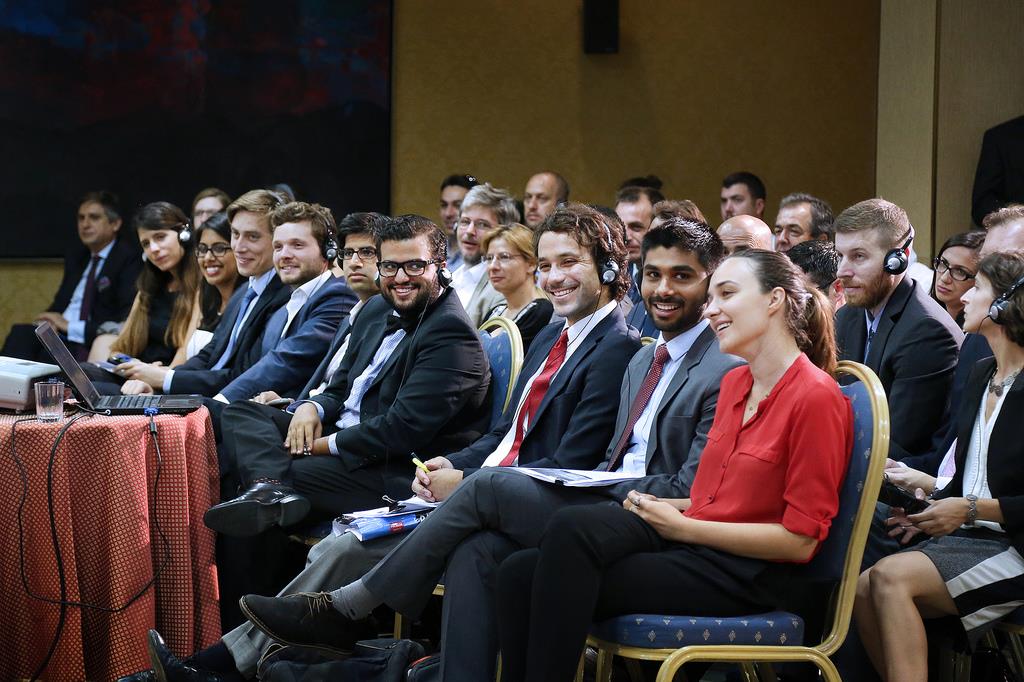
The lasting contribution of the interns’ work this summer can be best explained through the words of Prime Minister Edi Rama. At a July conference where the interns presented their work to the public, entitled “Sustaining Albania’s Economic Development: Growth Opportunities and Challenges,” Prime Minister Rama described the economic transition that his government is working to achieve and the vision behind its partnership with CID. He identified Albania’s previous economic model, quite accurately, as unsustainable, with previous growth relying too heavily on remittances and construction rather than on increases in knowledge and productivity. Further, he described it as non-inclusive and stated that development must mean more than just higher incomes for some people. He described the fundamental economic challenge for his government as supporting a transition to new sources of sustainable growth, and its partnership with CID as critical for both identifying these sources and figuring out how to support them in practice.
The Prime Minister specifically mentioned five sectors of central importance—energy, oil and minerals, agriculture and rural development, tourism, and manufacturing—all of which were areas of focus for one or more of this year’s interns. In energy, for example, he acknowledged CID’s role in helping Albania emerge from an energy crisis and move forward in a process of building “solid pillars” on which to sustain growth. This year’s interns contributed to the process by suggesting steps that would close the investment gap in electricity distribution, namely through efficiencies in public generation that could amount to $70 million annually and restructuring electricity tariffs in a way that is both fair and feasible. The team also provided technical analyses that will help the Ministry of Energy and Industry continue its transition to a market-oriented energy system with strong links to the rest of Europe.
On agriculture and rural development, the interns provided insightful research into the opportunities and constraints for Albania in aquaculture products, with a particular focus on high-value mussels. In doing so, the team brought together previously dispersed ideas from varied stakeholders and arrived at a unifying vision that could be used to strengthen collaboration across the sector. On tourism, the interns provided new analysis into why Albanian tourism remains “the best kept secret in Europe” and recommendations for addressing several underlying constraints to adaptive policymaking, which, if followed, could be major steps toward unleashing the sector’s potential to generate growth. On manufacturing and industrial development more broadly, the interns worked on several fronts. They worked with the Ministry of Economic Development, Trade and Entrepreneurship and the Albanian Investment Development Agency (AIDA) on preparing for the auction of Albania’s first Technical and Economic Development Areas (TEDAs); assessing current foreign direct investments and improving the setting for future ones; and studying whether conditions are right for the creation of an Albanian development bank.
The interns also worked on several other cross-cutting issues to support the transition to sustainable growth. Regarding fiscal matters, the interns worked closely with the Ministry of Finance to study policy instruments that would improve tax collection and budgetary planning. Looking outward, the interns worked with the Ministry of Foreign Affairs on issues that are economic as much as they are diplomatic. They studied the progress and evolution over time of regional integration projects, and they worked with local and international stakeholders to understand how Albania might better connect with its large diaspora to support domestic development. If the five sectors mentioned by the Prime Minister are those where “solid pillars” are being built, then efforts such as these are strengthening the foundation that holds the pillars in place.
The contributions by the interns, or “young experts” in the words of the Prime Minister, made for an especially productive summer. But CID’s collaboration with the Government of Albania will continue in full force. The project just celebrated the approval of a new grant by the Open Society Foundations, which will guarantee its continuation for the next two years, and CID remains especially committed to helping the Albanian government maintain macro-stability, improve sector-specific productivity and continue on its path to deeper regional integration.
The Curious Case of Albanian Mussel Exports
By Alejandra Jimenez
Albania is blessed with a long marine coast and abundant inland waters including rivers, lakes, agricultural reservoirs and coastal lagoons. But in spite of the abundance of its water resources, Albania is a net importer of fish. The Ministry of Agriculture, Rural Development and Water Management wants to turn this situation around by understanding and eliminating the constraints on exports faced by the aquaculture industry in general and the mussel industry in particular.
In 1994, after a cholera outbreak, the European Union (EU) imposed a ban on all exports of living products from the fishery sector, and Albanian mussel production collapsed. Mussels had been produced primarily in the Butrint lagoon, at Albania’s southern tip, since the 1960s, with annual production ranging from 2,000 tons to a maximum of 5,000 tons in 1989. Our objective, as Harvard CID interns in the Ministry of Agriculture, was set in front of us eight weeks ago: understand why Albania has not been able to eliminate this ban on mussel exports that is now over 20 years old.
Our work has consisted of visits to aquaculture production sites, talks with all relevant stakeholders, and independent investigative research. We first catalogued the assumptions we encountered about the export ban, and then searched for evidence to support or debunk them. We found that the persistence of the ban has been attributed by various hypotheses:
- Mussels produced in the Butrint lagoon are not safe for human consumption
- Though mussels are safe for human consumption, the Albanian government does not have the capacity to prove compliance with European food safety standards and stop eventual hazardous batches from reaching the market
- Production and consumption of mussels is informal and does not create the incentives to produce in accordance with costly food safety standards
- EU countries, particularly Greece and Italy, are interested in maintaining the ban so as to protect their exports from competition from the famous Butrint mussels
So which, if any, is correct? Let’s turn to the evidence, checking the hypotheses in reverse order. The most optimistic numbers place the potential for Albanian mussel production at 8,000 tons a year, a number that is almost insignificant when compared with the more than 300,000 tons of Mediterranean mussel produced elsewhere in Europe. In this context, a conspiracy to ban Albanian mussels based out of Italy or Greece is highly unlikely.

The third hypothesis, however, seems more plausible. Mussel production and sales are, in fact, very informal. Only 25 mussel farmers have approval to produce in the Butrint lagoon (photo). The inspectors in the zone know these farmers personally and do not always enforce all contract clauses, including the government’s requirement that the mussels from the lagoon must undergo a purification process (called depuration) before entering the market. The inspectors argue that the tests done on the water imply the mussels are safe for consumption and therefore that depuration is unnecessary. Besides, restaurants buy the mussels even if they haven’t undergone the depuration process. Meanwhile, the inspectors do not face a punishment from the central authority when they do not enforce the food safety procedures established by law. Central authorities argue that the production is too small to make the purification process profitable, and that it would be done if production were large enough. They believe they have the capacity to enforce the food safety standards but will only do so when the production is large enough to make the process worthwhile.
The Food and Veterinary Office of the European Commission has a different assessment, in line with the second hypothesis. In audits made in 2007 and 2011, they point out deficiencies, both in implementation and in technical capacity, that undermine enforcement of the standards meant to guarantee that mussels produced in the country, and in the Butrint lagoon specifically, are safe for human consumption. The 2011 audit states that the government has made progress since 2007, but that some work remains to be done before food safety is ensured and the ban can be lifted. Testing of both the water and of the mussels needs improvement. The government laboratory is not able to run some of the tests that the EU requires and transportation of the samples is slow, allowing microorganisms to grow and the tests to be undermined. Additionally, inspections fail to meet standards for formalization and documentation. The EU’s regulatory bottom line remains that the depuration process must happen as long as the lagoon waters are classified as a “B” area by the Ministry of Agriculture, which they currently are, and the inspectors must be able to respond immediately to stop a hazardous batch of mussels.
Accordingly, the first hypothesis, and whether or not the waters of the Butrint lagoon are free of pollution and mussels produced are generally safe for human consumption, is irrelevant because there is no system in place to attest that this is the case for each mussel to be exported. In reality, safety for human consumption is not a constant as environmental conditions can damage mussels at any time, which is why the EU requires a reliable system be in place to ascertain food safety continuously. That said, local and central authorities have worked hard to improve the quality of the Butrint lagoon water, and sources of pollution have been reduced: there is almost no agriculture in the zone, and no untreated waters are discharged into the lagoon by the towns nearby.
So what is the reason that the ban is still in place? It is not the mussels themselves and it is not a conspiracy. The second and third hypotheses both hold some truth, and given this situation, removing the ban on Albanian mussel exports has become a chicken-and-egg problem. Inspectors do not have an incentive to fulfill their responsibilities because they are convinced that the problem is not their control, but in the low production.The domestic market remains small and the ban on exports removes any profit incentive for higher production by cutting off sellers from international buyers. Removing the ban requires a system with reliable testing where inspections to assess compliance with regulatory standards are properly done. However, both testing and inspections seem overly costly at the current levels of production.
Breaking the cycle implies a shock to the system. This could be a strong initiative within government to make the public inspection and testing system work; it could be organized pressure on the government from the communities that stand to benefit from mussel exports; or this could be the entry of a large private player that would own the mussel production and internalize the need for EU compliance. Any solution would entail better organization on the part of the government and also paying some form of upfront costs—as even the entry of a private company would require contracting and oversight. Meanwhile, fixing the system is not outside the capabilities of the ministry, and the government has even received external assistance for this goal. However, as is often the case, the challenge is not only technical but also bureaucratic—someone must take the initiative to reverse the cycle. Our hope is that by debunking some of the myths of this curious case, we can make this outcome more likely.
The Unknown of the Balkans: Albania and Foreign Investment
By Emmanual Steg
Albania has a two-headed eagle on its flag to symbolize a country that looks both towards the West and the East. However, since the end of the Second World War, Albania has been curled up and unable to open up to a dynamic Europe. During the Cold War, it was the most reclusive country in Europe, finding an ally only in the distant People’s Republic of China, and even after the fall of communism, Albania remained an anomaly among its Balkan neighbors, who were painfully taking back their place at the heart of Europe. Why would a country just off the coast of Italy and mere hours from Western European capitals have so much trouble attracting foreign investors?
History has not been kind to the Albanian people. Barely half a decade after the fall of communism, the country teetered again on the brink of collapse when large pyramidal schemes failed to make payments. Those schemes represented up to half of Albanian GDP and offered annual interest rates as high as 100%. With their collapse, rule of law virtually disappeared: legend is that more than a million guns were looted from military reserves. Though Albania is now a politically stable country, those images still hurt its reputation abroad.
Even now, Albania is still fighting to shake the remnants of the communist era. And although there has been improvement in the last few years, Albania still consistently ranks in the bottom half of Transparency International’s Corruption Perceptions Index, lagging behind its neighbors. Foreigners in Albania remain reluctant to invest in a country where the judicial system is perceived as unreliable (a planned reform of the justice system has just been announced by the current government). From the outward signals, it is not hard to see why the rest of the world has been avoiding Albania.
However, they would be mistaken to do so. The potential offered by Albania is almost dizzying. Out of all the possible industries, three are especially interesting.
Tourism – As of today, tourism represents less than 5% of Albanian GDP, while it accounts for up to 10x that share for its direct neighbors. The Albanian coast is an untouched jewel, reminiscent of the French Riviera a hundred years ago. The region from Vlora to Saranda is especially magical: the coast is a succession of daunting cliffs and small sandy beaches, bordered by a pale blue sea. The backcountry is just as impressive; the tall mountains allow hikers to discover traditional villages, natural wells, and UNESCO World Heritage ruins.
Energy – Albania has been blessed with many bountiful energy sources, from oil to hydropower. Although still a net importer of energy, recent years have seen considerable investments in this sector that will allow Albania to become a regional power in electricity. The planned creation of an energy market will allow the government to provide a clearer business environment for investors, who will be able to efficiently and transparently sell their production.
Manufacturing – Albania is not only located close to the big European economies; it also has a population that is young, well-educated (most speak Italian or English), hard-working and inexpensive (minimum wage is under 160 euro per month). This should allow the big manufacturing groups of Western Europe to position reliable factories at their very border for a fraction of the cost it would be at home.
Albania’s potential is slowly being discovered as it starts to open up to the rest of the world. The next ten years may well see dizzying growth coming from the center of Europe.
Beyond Remittances: Engaging the Albanian Diaspora in Development
By Sarah Zehner
Since 2001, a growing number of developing countries have established ministries, government departments or other official institutions dedicated to their diasporas. Albania, which has a Diaspora Unit within its Ministry of Foreign Affairs, is among this group. This shift worldwide is consistent with the recognition that diasporas can contribute greatly to both economic and social development in their countries of origin. In a recent article, Ricardo Hausmann refers to opportunities for diaspora engagement as ‘The Diaspora Goldmine’. But what makes a country’s citizens living abroad so valuable? And how does the Albanian diaspora play a role in Albania’s development.
Perhaps the most tangible way that diasporas contribute to the development of their home countries is via remittances. According to the Bank of Albania, remittances flowing into Albania increased by 8.6% from 2013 to 2014, reaching the amount of EUR 592 million. This is the equivalent of 5.6% of Albania’s GDP. These remittances supplement the incomes of households, serve as a critical source of foreign exchange, and help to promote macroeconomic stability.
However, remittances are only one small part of ‘The Diaspora Goldmine’. In its publication, Developing a Road Map for Engaging Diasporas in Development, the International Organization for Migration (IOM) lists six ways in which diasporas can play an influential role in their home country’s development: remittances, direct investments, human capital transfers, philanthropic contributions, capital market investments, and tourism. To help better understand and facilitate these types of diaspora engagement, the Economic Growth in Albania Project at CID launched its Albanian Diaspora Program earlier this year.
With over one-third of Albanians living outside of their home country, migration plays a critical role in economic and social change in Albania. Most Albanian emigrants live and work in neighboring Greece and Italy, while the United States is the third most popular destination. Earlier this year, CID did a statistical profiling of Albanian-Americans and found that this group is highly skilled and educated, with most of the population concentrated in just a few states. In March, the Diaspora Program conducted online surveying that confirmed that Albanian-Americans’ high levels of human and economic capital could be better leveraged to spur inclusive growth within Albania. The survey found that the diaspora is willing, able and committed to engage in the development of Albania through education, professional exchange, humanitarian aid, business development, trade, and investment.
The Diaspora Program is now working to bring stakeholders together in order to move toward this vision. You can follow along here and learn more about what the Diaspora Program is doing this summer through the Global Albanians Newsletter.
Energy as a Big Opportunity in Albania
By Juan Domingo Riesco
This year, Albania’s Parliament approved an ambitious new electricity law. With it, the country is trying to complete the unbundling of its electricity generation, transmission and retail; move toward a non-discriminatory competitive market; and integrate more fully with the rest of Europe, both in energy markets and energy priorities. If that sounds complicated and technical, that’s because it is.
Upon the foundation of the law, the Ministry of Energy and Industry is now working to develop specific procedures and regulations designed to increase the overall supply of energy, decrease losses of electricity in the system, improve service to customers, and reduce financial risk to the government—all within sustainable market systems. The devil is, of course, in the details, but the Ministry is using hard data to rank options and knowledge of international experience to avoid the pitfalls that have derailed a similar process in other countries.
So how important are these electricity reforms in Albania? The answer: hugely. According to business surveys, 21.6% of Albanian firms identify electricity as a major constraint to doing business—higher than accessing finance, taxes, corruption, education levels or transportation. This leaves Albania ranked 152nd out of 189 countries on ease for firms to connect to the electricity grid. And these are, by necessity, only firms in the industries that can survive in Albania. Industries that require large amounts of electricity do not report because they do not exist. Progress on the Ministry’s reform initiatives should help to solve that problem. It may take time, but with well-structured reforms we would expect the share of electricity-intensive industries to grow in Albania’s export basket, helping to generate new permanent employment.
For these and other reasons, getting the technical details right is important. Here is some of what to look for as the Ministry continues its efforts.
In 2019, when the new law is fully implemented, there will be a large flux of high-consumption customers (mainly businesses) moving from regulated to open markets, where tariffs will be market-determined rather than fixed by government. For this to succeed, new markets (day ahead, ancillary and balance) must be in place and complete. Incentives must be structured such that electricity users and electricity sellers both benefit from making the switch and such that generators, transmitters and distributors internalize the need to increase efficiency and invest in their assets. Albania will also systematically integrate into a market much more developed and 654 times bigger than its own. If successful, this will improve energy security and quality of service, while also lowering business and commercial risks to invest in the country.
Albania should view the new framework as a big opportunity for its economic participation in Europe, and ministries must join together to take serious steps to eliminate distortions that could reduce the scope of the gains. A good experience in the electricity transition will improve the overall business environment and will provide better opportunities for industries that depend critically on cheap and reliable energy. If matched by appropriate industrial policies, this could increase economic diversity and complexity, enhancing productivity and economic growth, which the single most important determinant of consistent increases in living standards and reductions in poverty.
The new law and integration may also provide benefits in other ways. First, if investments complement reforms and water storage management is improved, Albanian power, which is already highly valued for its cleanliness and low operating price, could be prized for its flexibility as well. Connecting with markets abroad may allow for the export of electricity at peak hours, improving the trade balance and serving to attract new energy investment. Second, reforms could pave the way for optimized access to and use of natural gas from the Trans Adriatic Pipeline, which is planned to become operational in 2020. Such could allow for much needed diversification of Albania’s electricity production.
With well-designed and implemented public policy, several countries have improved their position significantly in just one generation. One such case is my country, Chile, which was able to quadruple its GDP per capita and reduce poverty from 39% to 8% in just 25 years. In all such cases, there were binding constraints that needed to be lifted to unleash the country’s true potential. This required long-term solutions to complex problems. In Albania, electricity is one of those types of constraints, although maybe not exclusively. The new electricity law is one step toward a long-term solution, but it is one among many steps. The focus on designing procedures and regulations must now remain detailed, and the responsibilities must eventually be shared, to take advantage of a big opportunity.
Kickbacks, gambling, and match-fixing in football dwarf the FIFA scandal
Authors: Douglas Barrios, Matt Andrews, and Stuart Russell
The world of sports was taken by storm when a recent FBI probe led to the arrest of a series of high-ranking FIFA officials and the subsequent resignation of Sepp Blatter after winning re-election to a fifth four-year term as president of the organization.
The uproar is understandable; the accusations have been scandalous, their impact has been felt all around the globe and a never-ending series of notable sport controversies appear to be linked to the investigation.
More so, associated football (soccer) is widely perceived as the world’s most popular sport and the World Cup is its pinnacle event. It is revered by athletes, fans, cultural icons and even heads of state as it inspires dreams of glory, both for players and countries. Learning, or rather confirming, that some of those whom were supposed to serve as the guardians of the game, develop football for all and leverage the power of the sport to improve social outcomes have rather tarnished its legacy is disheartening, but it begs the question: What if this is merely one piece in a broader puzzle of illegal activity?
If one goes beyond the prestige associated to the World Cup, it quickly becomes evident that the financial size of FIFA, and its dealings in general, pale in comparison to the rest of organized football.
According to FIFA’s 2014 Financial Report the organization’s global revenue for the 2011-2014 period was 5.2 billion USD which was the highest in its history and 23.9% larger than the revenue for the previous 4-year cycle. However, this is only 41% of the revenues generated by the top 5 football leagues in Europe just in the 2012/2013 season1.
Revenues generated for World Cup hosts don’t hold up much better. While FIFA receives revenues from TV rights, marketing rights, hospitality rights, licensing rights and ticketing, host nations only reap revenues through taxes imposed to economic activities generated by the World Cup. In the case of the 2014 World Cup, the most optimistic estimates put the revenues generated by Brazil for hosting the event at 7.2 billion USD, while more moderate guesses places them at a mere 500 million USD.
More so, when we aggregate the yearly revenues of FIFA, UEFA and other Regional and National Associations and compare them with a broader definition of organized football, we find that they represent less than 15% of the global revenues directly associated with the sport2.
In this light, it becomes evident why the biggest scandal in FIFA history, centered on 151 million USD in kickbacks spanning a 24 year period, may not be as large as initially perceived, at least in financial terms, when compared to broader maladies in football.
For instance, as of 2013, Operation Soga, a tactical operation coordinated by INTERPOL to address illegal football gambling activities in Asia, had resulted in the closure of gambling dens which handled illegal bets worth more than 2 billion USD.
According to the World Lottery Association, an organization of state authorized lotteries, at least 90 billion euros are spent each year in illegitimate football betting, creating incentives for individuals outside the game, overseeing the game and leading the game to partake in a myriad of match fixing schemes. Perhaps even more damaging, these sorts of schemes appear to have been used by criminal organizations to launder 140 billion USD a year, creating a dangerous link between popular sporting activities and organized crime.
These kind of illegal activities represent an epidemic attacking the integrity of the game at its very core. A 2013 INTERPOL report on match-fixing highlighted that in just the period between June 1st 2012 and May 31st 2013 English-language open-source media reported match-fixing incidents in over 70 countries and across 6 continents.
This report also typified the type of matches usually targeted by match-fixers. They stated that despite the fact there may be higher returns to betting on top level competitions, matches in lower or semi-amateur leagues are usually targeted as ‘they are less likely to be monitored.’ Similarly, ‘friendly matches, often international, are particularly vulnerable, as they are less regulated than FIFA-sanctioned competitions.’
Kickbacks on marketing and TV rights, illegitimate betting and match-fixing don’t even encompass the whole array of illegal activity associated with organized football. Allegations of vote-rigging for host city selection and illicit reselling of tickets have also been rampant. Additionally other accusations of more subtle vote manipulation that have come to light, while potentially not illegal, are downright murky.
Public opinion is right to be appalled at the corrupt acts conducted by some at the very top of FIFA. Fans, players, and the history of the game deserve better, but if the concerns of sports fans and citizens in general are to be in the right place, we should interpret this most recent scandal as a symptom of a larger, deeper-rooted issue. The fact is that most of these scandals transcend the categorization of corruption in football, at any level, and truly reflect the pervasiveness of broader corrupt and criminal activities that merely utilize sports as a vehicle.
FIFA reform would be a step in addressing that issue. Yet safeguarding the integrity of the game, promoting healthy citizen engagement with sports and stopping these corrupt activities and criminal endeavors require a stronger and more proactive stance from national organizations, local organizations, and even from us, the spectators.
[1] In European soccer, a season is played between the fall of one year until the summer of the following year. We use this season as reference because financial data is publicly available for all top 5 leagues for this season and it represents a mid-point for the 4 year period of FIFA. Revenues for these leagues for the 2013/2014 season sat approximately at 15 billion USD.
[2] We conducted an attempt to reconstruct the annual revenues from organized soccer in different regions of the globe, including supranational organizations like FIFA and UEFA, CONCACAF, and CAF. The estimates for the European top leagues were informed by rigorous data from UEFA, FIFA, and independent studies by the firm Deloitte. Estimates for regions like Africa, Central and South America, Oceania and Asia were not as rigorous, given the lack of any organizations or processes to capture, audit and share data in these regions. Estimates in these cases were based on primary research into regional associations, national leagues, and even clubs, where data are also scarce and difficult to verify. All in all the revenue identified from these different sources of information add up to 33.5 billion dollars annually, 14% of which refers to FIFA, UEFA and other Regional and National Associations. Similarly an AT Kearney study estimates the size of global football at 35.3 billion dollars.
This research is part of an ongoing collaboration with the International Centre for Sport Security (ICSS). This blog highlights some of the findings of this work.
European Aspirations in the Balkans
By Ishani Desai
“Europe will not be made all at once, or according to a single plan. It will be built through concrete achievements which first create a de facto solidarity.”
– Robert Schuman, 9 May 1950
In his historic declaration in May 1950, Robert Schuman, the architect of Europe, voiced his determination to merge the economic interests of his region and raise living standards, and to eventually create a more unified Europe. The result—the European Coal and Steel Community (ECSC), which included six Western European countries—was the first supranational European institution and would ultimately pave the way for today’s European Union (EU).
Since 1950, the EU has grown to include 28 member states with six others recognized as candidates for membership, including Albania, Serbia, Montenegro, and Macedonia. Bosnia and Herzegovina and Kosovo, for the time being, are potential candidates because they have not yet submitted membership applications. In order for any of these Western Balkan nations to join the EU, they must leave the divisive “balkanized” politics of the past behind and strive for regional cooperation.
Arriving in Albania on the eve of Tirana Talks, a meeting of the Vienna Economic Forum, I was welcomed to a decorated Tirana full of security guards, blocked streets and traffic jams. This was, in part, due to the first ever visit by a Serbian Prime Minister to Albania. The scene must have resembled that of Belgrade last November, when Albanian Prime Minister Edi Rama’s visit to Serbia marked the first for an Albanian head of government since 1947.
In total, Prime Ministers from all six Western Balkan nations were in attendance in Tirana to discuss regional collaboration and prepare for the upcoming Vienna Forum in August. Their shared aim was simple: faster EU accession supported by improved regional integration. While disputes surfaced during the talks, this motivation ruled the day. An emphasis was put on increasing infrastructure and investment; however, securing funding for proposed projects remains a large challenge. To fulfill EU requirements, the region plans to invest in new highways to link ports and capitals and enhance mobility, to establish the first government-led regional youth center to foster social integration, and to work on linking energy markets. With the talks completed, the actions of the six nations over the next few months regarding these and other initiatives will be telling.
The priority of integration is clear within the Albanian Ministry of Foreign Affairs and is broadly supported by public opinion. The EU-funded Balkan Barometer 2015 Public Opinion Survey indicates that more than 84% of Albanians think that EU membership would be a good thing. Meanwhile, the surest path to EU accession is through regional integration. Although there are challenges to regional collaboration that are embedded in deep-rooted history and complex politics, the potential benefits are driving this priority today. One key idea is that regional cooperation will lead to regional security, which in turn will increase investments and help Albania (and the Balkan region) grow.
Working for the Center for International Development, my role for the summer is to help the Albanian Government explore ways to enhance regional integration and prepare for the next meeting of the Vienna Economic Forum. The Tirana Talks have set a positive atmosphere at the highest levels of government. The goal now is to design sound public policy, structure forward-thinking investment plans, and operationalize this spirit of regional collaboration into sustainable joint projects and initiatives. Trade is already encouraged in the region through the Central European Free Trade Agreement (CEFTA), but Albania must lead the push for still greater economic cooperation and improved social integration. Such is the only way to achieve the de facto solidarity that Schuman described more than a half century ago.
A Better FIFA Won’t Solve Football’s Ills
Authors: Stuart Russell, Matt Andrews and Douglas Barrios
Recent accusations of corruption at the Fédération Internationale de Football Association (FIFA) are, unfortunately, entirely unsurprising. Allegations of bad governance, bribery and fraud have surrounded the organization for years, but repeated calls for reform have generated limited change. While FIFA needs reform, many of the recent calls for change seem excessively narrow when one considers that the organization is only marginally important in the general governance of football (or soccer). One needs to look beyond FIFA to seriously correct the governance problems plaguing football and sports more generally.
At the most basic level, governance is about the exercise of authority by some agents on behalf of others to affect a certain result or achieve a particular impact. Football governance is complex. It involves many different authorizing agents distributed across multiple levels of government or parts of society, acting on behalf of different groups and with different ends in mind. Besides supranational entities like FIFA, there are many other authorizing agents: national entities (central governments and national football organizations), regional and municipal governments, football clubs and teams, associated sports-related firms (broadcasting corporations and sponsoring businesses), and more.
Improving football governance requires recognizing this complexity, which has implications for how we think of the calls to reform FIFA. First, we need to recognize that FIFA does have some authority in the sport and that the organization can be better structured to exercise that authority. Second, we need to acknowledge that FIFA’s actual power is rather limited and many of the governance ills in the game require reforms in other jurisdictions and entities. Third, we should accept the need to carefully re-examine the roles of different governance agents, especially more important, but lower-profile authorizing agents like national and municipal governments.
FIFA’s limitations
FIFA’s limits become plain when one scrutinizes the organization’s role and the tools at its disposal. To start, one might assume that FIFA controls the rules of football, but these standards are actually determined by the International Football Association Board (IFAB), an organization in which FIFA possesses some, but not complete, influence. One might also think that FIFA provides money to build the sport across the globe, especially in poor and emerging countries. However, FIFA’s Goal and Financial Assistance programs are actually quite limited in size and seem to be used less for large scale development and more as mechanisms for the FIFA leadership – and President Sepp Blatter in particular – to consolidate power. FIFA doles out financial assistance in return for pledges of support and votes in internal elections. The formula is simple pork-barrel politics, used by politicians all over the world to mobilize support, and seems to have been ineffective for actually developing the game.
The most important and obvious authorizing mechanism FIFA has is the power to award the rights to host the FIFA World Cup. However, despite the glitz and glamor that this mega-event attracts, the revenues FIFA derives from its premier championship pale in comparison to revenues in other parts of the football world.
During the period from 2011 to 2014, FIFA reported revenues of about $1.4 billion a year, with about 70% of these revenues flowing directly from the 2014 Brazil World Cup. In contrast, Deloitte’s Sports Business Group reports that the top five leagues in Europe generated over $15 billion in revenues in 2013/14. Likewise, the revenues of just the top three richest clubs in the 2013/2014 season (Real Madrid, Manchester United, and Bayern Munich) sum to more than the annual revenues of FIFA. If leveraged properly, the financial influence of Europe’s top leagues and clubs would clearly dwarf that of FIFA. The power, influence and authority of these leagues and their richest clubs are arguably much more important than that of FIFA.
Of course, FIFA’s limited authority shouldn’t undermine the public’s calls for change within the institution. This is especially important when one notes how much soft and manipulative power the organization seems to have had in the past. European leagues have not stood up as aggressively against FIFA as one might have expected, and national governments in Brazil and South Africa accepted a range of questionable demands from FIFA in order to get rights to host the World Cup. In many ways, FIFA has proved more effective at forcing governments to suspend laws and re-allocate resources than entities like the International Monetary Fund.
Given this, it is necessary to clarify the nature of FIFA as an authorizing agent in sports governance and ensure that it operates in a transparent and accountable manner. Right now, the organization operates, formally, as an “association” under Swiss law, but it acts in a de facto sense as an informal country club of elite soccer executives with minimal accountability. One way to fight backroom informalities would be to officially transform FIFA into a private business. If FIFA acted like a firm, the transparency demands of the market could force FIFA to become more accountable. Alternatively, FIFA could become quasi-governmental organization like the World Doping Agency, an institution partially composed of national governments. An intergovernmental structure could provide countries with direct oversight of the group’s actions.
Governments must do more
While these changes are needed, it is clear that reforms to the governance of football shouldn’t be limited to FIFA only. Put another way, if FIFA possesses limited authority over football, then which authorizing agents are actually relevant?
National governments play an important role, crafting sports-specific policies related to the incorporation of clubs and the regulation of leagues. Moreover, they enjoy broad authority over a range of policy domains that aren’t sports-specific but are still crucial for the sector to function. These include financing transportation systems, regulating the financial sector and labor markets, supervising television broadcasting, and structuring sound legal systems. Spectator sports behave like any other industry in that they rely heavily on the effectiveness of a national government’s authority in these arenas. When one compares FIFA’s authority with that of a national government, it is surprising that countries so often allow FIFA to bully or manipulate them. As agents possessing more significant direct authorities over football than FIFA itself, national governments are far too lenient with the organization and the sport in general. The ongoing American and Swiss investigations into FIFA’s corruption are steps in the right direction, but these inquiries should only be the beginning of national government efforts to use their clout and reform the system.
Regional or municipal administrations also play an important role with respect to the governance of football. At a most basic level, local governments control essential services like policing and utilities systems. These governments also control the use of land, perhaps the most important resource for sports in general (that are played in stadiums and on fields in front of crowds who need to be able to access the spaces via municipal infrastructure systems). Moreover, many municipalities either subsidize these stadiums or support the day-to-day operations of the teams in their jurisdiction. Some clubs, particularly those in central and eastern Europe or in the lower tiers of Europe’s bigger football leagues, operate like state-owned enterprises. Propped up by municipal assistance, these clubs face many of the problems associated with traditional state-owned enterprises: operating inefficiencies, corruption, and political interference. Municipal support often means these clubs have a soft budget constraint, given a reliance on city subsidies for financing rather than the private sector. Such dependence gives municipalities the opportunity to exert significant influence. Regional and municipal administrations need to be more strategic about how they use the influence of these authorizing mechanisms to control corruption and fight fraud in football.
Perhaps the most important lesson to be learned from the ongoing FIFA scandal is that football – and sports in general – has been given special treatment for too long. The Economist correctly diagnosed the problem in a recent article, observing that
Too often the authorities have shared the misconception that corruption in sport is essentially benign. Worried about appearing killjoys, they have let it be.
There is significant room for improvement amongst the many authorizing agents in football governance. Furthermore, international focus on the emerging FIFA scandal has masked ways in which other agents can effect positive change. National governments should crackdown on corruption in football just as they would in any other industry. As the American and Swiss governments have started to do, they should leverage their control of financial, broadcasting, and legal systems to improve the sector. Likewise, regional and municipal governments should consider ways to leverage the authorizing mechanisms under their control to reform football. Given the reliance of European clubs on local government support, these administrations have the power to force real reforms. Football and sports more broadly have many problems, only some of which can be solved through changes within FIFA. As for the rest, other authorizing agents – like national and municipal governments – ought to stop playing around and take the game of football more seriously.
This research is part of an ongoing collaboration with the International Centre for Sport Security (ICSS). This blog highlights some of the findings of this work.