
Kicking Off the 2015 Summer Internship Program
By Ljubica Nedelkoska
For a second year in a row, the Center for International Development (CID) at Harvard University is organizing a 10-week summer internship program as a part of the Economic Growth in Albania project. Today, 13 master’s level students from Harvard University stepped into government and ministry offices in Tirana, Albania to work towards development goals. About half of them will work at the Ministry of Economy and Tourism. The other half will join the Ministry of Energy, the Ministry of Agriculture, the Ministry of Foreign Affairs and the Albanian Investment Development Agency (AIDA).
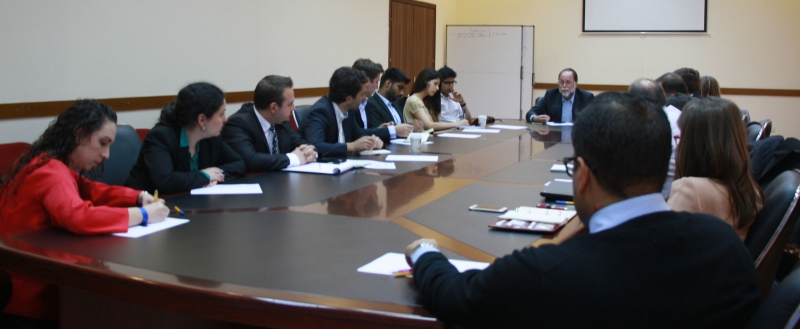
Albania has ample economic issues to address, some of which are structural in nature and others which are driven by the recent developments in the Eurozone. While still struggling to break with its socialist past and build good institutions, the European economic crisis took its toll on Albania. Almost one-third of the Albanian population lives in Greece and Italy today – migration has been a major mechanism through which Albania reduced unemployment, maintained wage growth and alleviated poverty through remittances. The European Union is also Albania’s largest foreign direct investment (FDI) and trading partner, and ultimately, is the community Albania aspires to join in the near future. The long-standing mismanagement of public funds is why the country is now undertaking a major fiscal consolidation. With little room for fiscal maneuvers, the government, supported by CID’s project, has turned to a strategy of strengthening the productive capabilities of export-generating industries as well as creating opportunities for FDI investments. Like last year, this year’s internship program will help us advance the implementation of this strategy.
The interns will work on key elements of the growth strategy. They will:
- Investigate the needs and means for financing large development projects in Albania, such as tourist destinations or large infrastructure.
- Work together with AIDA and help the agency prepare technical and economic development zones for FDI bids.
- Engage on the issue of deepening regional integration and others on a strategy for engaging the Albanian Diaspora in the development of the region.
- Help the Ministry of Agriculture study the value chains of certain agricultural products such as olive oil in order to learn about their production and market potential as well as hurdles.
- Address issues in the market for electricity and the oil exploration fields.
Most students have a combined background in economics and policy, and bring a wealth of knowledge and experience into the program. They come from ten different developed and developing countries spread across four continents.
Boston’s Olympic Bid: Leveraging the Non-Economic Gains
Author: Stuart Russell
Earlier this year, the United States Olympic Committee (USOC) named Boston as its candidate city for the 2024 Summer Olympic Games. Boston was chosen over other bids from Los Angeles, San Francisco, and Washington, D.C. It now joins Rome and Hamburg as the only cities to have officially submitted a bid for the 2024 Summer Games, although many other countries ranging from France to South Africa are also considering submitting cities. While the International Olympic Committee won’t select a host until 2017, supporters and critics of Boston’s candidacy have already made their voices heard. Newly elected Massachusetts Governor Charlie Baker hailed the selection of Boston as “an exciting opportunity to promote Massachusetts on the world stage.” However, critics like the group No Boston Olympics were more skeptical. Christopher Dempsey, the co-chair of the advocacy organization, told The Boston Globe that he was worried the city would now focus on the Olympics for the next two years instead of more important priorities like health care, education, and infrastructure.
The arguments of those opposing the candidacy are supported by the findings of a number of economists. The existing literature on sports mega-events like the Olympics, the FIFA World Cup, or the European soccer championships suggests there are relatively few positive economic benefits for the host city or country. Academics such as Rob Baade and Wolfgang Maennig contend that spending by locals during such events merely replaces spending those locals would do on different leisure activities or consumption goods. This sort of substitution effect limits the true additional spending that the events add to an economy. Other economists worry about the expensive and poorly-used sports infrastructure that often accompanies mega-events. Velodromes and archery stadiums, arenas which are filled during the Summer Olympics, are rarely used after the event. In light of such skepticism, why are these sporting events still so desirable? Why did San Francisco, Los Angeles, and Washington, D.C. battle Boston for the USOC’s nomination? Other academics suggest there could be less direct – but nonetheless still positive effects – of hosting mega-events.
In their article “The Olympic Effect,” Andrew K. Rose and Mark M. Spiegel propose one interesting impact. Rose and Spiegel argue that hosting mega-events, such as the Olympic Games may foster trade among countries. They demonstrate that countries with cities that have hosted the Summer Olympics benefit from an economically large and statistically significant increase in trade. In fact, they find that hosting the Summer Games is associated with a permanent 36% increase in exports following the event.1 Interestingly, they also find that the imports of host countries increase in addition to their exports. The findings suggest that the Winter Olympics don’t have the same export effect, a logical conclusion given that the Winter Games are hosted in smaller cities and attract less international attention. Hosting the World Cup, however, does have a very similar effect in both size and significance.
Perhaps the most interesting insight of the study is the finding that the increase in openness and trade extends to countries with unsuccessful bids for the Olympics. Simply bidding for the event brings the same trade benefit as hosting the event itself. Rose and Spiegel conclude that “bidding to host an international mega-event such as the Olympics is part of a costly strategy that signals trade liberalization and results in increased openness.”2 Even in light of uncertain direct economic benefits, politicians may still submit their city as a candidate for the Olympics with the hope of signaling to potential investors and business partners their intention to become more open to international trade.
Simon Kuper and Stefan Szymanski offer another thought-provoking argument in favor of hosting a mega-event like the Olympics. In their book Soccernomics, Kuper and Szymanski write that mega-events are desirable not for their economic appeal, but for the effect that they have on national happiness. They draw upon research that Szymanski conducted with Georgios Kavetos using European Commission survey data on happiness between 1974 and 2004.3 The researchers checked the happiness data’s correlation with eight major sporting events hosted in different European countries (the 1990 and 1998 World Cups and the 1980, 1984, 1988, 1996, and 2000 European championships). Interestingly, happiness in a given country wasn’t correlated with whether or not that country’s national team performed well. Instead, Szymanski and Kavetos observed a significant increase in happiness in a country after it hosted a mega-event. Happiness gains following the World Cup were robust, lasting two or three years after the event. Gains following the European championships were more fleeting, lasting only a year after they were finished. The increases in happiness that Kuper and Szymanski report are large. They compare the increase to “an unexpected increase in income that takes someone from the bottom half of the income distribution to the middle half.”4
The arguments above suggest that there might be more to hosting mega-events than direct economic gains. These benefits might be indirect in the sense that they are mediated by non-monetary outcomes. In fact, as Kuper and Szymanski suggest, the impacts might be entirely intangible in nature. Countries considering hosting these events should therefore be mindful of a wider array of potential benefits. The 2012 Summer Olympics in London are a good example of a mega-event that adopted this broader mindset. Part of London’s strategy focused on the legacy of the games with respect to four areas. Two of them, economic growth and East London regeneration, are related to traditional goals of hosting events. The other two, sports engagement and community engagement, are often overlooked by governments that usually focus on physical infrastructure and retail sales. Focusing their strategy on these four areas, London attempted to leverage the impact of the Olympics as much as possible. They created a number of innovative programs based on themes like sustainability, disability, equality, inclusion, and diversity. For instance, one creative program launched a business directory for firms that won sporting events contracts in order to allow these firms to secure more events-related business around the world. Another example is a program that offered volunteers who worked in the Games the opportunity to receive training as community organizers, as well as a fund for English youngsters to run their own volunteering projects inspired by the Olympics. While the precise impact of these programs is still being evaluated, the broader mindset that the London organizers used is potentially a very important strategy for future mega-events.
Although hosting a mega-event remains a controversial topic, some important impacts of hosting are often overlooked and left out of the public dialogue. Moreover, ensuring that the event has a successful, long-lasting legacy could hinge on the capability of policymakers to craft creative programs that effectively capture these impacts. Officials should therefore think beyond first-order, highly visible outcomes. Accordingly, if it is selected by the IOC, Boston should seek to identify a range of positive impacts associated with hosting the Summer Games. The city could utilize the region’s considerable human capital and innovation capacity to develop policies that subsequently leverage these benefits. The research we are conducting hopes to shed further light on these potential impacts and how to best take advantage of them.
This research is part of an ongoing collaboration with the International Centre for Sport Security (ICSS). This blog highlights some of the findings of this work.
[1] Andrew K. Rose and Mark M. Spiegel, “The Olympic Effect,” The Economic Journal 121 (2011): 658.
[2] Rose and Spiegel, “The Olympic Effect,” 654.
[3] Simon Kuper and Stefan Szymanski, Soccernomics (New York: Nation Books, 2009), 290.
[4] Kuper and Szymanski, Soccernomics, 291.
2015 Summer Internships with the Economic Growth in Albania Project
The Summer Internship Program of the Economic Growth in Albania Project is now recruiting Master’s level students to spend a summer in Albania working in areas that include but are not limited to:
- Agriculture with the Ministry of Agriculture
- Diaspora relations with the Ministry of Foreign Affairs
- Electricity/Energy with the Ministry of Energy and Industry
- Industrial zones/parks with the Ministry of Economy
- Textiles with the Ministry of Economy
- Tourism with the Ministry of Economy, the Ministry of Tourism and the Albanian Coastal Development Agency
- Public finance with the Ministry of Finance
- Regional Integration, a cross-ministerial task
We are looking for students who are interested in working at various government ministries for about ten weeks from end of May through July 2015. Students will work closely with Albanian senior officials to conduct research as well as policy and regulatory analysis. They will also receive close supervision from CID’s faculty and research fellows involved in the project. Familiarity with economic development theories and methods, and legal research and analysis are helpful for the internship. Familiarity with the country or fluency in Albanian is not required.
Assignments to students will be given by CID and their Albanian counterparts. Last year, the interns presented their findings before the Prime Minister and relevant cabinet members at a conference organized by the Albanian Government at the end of the internship program.
The internship is ideal for those who want to discover an unfamiliar country, work in an environment where politics, policy, economics and law are all intertwined, and be part of joint endeavor with CID in assisting a country in transition. The placement of students in various ministries will be done based on preferences and matching of skills with needs. CID will arrange accommodation for students in Tirana.
Eligibility
Harvard University Master-level students. Students from all Harvard Schools are encouraged to apply.
Funding
Students from the Harvard Kennedy School of Government are eligible for scholarships provided by the project itself. All applicants are encouraged to apply for school-specific scholarships (e.g., Harvard International Development Internship Fund).
Important Dates
Internship Information Session:
Date: February 12
Time: 4:10 pm
Location: Perkins Room, Rubenstein Building 4th floor, 79 JFK Street, Cambridge, MA.
Application Deadline: March 31, 2015
Throughout spring, CID staff will be available to provide continuous information and answer any questions that you may have. Please do get in touch with us!
Understanding the Economics of Sport through the Industry Space Methodology
The Center for International Development at Harvard University in cooperation with Anet Weterings from the PBL Netherlands Environmental Assessment Agency is preparing a publication which investigates the sports cluster in the industry space. This blog highlights some of the findings of this study. This research is part of an ongoing collaboration with the International Centre for Sport Security (ICSS).
Any casual observer of the Olympics, the World Cup, or European professional soccer knows that the world of sport is big business. Expensive stadiums and massive player transfer fees suggest that there is an economic dimension to sport. However, the exact mechanisms through which sport influences other sectors in the broader economy are less clear. The industry space is one technique through which we can better understand these connections. It is a methodology that illustrates the industrial structure of a given geographic area by emphasizing the linkages between economic activities. Economic sectors are connected in the industry space if they possess similar characteristics such as human capital, natural resources, or value chain linkages. If we can locate sport within the industry space, we can hope to better understand how the economic aspects of sport spillover to other sectors.
Figure 1: Sports sectors in the industry space (Click all to enlarge)

Source: Data from statistics Netherlands, edited by PBL. Own calculations of the industry space.
To illustrate the industry space technique, we used data from the Netherlands from 2001-2008 on the number of people employed in 826 different economic activities and the number of employees switching jobs between these activities. We utilize Dutch data due to its greater level of detail in the classification of sports-related activities. Each of these economic activities is represented by a node depicted in the industry space in Figure 1. The network in Figure 1 is constructed based on labor flows between economic sectors such that the links between the nodes demonstrate the skill relatedness between these economic activities. The full network has many more links amongst the nodes, but, for visualization purposes, we only show the strongest 2,478 linkages, which is three times the number of the nodes in the network. The size of the node is proportional to the employment in that sector and the color of the node represents a cluster or community of economic sectors. These communities are collections of sectors with a high level of mutual labor flows. They are constructed using community detection algorithms from social network science (here we use the Fast & Greedy algorithm). Workers are more likely to move to sectors within the same community because these industries require similar skills. It is comparatively more difficult for a worker to jump to a sector outside of his or her community because that sector likely requires skills that the worker doesn’t already possess.
Of the 826 activities discernible in the data, 28 activities pertain to sport in the industrial classification that we use (SBI93, revision 2003). In Figure 1, sports-related activities have a triangular shape to distinguish them from the rest of the economic activities. The sports activities can be placed in 4 categories. First, 23 of the activities pertain to sports clubs such as soccer, tennis, or track and field. Second, 5 activities relate to sports facilities such as swimming pools, gyms, or sports halls. Third, 3 activities pertain to support organizations like fan associations. The final category includes professional sportsmen and sports instructors. The industry space depicted in Figure 1 reveals a significant amount of information about the role of these sports-related activities in the broader Dutch economy.
Figure 2: Sports clusters

To start, the industry space demonstrates how sports co-occur or group with other industries. In particular, two communities stand out when it comes to sports. First, 21 of the 28 sports-related activities cluster in a single community of red nodes depicted in Figure 2, confirming that, relative to all other economic activities, sports share a very similar skills base. Sports-related activities in the community, which are represented by the triangular nodes, include soccer, swimming pools, and motor sports. Besides these activities, the community primarily consists of health care, social care, and educational services such as hospitals, child care, and universities.
The purple nodes designate a second community that contains 4 other sports-related activities: winter sports, billiards, board games and puzzles, and other outdoor sports. These activities cluster with transportation, recreation, and accommodation activities like restaurants, cafeterias, and railways. The remaining 3 sports sectors, which do not belong to either of these two communities, belong to other clusters. For instance, equestrian activity is more closely linked to agriculture and farming than to other sports and is therefore part of the agricultural products community.
Figure 3: Swimming – an example of sports sector that mainly connects to its own cluster

In addition to these clusters, the industry space also reveals interesting information about the different types of connections that sports-related activities have. Many sports-related activities are poorly connected to the broader economy and link to very few other nodes. Cycling, for instance, connects to only two other economic sectors once we selected for the top 5 percent of the strongest links from the full network. At the same level of link selection, some sports-related activities are connected to many other nodes, but the sectors to which they link are mostly only other sports. Swimming is an excellent example. It has linkages to swimming pools, sports halls, martial arts, and other advisory sport groups (Figure 3). On the other hand, other sports activities may not be densely connected, but the connections that they do have are diverse and link them to several different types of communities. Motorsports, for example, relates to four different communities and has connections with a diverse array of nodes that include car repair, hotel restaurants, and physical well-being activities (Figure 4).
Figure 4: Motorsports – an example of sports sector with cross-cluster connections

Soccer is an example of a sports-related activity with linkages that are both numerous and diverse. Figure 5 depicts a visualization of soccer’s connections in the industry space. The figure zooms in on soccer’s node and shows the links it shares with other economic activities. The linkages are grouped by community and, within each community, the strength of the linkages decreases as one proceeds clockwise around the circle. The strongest connections are shown at the top of the ring. Unsurprisingly, employees in the soccer sector often work in other sports-related activities such as professional sportsmen, sports instructors, and sports facilities. However, the ring also shows that employees in the soccer sector work in numerous other communities. These communities include sectors such as newspaper publishing, textile sales, and building cleaning. This demonstrates that relatedness often cuts across clusters. While sports-related activities like soccer may be primarily linked to other sports, they also share many connections with the broader economy.
Figure 5: Soccer – an example of densely interlinked sports sector with connections to many clusters

Analyzing the location of sport in the industry space is important because it helps us understand how sport affects other economic sectors. When a sports sector experiences an economic shock such as a mega-event like the World Cup, the industry space can help predict which related sectors will be influenced. For instance, increased labor demand in a sports industry may result in labor poaching and increased wages in a connected sector. Which nodes and which communities are affected by these spillovers? How strong must the connections between sectors be for these spillover effects to occur? Alternatively, if a government wants to create a sports industry, the industry space can help identify what related industries are helpful for the establishment of a robust sports sector. Are medical activities helpful complements of a strong sports sector? If not, are education activities more useful? As our research on sport and economic complexity progresses, we hope to address many of these research questions.
About the authors: Ljubica Nedelkoska is a Research Fellow with CID’s Growth Lab and Stuart Russell is a Program Assistant at CID.
The End of the Beginning
For such a tranquil airport, Tirana Nene Tereza has a dramatic setting. At 7am on a Saturday, awaiting a flight to Athens and on to London, the mountains that encircle the bright, modern terminal take on misty, mysterious quality in the morning sun. It’s the start of another hot summer day in Albania, and the end of an important first chapter in CID’s engagement with the government.
I am at the end of my second monthly visit to the country, visits that will continue over the next year as the Building State Capability program helps the Albanian government’s ‘Black Belt Teams’ – special implementation committees – drive delivery in priority growth sectors.
We are still in the early stages of a long engagement, but early August signaled the end for the 12 HKS interns who have been in Albania for the last few months embedded across the government, working side by side with civil servants and supporting ministers (as well as blogging here). It is a major transition point for the project, and more importantly for the government as many officials head into the customary August break.
The HKS interns have achieved a great deal. From education and agriculture, to electricity, extractives, finance, fason (manufacturing), industrial parks and more, they have spent time immersed in the challenges facing the country, and learning the challenges in moving the government’s agenda forwards. They have done vital research, analyzed policy and value chains, advised on implementation, helped coordinate the Black Belt Teams, and helped the government crystallize its agenda in many of its priority areas. They will come away with enormously valuable experiences, and will also have left an indelible mark on the ministries and colleagues with which they worked.
Their departure is a moment for pause, take stock, gather lessons learned and above all capitalize on the momentum they have generated. Each of the interns has helped both develop the strategic direction of their sector, and generate will and motivation to put strategies into action. This last part is always the difficult bit, to develop government bureaucracy – a bit like strengthening a muscle – to carry out the difficult, sometimes mundane, but ultimately transformative business of delivery.
And it is why the BBTs exist – to turn ideas and strategies into action. Working in four priority sectors for now – industrial zones, fason, agriculture and tourism – the teams match the right people with the right priority, and empower them to get things done. With they support of the Building State Capabilities Team from CID, the teams start with problems and develop solutions themselves. They learn as they go, iterating, muddling where necessary, but all the while developing ways of moving forwards that work in Albania. We are excited to see how much we can do in the next year together.
The first chapter of CID’s engagement is complete, and thanks to the interns and the many people involved in the project, tremendous work has been accomplished. The challenge now is to translate the analysis and policy development into concrete implementation plans, with clear steps and responsibilities, so that the teams can turn ideas into action. For our work with the Albanian government it is, to paraphrase Churchill, not the end, nor even the beginning of the end. But it is the end of the beginning.
About the author: Peter Harrington is a Research Fellow with CID’s Building State Capability program.
The “Black Belts” of Government Innovation
The Economic Growth in Albania project is focused on establishing mechanisms and practices within the public sector that will improve the government’s ability to develop and implement effective growth strategies. Many of the key growth sectors in Albania require coordination and implementation within and across several ministries, which can lead to delays and bottlenecks. CID has therefore worked with the government to establish “Black Belt Teams” aimed at facilitating problem identification and finding solutions.
The Black Belt Teams (BBTs), modeled after Toyota, are strategically formed to bring together diverse actors of an organization or a network of organizations to analyze problems and strategize solutions. The BBT structure allows civil servants to address issues in a more flexible manner, allowing for adaptation and iteration in the search for solutions. “The BBTs take people who know the system and processes and provide them with a vehicle where they can innovate and operate in a way they are not accustomed to,” says Brad Cunningham, CID Research Fellow.
In Albania, the first BBT was formed with the Ministry of Trade, Economic Development and Entrepreneurship to work on the “Fason,” or manufacturing, sector. Textile and footwear manufacturing made up 32 percent of the country’s exports in 2013 and employs approximately 6,000 people (of whom 95 percent are women). Until now the industry has mainly relied on its strategic location next to Italy’s large fashion industry and its comparatively cheap labor cost to stay competitive. To ensure the sustainability of the sector and the ongoing employment it provides, the government is working to encourage growth and the development of new technologies.
With leadership from the Deputy Minister for Trade, Economic Development and Entrepreneurship, the manufacturing sector BBT includes representatives from within the Ministry as well as the Albanian Investment Development Agency (AIDA), the National Employment Service (NES) and the Institute of Statistics (INSTAT). The BBT has been actively working to implement measures proposed in an incentive package developed earlier in the year in consultation with the private sector. The package includes fiscal and non-fiscal measures to promote growth, investment and technological improvements within the sector.
One of the measures included in the package is the establishment of a technology fund. “The financial capacity of private actors within this sector is low and small manufacturers often do not have the revenue to invest in technology and quality improvements,” explains Hanieh Mohammedi, an HKS Master’s student working with the BBT on the development of this fund. Estimated at 2.5 million USD for the first year, the fund will allow manufacturers to apply for government funding for new machinery, technological improvements or training and capacity development.
With high unemployment rates throughout the country, the sustainability of the manufacturing sector is a key concern for the Ministry of Trade, Economic Development and Entrepreneurship, as well as other members of the BBT, such as the National Employment Service. Competing textile manufacturers worldwide are forcing Albania to take a proactive approach to remain internationally competitive. By working through the BBT, the ministry and government agencies have been able to identify obstacles to productivity improvements, such as lack of modern machinery and training, and develop effective mechanisms for tackling these obstacles.
Visit our Building State Capability website to learn more about Problem-Driven Iterative Adaptation.
About the author: Karen Vanderwillik is a summer intern for the Economic Growth in Albania project.
Taking a closer look at Albanian agriculture
From above, Albania is a picturesque scene of patchwork farms framed by mountain ranges, lakes and turquoise seas. Look a little closer and you may see a few greenhouses filling the narrow plots of land, goats being herded down dirt roads and chickens scattered across barnyards. A little closer and you may see a few larger fish farms and barns. However, across the country Albanian farming is predominantly small scale.

Agricultural production and export in Albania has been constrained by small and geographically fragmented plot sizes, unclear land titles resulting from the communist-era cooperative systems and limited capacity for technological development. Over half the population of Albania is employed in the agriculture sector yet it makes up only 16-18 percent of the country’s GDP. For small scale farmers, yields are low and input costs are high. Most agricultural inputs are imported, including tractors, fertilizers, and even chicks.
This summer, Koji Ito and Boban Paul, MPA/ID students at the Harvard Kennedy School, have been working with the Albanian Ministry of Agriculture and CID to study the value chains for poultry and medicinal and aromatic plants (MAPs), respectively. They are working with the government and local academics to study constraints and bottlenecks in these sectors and to develop potential policy strategies that could increase productivity. But to really understand the dynamics of agriculture in Albania, they needed to take a much closer look.
 2014 growth lab interns Albania image4.jpeg
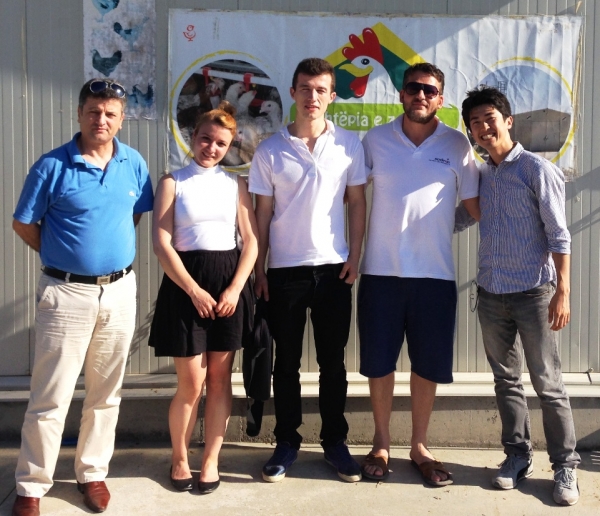
Koji Ito has been travelling around rural Albania with a counterpart from the Agriculture Ministry and two students from the Agricultural University of Tirana in an effort to interview poultry farmers and retailers first-hand and inquire into the production system, for which little information was available. “At first some farmers were not willing to talk to us,” says Ito, who explained that a good number of businesses operate outside the scope of the government and may prefer to be left untouched. “But others were very open and even interested in what this research is going to reveal about their industry.”
 The poultry sector picked up quickly and well in the post-communism transition years; however, Albania still imports more than half of chicken meat on the local market. Most farmers rear chickens for subsistence purposes with minimal technology, and only a handful produce intensively to fill large urban markets. The government is considering potential policies for supporting growth in domestic poultry production, so as to reduce dependence on imports.
For medicinal and aromatic plants however, the focus is on increasing exports. Farmers and exporters of MAPs, particularly sage and lavender, feel there is potential for growth in this sector due to international demand. Boban Paul, along with local students from Agriculture University of Tirana, has been visiting MAPs farms primarily in Northern Albania, at the foothills of the Albanian Alps. By going into the fields and actually seeing how plants are harvested, they found that current production practices are actually not sustainable. “The farmers realize that some of the harvesting practices are leading to a scarcity of MAPs,” explains Boban Paul, “but they are not yet doing anything to change this.”
In Northern Albania, medicinal and aromatic plant farming makes up close to 35 percent of household income and about 18 percent of agricultural exports. However a lack of a quality controls and certification processes limits the market price Albanian producers can fetch for their plants. “Some exporters sell to Germany where they suspect the plants go through additional processing and quality management and are probably re-exported to the United States at a higher price,” explains Paul.
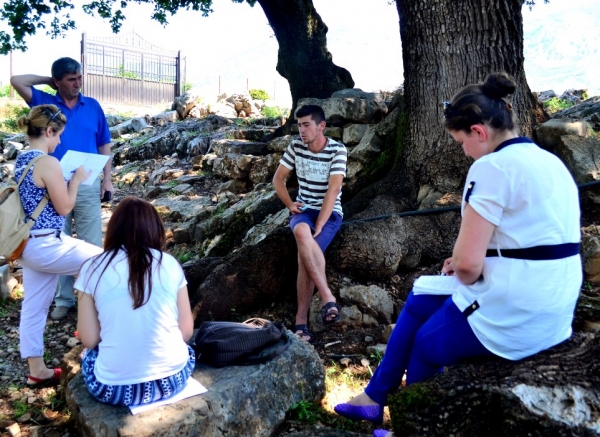
The field research the students are undertaking will provide the Ministry of Agriculture with valuable data on the characteristics of Albanian agriculture at all stages of their value chains. Some of what they have discovered supports what the government already suspected, but they have also discovered interesting and important nuances about these sectors that will help guide policy decisions.
Field work can be difficult and time-consuming, especially when dealing with rough roads and language barriers, but it will help provide the Ministry with a much clearer picture of what the agriculture sector really looks like. For the students, the opportunity to meet with local Albanian farmers and producers has been informative and at times entertaining: “During one field visit we asked a cultivator what he pays for fertilizer,” recounts Paul, “and the farmer answered ‘It depends on the cow!’”
Opening Albania to the World
Just opposite the Italian coast and between the famed beaches of Croatia and Greece, Albania is marketing itself as a unique and undiscovered destination in the Mediterranean. With beautiful coastlines, snow-capped mountains and stone castles steeped in history, this small country has much to offer, but it has yet to make it onto most people’s bucket list.
After 50 years of communist isolation and subsequent political and economic uncertainty, the country is only recently becoming a destination for international travelers. International tourism is a relatively new industry in Albania and many attractions are underdeveloped, hospitality services are often informal and road travel throughout the country can be slow and difficult. Furthermore, Albania is poorly connected to the region, with a limited number of direct flights and no charter airline services.
Yet the country is brimming with potential and the current government has identified tourism as a key sector for economic growth. “The tourism sector is perceived to be a priority for several different parts of the government,” explains Mejvis Kola (Bajollari), Minister Advisor on Tourism Issues. “It has great potential to attract foreign investments, create jobs, and support inclusive economic growth.”
CID is working with the Ministry of Urban Development and Tourism to understand the challenges unique to the tourism sector in Albania and to begin to develop tailored economic growth strategies. As part of this process they helped form a “Black Belt Team” (BBT) coordinated by Ms. Kola and comprised of key staff from within the Ministry. This team, in consultation with the private sector and with other ministries and government agencies, is currently developing an incentive package to promote growth and increase investment in tourism.
To better understand the Albanian context and bring insight from the region, the BBT has conducted research on how the country is positioned in relation to its regional peers. “Some preliminary data highlights infrastructure (air, ground, tourism) and the quality of human capital as the lowest ranking aspects of tourism in Albania,” explains Karina Baba, a Harvard master’s student working with CID’s Economic Growth in Albania project. To address these problems, the BBT is looking into ways to mobilize private and public investments in the sector and has proposed the inclusion of measures for establishing licensing, certification and training for tourism professionals and agencies into the tourism package.
While tourism is a priority across the government, the team has a difficult job. Tourism development is coordination intensive – it depends on simultaneous implementation of actions and policies across various parts of the government. Any fiscal incentives included in the package need to be coordinated with the Ministry of Finance, among others. Promoting destination-specific tourism development involves tackling the issue of unclear land ownership across the country (a legacy of the former communist system), which involves the Ministry of Defense, Ministry of Infrastructure, and more.
The Tourism BBT is therefore in a crucial position to build communication and coordination across the government. The Ministry has already made significant progress by proposing a new Law of Tourism, which is currently pending approval, and the tourism development package aims to bring more opportunities for growth to the sector.
With 80 percent of hotels having only 20 to 40 rooms and unpaved roads leading to many of the country’s key attractions, Albania still has a long way to go to becoming a competitive tourism destination in the Balkans. However the potential for economic growth and employment through tourism is high. CID is supporting the Ministry’s efforts to tackle these challenges in collaboration with key government actors and ensure growth is sustainable over the long term.
About the author: Karen Vanderwillik is a summer intern for the Economic Growth in Albania project.
The building blocks of higher education reform
Albania is a relatively small country, with a population of 2.9 million, yet the country is home to 59 public and private universities. Higher education enrollment rates rose from 33% of the university-aged population in 2009 to 56% in 2012 (Source: World Bank), a high number even for European standards. CID is working with the Ministry of Education to understand what these numbers mean for the quality of the country’s education system, and what can be done to improve higher education going forward.
Education is fundamental to social and economic development, yet access and quality are ongoing issues around the world. Albania has a solid system of basic (primary and secondary) education, including a system of standardized testing to ensure ongoing monitoring and improvement of quality across the country. Unfortunately, the same standards for quality control have not been applied to higher education.
In 2005 the previous government administration began a campaign to increase the number of students enrolled in higher education throughout the country. The campaign aimed to align the country more closely with OECD rates of enrollment and also ensure higher education was available across the country, not just in the capital.
Universities began popping up across the country, many with less than 100 students, and some actually built illegally on unclaimed land. The number of students jumped from around 60-thousand in 2004-2005 to 160-thousand in 2011-2012 (Source: Albania Commission on Higher Education). In the same time period the number of higher education institutions rose from 14 to 59 (Source: Albania Commission on Higher Education). However, budget increases did not keep up with these student numbers. Current spending for higher education is around 0.5% of GDP, far below the OECD average of 1.6% (Source: OECD). Neighboring countries are spending around 4-5 times more per student than Albania.
“At a moment when they could have increased the quality of their education system to align more with European Union (EU) standards, the government instead focused on an increase in quantity of enrollment,” explains Evelien Blom, a Master’s student at the Kennedy School working with Albania’s Ministry of Education. “This led to a rapid deterioration in the quality of the existing higher education system.”
This rapid growth in enrollment created such a demand for instructors that institutions had to lower requirements for the academic staff. Furthermore, because many schools are small, professors often teach part-time at several institutions to earn an income, leaving little to no time for academic research and writing. Corruption and fraud have also become prevalent in the university system, with degrees practically available for purchase in some schools.
Higher education reform is therefore a top priority for the Ministry of Education in Albania. They are developing a reform agenda that will focus on increasing the quality of teaching and scientific research by introducing performance based and competitive funding for teaching and research, increasing the autonomy of institutions while also increasing control mechanisms and auditing, and introducing a scholarship system based on merit and needs of the student. With this reform, the Ministry aims to align the country’s universities closer to EU standards and improve their ability to access funding through the European Research Council (ERC), which Albania is part of.
“The Deputy Minister is aware of the challenges and of what needs to be done,” says Blom, “but he also knows the ministry will need a lot of support to achieve meaningful reform.” For one, the reform agenda places a lot of emphasis on quality control, which the universities are expected to carry out. However they currently do not have the capacity to do so. Albania does have a public accreditation agency for higher education programs and degrees, but the agency has limited experience and cannot keep up with the speed at which new institutions and programs are opening up across the country. The Ministry is working to restructure this agency, including more emphasis on the collection and analysis of statistics, with managerial oversight from an agency in the UK.
The reform agenda also plans to incentivize reforms within universities through financing. The government plans to increase the budget for universities and divide it between teaching, research and infrastructure development, with performance indicators applied to each area. Blom is supporting the ministry to develop this budget; including determining how much funding should be allocated to each area and what indicators could be used to steer the universities.
As the Albanian economy grows and the country moves toward greater integration within the region, an educated and skilled workforce will be in high demand. The Ministry of Education’s reform agenda is moving in the country’s higher education system in the right direction, but it will be an uphill climb.
About the author: Karen Vanderwillik is a summer intern for the Economic Growth in Albania project.
The Road to Kosovo
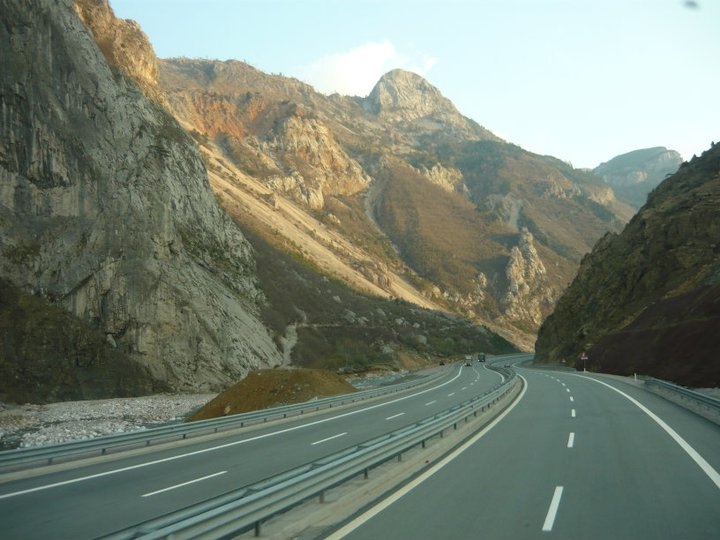
Can the building of a highway facilitate regional integration? In the case of Albania and Kosovo, it might. “We hypothesize that the building of the Albania-Kosova highway may have been crucial in expanding Albania’s trade with Kosovo,” explained Maria Qazi, a Harvard master’s student working on the issue of Albania’s integration with Kosovo. And “it is generally accepted that greater regional integration with Kosovo and other neighboring states will help prepare Albania for eventual EU accession.”
Qazi recently joined HKS Professor Robert Lawrence and Research Fellow Ermal Frasheri on a visit to Kosovo to further understand the connections already established between the two countries and the ongoing barriers they face towards deeper integration. Their research will examine how bilateral integration with Kosovo can increase economic growth in Albania and also support eventual integration with the EU. As part of the overall Economic Growth in Albania project, CID researchers will examine the costs and benefits of strengthening connections in four key markets: goods, services, labor and capital.
Kosovo, a partially recognized state to the north of Albania is both small and landlocked, and would therefore benefit greatly from access to Albania’s markets and sea ports. It is currently Albania’s third largest trading partner, after Italy and Spain, and is actively pursuing further integration. Due to their shared language and culture, the Albanian government envisions a potential for both economic and cultural integration between the two countries.
The new highway to Kosovo has the potential not only to increase trade and cultural exchanges – nearly 1.5 million people cross the border with Kosovo every year in each direction – but could also help Albania’s ports to become regional ports and create a market for transit trade to Kosovo and beyond. However, despite greater physical connectivity through improved road access and a free trade agreement, there are still significant challenges that hinder integration.
During the recent visit to Kosovo and through meetings with public and private-sector stakeholders, Prof. Lawrence and his team have identified a significant gap between existing trade and integration policies and the reality on the ground. There are many hidden barriers that continue to limit the exchange of goods despite the free trade agreement. In particular, both countries continue to face technical barriers such as different regulatory standards on food exports. These barriers create significant price differentials and restrict imports of certain goods.
The movement of labor between Albania and Kosovo is also technically “free” – work permits are not required for nationals of either country. However in practice, Albania limits the number of foreign employees hired by local firms through a quota system. Also, foreign professional accreditations are generally not recognized. These practices limit further labor mobility, which could have the potential to address skills shortages and unemployment in both countries.
By evaluating the impacts of intensifying regional integration, CID hopes to understand and address some of the key limitations to growth the country is currently facing. This research could lay the groundwork for the creation of effective policies and mechanisms to improve real integration and reduce barriers. The road to Kosovo has paved the way for new growth opportunities in both countries, and it could become a significant step on the long road to greater regional integration for Albania.
About the author: Karen Vanderwillik is a summer intern for the Economic Growth in Albania project.