
Student Stories: Collecting Evidence to Help Smallholder Farmers Around the World
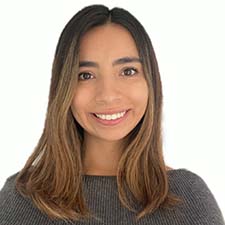
Laura Romero is a first-year MPA/ID student at Harvard Kennedy School. She was accepted into the Growth Lab’s 2022 Fall RA Program and contributed to our Initiative on Agriculture where the work included developing a framework to determine products that are suitable for smallholder farming agriculture and its integration into markets.
Why did you apply?
I applied to the Growth Lab RA program because I wanted to enrich my experience as an HKS student with some research experience. I wanted to apply some of the concepts and skills that I am learning outside of the classroom.
What did you work on?
I worked on the Initiative on Agriculture: Smallholder Complexity & Putting Collective Land to Work, where my main goal was to contribute to answering the question of how to measure complexity for smallholder farmers around the world. My work included literature review, data analytics, programming, and developing a general framework to identify existing capabilities in different economies using comparative advantages.
In what ways were you challenged?
It was challenging to think about smallholder farmers as one population target, as they are heterogeneous in different regions of the world. Moreover, it was an arduous task to gather information from different sources, including agricultural national censuses and surveys, and putting all the evidence together to tell a story. On a personal level, this project was my first exposure to research at Harvard, while being a graduate student. It was challenging to manage both roles at the same time.
What was your most exciting/surprising experience?
My most exciting experience was learning about agriculture databases in FAOSTAT and getting to code functions that last over time. Applying my previous knowledge of agriculture in Colombia to this project was also thrilling, as well as being able to get a better understanding of the issues affecting smallholder farmers around the world.
What advice would you give future Growth Lab interns/RAs?
First, dare to apply! Once you are in, try to learn everything you can, you are encouraged to ask questions and be curious. Compliment all the theory you learn in class with hands on research or experience in real world problems.
What’s next for you?
I still have to complete my second year in the MPA/ID program. This summer I will keep working in research, as I will be doing an internship in Innovations for Poverty Action based in Mexico City. This RA role further fueled my interest in agriculture and food security, and I hope to continue working on these topics after graduating the MPA/ID program.
Student Stories: Inspired by the Growth Diagnostics Framework
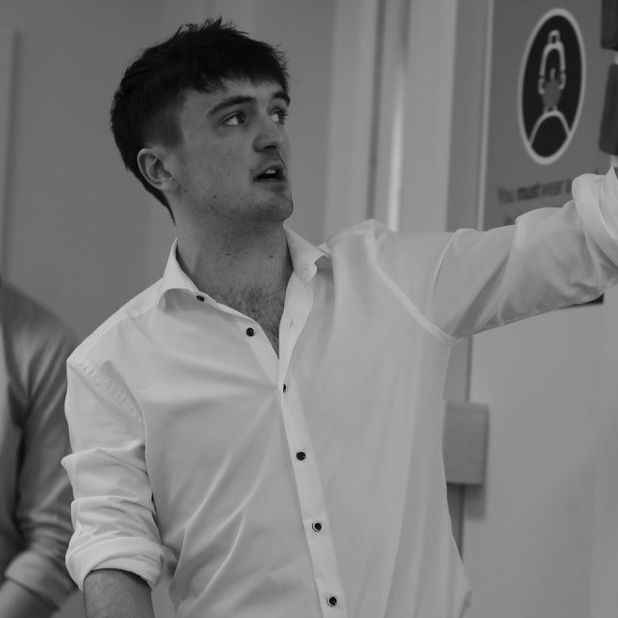
Jack Gisby recently graduated with an MPA (Economic Policy) from the London School of Economics. As part of the Growth Lab’s 2022 Summer Internship Program, he contributed to the newly formed Pan-Africa research agenda. Our team is exploring the Africa Continental Free Trade Area (AfCFTA) and the underlying constraints that have held African nations back from economic diversification and structural transformation.
Why did you apply to be a Growth Lab intern?
Taking the growth diagnostics course with Miguel Santos was a highlight of my time at the LSE. It was quickly apparent that the diagnostic framework provides analysts with a unique ability to identify and understand the material factors that are impacting the growth trajectory of a developing economy. I wanted to work at the Lab to expand my understanding of how the framework can be applied to different contexts and to gain additional experience conducting the underlying analysis.
What did you work on this summer?
I’ve spent my time trying to understand the ways in which the African Continental Free Trade Agreement could potentially transform the continent’s economic environment and enable African countries to engage in more complex and valuable aspects of production. In this pursuit, I’ve reviewed literature, attended conferences, interviewed stakeholders from the public and private sector, and conducted independent analysis.
In what ways were you challenged?
Given the excitement surrounding the AfCFTA, as well as the scope of the agreement, there has been an enormous amount of literature written about it over the last five years. At times, it’s been challenging to cut through the sheer volume of information to identify credible and novel insights that are relevant to the Growth Lab’s approach.
What was your most exciting/surprising experience?
The opportunity to work on an independent blog post derived from the research that I’ve done with the Lab has been particularly enjoyable – the flexibility and autonomy offered by my team has been empowering.
What advice would you give future Growth Lab interns?
1) Be proactive in reaching out to your manager, team, and other project teams to express your interest in specific topics. 2) Start thinking about topics that you might want to write about as early as possible.
What’s next for you?
I will continue working at the World Data Lab, focusing on the design and management of development-focused research projects in Africa. I will also begin working at the International Growth Centre based at the LSE, within the newly created Tax4Growth Initiative – again, with a geographic focus on Africa. Given that both roles have a strong focus on Africa’s economic development, I have no doubt my learnings within the AfCFTA project team will be relevant and valuable.
Student Stories: Tackling Transportation Infrastructure in Kazakhstan
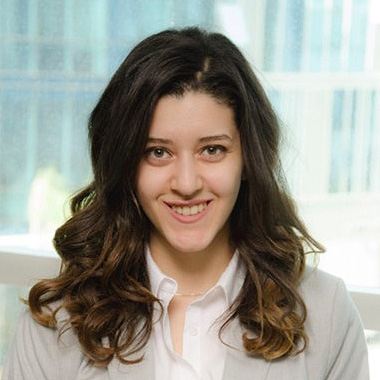
Yomna Mohei Eldin is a second-year MPA/ID student at Harvard Kennedy School. She was accepted into the Growth Lab’s 2022 Summer Internship Program and contributed to our policy engagement in Kazakhstan where our research aims to identify and prioritize investment opportunities and policy options to drive sustainable economic growth and diversification.
Why did you apply to be a Growth Lab intern?
I applied to the Growth Lab internship because I believe that it would be an essential cornerstone of my MPA/ID experience and my interest in international finance and trade.
What did you work on this summer?
I worked on researching policy solutions for stagnant corporate credit growth in Kazakhstan and on studying the transportation infrastructure sector. My work also included meeting with businessmen, researchers, and government officials in Kazakhstan to discuss our diagnostics and policy recommendations.
In what ways were you challenged?
This project was my first exposure to the central Asia region; thus, it was challenging and exciting to learn about a new region and a new project within the span of 8 weeks. Given that I had only worked in Egypt before going to HKS, it was a challenge to avoid my unconscious confirmation bias of linking problems in Kazakhstan with those I have seen before in Egypt. However, it was an exciting experience to fight these unconscious biases and focus on the unique economic environment of Kazakhstan.
What was your most exciting/surprising experience?
The most exciting experience was staying in Astana for a month. It was very exciting to see first-hand the unique culture and development efforts of the country.
What advice would you give future Growth Lab interns?
I would advise them to aim for a project in an unfamiliar region.
What’s next for you?
The internship has further increased my interest in international finance and trade, and I hope to continue working on these topics after graduating from the MPA/ID program.
Student Stories: Assessing Decarbonization (and the Rodeo) in Wyoming

Ryosuke Shimizu is a second-year MPA/ID student at Harvard Kennedy School. He was accepted into the Growth Lab’s 2022 Summer Internship Program and contributed to our policy engagement in Wyoming. Initial work will focus on understanding the causes of economic stagnation that have resulted in a deficit of job opportunities. We will also examine the risks and opportunities for the future of Wyoming’s economy, including automation and global decarbonization.
Why did you apply to be a Growth Lab intern?
The Wyoming project is a unique opportunity to analyze an economically stagnant region in a developed country. What I found very interesting is that the project also focuses on the impact of decarbonization trend on local economies. I thought that learning about the role of public policy in the energy transition process would be a great experience for my future career in the public sector.
What did you work on this summer?
I conducted research about Wyoming’s energy strategy in response to decarbonization and the latest demonstration projects being conducted in Wyoming (e.g., rare earth extraction technologies). I also assisted a researcher at the University of Wyoming in writing an economic analysis report.
In what ways were you challenged?
In order to understand the current state of the energy transition process in the U.S., it was necessary to research a wide range of topics, including various energy technologies and federal/state government policies.
What was your most exciting experience?
I watched the rodeo festival held once a year in the town where I was staying in Wyoming. It was exciting to experience the essence of western culture in the U.S.
What advice would you give future Growth Lab interns?
I recommend examining the project topic in advance and choosing a project in your area of interest.
What’s next for you?
Energy transition has become a common challenge for governments around the world. I would like to use the knowledge gained through this project in my future research activities in public organizations.
Student Stories: Challenges and Public Sector Growth in Namibia
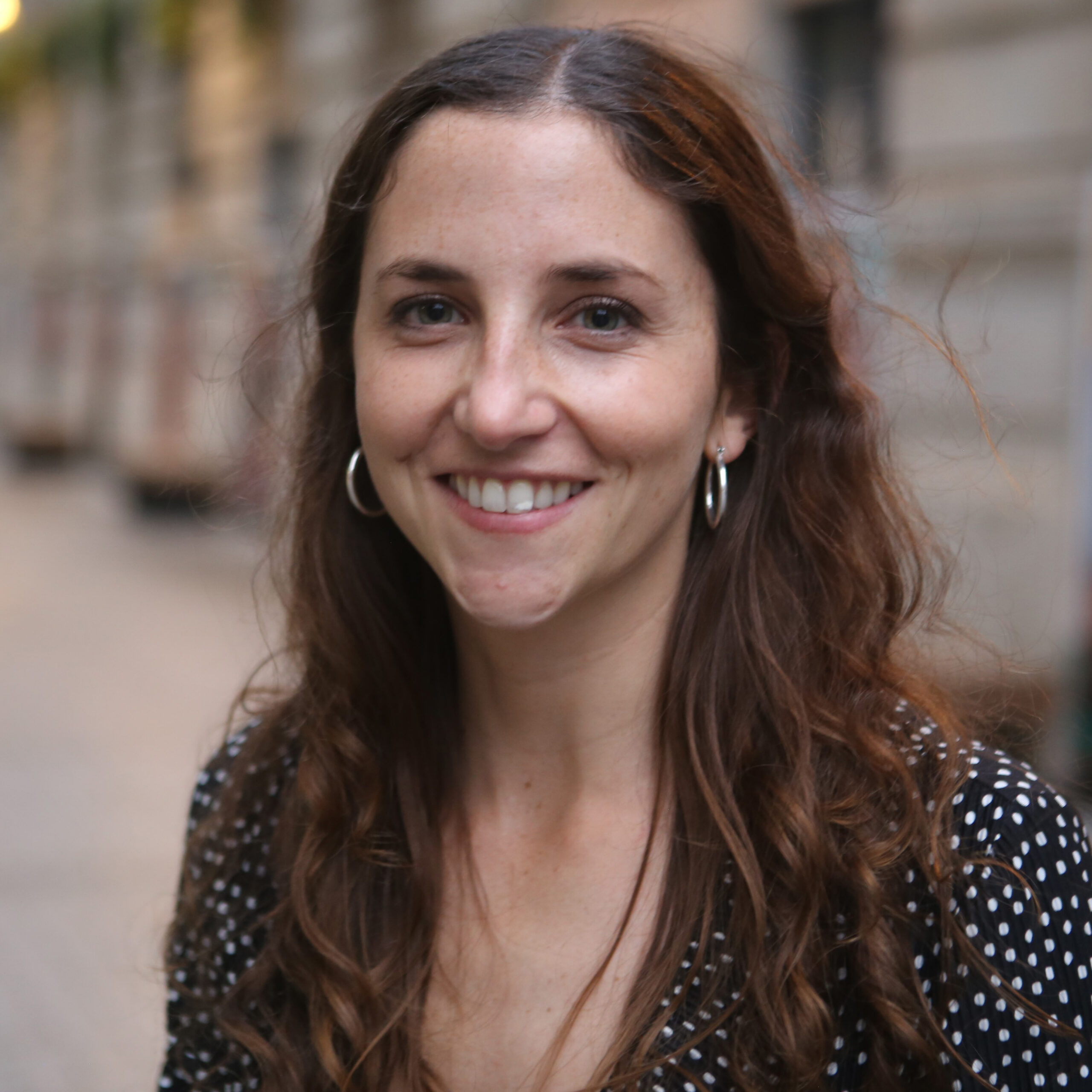
María Ignacia Ossa is a second-year MPP student at the London School of Economics and Political Science. As part of the Growth Lab’s 2022 Summer Internship Program, she contributed to the project in Namibia. This two-year policy engagement with the Government of Namibia focuses on supporting implementation efforts on a range of growth- and inclusion-related challenges.
Why did you apply to be a Growth Lab intern?
I am very interested in focusing my career on economic development. After studying related theoretical courses in my masters degree program, I wanted to apply what I had learned in the real world.
What did you work on this summer?
As part of the strategy to revamp public sector growth as a growth enabler, I worked on the development of two frameworks. We designed a guideline for the assessment and prioritization of concessional loans, and a framework for the assessment of the performance of public financial institutions and the extra-budgetary funds, also including recommendations for the assessment process for all SOEs.
In what ways were you challenged?
Living in a new country and working with a language that is not my native language was a big challenge.
What was your most exciting experience?
Despite the geographical distance and cultural differences, I found many similarities between Namibia and my native Chile. It is very interesting to see how two different countries face similar challenges. In addition, during the internship I was able to travel and get to know the country a little bit, and we got to see wild animals in their natural habitat.
What advice would you give future Growth Lab interns?
It is an excellent opportunity to put into practice what you have learned from your masters degree courses. Try to learn as much as possible from the Growth Lab team and get involved with local teams. I highly recommend doing the internship in person.
What’s next for you?
I will work on research to reduce homelessness in the UK.
Student Stories: Analyzing Trade with UAE’s Ministry of Economy
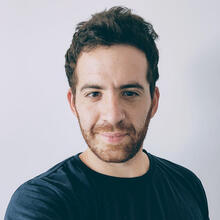
Enzo Dominguez Prost is a second-year MPA/ID student at Harvard Kennedy School. He was accepted into the Growth Lab’s 2022 Summer Internship Program and contributed to the UAE project. Our team is developing rigorous research to inform the Ministry of Economy in devising a dynamic trade policy, geared towards promoting structural transformation in the UAE and achieving sustained long-term economic growth.
Why did you apply to be a Growth Lab intern?
Before coming to HKS, I knew the Growth Lab would be the right place to connect the concepts and tools we learned during our first year in projects related to public policy, especially in topics such as international development, industrial policy, and growth.
What did you work on this summer?
I was in Dubai for 8 weeks working in the Ministry of Economy. I was involved in two projects. On the one hand, I worked on the development of a tool to automatically create offers and requests in trade negotiations in goods with any partner worldwide. On the other hand, I studied and analyzed the direct value addition of re-exports and their contribution to GDP.
“I was in Dubai for 8 weeks working in the Ministry of Economy… I worked on the development of a tool to automatically create offers and requests in trade negotiations in goods with any partner worldwide.”
Enzo Dominguez Prost MPA/ID 2023
In what ways were you challenged?
The first project involved an exhausting methodology, and we needed to make many technical decisions. However, despite being technical work, I had to explain it and present it to the Minister of Economy and other authorities in a few minutes. Therefore, it was crucial to be super clear about the implications and benefits of our proposals and work.
What was your most exciting experience?
Having worked in the public sector in Argentina, this was an enriching experience. Despite many differences between the UAE and Argentina, I found many similarities that made me think and reflect on the different binding constraints that policymakers face daily.
What advice would you give future Growth Lab interns?
Before going to my internship, my project manager gave me some excellent advice: “you are the owner of your internship.” I think it is 100% accurate. You need to be aware that you have only 8 weeks, and in order to start something and finish it on time, you must start thinking about your potential research questions on day 0. Do not expect to have someone telling you what to do: you should go and find the questions.
What’s next for you?
I am starting my second year at HKS. In addition, I am planning to be CA in some courses and keep working and learning about international development. Ideally, my SYPA would be related to my experience in the UAE and the Growth Lab.
Student Stories: Forecasting Inflation for the UAE

Fernando Mundaca is currently pursuing a master’s degree in the MPA/ID program at Harvard Kennedy School (expected graduation in May 2023). He was accepted into the Growth Lab’s 2022 Summer Internship Program and contributed to the UAE project. Our team is developing rigorous research to inform the Ministry of Economy in devising a dynamic trade policy, geared towards promoting structural transformation in the UAE and achieving sustained long-term economic growth.
Why did you apply to be a Growth Lab intern?
I found the project on diversification of the UAE’s economy very interesting. I wanted to work in a country set-up that was completely different to what I was used to (South American government).
What did you work on this summer?
I worked on a model to forecast/nowcast inflation in the UAE. Because of the international context, high inflation in the country was a concern for the Ministry of Economy. I divided the CPI into four components and worked a model for each component.
In what ways were you challenged?
Working in a new country for a new institution, locating and accessing information was a challenge. The ministry is a large and complex organization that I had to quickly learn how to navigate if the project was to be successful.
What was your most exciting experience?
Getting to know a different government type (monarchy) and monetary policy (exchange rate pegged to the dollar) were the most exciting aspects of doing the internship.
What advice would you give future Growth Lab interns?
I would advise them to have patience even if the internship seems short. There is enough time to do something productive and interesting.
What’s next for you?
After the program, I am going back to the Central Reserve Bank of Peru to try to apply some of the tools learned at HKS.
Student Stories: Developing Diversification Strategies for African Countries

Benedikt Margraf is a second-year MPA student at the London School of Economics and Political Science. As part of the Growth Lab’s 2022 Summer Internship Program, he contributed to the newly formed Pan-Africa research agenda. Our team is exploring the Africa Continental Free Trade Area (AfCFTA) and the underlying constraints that have held African nations back from economic diversification and structural transformation.
Why did you apply to be a Growth Lab intern?
The Growth Lab constituted an excellent opportunity to deepen my interest in economic growth constraints with an empirical-analytical focus.
What did you work on this summer?
My work focused on the development of national export diversification strategies in the context of the African Continental Free Trade Area Agreement.
In what ways were you challenged?
Although AfCFTA has already been ratified and is in force, implementation is still very much in its infancy. Identifying concrete export opportunities and existing constraints therefore requires very detailed research at the product and industry level, extensive econometric analysis and background discussions with institutional stakeholders. Exciting and challenging at the same time.
What was your most exciting experience?
I especially enjoyed the inspiring colleagues and teamwork.
What advice would you give future Growth Lab interns?
Be curious and apply!
What’s next for you?
I will start the second year of the two-year MPA program, specializing in Economic Policy.
Student Stories: From DEV 309 to Analyzing WAEMU’s Impact on Trade

Julia Conrad is a second-year MPA/ID student at Harvard Kennedy School. She was accepted into the Growth Lab’s 2022 Summer Internship Program and contributed to the newly formed Pan-Africa research agenda. Our team is exploring the Africa Continental Free Trade Area (AfCFTA) and the underlying constraints that have held African nations back from economic diversification and structural transformation.
Why did you apply to be a Growth Lab intern?
In Fall 2021, I completed the Development Policy Strategy (DEV-309) course with Professor Ricardo Hausmann. It was a great learning experience and one that I hoped to build on with this opportunity. As the regional focus of the internship was Africa, it was especially interesting and fitting to my background and experience.
What did you work on this summer?
For the case of the West African Economic and Monetary Union (WAEMU), I analyzed how the establishment of a regional economic bloc has translated into increased trade and investment among member countries and within the region. [Read Julia’s blog on this research]
In what ways were you challenged?
I initially intended to talk to policymakers and trade practitioners in WAEMU to discuss the Growth Lab’s research agenda on AfCFTA and to receive feedback on some tools that were developed. Unfortunately, the outreach via Zoom/email was more difficult than expected, also given that my internship fell into the holiday season of many institutions and ministries.
What was your most exciting experience?
I very much enjoyed the Growth Lab’s Development Talk seminar with economist and Namibian Finance Minister Iipumbu Wendelinus Shiimi.
What advice would you give future Growth Lab interns?
I believe it could be more fruitful to work on a research question as a team of interns or to be paired with a full-time Growth Lab research staff. Therefore, I recommend future interns consider aligning in advance.
What’s next for you?
I am leaving for a trekking trip to the Peruvian Andes and after I will attempt to climb Cotopaxi in Ecuador (wish me good luck!).
Student Stories: Unlocking Green Hydrogen in Namibia

Henry Rounds is a second-year MPA/ID student at Harvard Kennedy School. He was accepted into the Growth Lab’s 2022 Summer Internship Program and contributed to the project in Namibia. This two-year policy engagement with the Government of Namibia focuses on supporting implementation efforts on a range of growth- and inclusion-related challenges.
Why did you apply to be a Growth Lab intern?
As a result of my growing interest in understanding the levers of economic growth and equitable distribution, I applied to the Growth Lab Namibia project to work directly with the government on a project aimed at harnessing the resources of the private sector to spur new growth and create jobs.
What did you work on this summer?
Over the summer, I was tasked with identifying how Namibia could unlock future growth as it invests in developing a green hydrogen industry. In particular, I focused on understanding the kinds of industries that could thrive in a cheap green energy context and the skills the Namibian workforce will have to develop to benefit fully.
“What’s exciting is simply Namibia’s opportunity to develop a brand new industry that will be in high demand in the future and one that it is competitively positioned to produce, given its geography.”
Henry Rounds MPA/ID 2023
In what ways were you challenged?
One of the most challenging aspects of the work was the multiplicity of stakeholders involved, each with their own priorities. Moving forward means getting everyone on the same page, a challenging task across government agencies, not to mention private actors.
What was your most exciting experience?
What’s exciting is simply Namibia’s opportunity to develop a brand new industry that will be in high demand in the future and one that it is competitively positioned to produce, given its geography.
What advice would you give future Growth Lab interns?
Define your scope early and talk to as many folks as possible, no matter what their role. Also, travel as much as you can to get to know the country and work with other interns if possible!
What’s next for you?
I’m looking forward to continuing my work on Namibia as part of my SYPA, and deepening my ability to apply Growth Lab’s approach to the questions that arose this summer.