
Thank You, Interns – Now the Work Continues
By Tim O’Brien
The Center for International Development’s thirteen master’s level interns (Team Albania 2015) are returning to Cambridge this week to start the final year of their studies. In Tirana, they have left behind not only their reports and recommendations but living projects that are now tangible instruments for Albania’s economic transition. They take with them fond memories, lessons both large and small, and experiences in governance that will soon become learning tools for the larger community at Harvard’s Kennedy School of Government.
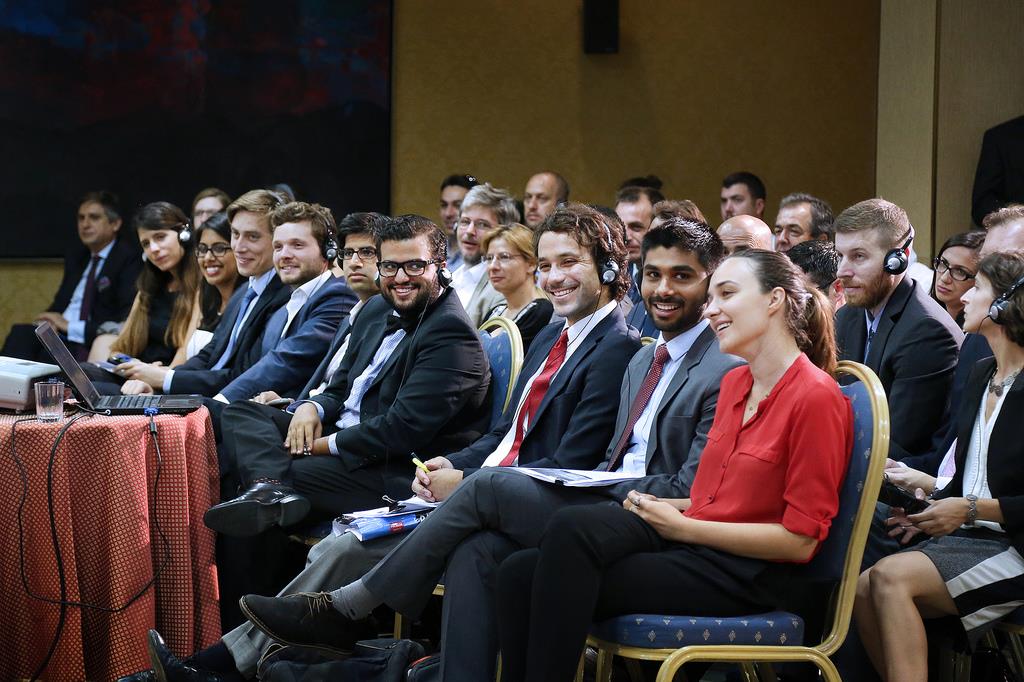
The lasting contribution of the interns’ work this summer can be best explained through the words of Prime Minister Edi Rama. At a July conference where the interns presented their work to the public, entitled “Sustaining Albania’s Economic Development: Growth Opportunities and Challenges,” Prime Minister Rama described the economic transition that his government is working to achieve and the vision behind its partnership with CID. He identified Albania’s previous economic model, quite accurately, as unsustainable, with previous growth relying too heavily on remittances and construction rather than on increases in knowledge and productivity. Further, he described it as non-inclusive and stated that development must mean more than just higher incomes for some people. He described the fundamental economic challenge for his government as supporting a transition to new sources of sustainable growth, and its partnership with CID as critical for both identifying these sources and figuring out how to support them in practice.
The Prime Minister specifically mentioned five sectors of central importance—energy, oil and minerals, agriculture and rural development, tourism, and manufacturing—all of which were areas of focus for one or more of this year’s interns. In energy, for example, he acknowledged CID’s role in helping Albania emerge from an energy crisis and move forward in a process of building “solid pillars” on which to sustain growth. This year’s interns contributed to the process by suggesting steps that would close the investment gap in electricity distribution, namely through efficiencies in public generation that could amount to $70 million annually and restructuring electricity tariffs in a way that is both fair and feasible. The team also provided technical analyses that will help the Ministry of Energy and Industry continue its transition to a market-oriented energy system with strong links to the rest of Europe.
On agriculture and rural development, the interns provided insightful research into the opportunities and constraints for Albania in aquaculture products, with a particular focus on high-value mussels. In doing so, the team brought together previously dispersed ideas from varied stakeholders and arrived at a unifying vision that could be used to strengthen collaboration across the sector. On tourism, the interns provided new analysis into why Albanian tourism remains “the best kept secret in Europe” and recommendations for addressing several underlying constraints to adaptive policymaking, which, if followed, could be major steps toward unleashing the sector’s potential to generate growth. On manufacturing and industrial development more broadly, the interns worked on several fronts. They worked with the Ministry of Economic Development, Trade and Entrepreneurship and the Albanian Investment Development Agency (AIDA) on preparing for the auction of Albania’s first Technical and Economic Development Areas (TEDAs); assessing current foreign direct investments and improving the setting for future ones; and studying whether conditions are right for the creation of an Albanian development bank.
The interns also worked on several other cross-cutting issues to support the transition to sustainable growth. Regarding fiscal matters, the interns worked closely with the Ministry of Finance to study policy instruments that would improve tax collection and budgetary planning. Looking outward, the interns worked with the Ministry of Foreign Affairs on issues that are economic as much as they are diplomatic. They studied the progress and evolution over time of regional integration projects, and they worked with local and international stakeholders to understand how Albania might better connect with its large diaspora to support domestic development. If the five sectors mentioned by the Prime Minister are those where “solid pillars” are being built, then efforts such as these are strengthening the foundation that holds the pillars in place.
The contributions by the interns, or “young experts” in the words of the Prime Minister, made for an especially productive summer. But CID’s collaboration with the Government of Albania will continue in full force. The project just celebrated the approval of a new grant by the Open Society Foundations, which will guarantee its continuation for the next two years, and CID remains especially committed to helping the Albanian government maintain macro-stability, improve sector-specific productivity and continue on its path to deeper regional integration.
Kicking Off the 2015 Summer Internship Program
By Ljubica Nedelkoska
For a second year in a row, the Center for International Development (CID) at Harvard University is organizing a 10-week summer internship program as a part of the Economic Growth in Albania project. Today, 13 master’s level students from Harvard University stepped into government and ministry offices in Tirana, Albania to work towards development goals. About half of them will work at the Ministry of Economy and Tourism. The other half will join the Ministry of Energy, the Ministry of Agriculture, the Ministry of Foreign Affairs and the Albanian Investment Development Agency (AIDA).
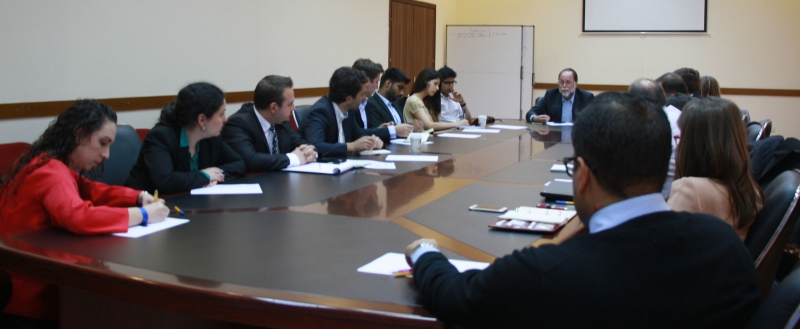
Albania has ample economic issues to address, some of which are structural in nature and others which are driven by the recent developments in the Eurozone. While still struggling to break with its socialist past and build good institutions, the European economic crisis took its toll on Albania. Almost one-third of the Albanian population lives in Greece and Italy today – migration has been a major mechanism through which Albania reduced unemployment, maintained wage growth and alleviated poverty through remittances. The European Union is also Albania’s largest foreign direct investment (FDI) and trading partner, and ultimately, is the community Albania aspires to join in the near future. The long-standing mismanagement of public funds is why the country is now undertaking a major fiscal consolidation. With little room for fiscal maneuvers, the government, supported by CID’s project, has turned to a strategy of strengthening the productive capabilities of export-generating industries as well as creating opportunities for FDI investments. Like last year, this year’s internship program will help us advance the implementation of this strategy.
The interns will work on key elements of the growth strategy. They will:
- Investigate the needs and means for financing large development projects in Albania, such as tourist destinations or large infrastructure.
- Work together with AIDA and help the agency prepare technical and economic development zones for FDI bids.
- Engage on the issue of deepening regional integration and others on a strategy for engaging the Albanian Diaspora in the development of the region.
- Help the Ministry of Agriculture study the value chains of certain agricultural products such as olive oil in order to learn about their production and market potential as well as hurdles.
- Address issues in the market for electricity and the oil exploration fields.
Most students have a combined background in economics and policy, and bring a wealth of knowledge and experience into the program. They come from ten different developed and developing countries spread across four continents.
Taking a closer look at Albanian agriculture
From above, Albania is a picturesque scene of patchwork farms framed by mountain ranges, lakes and turquoise seas. Look a little closer and you may see a few greenhouses filling the narrow plots of land, goats being herded down dirt roads and chickens scattered across barnyards. A little closer and you may see a few larger fish farms and barns. However, across the country Albanian farming is predominantly small scale.

Agricultural production and export in Albania has been constrained by small and geographically fragmented plot sizes, unclear land titles resulting from the communist-era cooperative systems and limited capacity for technological development. Over half the population of Albania is employed in the agriculture sector yet it makes up only 16-18 percent of the country’s GDP. For small scale farmers, yields are low and input costs are high. Most agricultural inputs are imported, including tractors, fertilizers, and even chicks.
This summer, Koji Ito and Boban Paul, MPA/ID students at the Harvard Kennedy School, have been working with the Albanian Ministry of Agriculture and CID to study the value chains for poultry and medicinal and aromatic plants (MAPs), respectively. They are working with the government and local academics to study constraints and bottlenecks in these sectors and to develop potential policy strategies that could increase productivity. But to really understand the dynamics of agriculture in Albania, they needed to take a much closer look.
 2014 growth lab interns Albania image4.jpeg
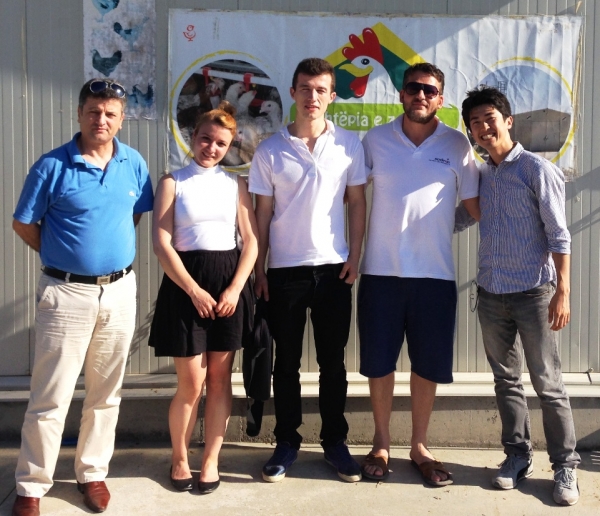
Koji Ito has been travelling around rural Albania with a counterpart from the Agriculture Ministry and two students from the Agricultural University of Tirana in an effort to interview poultry farmers and retailers first-hand and inquire into the production system, for which little information was available. “At first some farmers were not willing to talk to us,” says Ito, who explained that a good number of businesses operate outside the scope of the government and may prefer to be left untouched. “But others were very open and even interested in what this research is going to reveal about their industry.”
 The poultry sector picked up quickly and well in the post-communism transition years; however, Albania still imports more than half of chicken meat on the local market. Most farmers rear chickens for subsistence purposes with minimal technology, and only a handful produce intensively to fill large urban markets. The government is considering potential policies for supporting growth in domestic poultry production, so as to reduce dependence on imports.
For medicinal and aromatic plants however, the focus is on increasing exports. Farmers and exporters of MAPs, particularly sage and lavender, feel there is potential for growth in this sector due to international demand. Boban Paul, along with local students from Agriculture University of Tirana, has been visiting MAPs farms primarily in Northern Albania, at the foothills of the Albanian Alps. By going into the fields and actually seeing how plants are harvested, they found that current production practices are actually not sustainable. “The farmers realize that some of the harvesting practices are leading to a scarcity of MAPs,” explains Boban Paul, “but they are not yet doing anything to change this.”
In Northern Albania, medicinal and aromatic plant farming makes up close to 35 percent of household income and about 18 percent of agricultural exports. However a lack of a quality controls and certification processes limits the market price Albanian producers can fetch for their plants. “Some exporters sell to Germany where they suspect the plants go through additional processing and quality management and are probably re-exported to the United States at a higher price,” explains Paul.
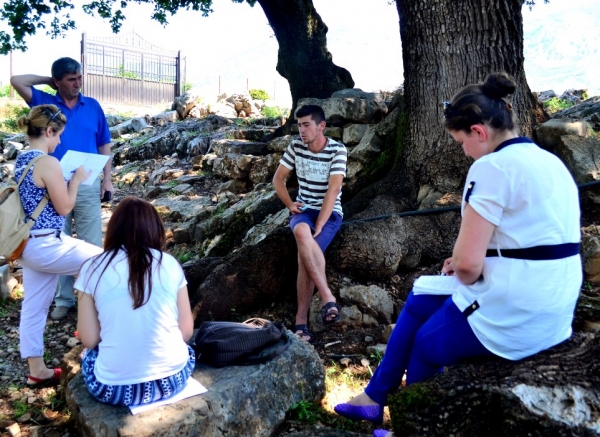
The field research the students are undertaking will provide the Ministry of Agriculture with valuable data on the characteristics of Albanian agriculture at all stages of their value chains. Some of what they have discovered supports what the government already suspected, but they have also discovered interesting and important nuances about these sectors that will help guide policy decisions.
Field work can be difficult and time-consuming, especially when dealing with rough roads and language barriers, but it will help provide the Ministry with a much clearer picture of what the agriculture sector really looks like. For the students, the opportunity to meet with local Albanian farmers and producers has been informative and at times entertaining: “During one field visit we asked a cultivator what he pays for fertilizer,” recounts Paul, “and the farmer answered ‘It depends on the cow!’”
The Road to Kosovo
Can the building of a highway facilitate regional integration? In the case of Albania and Kosovo, it might. “We hypothesize that the building of the Albania-Kosova highway may have been crucial in expanding Albania’s trade with Kosovo,” explained Maria Qazi, a Harvard master’s student working on the issue of Albania’s integration with Kosovo. And “it is generally accepted that greater regional integration with Kosovo and other neighboring states will help prepare Albania for eventual EU accession.”
Qazi recently joined HKS Professor Robert Lawrence and Research Fellow Ermal Frasheri on a visit to Kosovo to further understand the connections already established between the two countries and the ongoing barriers they face towards deeper integration. Their research will examine how bilateral integration with Kosovo can increase economic growth in Albania and also support eventual integration with the EU. As part of the overall Economic Growth in Albania project, CID researchers will examine the costs and benefits of strengthening connections in four key markets: goods, services, labor and capital.
Kosovo, a partially recognized state to the north of Albania is both small and landlocked, and would therefore benefit greatly from access to Albania’s markets and sea ports. It is currently Albania’s third largest trading partner, after Italy and Spain, and is actively pursuing further integration. Due to their shared language and culture, the Albanian government envisions a potential for both economic and cultural integration between the two countries.
The new highway to Kosovo has the potential not only to increase trade and cultural exchanges – nearly 1.5 million people cross the border with Kosovo every year in each direction – but could also help Albania’s ports to become regional ports and create a market for transit trade to Kosovo and beyond. However, despite greater physical connectivity through improved road access and a free trade agreement, there are still significant challenges that hinder integration.
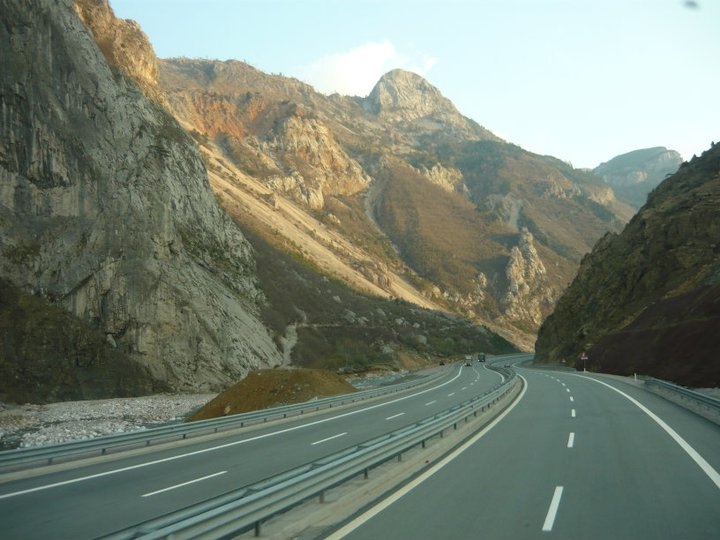
During the recent visit to Kosovo and through meetings with public and private-sector stakeholders, Prof. Lawrence and his team have identified a significant gap between existing trade and integration policies and the reality on the ground. There are many hidden barriers that continue to limit the exchange of goods despite the free trade agreement. In particular, both countries continue to face technical barriers such as different regulatory standards on food exports. These barriers create significant price differentials and restrict imports of certain goods.
The movement of labor between Albania and Kosovo is also technically “free” – work permits are not required for nationals of either country. However in practice, Albania limits the number of foreign employees hired by local firms through a quota system. Also, foreign professional accreditations are generally not recognized. These practices limit further labor mobility, which could have the potential to address skills shortages and unemployment in both countries.
By evaluating the impacts of intensifying regional integration, CID hopes to understand and address some of the key limitations to growth the country is currently facing. This research could lay the groundwork for the creation of effective policies and mechanisms to improve real integration and reduce barriers. The road to Kosovo has paved the way for new growth opportunities in both countries, and it could become a significant step on the long road to greater regional integration for Albania.
About the author: Karen Vanderwillik is a summer intern for the Economic Growth in Albania project.
CID Thanked at World Bank Signing Ceremony
With soaring ceilings, bright red walls and large prints of historic Albanian maps, the “Map Room” of the Prime Minister’s office is an impressive sight. It was here that a small ceremony was held on May 30 for the official signing of a US $220 million loan agreement between the World Bank and the Government of Albania. The CID team working in Albania was invited to attend the ceremony along with the Council of Ministers, World Bank, Bank of Albania and representatives from the private sector.
“Today, by signing this agreement another page of a new chapter opens,” stated Albanian Prime Minister Edi Rama.

The Prime Minister was quick to acknowledge that this agreement goes beyond his government. “Our merit,” he stated, “is that we have managed to build a team spirit with our partners.” He thanked the World Bank for making the agreement possible and went on to also thank Professor Ricardo Hausmann and his Harvard team, as well as the Bank of Albania and Albanian entrepreneurs for their part in bringing stability and growth to the country.
The agreement is significant for the government of Albania both for the recognition it shows of the economic reforms already set in place by the current government and for the confidence it places in this government’s ability to continue with its agenda of reform and growth over the coming years.
“The World Bank has ramped up its engagement in Albania commensurate with [Albania’s] reform effort,” stated Ms. Laura Tuck, World Bank Vice President for Europe and Central Asia. “We look at Albania and see a country with tremendous growth potential and a population determined to succeed.”
Ms. Tuck praised the great strides made thus far in Albania and the “decisive leadership” of the government, but noted the challenges the country still faces.
“The macro-fiscal stabilization which you have undertaken this year will need to be sustained over the medium-term,” she cautioned. “Key structural reforms will need to be pursued with vigor, especially deepening restructuring of the energy sector, creating a more attractive investment climate and enhancing the quality of public service delivery.”
For the Government of Albania, the agreement with the World Bank represents the spirit of openness and collaboration they are trying to build.
“For us this is an opportunity to govern together with all stakeholders and all other factors of development,” stated Prime Minister Rama. “The presence here in this room of many ministers, representatives of the World Bank and of the governor of the Bank of Albania, businessmen and bankers, but also of the newly-arrived team of master students of Harvard University … are an indicator of a new opening and attempt to make the next steps together in a country which, first of all needs a new culture of governance.”

“Once more, I would like to thank our newest friends of Professor Hausmann’s team,” stated Prime Minister Rama in closing the ceremony, “who… have brought many terrific experiences from different countries where they have worked in key positions.”
About the author: Karen Vanderwillik is a summer intern for the Economic Growth in Albania project.
If you build it, they will come?
Not necessarily… Albania has had designated industrial zones for several years now, but they have yet to attract investors and many remain empty. The CID project in Albania is working to support an increase in the country’s exports, and developing industrial zones is a key strategy in this effort. CID is working with a team of experts from the government to determine why these zones have not attracted development and what measure can be taken to change this.
He (Charlie) Tian, one of the CID interns working in the Ministry of Economic Development, Trade and Entrepreneurship, recently visited the Spitalle Free Zone (photo below) in Durres. Measuring 500 hectares with potential to expand to 800 hectares, the site is a good size and ideally located next to the Port of Durres and a major highway that connects the area to the capital. The Port of Durres is an ideal location for an export-oriented industrial zone. It is the largest port of Albania and covers more than 80% of the country’s maritime transport.
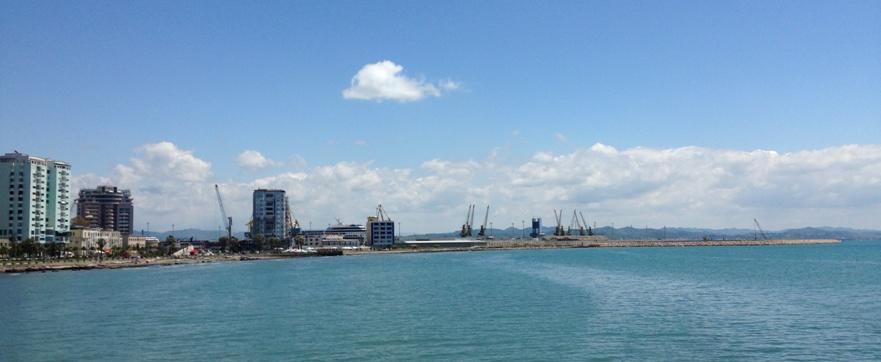
Spitalle is also next to a small energy park that could potentially provide opportunities for synergy between the two sectors, however there is currently no infrastructure developed on the site. “The Spitalle Free Zone in Durres remains an almost empty piece of land,” notes Tian. “In China it only takes a couple months for empty land to develop into industrial zones but here negotiations with developers have been delayed due to ongoing discussions within the government regarding laws and incentives.”
The Ministry of Economic Development will meet with potential investors this week to discuss the development of this site. Some of the industries that this site has potential to support include:
- Energy production: Energy product exports are increasing quickly and there is potential for more mineral manufacturing and refining.
- Fashion (textiles and footwear) production: Albania has a significant cost advantage in terms of human capital. Factories already exist around Tirana and Durres in this sector, but coordination could be improved by clustering them.
- Services and Trade industry: Importers and exporters could set up in the free zone to avoid tariffs and customs payments and therefore increase efficiency.
“It could be the very first industrial park/free zone that functions in Albania,” says Tian, “and we are supporting the Ministry in preparation of the presentation for investors.”
One of the complications the government now faces in developing these zones is dealing with the numerous illegal constructions that are currently using the space. For example, in Spitalle a local university was been built right in the middle of the industrial zone land.
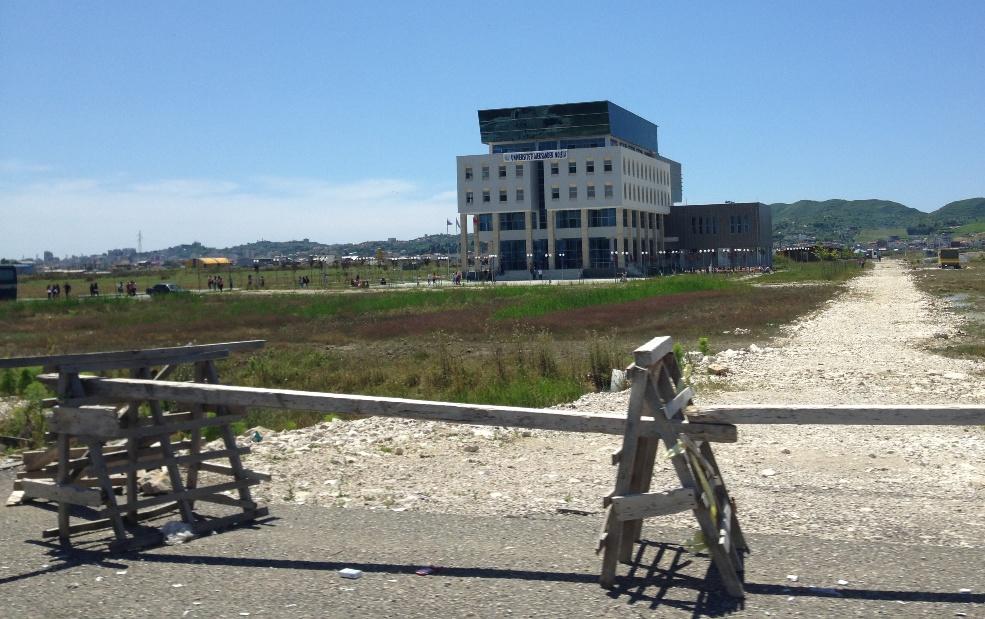
It will take time and also compensation to remove illegal constructions from the land, which is one of the major concerns of potential investors. This is just one of the many challenges the CID team will be tackling along with the government of Albania in an effort to support the development and growth of these existing resources.
About the author: Karen Vanderwillik is a summer intern for the Economic Growth in Albania project.