
The Myth of the Wyoming Migration Boomerang
By Eric Protzer
There is a popular concept in Wyoming known as the “boomerang” effect, which posits that people leave the state at high rates but often return later in life. This phenomenon is purported to support the long-term economic vitality of the state, as young people acquire experience elsewhere then move back to Wyoming with the skills they have acquired.
In reality, the Wyoming boomerang is a myth. Some individuals may move back to the state as they get older, but not in sufficient amounts to have a meaningful economic impact. Figure 1 shows the share of people born in each US state who are living in another state (as opposed to remaining in their home state) by age, with Wyoming highlighted in blue. If there was a strong boomerang effect, one would expect that the share of people living outside Wyoming would come down after a certain age. If anything, the opposite is true: older Wyoming-born people live outside the state at increasingly high rates.
Figure 1. Share Born in Each US State Living in Another US State by Age, 2022
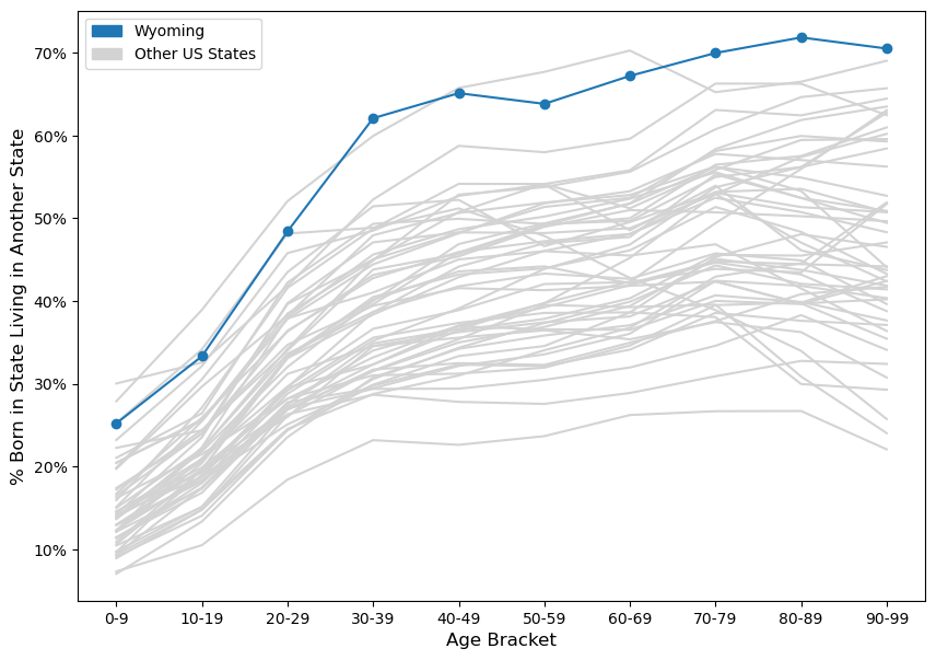
Source: 2022 5-Year American Community Survey
Another way of looking at the data is to follow different individual birth cohorts as they age, rather than a snapshot of all people in one year. Figure 2 follows people born in Wyoming in the 50s through 80s in the 1960, 1970, 1980, 1990, 2000, 2010, and 2019 US Censes as they age[1]. These birth cohorts are selected to ensure we observe people who have at least reached their 30s, so as to provide some meaningful time window for return migration in mature adulthood. Nevertheless, there is no significant boomerang effect in any of the four observed birth cohorts. All left at high rates in their youth, and did not return to Wyoming in substantial numbers thereafter.
Figure 2. Share Born in Wyoming Living in Another State by Birth Cohort over Time
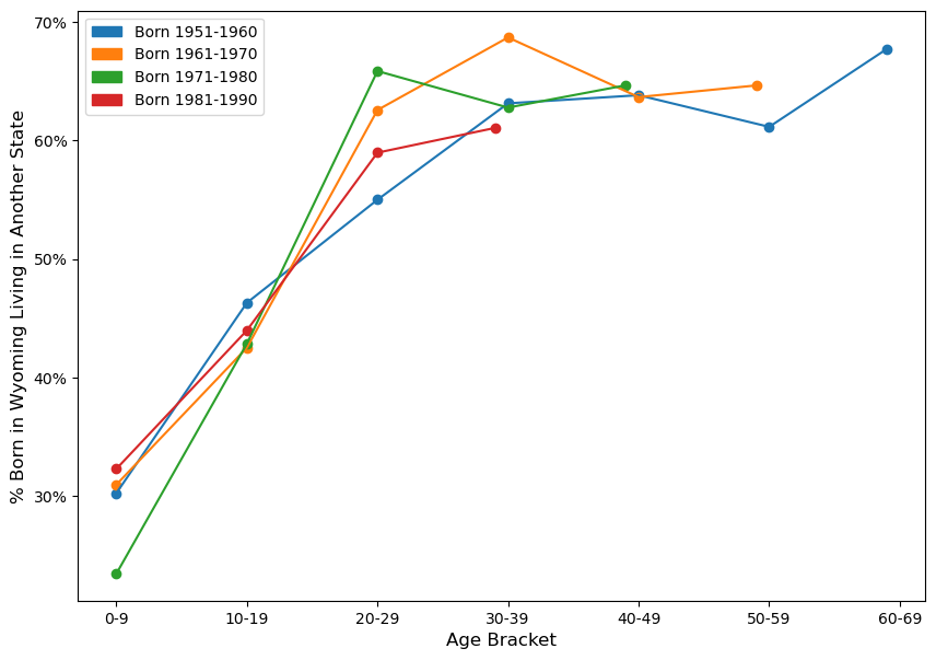
Sources: US Censes and American Community Surveys, Years 1960, 1970, 1980, 1990, 2000, 2010, and 2019
On the whole, it is thus not accurate to say that there is any kind of substantial boomerang effect. People born in Wyoming instead leave the states at high rates into young adulthood, and on average do not return thereafter.
One consequence of Wyoming’s enormous exodus of young adults who do not return is that the majority of the state’s population was born elsewhere. Figure 3 shows a treemap of the birth locations of people living in Wyoming. Those born in Wyoming account for just 42.6% of the Wyoming population. The next two top contributors to Wyoming’s population are Colorado and California.
Figure 3. Treemap of Birth Locations of the Population of Wyoming

Source: 2022 5-Year American Community Survey
[1] We avoid the 2020 census because of the effects of the COVID-19 pandemic, which could both induce irregular temporary migration patterns and statistical problems with the census sampling procedure itself. We instead use the 2019 census given that it is only one year beforehand.
Mixed Methods Valuable in Tackling Key Challenges in Wyoming
By Tim Freeman
Since August 2022, the Growth Lab has collaborated with the state of Wyoming to understand pathways to stronger economic growth across the state. The project, Pathways to Prosperity, has been conducted in close partnership with the Office of the Governor of Wyoming and the Wyoming Business Council in order to help state and local officials overcome key challenges. Together, we’ve examined Wyoming’s economic landscape, and further delved into problems within the state’s housing, grants, fiscal, workforce, and energy systems.
Wyoming’s wealth of reliable data has been instrumental to project work, allowing the team to extensively leverage quantitative analysis to explore barriers to economic growth across the state. However, we’ve found that quantitative methods have their limits, especially as one moves from studying the economy in aggregate to understanding issues and opportunities in smaller, local economies. This is especially relevant when digging into complex problems and change processes. Mixed methods—the pairing of qualitative and quantitative research—has been crucial to making real progress in Wyoming. This pairing has been a two-way street. At times, qualitative analysis has built upon quantitative findings, by providing an intuitive, real-world explanation for statistical outputs. Other times, qualitative research has guided our data analysis, with qualitative hypotheses tested against the data.
Leaning into mixed methods approaches has been particularly valuable in tackling two key challenges in Wyoming:
- Weak housing supply growth in the face of clear demand
- Severe difficulties that municipalities encounter in winning and implementing federal grants
The housing challenge in Wyoming is characterized by a shortfall of new residential construction. Demand for housing is rising across the state, but residential home builders face unique challenges and added costs in home construction. Identifying and now working to relieve those challenges to residential construction has relied on regression analysis and price elasticities to identify the most housing-constrained markets. The quantitative results worked in combination with iterative qualitative research between local housing stakeholders such as residential construction companies and city planners, with the goal of untangling the complex relations between housing policies, public goods provision, and private sector incentives.
The grants challenge centered on the underutilization of federal funds across the state, particularly in rural municipalities. Grants are one of the few lifelines for under-resourced municipalities to finance projects needed for community resilience and economic diversification, such as infrastructure, local capacity building, workforce training, and more. Our goal has been to identify and alleviate the hurdles Wyoming municipalities face in accessing the substantial federal grant funds available, including the challenges in crafting winning grant applications. Qualitative approaches became important very quickly in this work as quantitative analysis focused on the outcomes of grant applications, rather than the step-by-step process of winning and implementing grants.
Looking back at a year of work through the Pathways to Prosperity Project, a few lessons stand out regarding the mixed methods approaches key to our research:
History’s Staying Power
Policy is formulated to address current needs. However, policy designed to solve yesterday’s problems continue to be enforced today, even when said policy no longer matches present-day challenges. This policy holdover distorts the proper functioning of today’s markets and today’s public goods. Development researchers can use a historical lens to understand why certain policies are in effect today despite failing to address today’s needs. In the case of Wyoming’s grants system, the state’s institutional setup was designed to take advantage of federal funds as they were disbursed for the pre-2021 norm, primarily via state agencies. However, recent spending packages under President Biden asked communities to apply directly to federal agencies for access to the majority of funds, with Wyoming municipalities failing to adjust. This hypothesis was evidenced in part in official figures, showing that today just 20% of federal funds are disbursed via states, compared to 75% disbursement pre-2021. Understanding the historical origin of certain policies and how societal challenges have shifted allows researchers to gain an understanding on the mismatch between policy and today’s needs.
Positive Deviance
A surprising success story, such as the entrepreneur in a failing industry or the growing city in a struggling economy, offers insight into how other actors may overcome similar challenges. Positive deviance is the phenomenon of an individual agent overcoming a constraint holding back the broader group. Understanding the exact challenges surmounted and the mechanisms to success provide actionable insight into the fundamental nature of the development challenge, as well as a clue to what a feasible path forward may be. The housing workstream explored cases of positive deviance to understand why certain municipalities enjoyed cheaper residential land prices than the rest of the state. Although quantitative analysis allowed the team to identify the positive deviants (i.e. municipalities with cheaper residential land), deep dives into the positive deviants provided insight towards why certain land markets enjoyed cheaper prices than others. We found that positive deviant municipalities boasted robust arterial infrastructure, which allowed for a higher supply of land to be viable for residential construction, in turn lowering prices. In contrast, municipalities with high residential land prices struggled to expand their arterial infrastructure beyond city centers.
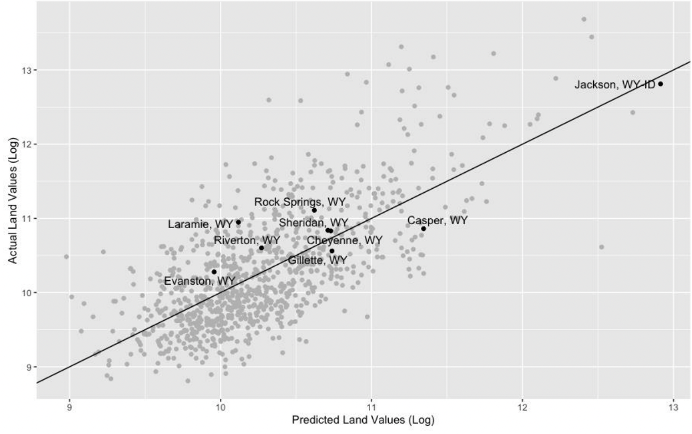
Gillette and Casper enjoy cheaper residential land than predicted. Both cities boast comparatively robust water and sewage systems. Source: Pathways to Prosperity Housing Note
Process Tracing
Quantitative analysis often overlooks dynamics within the change process, as numerical data tends to measure development outcomes rather than the process itself. Dissecting the underlying sequence of change with local actors elucidates when and where blockages impede the development process. Within our project work on housing, interviews with residential construction companies noted many issues that cropped up in the process of building a new subdivision. However, tracing the process of unsuccessful subdivisions identified two persistent blockages:
- When the developer was obligated to cover infrastructure costs that often are provided by the local government
- When the parcel was zoned to prohibit denser market-rate housing
Other difficult aspects within the construction process, such as finding a workforce, interest rate increases, or supply chain delays were problematic (and at times costly) but did not fully block construction. Conversely, we observed specific instances in which a parcel of land that was not hindered by these two blockages suddenly became available for sale. These cases enjoyed a comparatively smooth subdivision build-out.
Stakeholders as Analysts
Development researchers often do not belong to the society in which they are working. Although outside technical support is key for capacity-strapped governments, the loss of important local context should be minimized. The field can better leverage the contextual knowledge of local actors by incorporating a range of stakeholders into the research process itself. Local stakeholders add depth and uncover key insights often unseen by researchers arriving on assignment, such as providing intuitive explanations to data results. Better yet, any policy recommendation will be vetted for implementation feasibility and potential political support early in the research process. Our project work on grants grew out of biweekly task force meetings with grant applicants, grant funders, consulting firms, state government representatives, and local economic development officials. Joint research with the task force–including process tracing, discerning patterns in the evidence, trips to the field, and general brainstorming–ensured research findings leveraged the on-the-ground knowledge of stakeholders.
Concurrent and Existent Action Steps
When researchers take the time to explore what individuals and groups are already doing to try to overcome the problem, hard-won and innovative initiatives that could scale up or be stitched together often emerge. Similarly, piloting solutions oneself and iterating towards success identifies fundamental drivers of specific challenges and builds a targeted policy response. Problem-solving around the grants problem in Wyoming benefited from studying the different grant support programs already underway across the state, even though no existent initiative was intended to be a comprehensive solution. Key findings pointed to direct support as more useful than online webinars. Our team even worked through a live federal grant application with stakeholders to understand what type of support was most needed. Development research greatly benefits from studying action steps already taken to resolve the problem, as well as piloting initial solutions.
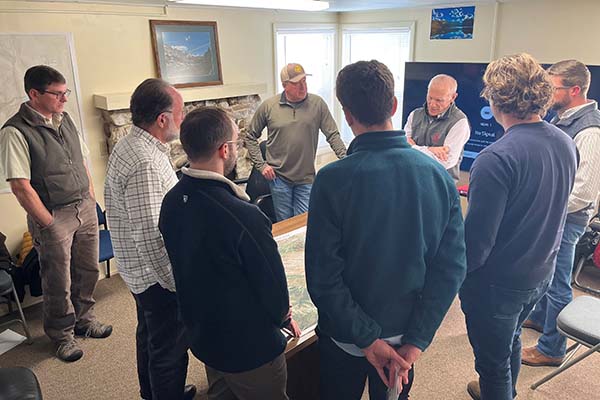
Growth Lab researchers visit the Wind River Indian Reservation in February 2023.
Targeted Surveys
The solution to a lack of targeted data can be to gather data, often quickly. Although a large-scale, fully representative survey is time-intensive and costly, surveys leveraging existing membership groups are straightforward and target a relevant group of respondents. Online tools such as Google Forms make the leg work minimal. Research on grants in Wyoming leveraged an existing state-wide conference on federal funding opportunities to run surveys with attendees, comprising grant writers and administrators from across the state. Although a state-wide representative survey would have been infeasible, our limited and targeted survey provided quick insights from relevant stakeholders with targeted research questions such as the number of staff dedicated towards grant writing, the grant sources they were most familiar with, and the prioritization of specific challenges in the process of winning a grant. The survey results were, in turn, analyzed with existing figures such as federal grant disbursement by municipality to give more complete and relevant quantitative analysis to pair with qualitative findings.

Targeted surveys allowed the team to gather pointed and unique data from key beneficiaries. Source: Pre-Summit Survey Results
Complex development challenges are only partially understood through data analysis. Mixed methods approaches have allowed the Wyoming team to explore constraints in the development process with added rigor and depth. Importantly, mixed methods not only allow for a more comprehensive analysis but facilitate policy action by building a sense of ownership among local actors. The relationships established during the research process develop the political capital and on-the-ground partnerships crucial for implementing proposed initiatives. Development researchers employing mixed methods approaches will dissect and address complex challenges with new clarity, ensuring their research leads to practical, impactful solutions.
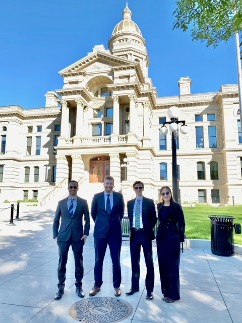
Top photo: Growth Lab team members visit the Capitol Building in Cheyenne in September 2022.
Boosting future economic growth through diversification into more sophisticated industries: China, Viet Nam, Uganda, Indonesia and India leading the way
By: Timothy Cheston and Lorena Rivera León (World Intellectual Property Organization)
The journey towards economic development hinges upon the acquisition and utilization of productive knowledge, particularly in increasingly sophisticated – aka complex – industries and products. To chart a course toward robust economic growth, economies must effectively diversify into products that require rich and deep know-how which only a few other countries master, including innovation-intensive sectors such as information and communication technologies (ICTs), pharma, medical technologies, and different high-tech engineering products.
Embracing this premise, the Economic Complexity Index (ECI) of Harvard University, an indicator used in the Global Innovation Index (GII) 2023, evaluates economies’ competitive standing in terms of the advanced nature and diversification of their exports.
Based on this, Japan, Switzerland, Germany, the Republic of Korea, and Singapore top the rankings (see Figure 1). The Czech Republic, Austria, Sweden, Hungary and the UK (see Table 1) follow. The US ranks 12th.
Read the entire blog on Global Innovation Index Insights >>
Accelerating Sustainable Growth in Albania through Targeted Investment Promotion
Authors: Daniela Muhaj and Tim O’Brien
“[Targeted investment promotion] requires people in and out of government to imagine
what is not yet there, figure out what is needed to establish it, and determine whether
it would be both feasible and valuable to society.”
– Ricardo Hausmann
Between 2014 and 2018, the Albanian economy experienced accelerating growth and structural transformation, which has been tied to the arrival of foreign companies (Hausmann 2018). Our updated growth diagnostic tracks Albania’s recent growth history and describes key steps needed to seize additional growth opportunities. Albania has the potential to realize much more and more diversified foreign direct investment (FDI), which will be critical to accelerating sustainable growth in the period of global recovery from COVID-19. The Growth Lab team coordinated with the Government of Albania to research, develop tools and build capacity toward this end.
TIP is a coordinated approach to addressing the information
problem in attracting efficiency-seeking FDI that
can thrive without costly incentives.
The Government of Albania (GoA) is pursuing various investment promotion and attraction strategies (see Table 1). The targeted investment promotion (TIP) approach complements existing tools by capitalizing on Albania’s many existing comparative advantages to attract efficiency-seeking FDI. TIP would not displace Albania’s Strategic Investment Law, which provides incentives for certain investments, nor the activities of the Albanian Investment Corporation (AIC), which aim to expand the country’s comparative advantages. Efficiency-seeking FDI — global companies that expand into Albania to serve global markets because it makes them more productive — will not need extensive tax incentives, regulatory exemptions, or other subsidies. In fact, an overreliance on these approaches can — and probably does — crowd out firms that do not want or need to rely on government support (see Figure 1). Leveraging targeted investment promotion within Albania’s growth strategy would lead to more jobs, better quality jobs, faster convergence with the income levels of the rest of Europe, and ultimately less outmigration.
Table 1: Three Distinct Tools for Investment in Albania
| Government Tools | Goal / Type of Investment / Requirements |
| Targeted Investment Promotion (TIP) Network |
To overcome the information scarcity or misinformation problem in attracting efficiency-seeking FDI that can thrive in Albania without costly incentives.
|
| Law on Strategic Investments |
To utilize a private investment incentive package that would deliver very large economic benefits, which may not be commercially viable in Albania without such incentives.
|
| Albanian Investment Corporation (AIC) |
To develop investment projects that are not commercially viable by the private sector because they require the active participation of the public sector in some form.
|
1 Promotion does not stop with first contact or the generation of a “lead.” It must continue in the form of proactive follow-up (or “facilitation”). This facilitation involves both connecting specific companies to specific locations where they can set up operations and helping companies to efficiently solve specific delays and roadblocks that may arise through coordination with various public sector entities.
Figure 1: Key Elements of Targeted Investment Promotion in Albania
| Targeted | Investment | Promotion |
| Identify companies through an objective process to prioritize those that would be both likely to thrive in Albania and deliver significant economic benefits. | Focus on efficiency-seeking FDI – business investments, which can expand in Albania because they can thrive in producing goods and services that they sell not only in Albania but also to the rest of the world. | Engage in proactive and iterative promotion efforts, whereby a coordinated network of Albanian officials’ contacts companies that could thrive in Albania. |
| Make clear and well-developed cases (pitches) as to why and how a foreign company can succeed by investing to expand their business operations in Albania. | Prioritize companies that employ Albanian workers, and seed industries and innovation in the Albanian economy that drives up wages and builds the economy of the future. | Support the process of business entry and start-up of operations without the need for use of tax incentives, free land, regulatory exceptions, or other incentives, as these companies are poised to be profitable without such giveaways. |
Source: Growth Lab elaboration.
To translate the concept of TIP into practice, our Policy Research and Digital Development & Design teams worked closely with the Albanian Investment Development Agency (AIDA) to build several tools to enhance the Government of Albania’s ability to implement TIP, and then convened working meetings to begin to apply them. Our goal was to collaboratively identify several potential starting points where the AIDA Research Unit could begin to develop targeted pitches and informed strategies for outreach. These starting points were generated through an objective process that drew on evidence from our Albania Industry Targeting Dashboard, which can be used together with the Atlas of Economic Complexity. Both are publicly available tools that can be used to help identify global businesses whose investment would be both viable in Albania and attractive to Albania. Our initial analysis indicated that the following industries represented promising starting points for AIDA to organize TIP activities around:
- electrical wiring and devices
- plastics and derivative products
- agriculture exports, food, and seafood processing
- software development, data processing, hosting and related activities.
Investment starting points were identified through an evidence-based
process drawing on insights from our collaboratively
developed open-source tools.
Exploring One Example
Once a broad industry is identified, the process then requires a more in-depth research dive to build a business case and a customized investment pitch. Let’s take a closer look at the case for expanding software development, data processing, hosting and related activities. This is an industry with high viability and very high attractiveness in Albania, and a prospective area of dynamic international investment in the wake of the COVID-19 pandemic. Given the development and growth of Business Processing Outsourcing (BPO) in recent years, Albania already has firms intensively involved in business services in comparison to the rest of Europe. While the growth of the sector has been mainly driven by call centers and customer-service related activities, recently higher skilled opportunities such as accounting and auditing services, data processing and web services have emerged. There are examples of successful companies who have been able to invest and scale in Albania (see mozenda as an example). However, the opportunities for moving beyond the call center model to more complex business outsourcing opportunities are vast but poorly identified to date.
The types of questions that could be asked while conducting additional research to identify specific opportunities in software development, data processing, and related activities include:
- What are the higher end business services that have already emerged in the past few years and how can they be scaled? Are there opportunities to collaborate with leading companies in Albania that would now like to see the ecosystem grow to develop sophisticated pitches to other companies?
- What additional opportunities does the existence of accounting, web services and data processing activities unlock? What are the main regional and global companies in these areas? Who has expanded into the Balkans in recent years? What are their business and expansion goals? Do they match Albania’s comparative advantage?
- What emerging sub-sectors and applications are scaling because of COVID-19? Among these, where might Albania have the greatest viability?
The proposed list of starting investment opportunities and the example outlined above are far from exhaustive. They merely provide some ideas with which to start. The process of identifying opportunities and generating customized pitches should be ongoing and iterative within and across targeted industries.
Investment starting points were identified through an evidence-based process drawing on insights from our collaboratively developed open-source tools.
Coordinating within Government to Coordinate with New Investors
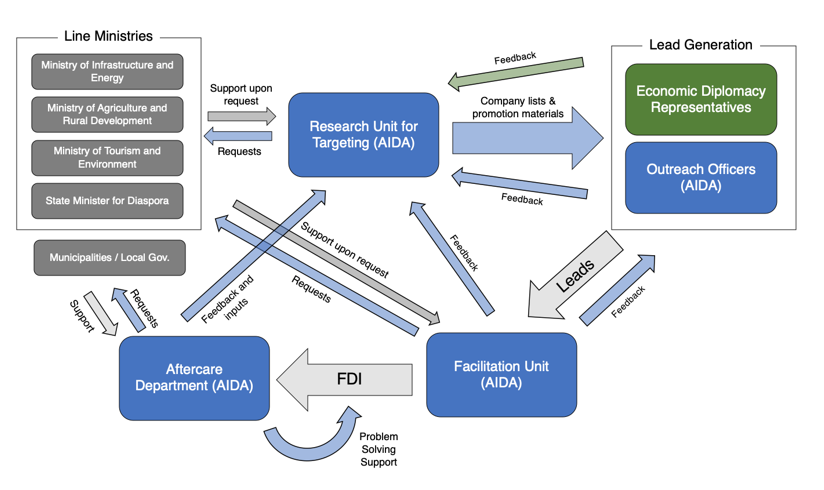
It is also important to recognize that targeted investment promotion in practice is not something that can be done by isolated individuals but rather requires a coordinated network of government actions. Albania already has several parts of a network in place (see Figure 2), including AIDA and numerous ambassadors abroad that have been trained in economic diplomacy. AIDA also utilizes the internal e-Invest platform as a tool for coordinating the network to ensure that investment leads receive appropriate follow-up attention and that progress through the investment process is tracked. This network has allowed for some improvement in Albania’s investment promotion. However, the fruits of investment promotion remain limited because the network’s actions are not targeted. Addressing these bottlenecks and expanding the investment promotion network though efforts like the recent Connect Albania platform, which mobilizes diaspora members in advancing investment attraction efforts, could result in many more promising leads and an effective facilitation process.
An effective TIP practice requires a coordinated network of institutions and stakeholders that can pursue well-identified investment
leads by employing a consistent approach.
Growth Lab research and capacity building in Albania has found that the key step needed to make TIP fully functional in Albania is a strong coordination mechanism at the top. This could be an individual appointed by the Prime Minister with a specific mandate to activate TIP, who would be authorized to develop KPIs for various parts of the network, monitor actions, and direct funding to fill in gaps that emerge. Importantly, TIP would be extremely inexpensive for its expected benefits in stronger growth and job creation. Directed spending on the order of a few hundred thousand dollars per year to expand staffing in different units and improve information tools would be expected to increase the rate of economic growth and income levels across Albania for years to come.
Figure 2: Schematic of the Investment Promotion Network in Albania
Source: Growth Lab elaboration.
A successful TIP approach, which should be iterative and adoptive over time, has the potential to unlock complementary investment and growth opportunities in Albania and beyond. As developing countries around the world gradually and unevenly emerge from the COVID-19 pandemic, pressures to deploy scarce fiscal resources wisely will continue to amount. With limited room for costly incentives, countries can utilize a targeted approach to investment promotion to attract the type of investments that can rightly serve their development needs. Instead of merely focusing on compensating desirable investors for what a country lacks, governments can and should target investors that can gain efficiency and scale based on country-specific comparative advantages. TIP provides a framework for organizing an effective investment promotion network that can systematically identify and pursue promising growth enhancing opportunities.
The Growth Lab’s Most Important Academic Papers of the Past Decade on Economic Complexity
This blog post originated as a thread on Twitter. Written by Frank Neffke.
At the Growth Lab, an interdisciplinary team of researchers explores the foundations of economic growth from both an academic and applied angle.
Our Economic Complexity approach starts from the assumption that technology takes the form of tools, codes and knowhow. Because each individual can only acquire so much knowhow in a lifetime, a country’s collective knowhow grows by distributing different bits of knowhow across different brains. In that sense, countries know more, because individuals in them know different. Complex places are places that can mobilize a diverse body of knowhow. Complex products are products that require more knowhow. Two core quantities developed at the Growth Lab are the Product Space (a network that links products or industries with similar capabilities requirements) and the Economic Complexity Index (ECI, a measure of how much knowhow an economy can mobilize).
Since knowhow is often tacit, embodied in skills and routines, knowhow diffuses with people and teams of people. However, because knowhow is distributed across different people, to use it, it needs tying back together by firms, cities, or countries.
Our research established that this view has testable implications that are borne out in the data. In our work, we explore how knowhow grows at the local level, how it diffuses and how it is coordinated within individuals, firms, and value chains. Below, we list our most important academic papers of the last ten years on Economic Complexity.
The Network Structure of Economic Output (2011)
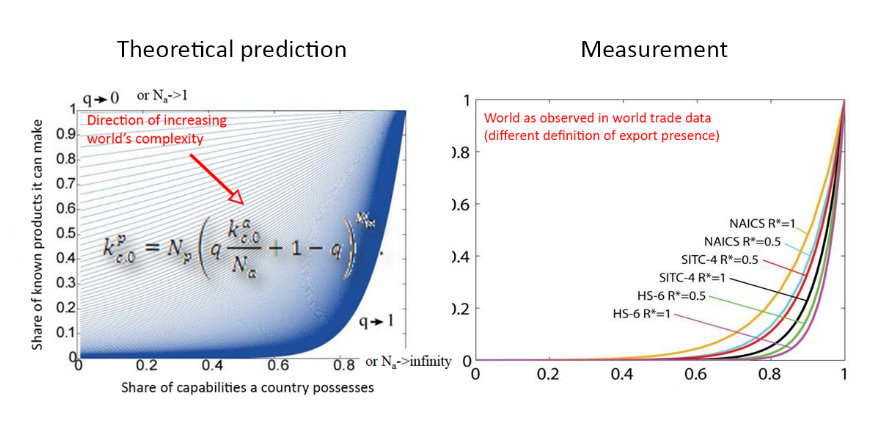
Modeling complexity: Ricardo Hausmann and César Hidalgo describe the economy as a tripartite network connecting places to the capabilities they have and products they can make, explaining stylized facts about exports and why complex worlds feature a poverty trap.

Explaining the Prevalence, Scaling and Variance of Urban Phenomena (2016)
Taking the model to cities, Andres Gomez-Lievano, Oscar Patterson-Lomba and Ricardo Hausmann ask: Why do larger cities exhibit higher wages and more innovation, but also more rare diseases and crimes? Because these all are socially complex phenomena.
The Atlas of Economic Complexity (2011)
Authored by Ricardo Hausmann, César Hidalgo, Sebastian Bustos, Michele Coscia, Alex Simoes and Muhammed Yildirim, the Atlas is a guide to the world of economic complexity through trade data: explanations of core concepts, empirical tests and country-specific visualizations. [Explore the tool]
A Structural Ranking of Economic Complexity (2019)
Measuring complexity: Ulrich Schetter embeds a structure of log-supermodular productivities into a multi-product Eaton-Kortum model to show that under these conditions the Economic Complexity Index really does measure complexity.
Implied Comparative Advantage (2014)
The Product Space revisited: Hausmann, Dan Stock and Muhammed Yildirim construct a Ricardian model to explain why growth of exports in countries (or of industries in cities) can be predicted from product and country spaces.
Why do Industries Coagglomerate? How Marshallian externalities differ by industry and have evolved over time (2016)
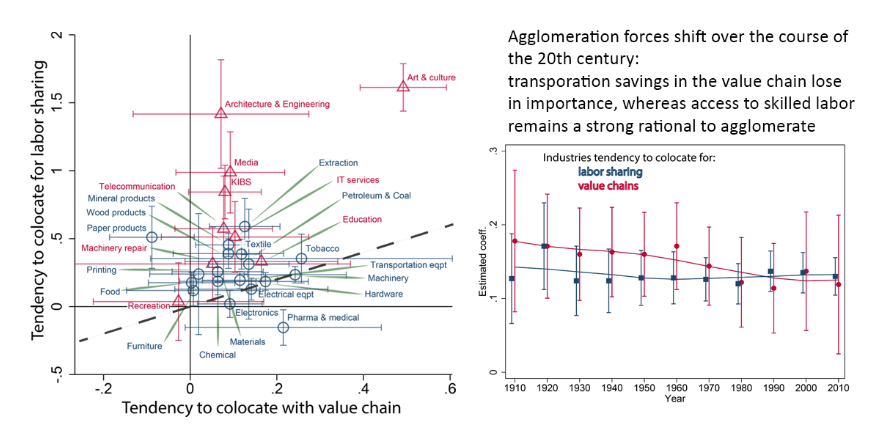
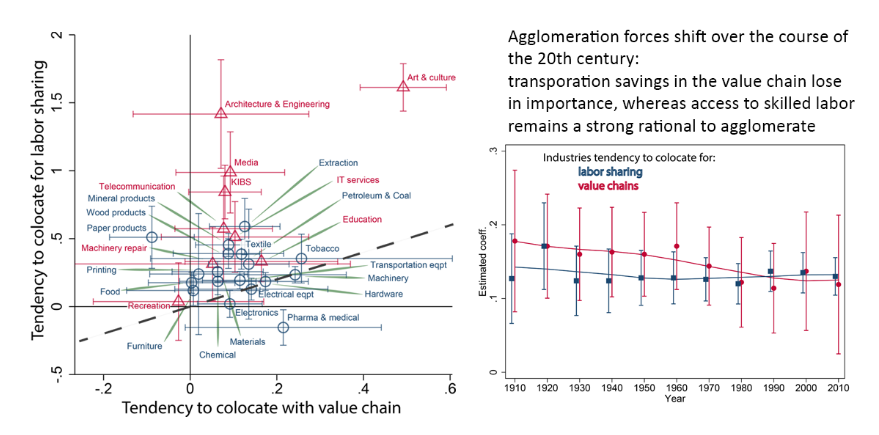
Neave O’Clery, Dario Diodato and Frank Neffke dissect the industry space: Why do industries collocate? It depends: services to share workers, manufacturing to be close to their value chain. But over time, sharing workers increasingly dominates.
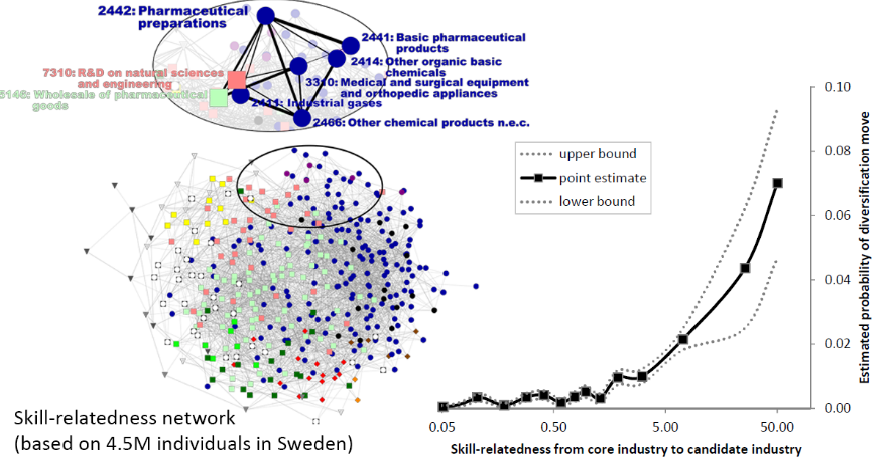
Skill Relatedness and Firm Diversification (2012)
Firms diversify into industries for which their workers have the right skills. Frank Neffke and Martin Henning show that skill-relatedness, which they infer from large-scale data on how people change jobs across industries, predicts firm diversification 60x better than value chain linkages.

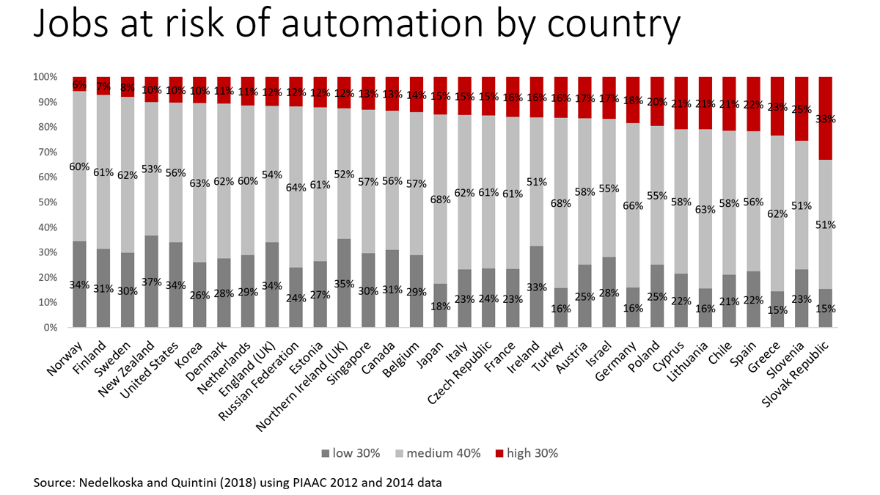
Automation, Skills Use and Training (2018)
Capabilities of machines: Ljubica Nedelkoska and Glenda Quintini estimate the risk of automation for 32 countries, representing close to 600M jobs. It is the jobs of the young, not the old that are more at risk of automation.

Welcome Home in a Crisis: Effects of Return Migration on the Non-migrants’ Wages and Employment (2018)
Diffusing knowhow through return migration. Hausmann and Nedelkoska show that the massive return of relatively low-skill, yet experienced Albanians from Greece in the financial crisis didn’t lead to unemployment, but to new jobs & wage increases.
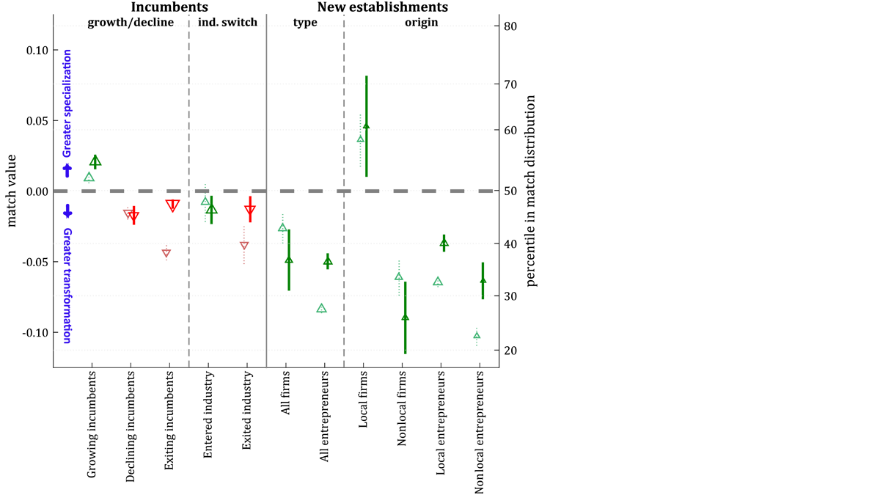
Agents of Structural Change: The Role of Firms and Entrepreneurs in Regional Diversification (2017)
How do regions make long developmental jumps? Frank Neffke, Matte Hartog, Ron Boschma and Martin Henning show that regions change mostly by the creation of new economic establishments. However, the most transformative diversification is not due to new establishments of local firms or local entrepreneurs, but due firms and, to a lesser extent, entrepreneurs from outside the region starting new establishments and therewith transferring new capabilities to the region from elsewhere.

The Workforce of Pioneer Plants: The Role of Worker Mobility in the Diffusion of Industries (2019)
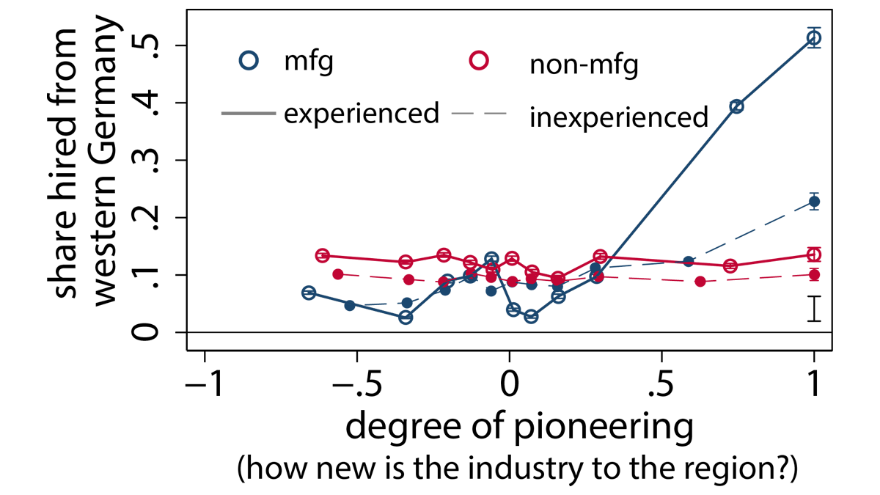
How did former East Germany reindustrialize? Using social security data, Hausmann and Neffke show that the pioneer firms in the east that brought in new manufacturing industries relied heavily on the sudden possibility of accessing human capital in the west: the majority of experienced workers in these firms did not come from eastern Germany, but moved in from western parts of the country.

Neighbors and the Evolution of the Comparative Advantage of Nations: Evidence of International Knowledge Diffusion? (2014)
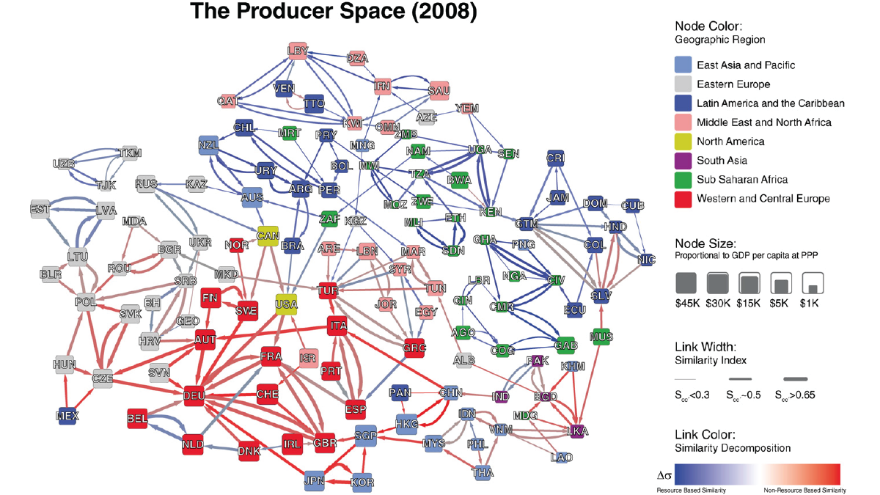
Learn from your neighbors. Dany Bahar, César Hidalgo, and Ricardo Hausmann show that countries diversify their exports by moving into products that their neighbors were already exporting. This paper also introduces the country space: a network linking countries with similar exports.

Knowledge Diffusion in the Network of International Business Travel (2020)
However, learning doesn’t require permanent proximity. Michele Coscia, Frank Neffke, and Ricardo Hausmann show how transient proximity diffuses knowledge through business travel, helping countries diversify into the industries of their visitors’ home countries. [Explore the research]
The Value of Complimentary Co-workers (2019)
Coordinating knowhow. If global knowledge keeps growing, we need to divide it across ever more people. As Frank Neffke shows, the result is growing interdependence: the value of your skills comes to depend on how well your co-workers’ skills complement yours. [Explore the research]
Functional Structures of US State Governments (2018)
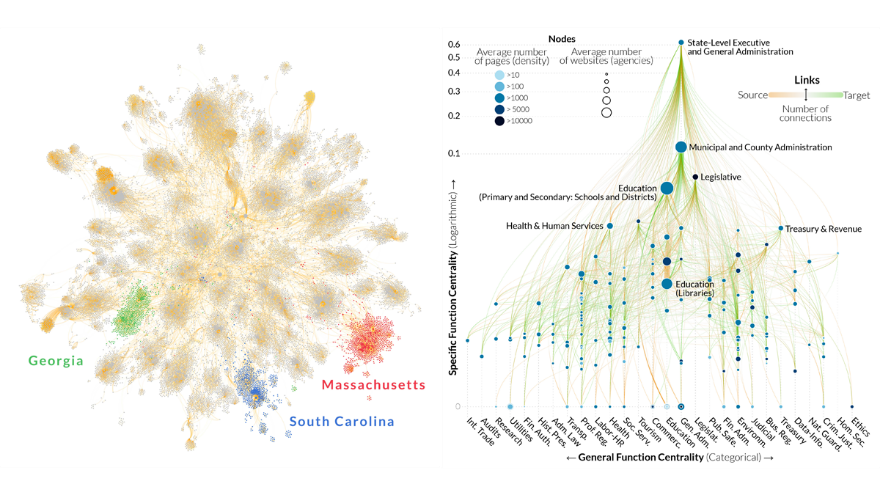
State capabilities. Steve Kosack, Michele Coscia, Evann Smith, Kim Albrecht, Albert-Laszlo Barabasi and Ricardo Hausmann reconstruct the online digital footprint of US state governments and show that it mostly reflects not ideology or location but a state’s economic structure. [Learn more]

Horrible Trade-offs in a Pandemic: Lockdowns, Transfers, Fiscal Space, and Compliance (2020)
Fighting COVID-19 involves horrible trade-offs. Ricardo Hausmann and Ulrich Schetter show why they are particularly excruciating in countries without unlimited access to foreign credit and why there is a dire need of massive financial support. [Learn more]
You’ll find all of our publications in the Growth Lab’s repository Our research agenda keeps deepening & expanding: we are working on theoretical foundations, the diffusion, adoption and upgrading of capabilities, innovation, changing tasks and occupations, localization and more. Stay tuned!
The Diaspora Brain Trust: A Study of Albanian Talent Around the World
Kickbacks, gambling, and match-fixing in football dwarf the FIFA scandal
Authors: Douglas Barrios, Matt Andrews, and Stuart Russell
The world of sports was taken by storm when a recent FBI probe led to the arrest of a series of high-ranking FIFA officials and the subsequent resignation of Sepp Blatter after winning re-election to a fifth four-year term as president of the organization.
The uproar is understandable; the accusations have been scandalous, their impact has been felt all around the globe and a never-ending series of notable sport controversies appear to be linked to the investigation.
More so, associated football (soccer) is widely perceived as the world’s most popular sport and the World Cup is its pinnacle event. It is revered by athletes, fans, cultural icons and even heads of state as it inspires dreams of glory, both for players and countries. Learning, or rather confirming, that some of those whom were supposed to serve as the guardians of the game, develop football for all and leverage the power of the sport to improve social outcomes have rather tarnished its legacy is disheartening, but it begs the question: What if this is merely one piece in a broader puzzle of illegal activity?
If one goes beyond the prestige associated to the World Cup, it quickly becomes evident that the financial size of FIFA, and its dealings in general, pale in comparison to the rest of organized football.
According to FIFA’s 2014 Financial Report the organization’s global revenue for the 2011-2014 period was 5.2 billion USD which was the highest in its history and 23.9% larger than the revenue for the previous 4-year cycle. However, this is only 41% of the revenues generated by the top 5 football leagues in Europe just in the 2012/2013 season1.
Revenues generated for World Cup hosts don’t hold up much better. While FIFA receives revenues from TV rights, marketing rights, hospitality rights, licensing rights and ticketing, host nations only reap revenues through taxes imposed to economic activities generated by the World Cup. In the case of the 2014 World Cup, the most optimistic estimates put the revenues generated by Brazil for hosting the event at 7.2 billion USD, while more moderate guesses places them at a mere 500 million USD.
More so, when we aggregate the yearly revenues of FIFA, UEFA and other Regional and National Associations and compare them with a broader definition of organized football, we find that they represent less than 15% of the global revenues directly associated with the sport2.
In this light, it becomes evident why the biggest scandal in FIFA history, centered on 151 million USD in kickbacks spanning a 24 year period, may not be as large as initially perceived, at least in financial terms, when compared to broader maladies in football.
For instance, as of 2013, Operation Soga, a tactical operation coordinated by INTERPOL to address illegal football gambling activities in Asia, had resulted in the closure of gambling dens which handled illegal bets worth more than 2 billion USD.
According to the World Lottery Association, an organization of state authorized lotteries, at least 90 billion euros are spent each year in illegitimate football betting, creating incentives for individuals outside the game, overseeing the game and leading the game to partake in a myriad of match fixing schemes. Perhaps even more damaging, these sorts of schemes appear to have been used by criminal organizations to launder 140 billion USD a year, creating a dangerous link between popular sporting activities and organized crime.
These kind of illegal activities represent an epidemic attacking the integrity of the game at its very core. A 2013 INTERPOL report on match-fixing highlighted that in just the period between June 1st 2012 and May 31st 2013 English-language open-source media reported match-fixing incidents in over 70 countries and across 6 continents.
This report also typified the type of matches usually targeted by match-fixers. They stated that despite the fact there may be higher returns to betting on top level competitions, matches in lower or semi-amateur leagues are usually targeted as ‘they are less likely to be monitored.’ Similarly, ‘friendly matches, often international, are particularly vulnerable, as they are less regulated than FIFA-sanctioned competitions.’
Kickbacks on marketing and TV rights, illegitimate betting and match-fixing don’t even encompass the whole array of illegal activity associated with organized football. Allegations of vote-rigging for host city selection and illicit reselling of tickets have also been rampant. Additionally other accusations of more subtle vote manipulation that have come to light, while potentially not illegal, are downright murky.
Public opinion is right to be appalled at the corrupt acts conducted by some at the very top of FIFA. Fans, players, and the history of the game deserve better, but if the concerns of sports fans and citizens in general are to be in the right place, we should interpret this most recent scandal as a symptom of a larger, deeper-rooted issue. The fact is that most of these scandals transcend the categorization of corruption in football, at any level, and truly reflect the pervasiveness of broader corrupt and criminal activities that merely utilize sports as a vehicle.
FIFA reform would be a step in addressing that issue. Yet safeguarding the integrity of the game, promoting healthy citizen engagement with sports and stopping these corrupt activities and criminal endeavors require a stronger and more proactive stance from national organizations, local organizations, and even from us, the spectators.
[1] In European soccer, a season is played between the fall of one year until the summer of the following year. We use this season as reference because financial data is publicly available for all top 5 leagues for this season and it represents a mid-point for the 4 year period of FIFA. Revenues for these leagues for the 2013/2014 season sat approximately at 15 billion USD.
[2] We conducted an attempt to reconstruct the annual revenues from organized soccer in different regions of the globe, including supranational organizations like FIFA and UEFA, CONCACAF, and CAF. The estimates for the European top leagues were informed by rigorous data from UEFA, FIFA, and independent studies by the firm Deloitte. Estimates for regions like Africa, Central and South America, Oceania and Asia were not as rigorous, given the lack of any organizations or processes to capture, audit and share data in these regions. Estimates in these cases were based on primary research into regional associations, national leagues, and even clubs, where data are also scarce and difficult to verify. All in all the revenue identified from these different sources of information add up to 33.5 billion dollars annually, 14% of which refers to FIFA, UEFA and other Regional and National Associations. Similarly an AT Kearney study estimates the size of global football at 35.3 billion dollars.
This research is part of an ongoing collaboration with the International Centre for Sport Security (ICSS). This blog highlights some of the findings of this work.