
Student Stories: Developing the Nagorno-Karabakh region in Azerbaijan
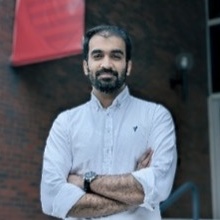
Hussaini Shan-e-Abbas is a second-year student in the Master in Public Administration in International Development (MPA/ID) Program at Harvard Kennedy School. He was accepted into the Growth Lab’s 2024 Summer Internship program and contributed to the ongoing project with Azerbaijan.
Why did you apply to the Growth Lab Summer Internship?
I applied to the Growth Lab Summer Internship to gain my first research experience and to apply the skills I developed during my first year in the MPA/ID program. I was particularly drawn to the Lab’s commitment to evidence-based, applied research and policymaking. My interest in macroeconomics aligned perfectly with the scope of the Azerbaijan project, especially in understanding how an oil-dependent economy can transition towards sustainable economic diversification. Lastly, the opportunity to spend a fully-funded summer in the beautiful country of Azerbaijan, immerse myself in its culture, and interact with local people was incredibly appealing.
What did you work on?
A very interesting work stream within the Azerbaijan project pertained to subnational analysis that sought to understand why economic opportunities across the country are not uniform. My work involved evaluating the regions of Nagorno-Karabakh and East Zangezur to assess the regional constraints and growth potential. I analyzed the current government reconstruction efforts, the available productive assets, and the challenges associated with the redevelopment process. To inform my analysis, I examined case studies of other conflict-ridden regions that achieved economic development post-conflict. Based on this analysis, I helped develop recommendations for the sustainable development of these regions. This exercise also enabled me to apply my learnings, particularly the policy trinity i.e., solutions to be technically correct, politically supportable, and administratively feasible.
In what ways were you challenged?
The internship offered a blend of intellectual and professional challenges. Initially, I felt overwhelmed by the various work streams, but by breaking the project into manageable parts, I could focus my efforts effectively. Tackling a broad challenge like developing fragile regions required transforming complex issues into actionable research areas. My interactions with stakeholders and colleagues and my in-depth literature review highlighted the complexity of these issues, with no easy answers to these questions. However, I was able to apply many of the skills I gained during my first year in the MPA/ID program. This was also my first experience in a research role, which was challenging but deeply rewarding.
What was your most exciting/surprising experience?
One of the most exciting aspects of my internship was engaging with key stakeholders, including government ministries, agencies, and think tanks. These interactions not only enriched my research but also expanded my network. A highlight was briefing the Advisor to the Minister of Economy on our ongoing work and findings, as well as meeting with the Special Advisor to the President for the Nagorno-Karabakh region, who provided invaluable insights. What surprised me the most was how united the people of Azerbaijan are. Their pride in their country and reverence for their leadership stood in stark contrast to the societal divisions I’ve observed in Pakistan. This sense of unity was truly remarkable and added a deeper layer to my understanding of the region.
What advice would you give to future interns?
I recommend being proactive in seeking clarity about the project’s scope and your role. It’s normal to feel overwhelmed by the complexity and uncertainty of the work. Developing strong time management skills and understanding what’s achievable within a 10-week period can help you pace and organize your tasks effectively. Don’t hesitate to ask for help—your colleagues at the Lab are incredibly supportive and always willing to assist. Additionally, take the opportunity to learn beyond the internship itself. I explored Baku and other parts of Azerbaijan, and my interactions with the locals not only enriched my experience but also deepened my research insights. This is a unique chance to live in and explore another culture—make the most of it!
What’s next for you?
As I begin my final year of the MPA/ID program at Harvard Kennedy School, I am eager to continue exploring the intersection of economic development and data-driven policymaking. My experience with the Growth Lab has significantly enriched my understanding of these areas, and I am grateful for the invaluable support and insights from my colleagues. Looking ahead, I am excited to apply these learnings in future projects and opportunities, and to further contribute to impactful policy solutions.
Student Stories: The Green Transition and Aguachile in Hermosillo, Mexico
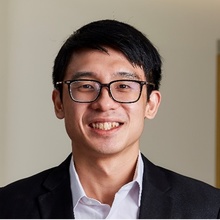
Bryan Tam is a second-year MPA/ID student at Harvard Kennedy School. Bryan was accepted into our Summer Internship program and contributed to our ongoing project examining productive diversification in Hermosillo, Sonora, Mexico.
Why did you apply to the Growth Lab Summer Internship?
I applied to the Growth Lab Summer Internship because I was drawn to the idea of working on economic development projects in a cultural and political context different from what I was familiar with. Through its project in Hermosillo (Mexico), the Growth Lab provided me with that opportunity. Coming from Malaysia, Latin America is halfway around the world and was not a cultural or political context that I frequently encountered. The topic of potential economic opportunities arising from recent trends in nearshoring and the green transition held significant interest for me as well.
What did you work on?
I worked on a diagnostic assessment to evaluate the viability of several potential economic opportunities emerging from recent trends in nearshoring and the green transition, including solar panel manufacturing, EV battery manufacturing, and semiconductor manufacturing. This involved understanding the prerequisites for a region to be competitive in these industries and assessing whether these prerequisites were present or likely to be present in Sonora.
In what ways were you challenged?
Unsurprisingly, the language barrier was one of my biggest challenges while in Mexico. The primary language in Mexico is Spanish, and having had no prior knowledge of the language, it took me time to learn some basic Spanish and conduct research on information sources, which were primarily in Spanish. I remember how reliant I was on sign language and Google Translate on my first night in Mexico—many frantic gestures and Duolingo lessons later, I am happy to say that I can navigate a restaurant and order food in Spanish (well, sort of, assuming the waiter speaks slowly and doesn’t use too many words I haven’t learned on Duolingo).
What was your most exciting/surprising experience?
My most surprising experience was discovering how friendly and hospitable Mexicans are! A special shoutout goes to my client counterpart, Fernando, who went out of his way to show me around Sonora and introduce me to his family. He truly made me feel welcome in a very foreign country and gave me a lot of advice as I traveled around Mexico. This is not to forget everyone else who also displayed the incredible hospitality that I now associate with Mexico—Manuel, Alejandro, Nitzia, and many others that I have met. Their warmth and kindness really made me appreciate Mexico so much more and enriched my overall experience.
What advice would you give to future interns?
My advice is to be open to exploring new places and having new experiences. The foreign geographies that Growth Lab interns are usually placed into hold so many cultural experiences for those not accustomed to them. Speaking from my own experience, I am very happy that I took the plunge and explored a place very different from what I was used to. Otherwise, I would never have experienced the incredible hospitality that a different culture could show me, tasted the delicious tacos and other foods (e.g., aguachile) that Mexico had to offer, or seen its breathtaking sights and sceneries.
What’s next for you?
I am still figuring out what’s next for me, but right now, I am focused on how to spend my second year well. It will be my final year at the Harvard Kennedy School, and inspired by my time in Mexico; I want to make it as fun and meaningful as possible. My experiences in Mexico have made me more open to stepping outside my comfort zone, and I may do so in my second year.
Student Stories: Morocco’s Female Labor Force and Cultural Delicacies
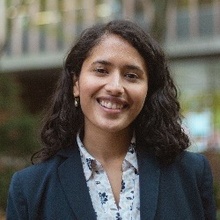
Anjali Nair is a second-year MPA/ID student at Harvard Kennedy School. She was accepted into the Growth Lab’s 2024 Summer Internship Program and contributed to the ongoing project in Morocco.
Why did you apply to the Growth Lab Summer Internship?
I wanted to deepen my understanding of growth diagnostics in practice, and this internship seemed like the perfect opportunity to do so. The Growth Lab team is known for asking insightful questions, formulating hypotheses, and building models to uncover each region’s binding constraint. Additionally, I’m particularly passionate about work at the intersection of gender and development. The chance to research Morocco’s low female labor force participation with the team and spend 10 weeks in Rabat was an opportunity I couldn’t pass up.
What did you work on?
My project centered on identifying the factors behind Morocco’s low female labor force participation. I started by reviewing existing research and consulting with experts at UM6P, the local university, and attending regional employment seminars. However, the most critical insights came from conducting qualitative interviews with women across Morocco. These conversations revealed that caretaking responsibilities and the scarcity of quality job opportunities were driving many women out of the labor force, and some even into the informal sector. Hence, to complement the team’s analysis of micro-risks, I delved into Moroccan labor regulations, focusing on those related to informality and gender-specific laws. In the final two weeks, I shifted my focus to firm-level data, where I analyzed wage and hiring trends across various industries and regions, which also helped me hone my coding skills.
In what ways were you challenged?
Two challenges stood out. First, grasping Morocco’s cultural context was crucial, especially when tackling complex issues like female labor force participation. It was important to distinguish whether women were choosing not to work out of personal preference or if they were constrained by family expectations, limited connections, or poor job quality. The qualitative interviews were essential in bridging the gap between existing reports and the lived experiences of Moroccan women. The second challenge was the scarcity of accessible official data. Initially, this seemed like a significant hurdle, but by partnering with local experts and students, we discovered alternative data sources, conducted our own interviews, and pieced together government reports to form a coherent narrative.
What was your most exciting/surprising experience?
The highlight of my experience was the extraordinary warmth of Moroccan hospitality. During our qualitative interviews, a UM6P student invited us to meet her extended family. What we anticipated as brief interviews around female labor force participation evolved into a memorable cultural exchange. Each home welcomed us with a spread of Moroccan delicacies—msemen, harcha, batbout, baghrir, and a willingness to share their experience with us. We were even invited to stay overnight, and the next afternoon, the matriarch even prepared couscous—a dish typically reserved for Friday family gatherings. I was especially touched when they went out of their way to make a vegetable couscous for me, knowing I didn’t eat meat. Additionally, learning to make baghrir from scratch, traditional fluffy pancakes best enjoyed with mint tea, is a memory I’ll always cherish. This experience truly embodied the essence of Moroccan kindness.
What advice would you give to future interns?
Come prepared to take initiative. Many focus areas at the Growth Lab are self-directed, so it’s crucial to set your own schedule and seek help when needed. Additionally, one of the most rewarding aspects of the internship is building connections with locals. I strongly recommend immersing yourself in a local community, whether in Morocco or another country. I started in a university dorm but quickly moved to the city, which enabled me to form deeper friendships and fully experience life in the country.
What’s next for you?
I’m entering my final year in the Master’s in Public Administration in International Development program. Building on my passion for gender-focused research and data analysis, I plan to focus on elective courses that deepen my expertise in these areas. Additionally, I’m excited to be back leading the next Women in Power Conference, where I’ll be dedicating time to organize discussions around gender equity and leadership.
Student Stories: Developing Global Metrics to Understand Country-Level Openness to Migration

Zahra Asghar is a second-year JD/MPP student at the Harvard Kennedy and Harvard Law Schools. She was accepted into the Growth Lab’s 2024 Summer Internship Program and contributed to the ongoing Migration project funded by the Templeton World Charity Foundation – an initiative aimed at developing de facto measures of country-level openness to migration and understanding which countries are most effective at integrating migrants.
Why did you apply to the Growth Lab Summer Internship?
I have been working on the ground in refugee resettlement and migrant support in some capacity since I was fifteen. Over the last decade, I have seen migration advocates increasingly begin making economic arguments in favor of migration, as opposed to the moral or political arguments that were effective in the past. This project would allow me the opportunity to understand the research underlying these arguments in more detail – what impacts have already been proven in the research, what gaps remain, and how such research is communicated to drive impact. While getting this exposure, I would also get the opportunity to work with a team on the cutting edge of answering the most critical questions on the topic!
What did you work on?
There are two primary areas the team is focused on – developing a de facto measure of openness to migration (as opposed to a de jure measure, such as a consolidated database of visa restrictions) and understanding which countries were most effective at integrating migrants. By May, when I began my work with the project, the openness measures had already been developed, so I focused on identifying potential use cases for the research and presentation materials for validation discussions with NGOs and other researchers. In terms of the economic integration question, I focused on consolidating and validating the initial cross-country dataset that will be used for analysis in the fall. I also began an initial literature review on the ways in which immigration can drive economic complexity and exports, to prepare for potential future questions the team might ask.
In what ways were you challenged?
As someone not coming from an academic research background, I spent much of the first weeks of the research project reading through the relevant literature and working to understand the methodology of the work. Thankfully, the team was immensely patient and ensured I got up to speed relatively quickly. Later in my experience, when it came to developing the integration database, many of the research databases we were pulling from were in languages that I had little to no fluency in, testing my ability to work in a foreign data environment and my ingenuity with Google translate.
What about this research most excites you?
I think this research has the potential to help a number of different types of stakeholders – countries, non-profit organizations, multilaterals, and academics – better understand the ‘softer’ levers that can influence immigration beyond visa restrictions or economic incentives. For countries with aging populations, increasing immigration is one lever they can use to stabilize their economies and drive growth, and understanding these types of factors can help inform best practices for attracting new immigrant populations and ensuring they are effectively integrated into their new communities.
What advice would you give to future interns?
Take advantage of your time at the Growth Lab! The teams are really invested in student growth, and the Lab is a fantastic place to learn. If you have a research question you are particularly interested in related to the project you are working on, you should share it with your team and carve out time to work on it while you have access to all the expertise they – and the broader Growth Lab Team – offer!
What’s next for you?
I have three years remaining of my joint policy and law degree. Over the next few years, I hope to work in public interest spaces around civil rights, including migrant rights and international human rights. This research experience has given me an important fluency in statistical research and migration literature that will greatly inform those experiences and make me more effective in driving impact.
Student Stories: Exploring Sovereign Wealth Funds and the Architecture of Baku
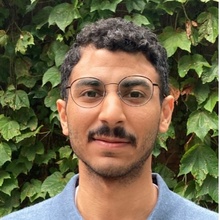
Abdullah Helal is a second-year student at Harvard Kennedy School. As part of the Growth Lab’s 2024 Summer Internship Program, he contributed to the project in Azerbaijan. The project focuses on advancing research and evidence-based policy development to address the challenges of economic diversification and job creation in a country transitioning from oil dependency.
Why did you apply to be a Growth Lab intern?
I applied for the Growth Lab internship because I wanted to gain firsthand experience working in an applied research think-tank that tackles the critical economic challenges facing countries today. The Growth Lab’s rigorous approach to economic analysis, which goes beyond traditional management consulting, deeply resonated with me. I valued the opportunity to contribute to impactful research while honing my skills in a setting that prioritizes evidence-based solutions.
What did you work on this summer?
This summer, I conducted a comparative analysis of sovereign wealth funds and their role in economic development, with a particular focus on the State Oil Fund of the Republic of Azerbaijan (SOFAZ). My research evaluated how SOFAZ and other sovereign wealth funds allocate their assets to balance economic development goals with their savings and stabilization mandates.
In what ways were you challenged?
I was challenged to move beyond merely descriptive research to a more analytical approach. My supervisor (shout-out to Felicia Belostecinic) set high expectations for not just the depth of analysis but also for how it was framed within a coherent and compelling narrative. The research needed to be both rigorous and practically applicable, contributing meaningfully to the overall project and addressing real economic challenges. I appreciated this push, as it helped me grow and ensured that my work was impactful.
What was your most exciting experience?
My most exciting experience was visiting Baku and immersing myself in its rich beauty, culture, and cuisine. As I roamed the city, I spent considerable time learning about its political and economic history, feeling as though I was truly discovering a new corner of the world. The city’s architecture was a visual delight, ranging from the UNESCO World Heritage Site of the Old City of Baku to the futuristic Zaha Hadid–designed Heydar Aliyev Center.
What advice would you give future Growth Lab interns?
My advice to future Growth Lab interns is to be proactive. The experience is largely self-guided, but you’ll have all the support you need from the Growth Lab team. The more prepared you are with a clear research topic, the more effectively you’ll be able to use your time during the internship.
What’s next for you?
I’m returning to the Kennedy School to begin my second year in the MPA/ID program. I’ll be focusing on my Second Year Policy Analysis (SYPA) paper, and I believe my experience at the Growth Lab has given me a solid understanding of the research process, which will be invaluable as I work closely with my academic advisor.
Student Stories: Snowboarding and Labor Force Dynamics in the UAE
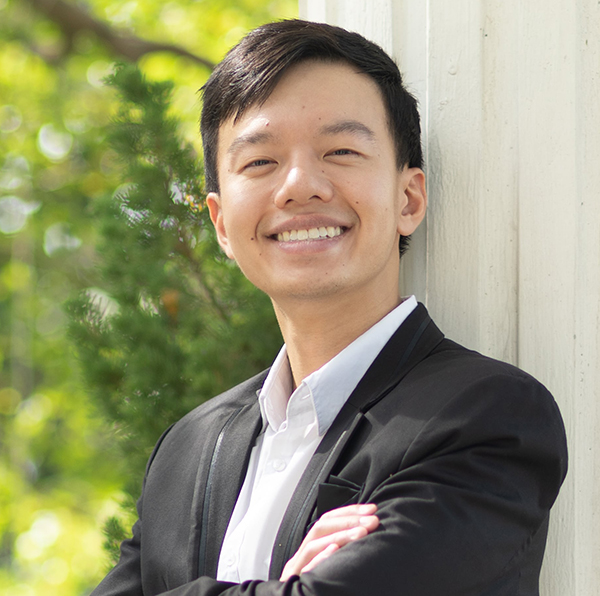
David Dam is a second-year MPP student at Harvard Kennedy School. He was accepted into the Growth Lab’s 2023 Summer Internship Program and contributed to the ongoing project with the United Arab Emirates – a multi-year initiative aimed at developing rigorous research to inform the UAE Ministry of Economy’s policies towards achieving sustained long-term economic growth and structural transformation.
Why did you apply to the Growth Lab Summer Internship?
The Growth Lab’s work aligned with many of my policy and research interests. I was especially excited about the UAE project given the country’s dramatic economic transformation over the past few decades. Additionally, I looked forward to collaborating closely with advisors within the UAE’s Ministry of Economy to gain exposure to another facet of policymaking where I could apply my existing skillset to an entirely different context. And of course, who could say no to spending an entire funded summer in Dubai?
What did you work on?
A focus of the Growth Lab UAE Project was on understanding productivity and labor force dynamics in the country. My main responsibilities over the summer included providing more insights to these workstreams. I worked on analyzing raw time series microdata of private sector firms and their employees using R and Python. This was such a fun collaboration navigating between the Growth Lab, Ministry of Economy, and Ministry of Human Resources and Emiratisation.
In what ways were you challenged?
I appreciated putting in the time prior to the actual summer internship to catch myself up on the ongoing project and familiarize myself with the economy of the UAE. Many of our policy research questions also required more creative thinking due to the lack of data granularity or reporting, in contrast to how I often took working with detailed U.S. economic data for granted. I enjoyed thinking about what traditional economic metrics tell us and what types of proxies we could use in place of them to yield additional insights and convey useful, actionable information.
What was your most exciting/surprising experience?
Besides learning how to ski and snowboard for the first time (you can truly find anything in the malls!) and witnessing the summer heat, I had the wonderful opportunity of briefing the Minister of Economy on the ongoing work and findings towards the end of my internship. I learned a lot from the preparation work, such as iterating on data visualizations and anticipating follow-up questions. I found myself putting many of the skills I learned from the first year of the MPP to good use!
What advice would you give to future interns?
Learn beyond the internship work! I took the time to explore Dubai and beyond over the ten weeks, and my conversations with both locals and expats gave me a much more informed view on the UAE’s labor market and high-growth industries. Time management and understanding what’s reasonable to accomplish within a 10-week period also helped me pace and organize my tasks, as well as balance work and fun!
What’s next for you?
I am finishing up my final year of the Master’s in Public Policy Program at the Harvard Kennedy School. I am incredibly thankful for my time at HKS, and I am really excited about all of the opportunities ahead!
Student Stories: Investigating the Housing Crisis in Wyoming
Yunxiao Han is a second year MPA/ID student at Harvard Kennedy School. He was accepted into the Growth Lab’s 2023 Summer Internship Program and contributed to the Pathways to Prosperity project, which touches upon the numerous challenges and opportunities facing Wyoming and western states.
Why did you apply to the Growth Lab Summer Internship?
I applied to the Growth Lab Summer Internship for several reasons. First, I have always been interested in economic development in less-advanced areas. I had several years of experience in poverty alleviation before entering the MPA/ID program. After working on poverty reduction in Asia, I became more curious about what people could do for economic development in an industrialized country like the United States. Therefore, I applied to the Wyoming project to better understand poverty and economic issues in an advanced country’s context. Second, I knew that the Growth Lab offers great skills training, including data collection, report drafting, R coding, etc. I wanted to improve my abilities by attending the program. What’s more, I thought it was a good opportunity to add to my experiences by traveling to a place that I had not been to before and researching the socioeconomic situations there.
What did you work on?
I worked on the housing problem in Wyoming. Due to some political and administrative constraints, development of new housing is limited. Since the cities could not grow up or grow out, Wyoming also lacked enough housing for workers and labor. This shortage only worsened during Covid, driving up housing prices. I was working on how to solve this problem and proposed policy recommendations to local authorities.
In what ways were you challenged?
I was challenged in various ways. First, I struggle with data processing, and my R coding skills needed improving. Second, I had not been to Wyoming before and needed time to get to know the people and the surroundings. Lastly, my research involved studying foreign housing policy patterns, including Japanese and French policies. Therefore, I needed to read some Japanese and French papers and materials, which were new languages to me.
What was your most exciting/surprising experience?
My most surprising experience was watching a rodeo show on the night I arrived in Casper. It was fascinating, and I think nearly half of the people in the town were there. It was a new and interesting experience for me, and I got to know the different events that make up a rodeo. The riders were excellent and performed well on the horses. I think it is a typical mid-western American event and could represent the western spirit of the United States. I would recommend going to a rodeo to whoever travels to Wyoming. You will not be disappointed.
What advice would you give to future interns?
First of all, I would say enjoy yourself. You needn’t worry too much about your abilities or your work. With the instruction of senior researchers, you will be fine. Just enjoy yourself and dive deep into your research topics. Second, it’s a fun journey but, do plan ahead. You will need to be prepared to experience a lot. Third, I think it is important for you to improve your skillset during the internship. You will have a lot of opportunities to learn. Moreover, please be aware that you need to be ready to work in a new environment and do some preparation work for it. I experienced beautiful scenery, delicious food, etc., but also deepened my understanding of economic development and housing market in Wyoming. From every perspective, I could say it was a great internship.
What’s next for you?
I will return to my MPA/ID program to finish my second year of study. I will further develop my knowledge and skills needed for economic research. I aim to work for a multilateral development bank or continue research on economic issues.
Student Stories: Navigating Wyoming’s Energy Dilemma

Namita Gupta is a second-year MPA student at the London School of Economics. She was accepted into the Growth Lab’s 2023 Summer Internship Program and contributed to the Pathways to Prosperity project, which touches upon the numerous challenges and opportunities facing Wyoming and western states.
Why did you apply to the Growth Lab Summer Internship?
I applied specifically to the Energy workstream within the Wyoming project at the Growth Lab, because my interest in the climate change and just transition domain aligned well with the internship’s focus. I was fascinated by the opportunity to work on an issue as complex and challenging as the energy transition for a coal-dependent state like Wyoming. Crucially, I was drawn to the commitment of the Lab to applied research and policymaking grounded in evidence and data.
My internship was based out of the towns of Casper and Cheyenne, Wyoming. The focus of my internship was understanding and addressing the complexities of Wyoming’s energy economy in the context of global decarbonization efforts. I collaborated with government counterparts, including the Strategy Officer at the Wyoming Business Council and the Director of the Wyoming Energy Authority. I also consulted with other state agencies, academic experts and private sector counterparts such as electric utilities, to gauge the different perspectives and challenges. I helped develop an “opportunity scan framework” and a knowledge repository to shed light on the market and regulatory uncertainties in the emerging energy technologies, to help guide the decision-making process in this evolving landscape.
In what ways were you challenged?
The internship presented challenges that were both intellectually stimulating and professionally enriching. It was interesting to take a challenge as broad-based as the energy transition and break it up into more comprehensible and actionable research areas. I had to navigate the technical intricacies of various energy technologies, including nuclear, carbon capture, and wind energy; the market dynamics, and regulatory landscapes. Maintaining a balance between diving deep into specific technical areas without losing sight of the big-picture overview was a constant challenge. I was also challenged at a personal level. Having lived all my life in big cities like Mumbai, Delhi, and London, the life of a relatively small town in Wyoming was very new to me. Over the ten weeks, I grew to appreciate the calmness of life in Wyoming and particularly grew to love the easy access to so many beautiful mountains, lakes and waterfalls!
What was your most exciting/surprising experience?
One of the most exciting experiences during my internship was the opportunity to engage with a diverse range of stakeholders, including government and private-sector representatives. Their insights and perspectives added depth to my research and expanded my network. It was both frustrating and exciting to understand that some of the questions we encountered had no easy answers, emphasizing the complexity of the issues we were addressing. I also went solo hiking a lot (including a visit to the Yellowstone National Park), which made for some exceptional highlights of the summer!
What advice would you give to future interns?
I would advise future interns to proactively seek clarity on the project’s context and their role and develop a foundational understanding early on, in order to maximise the opportunity. Embrace the complexity and uncertainty of the work, as it’s a valuable learning experience. Lastly, try to maximise engagement with a variety of stakeholders, as their insights can greatly enrich the research. And make the most of exploring your internship location!
What’s next for you?
I am keen on continuing my career in the climate change domain with organizations that prioritize applied research and government advisory with an academic rigor. I aim to work towards a ‘just transition,’ to ensure that marginalised communities are not adversely affected by the push towards decarbonisation.
From Chips to Beyond: Taiwan’s Need for Economic Diversification
By Rachel Chang
The fate of Taiwan’s economy hangs in the balance as the semiconductor industry encounters mounting geopolitical pressures from the United States and China. Although Taiwan’s dominance in the chip market provides a short-term advantage, it also exposes the economy to vulnerabilities. Taiwan must diversify into other industries in order to achieve a more stable path of growth and development and protect itself against the fluctuations of the chips industry.
Taiwan’s rise to dominate the IC industry
Taiwan is the leading producer of digital monolithic integrated circuits (ICs), exporting $164B annually or 23% of the entire world’s export supply. ICs, also known as microchips or chips, are the essential component of any electronic device, from smartphones to washing machines to cars and fighter jets, and powers the world’s digital infrastructure.
Figure 1: Electronic Integrated circuit (ICs) Exports by Country, 2020
(Source: Atlas of Complexity)
As China and many other countries attempt to close the gap in the global chip race, Taiwan remains home to more than 90% of the manufacturing capacity for the world’s advanced ICs.
The root of Taiwan’s chip manufacturing success can be traced back to the founding of the Industrial Technology Research Institute (ITRI), a government-supported nonprofit with the goal of promoting industrial technology development, in the 1960s. The institute worked with foreign partners to acquire IC technology and fund the incubation of the world’s top semiconductor foundries today: Taiwan Semiconductor Manufacturing Company (TSMC) and United Microelectronics Corporation (UMC).
Given budgetary constraints, TSMC and UMC operated fabrication plants that produced ICs for other companies, instead of designing its own products. This low-cost model, also known as the pureplay foundry model, began the interdependence of these Taiwanese IC suppliers and their international customers. It created specific knowledge areas in the IC and semiconductor industries, grew IC exports and drove Taiwan’s economic development.
Figure 2: Gross chip exports over time (left), Share of world’s chip exports (right)
(Source: Atlas of Complexity)
Why Taiwan’s stronghold in chip manufacturing is risky
Today, ICs comprise 41.5% of all Taiwanese exports and 25% of GDP. This dependence has made Taiwan’s economy susceptible to a number of recent economic and political shifts, including China’s increased military exercises and TSMC production moves to the United States.
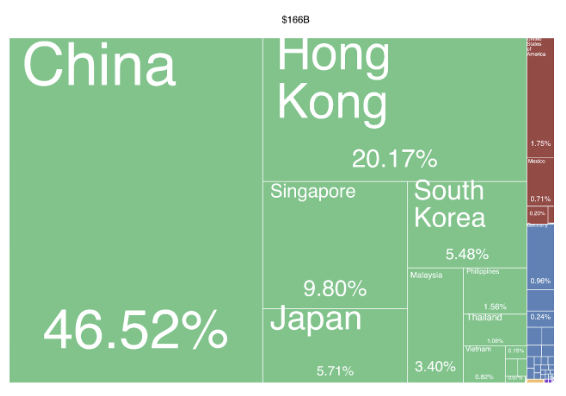
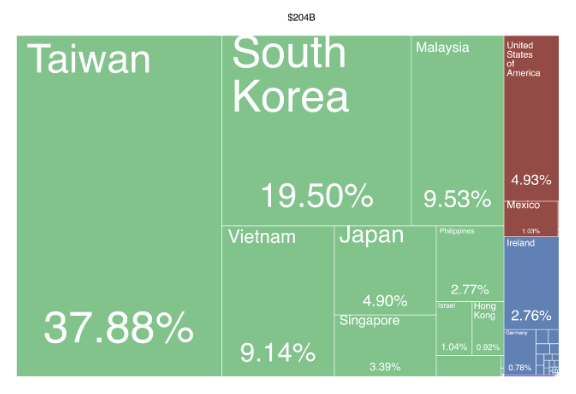
In October 2022, the Biden administration imposed a sweeping set of controls on the sale of advanced chips and chip-making equipment to Chinese firms. Given that 46% of Taiwanese IC exports go to China, the controls caused disruptions in the supply chain and resulted in reduced demand from Taiwan. China is also one of Taiwan’s biggest customers, importing 38% of ICs from Taiwan, further highlighting the dependence of Taiwan’s economy on Chinese markets.
Figure 3: Taiwan’s IC Exports, 2020
(Source: Atlas of Complexity)
Figure 4: China’s IC Imports, 2020
(Source: Atlas of Complexity)
With TSMC making up one-third of the value of the Taiwanese stock market and taking in about 10% of its revenue from China-based customers, TSMC shares fell 8.3% to its lowest close in more than two years.
Moreover, the growing semiconductor chip race between the United States, Europe, and Asia have made the future of Taiwan’s semiconductor chip production unpredictable. Each economy or regional block attempts to control the semiconductor production and not overly rely on the other for vital technology and materials.
What is Taiwan’s diversification story?
As these risks intensify, the question of diversification for Taiwan is less straightforward. Taiwan has reached the forefront of technology by producing and exploiting nearly all of the major products currently available. IC and semiconductor production, along with other electronics and machinery products have played a significant role in making Taiwan’s economy highly complex.
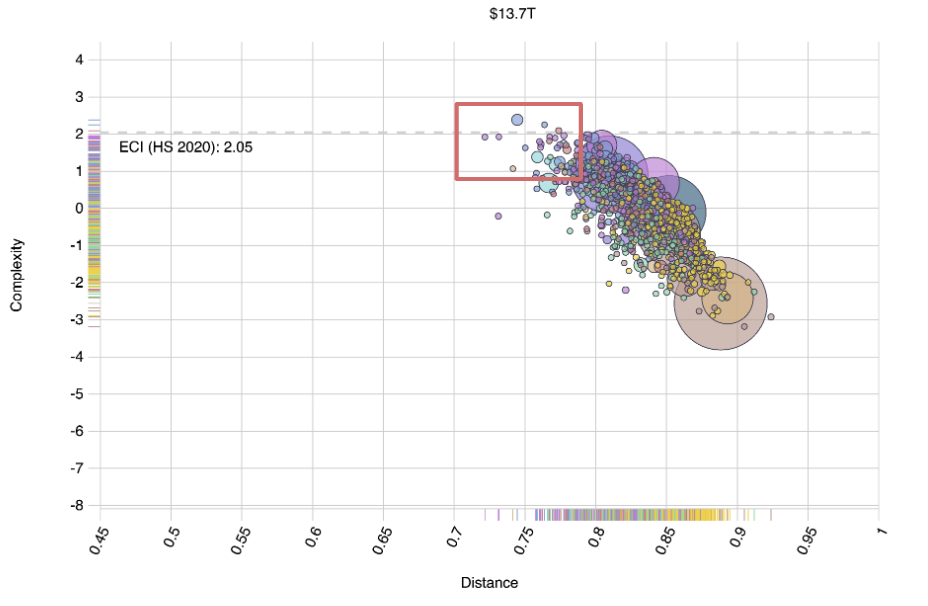
Taking a closer look at Taiwan’s Feasible Opportunities, we identify several potential products that are “closer” in distance and have relatively high complexity and could serve as potential candidates for economic diversification.
Figure 5: Taiwan’s Feasible Opportunities Graph Highlighting Several Products
(Source: Atlas of Complexity)
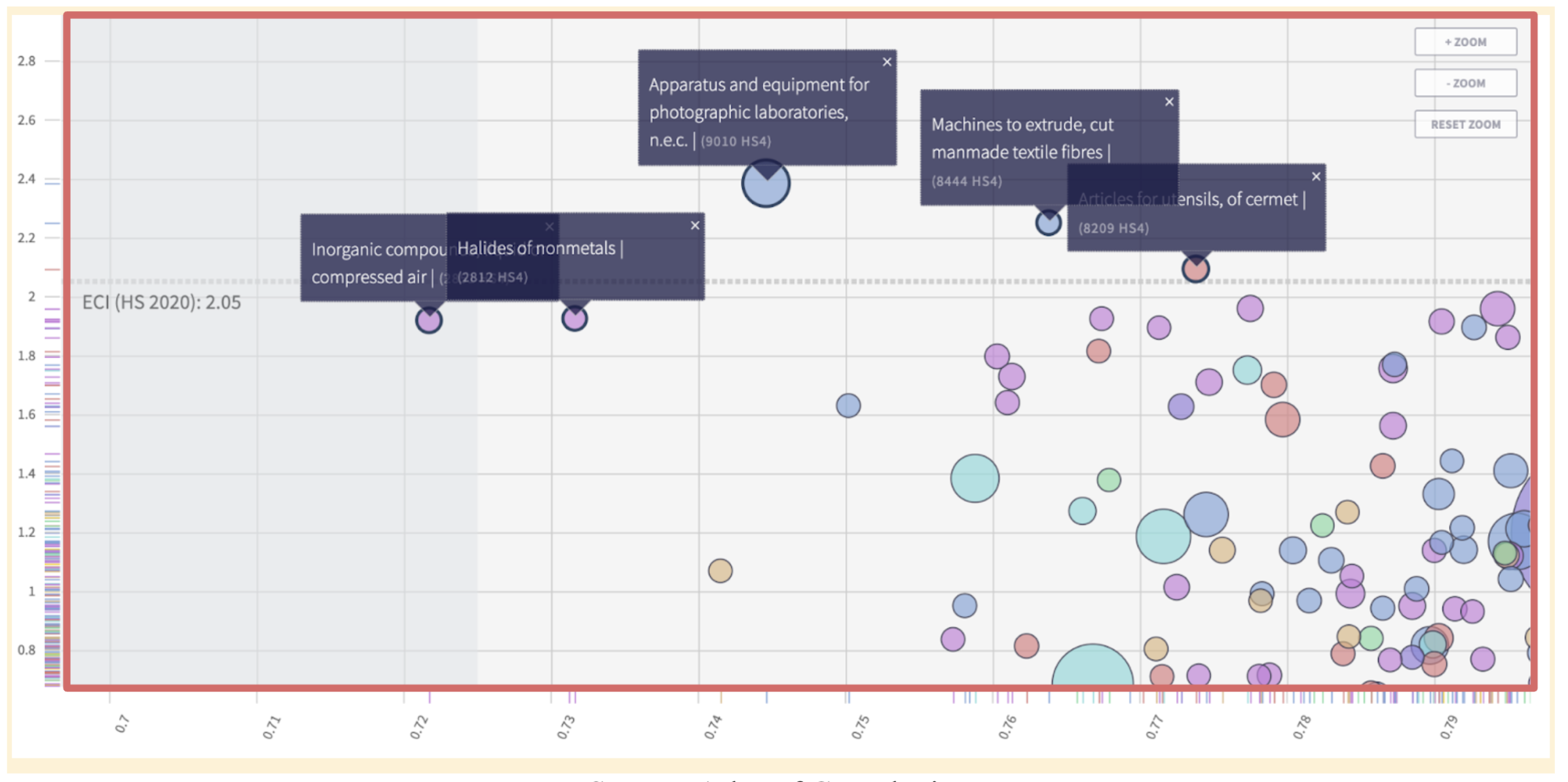
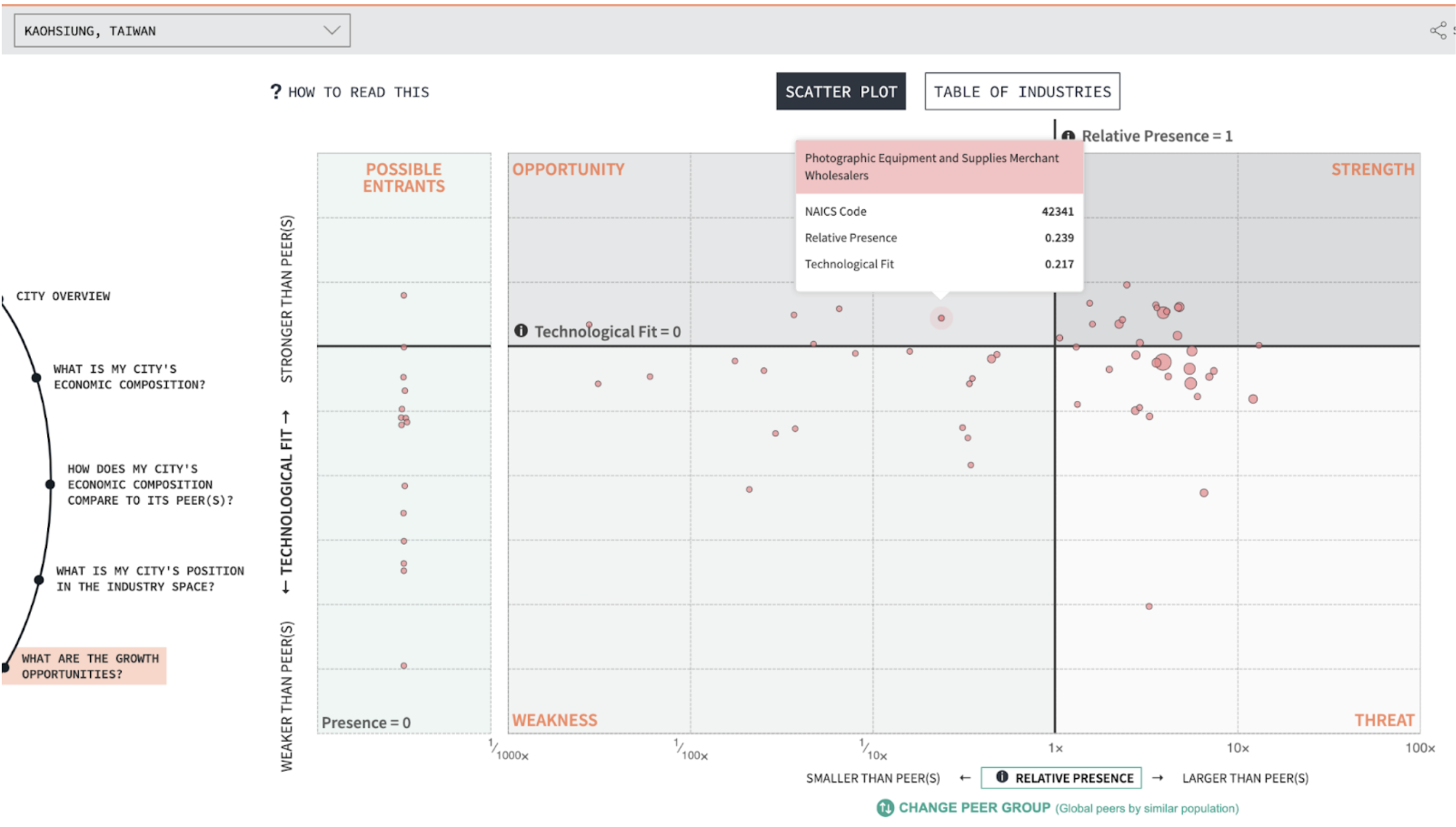
Apparatus and equipment for photographic laboratories could be promising new entrants for Hsinchu, Tainan and Zhuanghua City. This industry is a better technological fit to these cities than that of their selected peer groups. Photographic equipment and supplies merchant wholesalers also presents an opportunity in Hsinchu and Kaohsiung’s trade and transportation sectors.
Figure 6: Kaoshiung Feasible Opportunities
(Source: Metroverse)
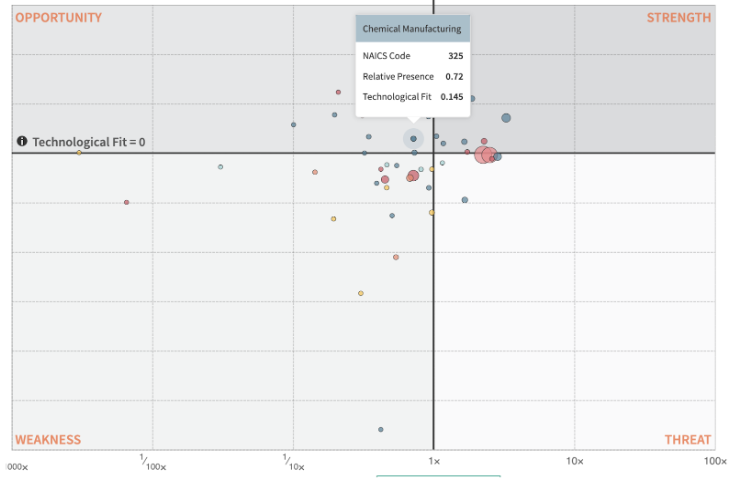
Chemical manufacturing is also an opportunity in the New Taipei Metropolitan Area, which aligns well with Taiwan’s suggested export opportunities in halides of nonmetals, inorganic compounds, and petroleum resins as indicated by Taiwan’s Feasible Opportunity graph.
Figure 7: New Taipei Metropolitan Area Feasible Opportunities
(Source: Metroverse)
However, when we look at potential products Taiwan could export overall in Figure 5, most of the opportunities are “far” away from Taiwan’s current capabilities, given the large minimum distances from Taiwan’s Economic Complexity Index (ECI) line, or the measure of how diversified and complex Taiwan’s total export basket is. It may take a few strategic jumps for Taiwan to diversify into these new products. The bulk of these feasible products are low in complexity, which may not be favorable to a highly complex economy. Therefore, diversification for Taiwan may mean promoting innovation and inventing new products.
Can a better story of diversification be illustrated at the city level?
Metroverse makes visible what a city is good at today to help understand what it can become tomorrow. Analyzing Taiwan’s diversification prospects at the city level yields a clearer picture of which industries have the highest potential based on the city.
The Telecommunications, Apparel Manufacturing, and Printing and Related Support Activities industries provide economic opportunities in most cities. Nonetheless, each city should focus on different specializations and pursue distinct diversification strategies. National policies could assist, but city-specific policies may have a more significant impact.
Figure 8: “Opportunity” Industries based on City

(Source: Metroverse)
A case study for opportunities in the medical industry
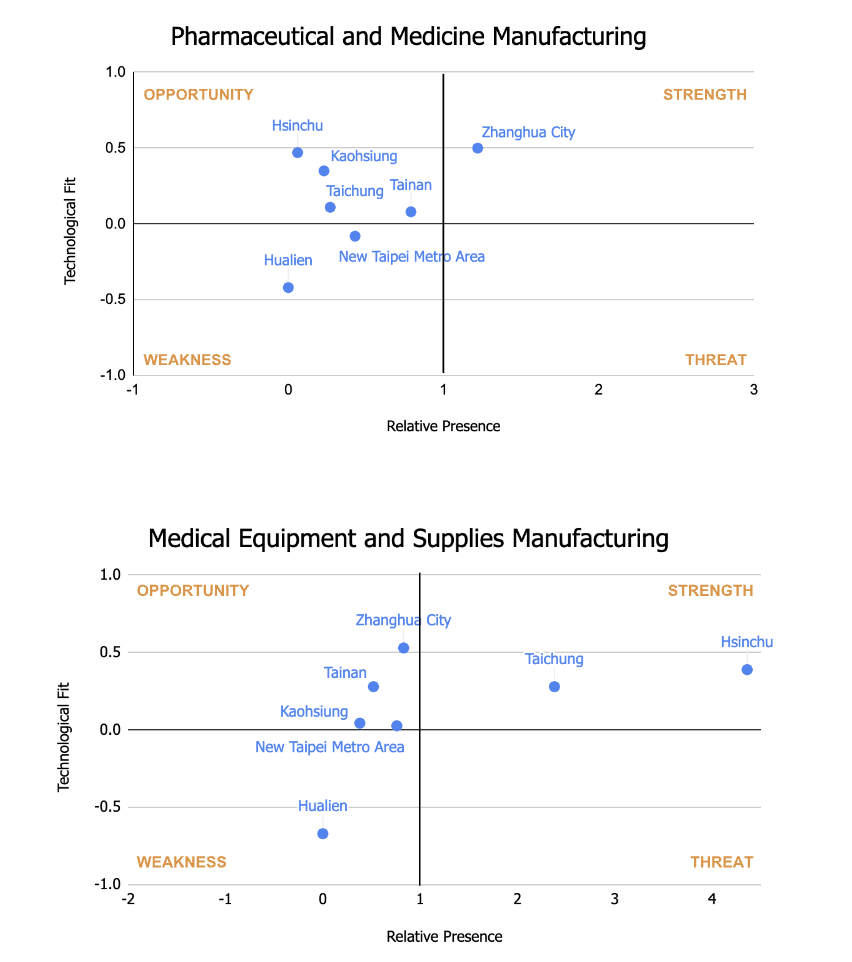
Hsinchu, Kaohsiung, Taichung, Tainan, Taipei Metropolitan Area, and Zhuanghua are six major cities in Taiwan that have opportunities in either the Pharmaceutical/Medicine Manufacturing or the Medical Equipment/Supplies Manufacturing industries. As it turns out, these cities also have existing strengths in the semiconductor, IC, and electronic component manufacturing industries.
Figure 9: Growth Opportunities in Pharmaceutical Manufacturing (Top), Medical Equipment and Supplies Manufacturing (Middle), Semiconductor and other Electronic Component Manufacturing (Bottom)

(Source: Metroverse)
The potential for growth in the Pharmaceutical/Medicine Manufacturing and Medical Equipment/Supplies Manufacturing industries reflects Taiwan’s strategic goal of positioning itself as a worldwide hub for pioneering research and development in the fields of biomedical and life sciences. The government’s 2018 “5+2 Industrial Innovation Plan” indicates that biotechnology is one of seven key high-tech initiatives that will “serve as the central driver of Taiwan’s industrial growth into the next era.”
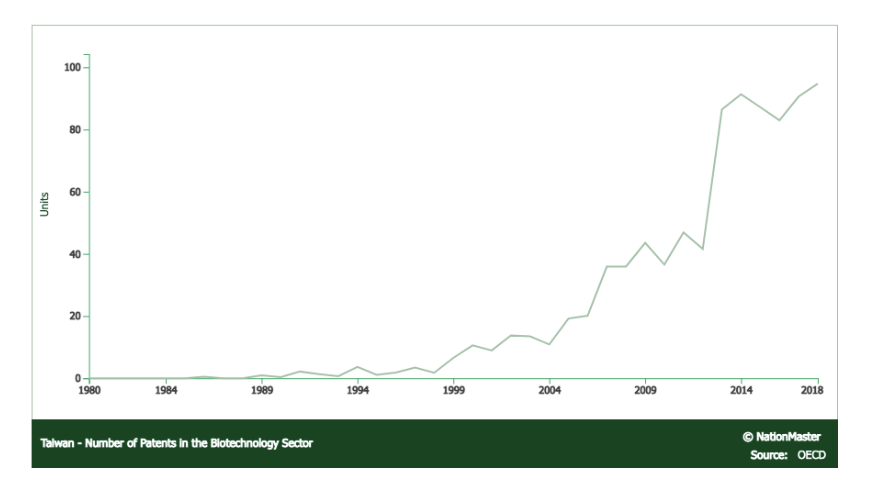
Taiwan has established biotechnology research parks in several cities, equipped with laboratory facilities, office space, and business development services, to support companies in the biotech and medtech sectors. The government has also streamlined market approval and R&D reimbursement timelines and made it easier for small companies to go public. As a result, the total market capitalization of local biotech companies has increased 700% since 2008, and patent data suggests a 1.9% year-on-year increase in biotech innovation.
Figure 11: Number of Patents in the Biotechnology Sector
(Source: OECD)
Looking forward
To lessen its dependence on the semiconductor industry and diversify its economy, Taiwan should explore further opportunities in industries, such as Telecommunications, Apparel Manufacturing, and Printing and Related Support Activities. These industries offer growth opportunities across several major cities.
In particular, the Telecommunications industry has great potential, and its three major providers, Chunghwa, Taiwan Mobile, and FarEasTon, could significantly contribute to this progress. They can do this by extending their 5G services, creating inventive IoT applications in areas such as smart homes, smart cities, and healthcare, emphasizing cybersecurity, promoting public-private partnerships, and investing in talent development.
Some experts suggest that Taiwan should broaden the geographic scope of TSMC’s operations and the semiconductor fabrication industry to other locations as part of its diversification strategy. However, this may not necessarily safeguard Taiwan’s economy. Therefore, apart from supporting broader national initiatives, Taiwan should consider implementing more targeted policies to cater to the unique needs and opportunities of each city’s industry growth potential.
Student Stories: Merging Data to Understand Emerging Global and Local Challenges

Rachel Chang is a second-year MPA/ID student at Harvard Kennedy School. She was accepted into the Growth Lab’s 2022 Fall and Winter RA Program where she helped construct visual stories that translate data and visualizations into timely insights for decision-makers.
Why did you apply for the Growth Lab RA position?
I applied to the Growth Lab RA position because I wanted to utilize the findings from the Atlas of Economic Complexity and Metroverse to create compelling data-driven visual stories. The Growth Lab RA position was a great way for me to contribute my product management experience, along with the analytical frameworks and economic rigor from the MPA/ID curriculum.
What did you work on?
I generated three distinct story concepts and eventually focused on Taiwan’s need for diversification beyond chips and semiconductors. This involved conducting outside research, using the Atlas of Economic Complexity and Metroverse, and working closely with the Growth Lab team.
In what ways were you challenged?
I was challenged because I wanted to connect country-level data from the Atlas and city-level data from the Metroverse to create a cohesive narrative for Taiwan. This was challenging because there wasn’t a clear connection between the data.
What was your most exciting/surprising experience?
The most exciting part was finding a way to bring the Atlas and Metroverse data together in a seamless manner. I was thrilled to see this piece come together using analytical economic methods and crafting a narrative.
What advice would you give future Growth Lab interns/RAs?
I would advise future Growth Lab RAs to supplement their RA-ship with courses, such as API313M: The Tools and Methods of Economic Complexity Analysis and DEV 309: Development Policy Strategy. The Op-Ed writing class at HKS was also especially helpful in providing best practices for writing compelling pieces (for those interested in writing short stories for the Growth Lab). The technicalities learned from these classes were directly relevant to my project analysis!
What’s next for you?
I’m further inspired to utilize data as a means to explore international economic growth opportunities and to bridge both the micro and macro aspects of economic advancement. I hope to continue working on these topics after graduating from the MPA/ID program.