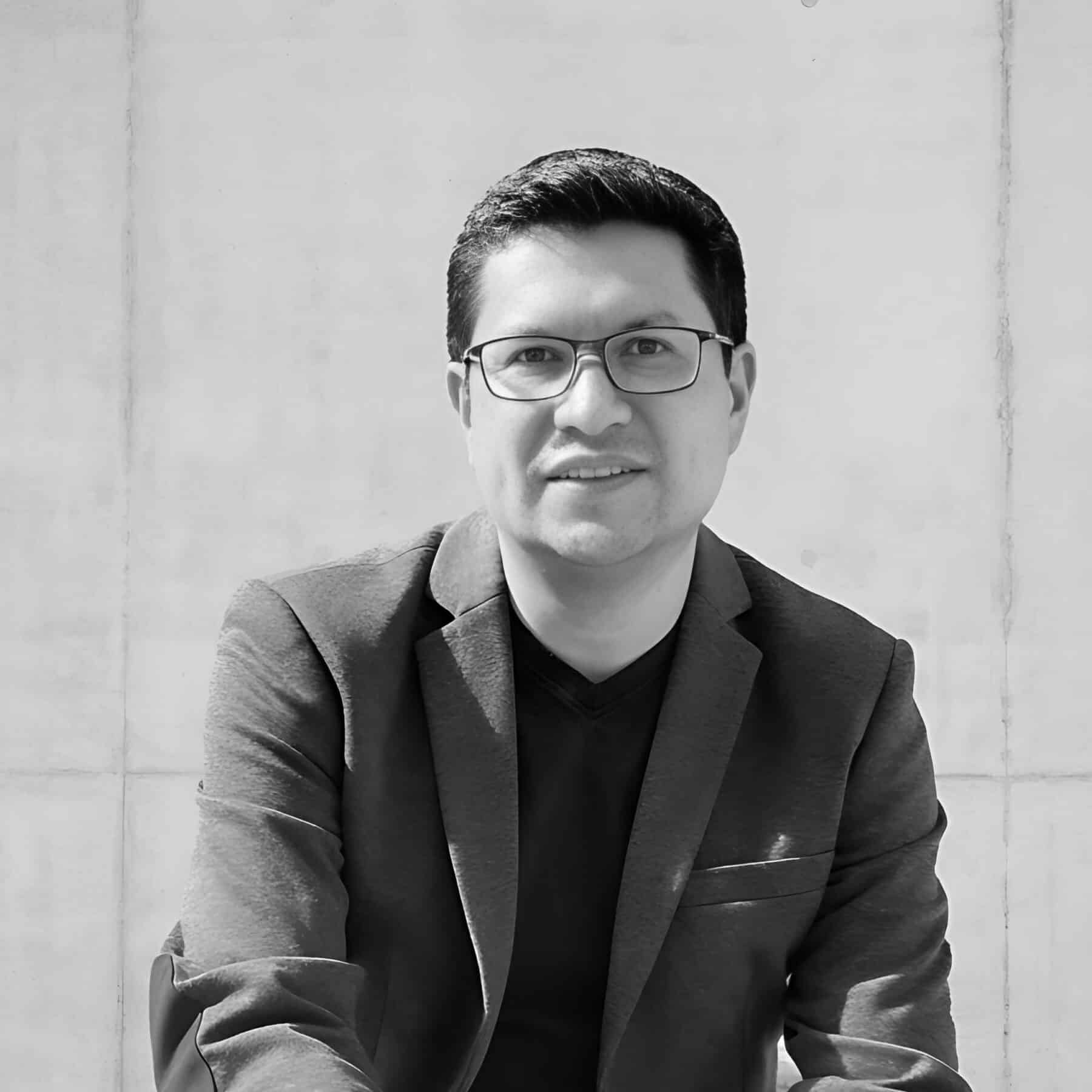
Pablo Astudillo-Estevez
- Former Research Fellow
Pablo Astudillo-Estevez is a computational social scientist, currently an Assistant Professor at the School of Economics at Universidad San Francisco de Quito (USFQ) and Founding Director of the USFQ Data Hub (Laboratory on Computational Social Science and Digital Humanities). He holds a PhD in Economic Geography and Complexity Economics from the University of Oxford (UK) and an MSc in Environment and Development from the University of Edinburgh.
Pablo is also an associate fellow at the Institute for New Economic Thinking at the University of Oxford, and external faculty at the Complexity Science Hub – Vienna. Former research fellow at the Growth Lab at Harvard University, and visiting fellow at the Massachusetts Institute of Technology’s Media Lab. Alumnus of the Global Complexity School at the Santa Fe Institute.
His main interest lies in understanding how economies and places evolve and learn, and in finding ways to unlock their potential to create knowledge and innovate. More specifically, by analyzing massive data sets, Pablo studies the dynamics of the economic landscape that enable places (especially in the Global South) to become innovative and to climb the technology ladder.
In the applied policy space, Pablo serves as a Data Scientist at the World Bank – IBRD, where he has worked across the Finance, Competitiveness & Innovation Global Practice, the Poverty and Equity Global Practice, and the International Finance Corporation (IFC). He has also worked as a consultant for the Inter-American Development Bank, and advises governments and the private sector on ways to develop the foundations for sustainable, technology-enabled economies, as well as to harness the power of disruptive technology and data to solve development challenges.
Pablo has more than 20 years of experience in sustainable development and climate change. He was part of the Ecuadorian delegation that negotiated the UN Sustainable Development Goals at Rio+20 and the Paris Agreement at COP 21. Winner of the World Bank’s Development Prize – Ecuador and several academic awards.