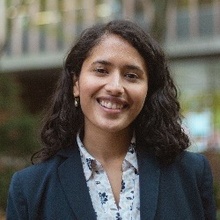
Anjali Nair is a second-year MPA/ID student at Harvard Kennedy School. She was accepted into the Growth Lab’s 2024 Summer Internship Program and contributed to the ongoing project in Morocco.
Why did you apply to the Growth Lab Summer Internship?
I wanted to deepen my understanding of growth diagnostics in practice, and this internship seemed like the perfect opportunity to do so. The Growth Lab team is known for asking insightful questions, formulating hypotheses, and building models to uncover each region’s binding constraint. Additionally, I’m particularly passionate about work at the intersection of gender and development. The chance to research Morocco’s low female labor force participation with the team and spend 10 weeks in Rabat was an opportunity I couldn’t pass up.
What did you work on?
My project centered on identifying the factors behind Morocco’s low female labor force participation. I started by reviewing existing research and consulting with experts at UM6P, the local university, and attending regional employment seminars. However, the most critical insights came from conducting qualitative interviews with women across Morocco. These conversations revealed that caretaking responsibilities and the scarcity of quality job opportunities were driving many women out of the labor force, and some even into the informal sector. Hence, to complement the team’s analysis of micro-risks, I delved into Moroccan labor regulations, focusing on those related to informality and gender-specific laws. In the final two weeks, I shifted my focus to firm-level data, where I analyzed wage and hiring trends across various industries and regions, which also helped me hone my coding skills.
In what ways were you challenged?
Two challenges stood out. First, grasping Morocco’s cultural context was crucial, especially when tackling complex issues like female labor force participation. It was important to distinguish whether women were choosing not to work out of personal preference or if they were constrained by family expectations, limited connections, or poor job quality. The qualitative interviews were essential in bridging the gap between existing reports and the lived experiences of Moroccan women. The second challenge was the scarcity of accessible official data. Initially, this seemed like a significant hurdle, but by partnering with local experts and students, we discovered alternative data sources, conducted our own interviews, and pieced together government reports to form a coherent narrative.
What was your most exciting/surprising experience?
The highlight of my experience was the extraordinary warmth of Moroccan hospitality. During our qualitative interviews, a UM6P student invited us to meet her extended family. What we anticipated as brief interviews around female labor force participation evolved into a memorable cultural exchange. Each home welcomed us with a spread of Moroccan delicacies—msemen, harcha, batbout, baghrir, and a willingness to share their experience with us. We were even invited to stay overnight, and the next afternoon, the matriarch even prepared couscous—a dish typically reserved for Friday family gatherings. I was especially touched when they went out of their way to make a vegetable couscous for me, knowing I didn’t eat meat. Additionally, learning to make baghrir from scratch, traditional fluffy pancakes best enjoyed with mint tea, is a memory I’ll always cherish. This experience truly embodied the essence of Moroccan kindness.
What advice would you give to future interns?
Come prepared to take initiative. Many focus areas at the Growth Lab are self-directed, so it’s crucial to set your own schedule and seek help when needed. Additionally, one of the most rewarding aspects of the internship is building connections with locals. I strongly recommend immersing yourself in a local community, whether in Morocco or another country. I started in a university dorm but quickly moved to the city, which enabled me to form deeper friendships and fully experience life in the country.
What’s next for you?
I’m entering my final year in the Master’s in Public Administration in International Development program. Building on my passion for gender-focused research and data analysis, I plan to focus on elective courses that deepen my expertise in these areas. Additionally, I’m excited to be back leading the next Women in Power Conference, where I’ll be dedicating time to organize discussions around gender equity and leadership.