Lunch Seminar: Benefiting from Return Migration: Effects of Return Migration on Non-migrants’ Wages and Employment
February 24, 2017
|
1:00 pm
–
2:00 pm
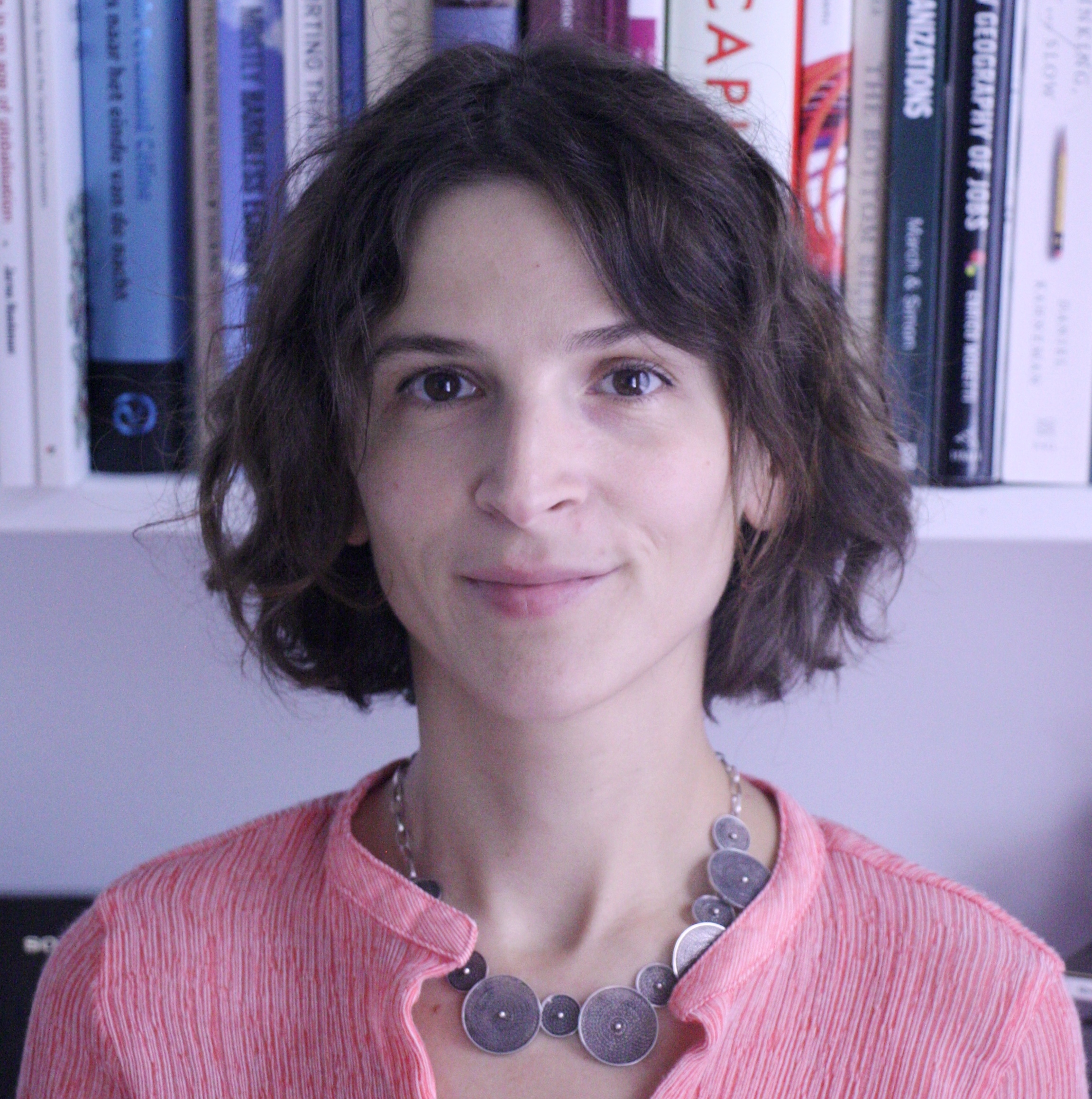
Speaker: Ljubica Nedelkoska is a Growth Lab research fellow at the Center for International Development at Harvard University
About the talk: When CID started its engagement in Albania, a small developing economy bordering Greece, our team was particularly worried about the negative spillovers that the unfolding debt crisis in Greece could bring about. In addition to the adverse effects on trade and investments, the livelihoods of some 600,000 Albanians living in Greece (over 20% of Albania’s population) and their remittance-receiving families were put at risk. Albanian migrants in Greece were particularly affected by the Greek crisis, which spurred a wave of return migration that increased Albania’s labor force by 5% between 2011 and 2014 alone. We studied how this return migration affected the employment chances and earnings of Albanians who never migrated. Initially to our surprise, we found positive effects on the wages of low-skilled non-migrants and overall positive effects on employment. The gains partially offset the sharp drop in remittances in the observed period and are probably triggered by return of know-how and financial capital. The employment gains are concentrated in the agricultural sector, where most return migrants engage in self-employment and entrepreneurship. Businesses run by return migrants seem to pull Albanians from non-participation, self-employment and subsistence agriculture into commercial agriculture.
About the speaker: Ljubica’s research focuses on human capital, migration, lifelong learning, capital-labor relations and structural transformation. She works at the intersection of research and policy, and has contributed to several such projects in Albania, Sri Lanka, the Netherlands, Sweden, and Germany. She holds a PhD in Economics of Innovation from the Friedrich Schiller University, Germany and a Master’s Degree in Public Administration from the Appalachian State University, North Carolina. Before joining CID, Ljubica worked as a post-doctoral researcher and a coordinator of the Research Group “Economics of Innovation” at the Friedrich Schiller University and as a research fellow at the Zeppelin University in Germany.
Lunch Seminar – Peace through Entrepreneurship: Investing in a Start-up Culture for Security and Development
March 3, 2017
|
1:00 pm
–
2:00 pm
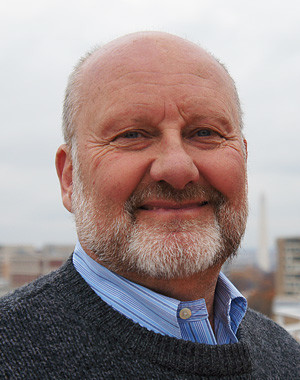
Speaker: Steven Koltai, Managing Director of Koltai & Company, and Brookings Guest Scholar, Governance Studies
Steven Koltai is an expert on international entrepreneurship ecosystem development. He is currently Managing Director of Koltai & Company, an entrepreneurship program development consultancy. At Brookings, Koltai is pursuing a project and book provisionally titled: “World Peace through Entrepreneurship.”
Most recently, he was Senior Advisor for Entrepreneurship at the US Department of State where he created and managed the Global Entrepreneurship Program (GEP), focused primarily in job creation via entrepreneurship in Muslim majority countries. Previously, Steven has 30 years of business experience as an investment banker (Salomon Brothers), management consultant (McKinsey & Company), media industry (Warner Bros and Lifetime Television), and as a multiple company successful entrepreneur and angel investor. He is a long time member of the Council on Foreign Relations where he was an International Affairs Fellow. Koltai serves on numerous for profit and not-for-profit Boards, including the Tisch College of Active Citizenship at Tufts University (his alma mater), Babson Global at Babson College, the Library of Congress’ David Rubenstein Literacy Awards Committee, the Museum of Hungarian-speaking Jewry in Safed, Israel, and Advancing Girls Education (AGE) Africa in Malawi.
Koltai was born in Budapest, Hungary, fleeing to the U.S. as a small child with his family following the Hungarian Revolution in 1956. He was raised in Los Angeles, California and Kansas City, Missouri. He has two sons and lives in Maine and Washington, D.C.
Lunch Seminar: Practical Economics – Economic Transformation and Government Reform in Georgia 2004-2012: A conversation with Nika Gilauri, Georgia Prime Minister (2009-2012)
February 17, 2017
|
1:00 pm
–
2:00 pm
Speaker: Nika Gilauri, former Prime Minister of Georgia
Nika Gilauri will present his book, Practical Economics, inwhich he provides a detailed analysis of the reforms made in Georgia.
The book starts by discussing why the Georgian case is exemplary for other countries and proceeds to describe the fight against corruption, the rightsizing of government, the creation of a business-friendly environment, tax and customs reform, the privatization of state-owned enterprises, energy sector reforms, and smart spending approaches applied to welfare, healthcare, education, and procurement. In some cases, the description draws on the experiences of other countries, either because they served as an inspiration for Georgia’s reforms or because approaches pioneered in Georgia were successfully applied there.
In a nutshell, this book is an attempt to answer one question: how do you manage a transformation to bring about fast and sustainable growth? In what follows, Mr. Gilauri approaches this question from two angles:
What is the right size for a government, both in terms of its regulatory footprint and in terms of its budget in relation to the size of the economy?
How do you ensure a government’s efficiency in terms of its decision making, its interaction with the private sector, its financial flows, and the services it provides?
The book concludes with a discussion of leadership, in recognition of the fact that even the best approaches would not apply themselves. It takes determined leadership to make them work – the courage to fix what is broken, to try innovative approaches, and to learn from one’s mistakes.
So is this a book for leaders only, for heads of state and government? Far from it. There is something here for everyone who takes an interest in public affairs – politicians, civil servants, consultants, and all active citizens who may be interested in how governments function and how they can be transformed. This book also shows that none of the major economic theories stands the test of practical application. Some people believe that the state should redistribute wealth from the rich to the poor. Others believe that the freedom of enterprise is more important. Many believe that a monetarist approach is the best solution to the world’s economic problems, while others favor Keynesian economics. In author’s experience, none of these theories is universally applicable. Every given economic problem requires its own solution. This is why he advocates what he calls Practical Economics. Practical Economics is about finding the right mix of economic policies for a given country at a given moment. This book is about the mix of economic policies that transformed the Georgian economy between 2004 and 2012. While some of these policies may not be applicable to any other country, the book makes the case that many of them are relevant for many countries, developing as well as developed, today.
NEW LOCATION: Malkin Penthouse, 4th Floor Littauer, HKS
Stories and Statistics: Why we need mixed methods to understand international development (Co-Sponsored with the Ash Center)
February 8, 2017
|
5:15 pm
–
6:30 pm
Quantitative or qualitative: which evaluation method is more useful? This has long been a contentious debate in the field of international development. Yet while individual methods like randomized control trials, ethnography, structured observations, and interviews are each well-placed to reveal parts of the picture, each can also miss important parts of the whole. Thus the question is: how can researchers become more deliberate and holistic in using mixed methods to understand the full picture? The Transparency for Development Project is seeking to answer that question in its pursuit of understanding of whether, where, and how citizen-led transparency and accountability interventions can improve health. Join us as T4D Principal Investigators Archon Fung, Dan Levy, and Stephen Kosack reflect on the T4D project’s mixed method approach and draw on early insights from the evaluation that demonstrate the importance of integrating qualitative and quantitative methods in evaluating development programs.
Speakers:
Dan Levy, Senior Lecturer in Public Policy, HKS; Faculty Chair, SLATE
Stephen Kosack, Associate Professor, University of Washington; Senior Research Fellow, Ash Center
Moderator:
Archon Fung, Ford Foundation Professor of Democracy and Citizenship; Academic Dean, HKS
Ash Center for Democratic Governance and Innovation, Suite 200N, 124 Mt Auburn Street, Cambridge
Lunch Seminar: How Some Rustbelt Cities are Becoming the Smartest Places on Earth and Why it Matters
February 3, 2017
|
1:00 pm
–
2:00 pm
Speaker: Antoine van Agtmael, senior adviser at Foreign Policy Analytics and principal founder, CEO and CIO of Emerging Markets Management LLC.
Mr. van Agtmael is senior adviser at Foreign Policy Analytics, a public policy advisory firm in Washington DC and was the principal founder, CEO and CIO of Emerging Markets Management LLC (and later chairman of AshmoreEMM), a leading investment management firm for emerging market equities. He was also a founding director of the Strategic Investment GroupSM. Before founding EMM in 1987, Mr. van Agtmael was Deputy Director of the Capital Markets department of the International Finance Corporation (“IFC”), the private sector-oriented affiliate of the World Bank. While at IFC, he coined the term “emerging markets” and founded the IFC Emerging Markets Database. He was also a Division Chief in the World Bank’s borrowing operations, Managing Director of Thailand’s leading merchant bank TISCO and Vice President at Bankers Trust Company.
Mr. van Agtmael is co-author of The Smartest Places on Earth (Public Affairs, March 2016), author of TheEmerging Markets Century (Free Press, 2007), Emerging Securities Markets (Euromoney, 1984), and co-editor of The World’s Emerging Stock Markets (Probus Publishing, 1992). He was an adjunct professor at Georgetown Law Center and taught at the Harvard Institute of Politics and Thammasat University, Bangkok. He has lectured widely at universities and other professional audiences around the world. He holds an M.B.A. from New York University’s Stern School, an M.A. in Russian and Eastern European Studies from Yale University and an undergraduate degree in Economics from Erasmus University in the Netherlands.
He is a Board member of The Brookings Institution (and Co-Chair of its International Advisory Council), the NPR Foundation (and until 2013 its Chair and NPR board member), the Smithsonian’s Freer Sackler Gallery, and Magnum Photos. He is also a member of the Yale President’s Council on International Activities and of the Council on Foreign Relations. He is married and has two children and a grandchild.
Latin America has the highest rates of interpersonal violence in the world. In this session, leading experts explore the causes, correlates, and consequences of this violence, with an emphasis on the Northern Triangle region, which includes El Salvador, Guatemala, and Honduras.
Speakers:
Nathalie Alvarado-Renner, Citizen Security Lead Specialist, Inter-American Development Bank (IDB),
Daniel Ortega, Director of impact evaluation and policy learning, CAF
Thomas Abt, Innovation in Citizen Security Project, Center for International Development at Harvard University
Marcela Escobari, visiting Fellow at Brookings Institution and former Assistant Administrator, USAID Bureau for Latin America and the Caribbean
Inequality as both Cause and Effect of Crime, Violence in Latin America. This session will explore the causal relationships between inequality, crime, and violence, understanding the former as a both cause and effect of the latter. The relative importance of proximate vs. root causes of crime and violence will also be debated.
Speakers:
Rodrigo R. Soares, Lemann Professor of Brazilian Public Policy and International and Public Affairs
Filipe R. Campante, Associate Professor of Public Policy at the Harvard Kennedy School
João M P De Mello, Lemann Visiting Scholar at the David Rockefeller Center for Latin American Studies
Emily Owens, Associate Professor in the Department of Criminology, Law and Society at the University of California, Irvine
Lunch Seminar: Connectography: Mapping the Future of Global Civilization
March 31, 2017
|
12:00 pm
–
1:15 pm
Speaker: Parag Khanna, Geo-Strategist, best selling author & Senior Research Fellow, National University of Singapore.
Parag Khanna will present his book, “Connectography: Mapping the Future of Global Civilization”. In this book Khanna guides us through the emerging global network civilization in which mega-cities compete over connectivity more than borders. His journeys take us from Ukraine to Iran, Mongolia to North Korea, Panama City to Dubai, and the Arctic Circle to the South China Sea—all to show how 21st century conflict is a tug-of-war over pipelines and Internet cables, advanced technologies and market access.
Allison Dining Room, Taubman Building, Harvard Kennedy School
Lunch Seminar – How Change Happens: How Political and Social Change Takes Place and the Role of Individuals and Organization in Influencing that Change
December 7, 2016
|
2:00 pm
–
3:00 pm
Speaker: Duncan Green, Oxfam Strategic Adviser, LSE Professor of International Development
Duncan Green will introduce his new book and provide a chance for the audience to challenge, engage and add their own perspectives. How Change Happens explores how political and social change takes place, and the role of individuals and organizations in influencing that change.
He will discuss the challenges that ‘systems thinking’ creates for traditional activism and aid, and how a ‘power and systems approach’ requires activists, whether in campaigns, companies or governments, to fundamentally rethink the way they understand the world and try to influence it.
We seek to enable scholars, educators, and practitioners to learn from the past by providing rich and nuanced evidence on the key issues faced by the world today. Since the work of Joseph Schumpeter and the Research Center in Entrepreneurial History in the 1940s, Harvard has taken an interdisciplinary and global approach to understanding business history.