
Lunch Seminar – Productive Transformation in Latin America and Strategic Participation in Global Value Chains: An OECD Perspective
December 2, 2016 | 12:45 pm – 2:00 pm
Speaker: Roberto Martinez Yllescas, Head of OECD Mexico Centre
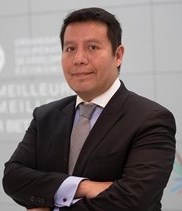
As head of the OECD Mexico Centre, Roberto Martínez Yllescas (MPP ’95) works to increase the OECD’s relevance and impact in Mexico and Latin America. Roberto was previously Chief of Staff to Commissioner Labardini as one of the founders of Mexico’s Federal Telecommunications Institute. Previously, he was a Senior Advisor in the Secretariat of Communications and Transport in Mexico. He has over fifteen years of experience working in governmental, multilateral organisations and private sector companies as Government Affairs manager in Mexico at Intel Corp, as well as Central-Southern Regional Chief for the National Telecommunications, Electronics and IT Industry Association of Mexico. He has also been a senior consultant to the United Nations Development Programme, USAID and Mexico’s Centre for Intellectual Capital and Competitiveness. Mr. Martínez Yllescas, a Mexican national, holds a BA in International Relations from El Colegio de México, a Master of Science degree from the London School of Economics and Political Science, and a Master’s in Public Policy from Harvard’s Kennedy School of Government
*Lunch is served
Nurturing Economic Growth: What Should LATAM Countries do under the New Normal?
November 28, 2016 | 7:00 pm – 8:30 pm
Speaker: Carlos Fernández Valdovinos, Governor of the Central Bank of Paraguay
Moderator: Ricardo Hausmann, Director of the Center for International Development at Harvard University
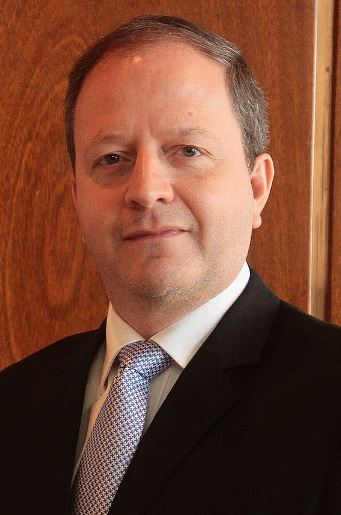
Carlos Fernández Valdovinos, Governor of the Central Bank of Paraguay since October 2013. He has a Ph.D. in Economics (University of Chicago, 1999), Master in Economic Policy (University of Illinois at Urbana-Champaign, 1994) and graduated in economics (Federal University of Parana, Brazil, 1990). Previously, he served as the Managing Director of the Economic Research Division at the CBP (2001-2004), senior economist covering Argentina at the World Bank in Washington, DC (2004-2006), senior economist at the African, European and Western Hemisphere Departments, and Representative for Brazil and Bolivia at the International Monetary Fund (2006 – 2013). Fernández Valdovinos is part of the Board of Directors of the Center for Latin American Monetary Studies (CEMLA) and Governor of Paraguay before the International Monetary Fund. Both in 2015 and 2016, he was a recipient of the “Best Central Banker Award” by Global Finance Magazine.
Co-sponsors: David Rockefeller Center for Latin American Studies; HKS Spanish Caucus; the Latinx Caucus; and the Latin American Caucus
Photo: CC BY-SA 4.0
Security and Development Seminar: Transnational Crime: Gangs, Guns, Drugs, and Development in Latin America
December 1, 2016 | 5:00 pm – 6:30 pm
The second session in CID’s new Security and Development Seminar Series.
This session will explore how trafficking in illicit drugs, weapons, and persons by transnational criminal organizations impedes development in many Latin American countries.
Speakers:
- Thomas Abt, Innovation in Citizen Security Project, CID
- Daniel Mejia, Secretary of Security of Bogota, Colombia
- Steven Dudley, Co-director, InSight Crime, Wilson Center
- João M P De Mello, Lemann Visiting Scholar at the David Rockefeller Center for Latin American Studies
There will be a live stream of the event on CID’s Facebook page.
Seating capacity is 40. RSVP to cid@hks.harvard.edu to confirm a seat.
Political Prisoners and Torture in Venezuela: The Experience of an HKS Alumnus and Venezuelan Political Prisoner
November 28, 2016 | 5:10 pm – 6:10 pm
Speakers: Francisco Marquez, MPP’12 and political prisoner; Tarek Masoud, Sultan of Oman Professor of International Relations, Ash Center for Democratic Governance and Innovation
Francisco Marquez Lara is a Venezuelan lawyer and polítical activist with the Voluntad Popular party. He was held as a political prisoner in Venezuela for four months. Throughout this time he was detained in four facilities under three organizations. This is the story of what he lived through and witnessed.
Before his imprisonment, Marquez was Chief of Staff for the Mayor of El Hatillo in Caracas. He obtained his law degree at Catholic University Andres Bello and his Master in Public Policy degree at Harvard Kennedy School.
Related – El Pais: Strife-torn Venezuela frees two political prisoners
Lunch Seminar – Too Small to Fail: Why Small Countries are Outperforming Larger Ones and What Lessons can be Learned
November 18, 2016 | 12:45 pm – 2:00 pm
Speaker: R. James Breiding, Author

‘Too Small to Fail’ analyzes a number of successful countries that have created virtues out of their physical limitations. It attempts to understand what they do differently and why they seem to do it better. Why are they better-educated, more egalitarian, and wealthier?
R.James Breiding is the author of Swiss Made – The Untold Story behind Switzerland’s Success. Published in 10 languages and offered by 50 Swiss ambassadors as a diplomatic gift, ‘Swiss Made’ has become the most authoritative work on Swiss socio-economic history.
Mr. Breiding is a graduate of IMD Lausanne and the Harvard Kennedy School. He has been selected as a fellow by Harvard University’s Center for International Development in connection with his research on Swiss Made. His work has been widely published in publications like the Economist, the Financial Times, the Wall Street Journal, and the New York Times, etc.
He worked as a chartered accountant and senior manager at Price Waterhouse Coopers; a director at NM Rothschild + Sons; and managing director at Templeton Investment. He founded, with the assistance of Sir John Templeton and other prominent investors, Naissance Capital, a Swiss ‘boutique’ Investment firm.
He is a Swiss citizen.
Education for People and Planet: Creating Sustainable Futures for All
November 16, 2016 | 5:00 pm – 6:30 pm
On November 16th CID will be hosting a presentation by Dr. Priyadarshani Joshi of the recently published 2016 Global Education Monitoring Report, an editorially independent report published by UNESCO. This report has been mandated by the international education community to monitor the progress of the global goal of education in the new UN agenda (2016 – 2030). The Report presents a comprehensive vision of the ways in which education is linked to the other 16 sustainable development goals, and details the implications for monitoring the education goal (SDG 4). The presentation will be followed by a panel discussion.

Priyadarshani Joshi is from Nepal and is a researcher with the Global Education Monitoring Report, housed in UNESCO. She joined the team in 2014, and her chief emphasis has been on articulating education’s role in the post-2015 sustainable development agenda. She has a PhD in Education Policy from the University of Pennsylvania. Her personal research agenda focuses on the consequences of private sector growth for the public sector, parental choice, and system wide quality and equity in the education sector in developing countries. Prior to her doctoral work, her professional backgrounds included research positions at the IMF and consultancies at UNICEF and the World Bank. Priya also initiated, co-designed and was part of the board of an innovative mobile library project in Nepal, one of the World Bank Development Marketplace 2003 Education Sector Project winners. Priya holds an undergraduate degree in Economics and Chemistry from Amherst College, and a Master’s in Public Administration (Economic Policy) from Princeton University.
Michèle Lamont is Professor of Sociology and of African and African American Studies and the Robert I. Goldman Professor of European Studies at Harvard University. She will serve as the 108th President of the American Sociological Association in 2016-2017. A cultural sociologist, Lamont is the coauthor of Getting Respect: Responding to Stigma and Discrimination in the United States, Brazil, and Israel(Princeton University Press, 2016). She is also the author of a dozen books and edited volumes and has published close to one hundred articles and chapters on a range of topics including culture and inequality, race, racism and stigma, social change and social resilience, academia and knowledge, and qualitative social science research. She is currently working on a monograph titled Being Worthy and is completing a co-edited Special Issue of Social Science and Medicine on “Mutuality, Health Promotion and Collective Cultural Change.” She serves as the Director of the Weatherhead Center for International Affairs at Harvard University and the Co-Director of the Successful Societies program of the Canadian Institute for Advanced Research.

Connie K. Chung is the Associate Director for the Global Education Innovation Initiative and a lecturer on education at the Harvard Graduate School of Education, teaching a research practicum about education quality. She conducts research about civic, global citizenship, and 21st century education. She is especially interested in how to build the capacities of organizations and people to work collaboratively toward providing a relevant, rigorous, meaningful education for all children that not only supports their individual growth but also the growth of their communities. She is the co-editor of the book, Teaching and Learning for the Twenty-First Century: Educational Goals, Policies, and Curricula from Six Nations (Harvard Education Press, 2016), a co-author of the K-12 curriculum resource, Empowering Global Citizens: A World Course (CreateSpace Independent Publishing Platform, 2016), and a contributor to a book about US education improvement efforts, A Match on Dry Grass: Community Organizing as a Catalyst for School Reform (Oxford University Press, 2011). A former high school English literature teacher, she was nominated by her students for teaching awards. Connie received her BA, EdM, and EdD from Harvard University and her dissertation analyzed the individual and organizational factors that facilitated people from diverse ethnic, religious, and socio-economic class backgrounds to work together to improve their community.
This event is co-sponsored by the Weatherhead Center for International Affairs.
Lunch Seminar – Designing Technology for the “Other” 5 Billion
November 10, 2016 | 12:45 pm – 2:00 pm
Speaker: Prof. Umar Saif, Chairman of the Punjab Information Technology Board
With the advent of $50 smartphones, we can finally design software applications to fight poverty, disease and illiteracy for the “other” 5 billion people in the developing-world. In this talk, Prof. Umar Saif will share a series of systems designed for the 120 million citizens in the province of Punjab in Pakistan. These systems have been used for targeting 13 million Dengue containment activities, monitoring 53,000 schools in Punjab, tracking 3,700 vaccinators and collecting feedback from 11 million citizens.
Each system highlights a unique set of challenges and opportunities for designing systems for the developing-world. Prof. Saif will conclude by explaining the challenge of measuring socio-economic impact of projects in the developing-world and present a new smartphone-based platform aimed at democratizing data collection, surveys and randomized controlled trails at a large scale.
Buffet lunch served. No RSVP required. Space available on a first-come, first-served basis.
Lunch Seminar – Venezuela: How an Oil Rich Country Went Bust and the Roadmap to Get It Back on Track
November 4, 2016 | 11:45 am – 1:00 pm
Speakers: CID Venezuela Project Team
Venezuela is currently undergoing the worst economic crisis in its history. By the end of 2016, more than 30% of the gross domestic product (GDP) it had three years ago will be lost. Poverty has soared to record levels. Monthly inflation rates are gradually approaching hyperinflation. Shortages of basic food staples and medicines are rampant. In order to promote a better understanding of the causes, magnitudes, and possible remedies of the crisis, the Center for International Development (CID) at Harvard University launched a research initiative on Venezuela at the end of 2015.
To learn more about this work and some preliminary findings, visit our project page. Members of our research team will share their experiences and preview their findings at this seminar.
*Originally scheduled in the Perkins Room, please note the location of this seminar is now in the Malkin Penthouse.
Case Study Seminar – Global Leadership and Management at a Time of Rapid Change: Translating Macro-trends to the Individual Organization
November 3, 2016 | 4:00 pm – 5:00 pm
Speaker: Charles MacCormack, President Emeritus, Save the Children
Charlie MacCormack is the former President and CEO of Save the Children US, an independent nonprofit organization with programs in the United States and more than 50 countries. He also serves on the board of directors of the International Save the Children Alliance, which implements programs totaling $1 billion for children in 120 countries, and is former chair of the board of InterAction.
RSVP required. Email cid@hks.harvard.edu.
Lunch Seminar – Peace through Entrepreneurship: Investing in a Start-up Culture for Security and Development — CANCELLED
October 28, 2016 | 11:45 am – 1:00 pm
This event has been cancelled. To be rescheduled in the spring. Details TBD.