Improving Smallholder Farmers’ Livelihoods through Mobile Phone-Based Agricultural Advice
April 5, 2019
|
12:00 pm
–
1:00 pm
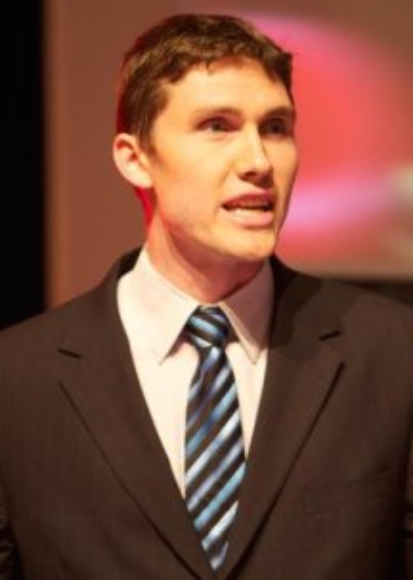
Speaker: Jonathan Lehe MPA/ID ’17, Director of New Programs, Precision Agriculture for Development (PAD)
About the talk: The majority of the world’s 450 million smallholder farmers and the 2 billion people who depend on them live in rural villages in developing countries, growing crops at close to subsistence levels to feed their families. Smallholders typically harvest only 30% to 50% of potential yields due to suboptimal farming practices in quickly changing contexts. Small changes in agricultural practices can substantially improve productivity and profitability, but farmers continue to lack the advice they need to close the yield gap and maximize their incomes, despite significant budgets spent on traditional in-person agricultural extension programs. However, mobile phone ownership is 50 to 70% in developing countries, and access to mobile phones is even higher—typically 70 to 90%—presenting a huge opportunity to provide digital agricultural advisory services. In addition to technological advances, recent advances in research methods can also be leveraged to improve the delivery of agricultural extension, including behavioral economics, big data and machine learning techniques, A/B testing, and rigorous evaluation techniques. Jonathan Lehe, Director of New Programs at Precision Agriculture for Development (PAD), will discuss how the organization is working to improve the lives of farmers in developing countries.
About the Speaker: Jonathan Lehe is PAD’s Global Research Manager. Mr. Lehe holds a Masters in Public Administration in International Development (MPA/ID) from the Harvard Kennedy School. He has more than 10 years of experience in the global health and education sectors, managing research projects and implementation of programs to scale up access to critical public services in Africa, Asia, and the Caribbean. He has previously worked at the Clinton Health Access Initiative, and consulted for the World Bank, Bridge International Academies, and MIT’s Jameel Poverty Action Lab.
Perkins Room (R429), Rubenstein Building 4th floor, HKS
Tackling Poverty Through Diplomacy and Development
March 29, 2019
|
12:00 pm
–
1:00 pm
Speaker: Fatema Z. Sumar, Vice President of Global Programs, OXFAM America
About the talk: At a time when 65 million people are displaced from their homes and more than 800 million people go to bed hungry every night, how can we make a real difference in tackling poverty & social injustices? During this talk, Fatema will draw on her experiences as a diplomat and development leader and offer case “samples” from her experiences working in the U.S. Senate, the U.S. State Department, the Millennium Challenge Corporation, and Oxfam America. We will explore different pathways to sustainable change – and how where you sit can define how you approach development.
About the Speaker: Fatema Z. Sumar joined Oxfam America in 2018 as Vice President of Global Programs, where she oversees our regional development and humanitarian response programs. Fatema comes to Oxfam with a distinguished career in the U.S. government, leading U.S. efforts to advance sustainable development and economic policy in emerging markets and fragile countries. Most recently, she served as Regional Deputy Vice President for Europe, Asia, Pacific, and Latin America at the U.S. Millennium Challenge Corporation (MCC), where she managed investments focused on international growth and poverty reduction. Prior to MCC, she served as the Deputy Assistant Secretary for South and Central Asia at the U.S. Department of State and as a Senior Professional Staff Member on the U.S. Senate Foreign Relations Committee. Fatema holds a Master’s in Public Affairs from Princeton University’s Woodrow Wilson School and a Bachelor of Arts in Government from Cornell University. She studied abroad at the American University in Cairo.
About the talk: Private global philanthropy is on the rise, which has resulted in a shift in the stakeholders involved in influencing international development policy and practice. During this talk, Nageeb Sumar will review trends in philanthropy- both with private foundations and individual donors- and present reflections on how these shifts are affecting issues in global health and development. He will touch on his recent experience at the Gates Foundation, as well as his current role at Fidelity Charitable to consider the appropriate role that philanthropy will play in the decades ahead to shape international development.
About the Speaker: Nageeb Sumar joined Fidelity Charitable in 2018 as a member of the Private Donor Group team. In his current role, Nageeb helps Fidelity Charitable’s most generous donors develop innovative solutions in catalyzing social change in the United States and around the world. Prior to joining Fidelity Charitable, he served in a leadership role at the Bill & Melinda Gates Foundation for nine years, overseeing the foundation’s work on policy, systems, and innovation in philanthropy. He also led and oversaw the Gates Foundation’s partnership with various governments in the U.S., Canada, and Asia-Pacific region.
Nageeb holds a law degree from McGill Law School, a master’s degree in international finance from Queen’s University School of Business, and bachelor’s degrees in Economics and Urban and Regional Planning from Cornell University.
Democracy Lab (R414 AB), Rubenstein Building 4th floor, HKS
Syria: The Catastrophe
February 22, 2019
|
1:00 pm
–
2:00 pm
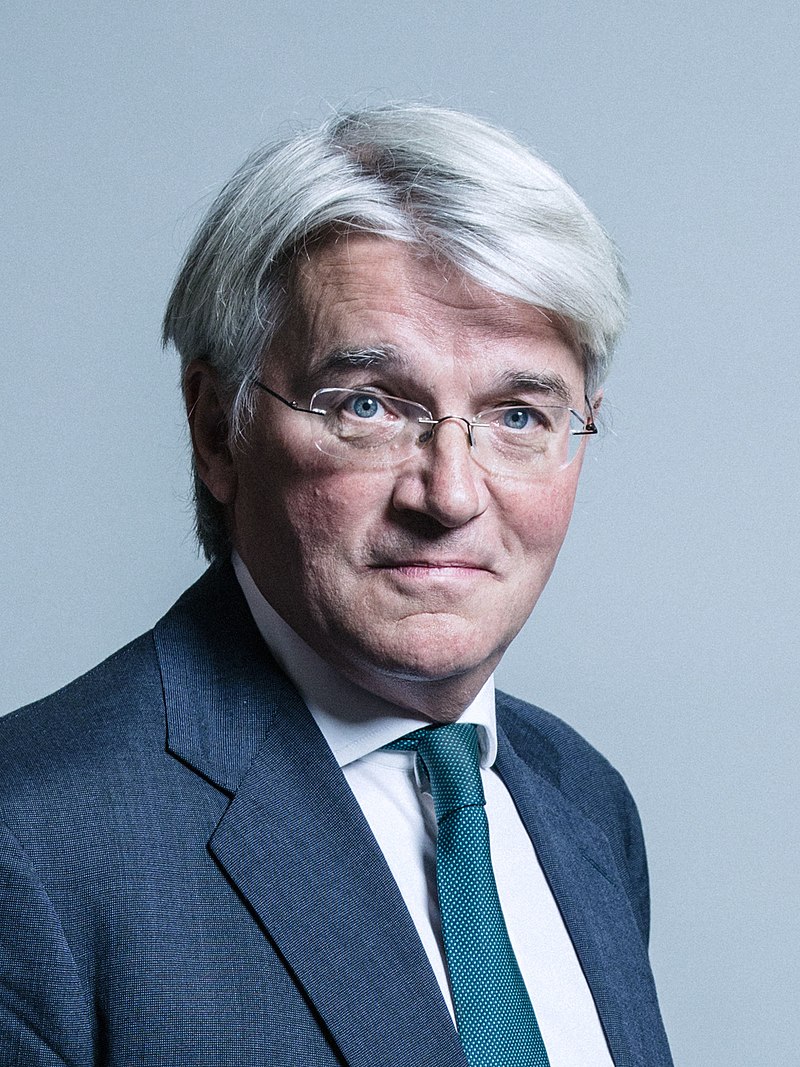
Speaker: Rt Hon. Andrew Mitchell, British MP and Former Secretary of State for International Development
About the Speaker: Rt Hon. Andrew Mitchell is a British Conservative Party politician who has been the Member of Parliament (MP) for Sutton Coldfield since 2001. He was the MP for Gedling from 1987 to 1997. He served in the Cabinet as Secretary of State for International Development from 2010 to 2012. Mitchell was elected President of the Cambridge Union in 1978. Before university, he served for several months as a United Nations military peacekeeper in Cyprus. He has extensive pre-government experience of the developing world, and is the founder of Project Umubano, a Conservative Party social action project in Rwanda and Sierra Leone in central and west Africa, launched in 2007. Mitchell was returned as MP for Sutton Coldfield at the 2017 general election, with a reduced majority.
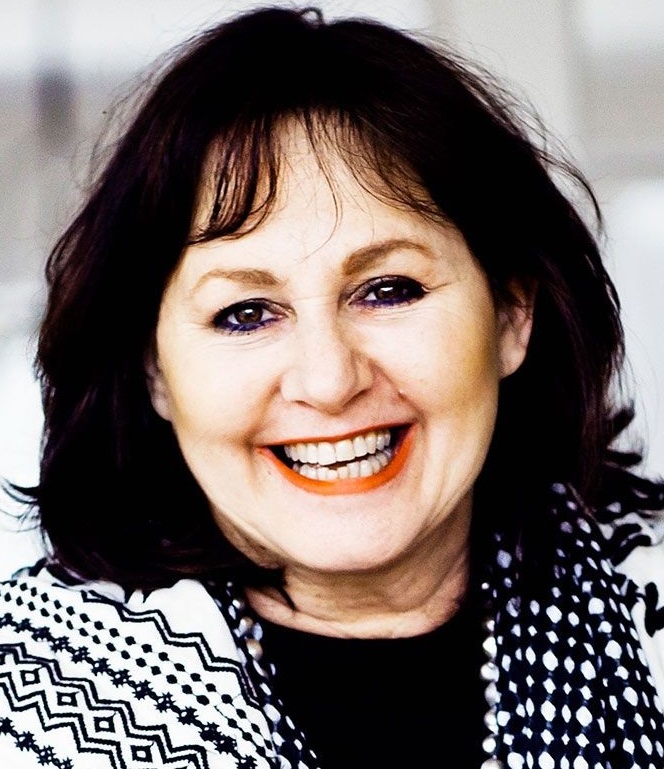
About the Speaker: Leslee was voted by the NY Times the No 2 Most Impactful Woman of 2015 (second to Hillary Clinton), and has been awarded the prestigious Swedish Anna Lindh Human Rights Prize (previously won by Madeleine Albright). She has also been named Safe’s Global Hero of 2015, Global Thinker by Foreign Policy. A BAFTA and multi-award winning filmmaker and Human Rights Campaigner, Leslee’s documentary “India’s Daughter”, has been critically acclaimed around the globe, won 32 awards (including the Peabody Award and the Amnesty International Media Award for Best Documentary 2016) and sparked a global movement to end violence against women and girls. The searing insights yielded by the 2½ journey making “India’s Daughter”, led Leslee to found UK-and-US-based Not for Profit global education initiative “Think Equal”.
Democracy Lab (R414 AB), Rubenstein Building 4th floor, HKS
PDIA in Action: Challenges & Experiences
March 1, 2019
|
1:00 pm
–
2:00 pm
Speaker: Salimah Samji, Director of the Building State Capability program at CID
About the talk: Building State Capability (BSC) program uses the Problem Driven Iterative Adaptation (PDIA) approach to help organizations develop the capability to solve complex problems and to implement public policies. PDIA is a process of facilitated emergence which focuses on problems (not solutions) and follows a step by step process (not a rigid plan) that allows for flexible learning and adaptation. In this seminar, Salimah will discuss the challenges and experiences BSC has faced when implementing PDIA in-the-field. She will draw on examples from BSC’s work in Albania and Sri Lanka, and talk about the recent launch of the PDIAToolkit, a Do-it-Yourself kit for teams to use when solving complex problems.
About the Speaker: Salimah Samji is the Director of Building State Capability (BSC). She has more than 15 years of experience working in international development on the delivery of public services, transparency and accountability, strategic planning, monitoring, evaluation and learning. She joined CID in 2012 to help create the BSC program. Today, she is responsible for providing vision, strategic leadership, oversight and managing projects and research initiatives. Salimah also leads BSC’s work on digital learning.
Before joining CID, she was an independent consultant working for the World Bank on issues of governance, and the Hewlett Foundation on strategic planning for one of their grantees. She has worked as a senior program manager at Google.org, leading a transparency and accountability initiative focused on empowering citizens and decision-makers, by making information on service delivery outcomes publicly available. Salimah has also worked at the World Bank as a social/rural development and monitoring and evaluation specialist in South Asia.
She has a Bachelor of Mathematics from the University of Waterloo (Canada) and a Masters in Public Administration in International Development (MPA/ID) from the Harvard Kennedy School. She is a qualified Casualty Actuary who changed careers after working for 18 months in Afghan refugee camps with a Canadian NGO (FOCUS Humanitarian Assistance) based in Pakistan. Salimah has worked and lived in Kenya, India, Pakistan, Tajikistan, Canada and the USA.
Democracy Lab (R414AB), Rubenstein Building 4th Floor, HKS
CID Speaker Series: How Cheap Smartphones and Off-The-Shelf Machine Learning are Changing the Government in Pakistan
November 2, 2018
|
9:30 am
–
10:30 am
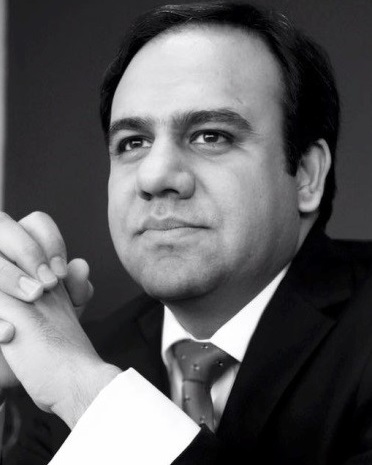
Speaker: Prof. Umar Saif,Chairman of the Punjab Information Technology Board
About the talk:In this talk, Prof. Saif will present a series of large-scale systems which use cheap smartphones and machine learning to inform policy in the government. Specifically, the talk will focus on three areas: (1) Agriculture: Their platform, FoodAtHome.org, uses free multi-spectral imagery, smartphone-based ground-truthing and distributed volunteer-computing to make weekly crop yield predictions in Punjab. (2) Vaccination: Their system, eVaccs, uses smartphones to track mobile vaccinators and satellite imagery to detect population clusters, resulting in vaccination improvement from 43% to 87%. (3) Data Collection: Their platform, SurveyAuto, enables an uber-style market place for crowdsourcing local data and uses machine learning to automatically analyze the quality of crowdsourced data.
About the speaker: Prof. Saif is Chairman of the Punjab Informational Technology Board (PITB), heading all public-sector IT projects in Punjab, Pakistan. He is also founding Vice Chancellor of ITU, a newly setup research university in Lahore. He holds a PhD from Cambridge University and worked at MIT for several years before returning to Pakistan. He was named as one of the top 35 young innovators by the MIT Technology Review in 2011 and a Young Global Leader by the World Economic Forum in 2010. He has received various accolades that include a Google Faculty Research Award, MIT Technovator, IEEE Percom Mark Weiser Award amongst others. In 2014, Prof. Saif was awarded Sitara-I-Imtiaz, one of the highest civil awards by the government of Pakistan, and he was named among the 500 most influential Muslims in the world in 2015-2018. Dr. Saif was appointed the UNESCO Chair for ICT for Development in 2018.
African Women Leadership: A Conversation with Oby Ezekwesili
Speaker: MME Oby Ezekwesili, Nobel Prize Nominee, 2019 Nigeria Presidential Nominee (ACPN), Convener, #BringBackOurGirls Movement
About the talk: Join the Africa Caucus, a student organization at HKS, as they celebrate African Women Leadership in conversation with MME Oby Ezekwesili, Nobel Prize Nominee, 2019 Nigeria Presidential Nominee (ACPN), Convener, #BringBackOurGirls Movement.
CID Speaker Series: The Economics and Politics of the Post-Financial Crisis Global Geography
October 22, 2018
|
6:00 pm
–
7:00 pm
Speaker: Ernesto Talvi, Academic Director of Centre for the Study of Economic and Social Affairs (CERES) and 2019 Presidential candidate, Uruguay
About the speaker: Ernesto Talvi is a nonresident senior fellow in the Global Economy and Development program at the Brookings Institution and Academic Director of CERES in Uruguay. He also serves as the director of the Brookings Global-CERES Economic and Social Policy in the Latin America Initiative, and as a visiting professor at Columbia University in New York. His work focuses on emerging markets macroeconomics with special emphasis on Latin America, stabilization programs, fiscal policy, capital flows and financial crises. Dr. Talvi has extensive experience in economic policy. Between 2001 and 2011 he was a special advisor to the Research Department of the Inter-American Development Bank (IADB) on global and regional macroeconomic and financial affairs, contributing to the policy dialogue and the development of cross-country research work. Between 1995 and 1997 he served as a senior research economist at the Research Department of the Inter-American Development Bank. He was also a visiting scholar at the Research Department of the International Monetary Fund (IMF) in 1994. Dr. Talvi also served as the chief economist and head of research of the Central Bank of Uruguay between 1990 and 1995. During that period, he was the chief advisor to Uruguay’s economic team (integrated by the Minister of Finance, the Governor of the Central Bank and the Director of Planning and Budget) and was in charge of the negotiations with the IMF. He was a professor of International Economics at the Universidad ORT in Uruguay and visiting lecturer at Universidad Torcuatto di Tella in Buenos Aires, Argentina, and Fundação Getulio Vargas in Rio de Janeiro, Brazil. Finally, he is a member of the World Economic Forum Global Agenda Council on Latin America, a founding member of the Latin-American Shadow Financial Regulatory Committee and was a member of the Executive Committee of the Latin American and Caribbean Economic Association. Dr. Talvi has published several academic and policy papers in books and journals. He has a Ph.D. in economics and an M.B.A. in finance from the University of Chicago and a B.A. in economics from the Universidad de la República Oriental del Uruguay.
Allison Dining Room, Taubman Building 5th Floor, HKS
CID Speaker Series: Better Growth & Better Climate: The New Climate Economy
October 19, 2018
|
11:00 am
–
12:30 pm
Speaker: Felipe Calderón Hinojosa, Former President of Mexico and Honorary Chair of the Global Commission on the Economy and Climate
About the talk: The presentation will focus on the key findings of the recently released New Climate Economy’s (NCE) 2018 Report on Unlocking the Inclusive Growth Story of the 21st Century: Accelerating Climate Action in Urgent Times. The presentation will introduce the key findings of the report, focusing on five key economic sectors: Energy, Cities, Food and Land Use, Water, and Industry, as well as the cross-cutting issues of Finance and Just Transition. President Calderon will then go on to highlight some examples of the low carbon transition taking root, as well as the economic and social benefits being reaped as a result. This will be followed by a deep dive into a case-study with NCE Lead Economist Leonardo Garrido on a Low Carbon Development Initiative in Indonesia, a collaboration with the Indonesian Planning Ministry (BAPPENAS) to create a low carbon 5-year development plan.
About the speaker:Felipe Calderón was President of Mexico from 2006 to 2012. During his presidency he prioritized the rule of law and public security; a competitive and job-creating economy; equal opportunities; sustainable development; effective democracy; and a responsible foreign policy. Among other achievement his government pushed through structural reforms to modernize the Mexican economy in key areas, such as public pensions, tax, the energy sector and universal healthcare. It also put in place the most ambitious infrastructure program in Mexican history, raising annual investment from 3 percent to 5 percent of GDP a year. During his period in office Mexico positioned itself as a global leader in fighting climate change: President Calderon presided over the successful UN climate conference in Cancun in 2010 and saw the passing of a comprehensive Climate Change Act in 2012.
Prior to becoming President Felipe Calderón served as Secretary of Energy, and General Director of BANOBRAS (the public works and infrastructure bank). He was elected to the Federal Congress in 1991, becoming Secretary-General of the PAN (National Action Party), President and Leader of the Parliamentary Group. He was earlier a Representative in the Assembly of Mexico City (1988-91).
Felipe Calderón is Chair of the Global Commission on the Economy and Climate; President of the Sustainable Human Development Foundation; and a Member of the Board of Directors of the World Resources Institute.
Felipe Calderón has a Bachelor’s degree in law, a Masters in Economics from the Instituto Tecnológico Autónomo de México; and a Masters in Public Administration from the John F Kennedy School of Government at Harvard University. He spent 2014-2015 as the Inaugural Angelopoulos Global Public Leaders Fellow at the Kennedy School.
RSVP is required for this event, please follow the prompts on this page to secure your space.