CID Speaker Series: Understanding Income Gaps within Mexico: Place-Specific vs. Individual Factors
September 14, 2018 | 12:00 pm – 1:00 pm
Speaker: Miguel Angel Santos, Adjunct Lecturer in Public Policy at Harvard Kennedy School of Government, Senior Research Fellow at the Center for International Development (CID) at Harvard University
About the talk: The literature on income gaps between Chiapas and the rest of Mexico revolves around individual factors. Yet, twenty years after the Zapatista rebellion, the schooling gap has shrunk while the income gap has widened, and we find no evidence indicating that Chiapas indigenes are worse-off than their likes elsewhere in Mexico. We explore a different hypothesis. Based on census data, we calculate the economic complexity of Mexico’s municipalities, a measure of knowledge agglomeration. Economic complexity explains a larger fraction of the income gap than any individual factor. Our results suggest that chiapanecos are not the problem; the problem is Chiapas.

About the speaker: Miguel Angel Santos is an Adjunct Lecturer in Public Policy at Harvard Kennedy School of Government, and a Senior Research Fellow at the Center for International Development (CID) at Harvard University.
At CID, he has been involved in various research projects aimed at helping governments to rethink their development strategies, both at the national and sub-national levels. Since he joined CID in August 2014, he has been involved in projects at the national level in Mexico, Panama, and Venezuela, and at the sub-national level in Mexico in the states of Chiapas, Baja California, Tabasco and Campeche; and the city of Hermosillo at Sonora state. He has also performed as project manager in the projects leading to the build-up of the Mexican Atlas of Economic Complexity, and the Peruvian Atlas of Economic Complexity.
Before joining the field of international development, Miguel worked for ten years in corporate finance and business development in Latin America, performing as Director of Finance for the Cisneros Group of Companies (1997-2003), Head of Corporate Finance for Mercantil Servicios Financieros (2005-2007), and Business Vice-President for Sony Pictures and Entertainment Latin America (2008-2009). At that point, he decided to switch tracks and get involved in development economics.
He holds two Master of Science degrees in International Finance and Trade (2011) and Economics (2012) from Universitat Pompeu Fabra, a Master in Public Administration from Harvard University (2014), and a Ph.D. in Economics at Universidad de Barcelona (2016). He was the head of the Macroeconomic Policy Team for presidential candidate Henrique Capriles Radonski in the Venezuelan elections of 2012.
CID Growth Lab Seminar: Why Can’t *Sri Lanka* Be First (In Software)?
May 9, 2018 | 12:30 pm – 2:00 pm
Speaker: Sanjiva Weerawarana, Founder, Chairman and Chief Architect of WSO2

About the talk: This talk is Sanjiva Weerawarana’s story of returning to Sri Lanka in 2001, starting an open source foundation, starting a business, joining the army and building software of all kinds. Sanjiva lived in the US for 16 years before that (his entire adult life) and has now been back for nearly 17 years. This talk will discuss his experiences and why he thinks Sri Lanka can easily become a leading technology creating country. He will also discuss how diaspora who genuinely want to, can practically play a role in improving Sri Lanka.
About the speaker: Sanjiva Weerawarana is Founder, Chairman and Chief Architect of WSO2, where he leads the design, architecture and development of Ballerina. After starting WSO2 in 2005, Sanjiva lead the creation of a complete set of middleware products before deciding to throw them all away and start again with a programming language approach. Prior to starting WSO2, he was at IBM Research where he led the development of Web services standards and technologies. He’s a long time open source developer and advocate and is a Member of the Apache Software Foundation, an Emeritus Board Member of the Open Source Initiative and Founder and Chief Scientist of the Lanka Software Foundation. He also volunteers in the Sri Lanka Army where he serves as the IT advisor. He received a Ph.D. in Computer Science from Purdue University in 1994.
Book Launch – Navigation by Judgment: Why and When Top Down Management of Foreign Aid Doesn’t Work
Speaker: Dan Honig, Assistant Professor of International Development, Johns Hopkins SAIS; PhD, Harvard Kennedy School
About the talk: Join the CID’s Building State Capability Program and the M-RCBG’s Sustainability Science Program for an interview with Dan Honig, author of Navigation by Judgment: Why and When Top Down Management of Foreign Aid Doesn’t Work. In his new book, Honig argues that high-quality implementation of foreign aid programs often requires contextual information that cannot be seen by those in distant headquarters. Tight controls and a focus on reaching pre-set measurable targets often prevent front-line workers from using skill, local knowledge, and creativity to solve problems in ways that maximize the impact of foreign aid. Drawing on a novel database of over 14,000 discrete development projects across nine aid agencies and eight paired case studies of development projects, Honig concludes that aid agencies will often benefit from giving field agents the authority to use their own judgments to guide aid delivery. This “navigation by judgment” is particularly valuable when environments are unpredictable and when accomplishing an aid program’s goals is hard to accurately measure.

About the speaker: Dan Honig is Assistant Professor of International Development and an affiliate of the International Political Economy program. Prof. Honig’s research focuses on the relationship between organizational structure, management practice, and performance in developing country governments and organizations that provide foreign aid. His new book (Navigation by Judgment: Why and When Top-Down Control of Foreign Aid Doesn’t Work) examines the optimal level of autonomy in foreign aid intervention delivery and the role political authorizing environments and measurement regimes play in circumscribing that autonomy.
Prof. Honig has held a variety of positions outside of the academy. He was special assistant, then advisor, to successive Ministers of Finance (Liberia); ran a local nonprofit focused on helping post-conflict youth realize the power of their own ideas to better their lives and communities through agricultural entrepreneurship (East Timor); and has worked for a number of local and international NGOs (e.g. Ashoka in Thailand; Center for Jewish-Arab Economic Development in Israel). A proud Detroiter, Prof. Honig holds an Honors BA from the University of Michigan and a Ph.D. in Public Policy from Harvard’s Kennedy School.
Sponsored by Matt Andrews, Bill Clark, and Jane Mansbridge.
A Conversation with Dr. Salam Fayyad and Prof. Rema Hanna
Speakers: Dr. Salam Fayyad, MEI Senior Fellow and Former Prime Minister of the Palestinian Authority and Rema Hanna, Jeffrey Cheah Professor of South-East Asia Studies, Harvard Kennedy School; Co-Director of the Evidence for Policy Design (EPoD) research program, Center for International Development, Harvard University
About the talk: A seminar with Dr. Salam Fayyad, MEI Senior Fellow and Former Prime Minister of the Palestinian Authority (2007-2013) and Rema Hanna, Jeffrey Cheah Professor of South East Asia Studies, Harvard Kennedy School and Co-Director, Evidence for Policy Design (EPoD), Center for International Development. Light lunch will be served.
About the Speakers:
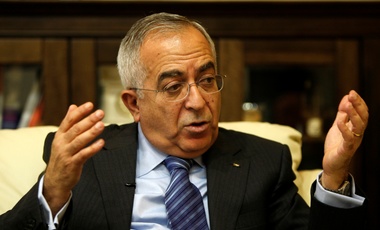
Salam Fayyad is an economist and former prime minister of the Palestinian Authority. With the International Monetary Fund (IMF) from 1987 to 2001, his tenure included serving as IMF resident representative in the West Bank and Gaza Strip from 1996 to 2001. He then served as manager of the Arab Bank in Palestine, and, in June 2002, he was named minister of finance of the Palestinian Authority. Until he resigned in December 2005, Dr. Fayyad served in that capacity on several cabinets, introducing in the process extensive financial reforms. In January 2006, he ran for elections on a slate of independents and was elected for the Palestinian Legislative Council (PLC), where he served as chairman of the Finance Committee. In March 2007, Fayyad was appointed again as minister of finance in a national unity government, and in June 2007, he was appointed prime minister, a position he held until he stepped down in June 2013. In August 2013, Fayyad founded “Future for Palestine,” a nonprofit development foundation. Currently, Dr. Fayyad is a Senior Fellow at the Middle East Initiative at Harvard Kennedy School of government, a Visiting Senior Scholar at the Woodrow Wilson School of Public and International Affairs at Princeton University, and a distinguished statesman with the Atlantic Council’s Brent Scowcroft Center on International Security. Dr. Fayyad holds a BSc from the American University of Beirut, an MBA from St. Edward’s University, and a PhD in economics from the University of Texas at Austin.

Rema Hanna is the Jeffrey Cheah Professor of South-East Asia Studies at the Harvard Kennedy School and Co-Director of the Evidence for Policy Design (EPoD) research program at the Center for International Development, Harvard University. In addition, Hanna is a Research Associate with the National Bureau of Economic Research (NBER), an affiliate of the Bureau for Research and Economic Analysis of Development (BREAD), and an affiliate at the Abdul Latif Jameel Poverty Action Lab (J-PAL). Additionally, as a faculty member at HKS Rema teaches in the MPA/ID Program.
Her research focuses on two main themes. First, she has concentrated on understanding how to improve the provision of public services in developing countries, particularly for the very poor. Her work in this area has ranged from testing models of corruption and bureaucratic absenteeism in the field to understanding how discrimination affects disadvantaged minority groups. Currently, she has been working on a series of field projects to understand what types of individuals are selected to receive social programs under different forms of targeting mechanisms. Second, Hanna aims to understand the implications of environmental policy on poor households in developing countries. Her recent work includes measuring the effects of improved air quality on labor market behavior, as well as assessing the long-run effects of a smokeless cookstove on health and fuel expenditures.
Prior to joining the Kennedy School, Hanna was an Assistant Professor of Public Policy and Economics at New York University. She holds a Ph.D. in Economics from MIT and a B.S. from Cornell University with Honors and Distinction.
Co-sponsored by Evidence for Policy Design (EPoD) at the Center for International Development.

CID SPEAKER SERIES: Preventing Violence in Caracas: A Community-Based, Evidence-Informed Approach
April 27, 2018 | 12:00 pm – 1:00 pm
Speakers: Roberto Patino, Founder and CEO, Caracas Mi Convive & Thomas Abt, Senior Research Fellow, Center for International Development at Harvard University
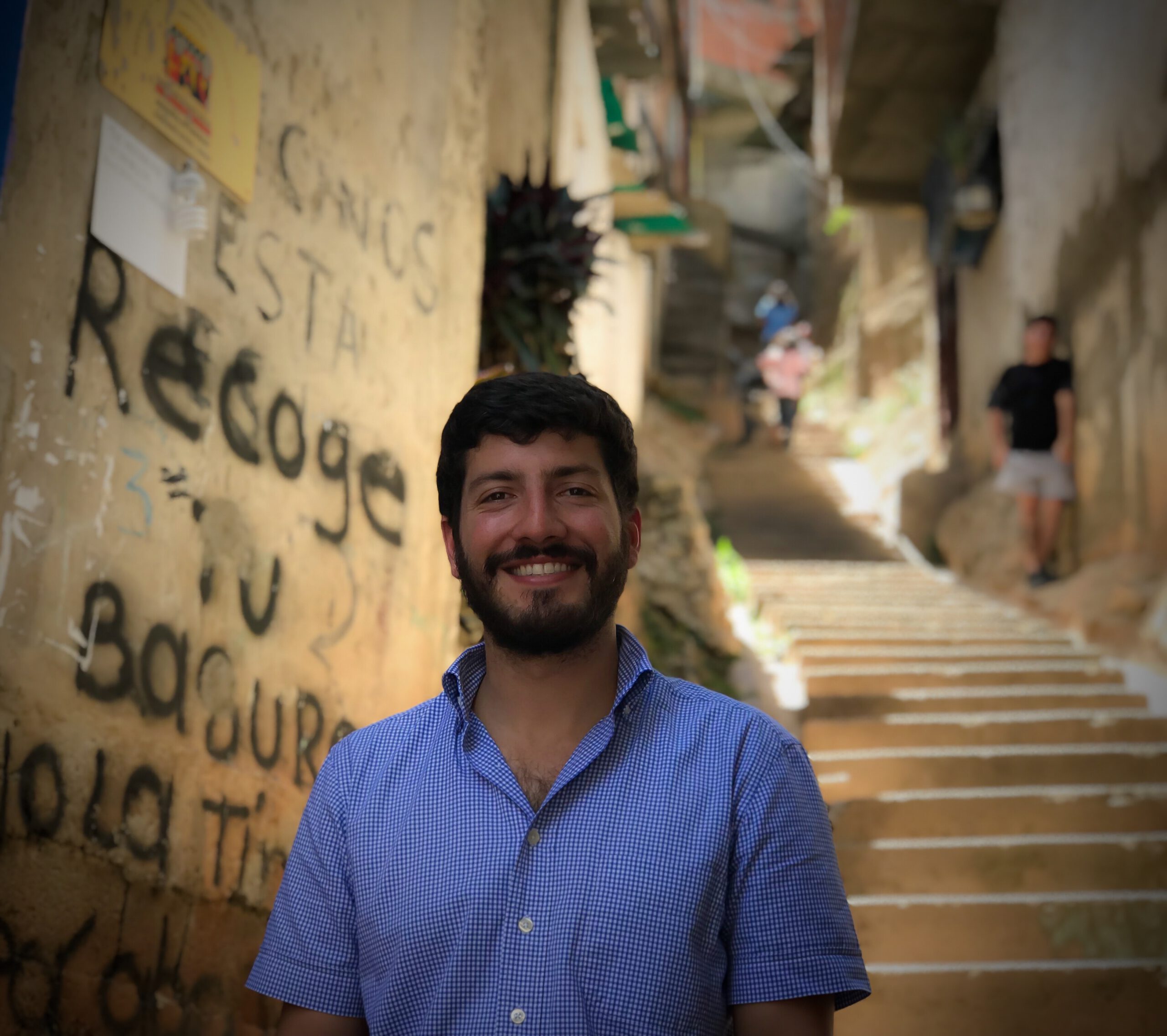
About the talk: Caracas Mi Convive works in the poorest communities of Caracas, Venezuela to prevent violence by building trusting relationships between and among community members. Founder, CEO, and HKS alum Roberto Patino will engage with Thomas Abt, CID’s Senior Fellow for Security and Development for a dialogue on the role of community-based organizations in preventing violence in Latin America, and on how scientific evidence can help to guide the process.
About the speakers: Roberto Patiño is 29 years old, he is from Caracas, Production Engineer from Simón Bolívar University, a Master in Public Policy from Harvard University and a member of Primero Justicia. During his college studies, he actively participated in the student movement, being co-founder and coordinator of initiatives such as Votojoven and the Jota Movement. He was president of the Federation of USB Centers and coordinated La Fuerza Joven, youth movement of the presidential campaign of Henrique Capriles Radonsky in 2012. During his studies abroad he specialized in citizen security and undertook a research and consulting project coordinated by professors from Harvard University on successful initiatives to reduce violence in other cities around the world.
He is currently coordinating the Caracas Mi Convive movement, a movement he founded in 2011 together with Leandro Buzón, with the aim of working to prevent violence in the city of Caracas through coexistence and close work with community leaders and vulnerable populations. He is also the creator and coordinator of the Alimenta la Solidaridad (Feed Solidarity) program, which offers lunches to 1030 children at risk of malnutrition in popular sectors of Caracas in collaboration with more than 700 volunteers.

Thomas Abt is a Senior Research Fellow with the Center for International Development, where he leads CID’s Security and Development Seminar Series.
Both in the United States and globally, he teaches, studies, and writes on the use of evidence-informed approaches to reducing gun, gang, and youth violence, among other topics. Abt is a member of the Campbell Collaboration Criminal Justice Steering Committee and the Advisory Board of the Police Executive Programme at the University of Cambridge. He also serves as a Senior Fellow to the Criminal Justice Policy Program at Harvard Law School and the Igarapé Institute in Rio de Janeiro, Brazil.
Before joining Harvard, Abt served as Deputy Secretary for Public Safety to Governor Andrew Cuomo in New York, where he oversaw all criminal justice and homeland security agencies, including the Divisions of Corrections and Community Supervision, Criminal Justice Services, Homeland Security and Emergency Services, and the State Police. During his tenure, Abt led the development of New York’s GIVE (Gun-Involved Violence Elimination) Initiative, which employs evidence-informed, data-driven approaches to reduce violence. He also established the Research Roundtable on Criminal Justice, a statewide criminal justice community connecting research with policy.
Before his work in New York, Abt served as Chief of Staff to the Office of Justice Programs at the US Department of Justice, where he worked with the nation’s principal criminal justice grant-making and research agencies to integrate evidence, policy, and practice. He played a lead role in establishing the National Forum on Youth Violence Prevention, a network of federal agencies and local communities working together to reduce youth and gang violence. Abt was also founding member of the Neighborhood Revitalization Initiative, a place-based development effort that was recognized by HKS as one of the Top 25 Innovations in Government for 2013.
Abt received a BA in Economics from the University of Michigan and a law degree with honors from the Georgetown University Law Center.
CID Speaker Series: Preparing for the next pandemic: Whose responsibility is it?
April 20, 2018 | 12:00 pm – 1:00 pm
Speaker: Susan Scribner, Director, Preparedness and Response project, DAI
About the Talk: In this session, Susan will lead an interactive exercise where participants will identify risks that might contribute to a pandemic, recommend interventions to mitigate the risks, and discuss how different government and non-government actors can contribute to pandemic preparedness and response.
About the Speaker:
Prior to joining DAI, Susan worked for 17 years for Abt Associates. From 2007 to 2009, she was Chief of Party for a project in Vietnam and Laos that built capacity to prevent, detect, and respond to Avian Influenza. She also led a health systems strengthening project in Uganda from 2004 to 2005. Susan has supported a wide range of projects from the home office and provided technical support and leadership in health policy, financing and governance, infectious diseases, and private sector health.
Susan is also helping to grow DAI Global Health’s work in health system solutions. She has extensive experience in strategy and business development and led the integration of Abt Associates’ Australian subsidiary, Abt JTA.
Panel Discussion – Women in International Development: Challenges and Opportunities
April 3, 2018 | 4:15 pm – 5:30 pm
Speakers: Martha Chen – International Coordinator, WIEGO 1997-2017
Isabel Guerrero Pulgar – Regional Vice-President, World Bank; Co-Founder, IMAGO
Jacqueline Bhabha – Professor of the Practice of Health and Human Rights, Harvard University
Salimah Samji – Director, CID Building State Capability Program
Join the Women in Power Professional Interest Council and the International Development Professional Interest Council for a panel discussion and Q&A on the topic of Women’s Careers in the Development Sector and the Challenges of Achieving Gender Equality Globally (SDG 5). Dinner & refreshments will be provided.
CID SPEAKER SERIES: Challenges of Latin America under the New Normal
April 23, 2018 | 12:00 pm – 1:00 pm
Speaker: Carlos Fernández Valdovinos, Governor of the Central Bank of Paraguay
About the Talk: Latin America experienced an average growth of 4.4% between 2004 and 2011, much higher than that observed in the nineties (3%). In large part, this improved performance was the result of a very favorable external situation, reflected in historically high commodity prices and financial conditions that were significantly lax. As a result, the social conditions of the countries improved markedly, reducing poverty rates and inequality in the region. More recently, this benign scenario has been reversed. Some economies that were better prepared were able to weather the “headwinds” with less difficulty, while others experienced a sudden adjustment. Consequently, a slowdown has been observed (in some cases, even a reversal) in the improvement of social indicators. The “golden years” are gone and, yet still policymakers must now develop new instruments to recover lost ground and advance the development process of our states. Clearly, “the solution” cannot and should not be the same for all cases. This seminar seeks to discuss how to face the challenges faced by Latin American countries in the new global context. What lessons we learned from the last crisis and what are the best policies to prepare us for the next one.
About the Speaker:
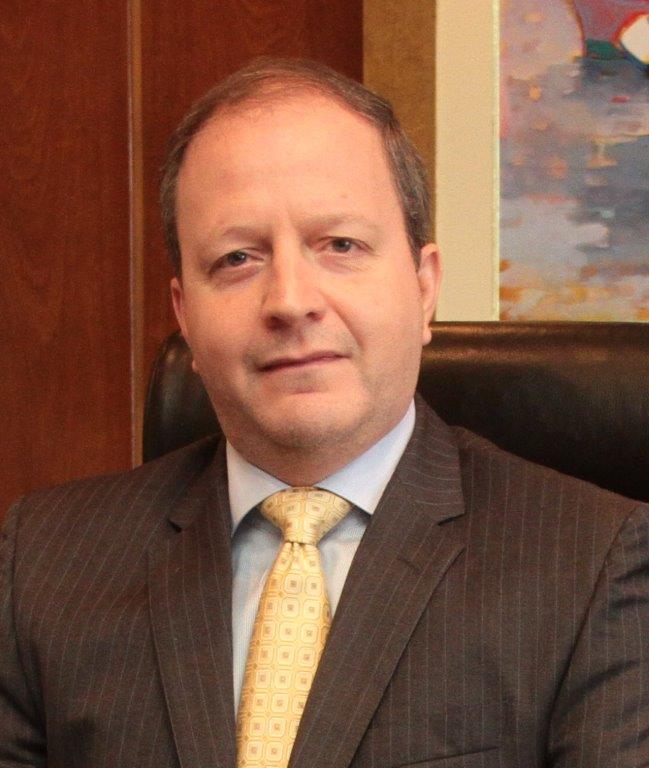
Carlos Fernández Valdovinos was designated Governor of the Central Bank of Paraguay (BCP) in October 2013 for a five-year period. He graduated from the Universidad Federal de Paraná (Federal University of Paraná – Curitiba, Brazil, 1990) and went on to study in the USA, obtaining a Master’s degree in Economics at the University of Illinois, Urbana-Champaign, in 1994. In 1999 he got his PhD degree from the University of Chicago.
He has had a vast pedagogical experience and has taught at both national and international universities: Universidad Nacional de Asunción (National University of Asunción), Universidad Católica “Nuestra Señora de la Asunción” – both Paraguayan; Universidad de San Andrés (Argentina), Georgetown University and the University of Chicago. He has worked on various research projects and has published a number of papers.
Professionally within the Central Bank he has acted as Monetary Programming Chief (1991-1992), Advisor to the Economic Studies Manager (1999-2001) and Economic Studies Manager (2001-2004).
He later moved to the USA to work for the World Bank as Senior Economist (2004-2006). From 2006 until his designation as President of the BCP he worked for the IMF as Senior Economist in the Africa, Europe and Western Hemisphere departments, and from 2011 onwards he was Resident Representative of the IMF for Brazil and Bolivia.
In 2015, 2016 and 2017, Global Finance awarded him Best Central Bank Governor of the Year. In 2017, The Banker (from the Financial Times Group) named him Central Banker of the Year -the Americas. In the same year, 2017, Mr. Fernandez has been awarded as the Central Bank Governor of the Year, being the first Latin American Governor prizewinner by Central Banking.
CID SPEAKER SERIES: A Public Address by Dr. Abdirahman Beileh, Minister of Finance of the Federal Republic of Somalia on Somalia’s development opportunities and challenges
April 13, 2018 | 12:00 pm
Speaker: H.E. Dr. Abdirahman D. Beileh, Minister of Finance, The Federal Republic of Somalia
About the Talk: While Somalia has achieved socio-economic progress in the past years, there are many remaining challenges to overcome. The overriding argument is that Somalia is truly unique in both the challenges it poses to the world and the opportunities it provides for national and regional progress and prosperity. In this talk, Dr. Beileh will talk about Somalia’s path to inclusive, sustainable prosperity.
SPACE IS LIMITED. PLEASE REGISTER TO THIS EVENT ON THE LINK BELOW TO SECURE A SEAT.
About the Speaker:
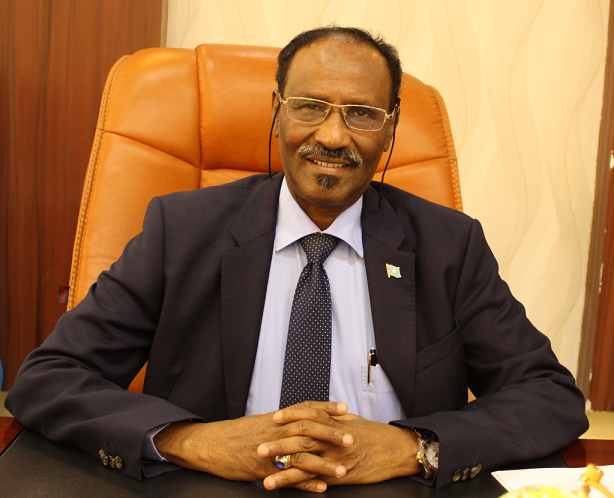
Dr. Beileh has 30 years of finance and development experience in Africa with the African Development Bank of which 17 years have been in senior management and leadership roles. This allowed him to directly and significantly contribute to the development of the Bank’s policies, programs, strategies and Africa’s economic future through these.
Dr. Abdirahman Dualeh Beileh served as Somalia’s Foreign Minister from January 2014 to February 2015 and in this period he oversaw the strengthening of bilateral and multilateral relations with established and new partner nations, agencies and organisations, including, the United Nations, African Union, European Union and Arab League. Dr. Beileh also set the vision for the first national Cabinet adopted Foreign Policy which today guides Somali Foreign Policy.
Dr. Beileh holds a PhD in Development Studies from the University of Wisconsin, Madison and enjoyed a successful academic career as an assistant professor in Finance at both Tennessee State University in the USA and King Saud University in the Kingdom of Saudi Arabia.
Dr. Beileh speaks English, Arabic and French alongside his native language of Somali.
This event is co-sponsored by the Harvard University Center for African Studies.

CID SPEAKER SERIES: Using and Generating Evidence for Policymaking: Security Interventions in Bogota
April 6, 2018 | 12:00 pm – 1:30 pm
Speakers: Daniel Mejia, Secretary of Security of Bogota & Chris Blattman, Professor of Global Conflict Studies, Harris School of Public Policy
Moderator: Thomas Abt, Senior Research Fellow, Center for International Development at Harvard University
About the talk: To better understand which security policies are most effective, the Mayor’s office of Bogota is testing and evaluating several policies, from “hotspot” policing to “broken windows” interventions. Join Daniel Mejia, current Secretary of Security and former Professor at Universidad de los Andes in Colombia, and Christopher Blattman, Professor at the Harris School of Public Policy, to discuss the challenges, the learnings and the opportunities from a policymaking perspective.
About the Speakers:
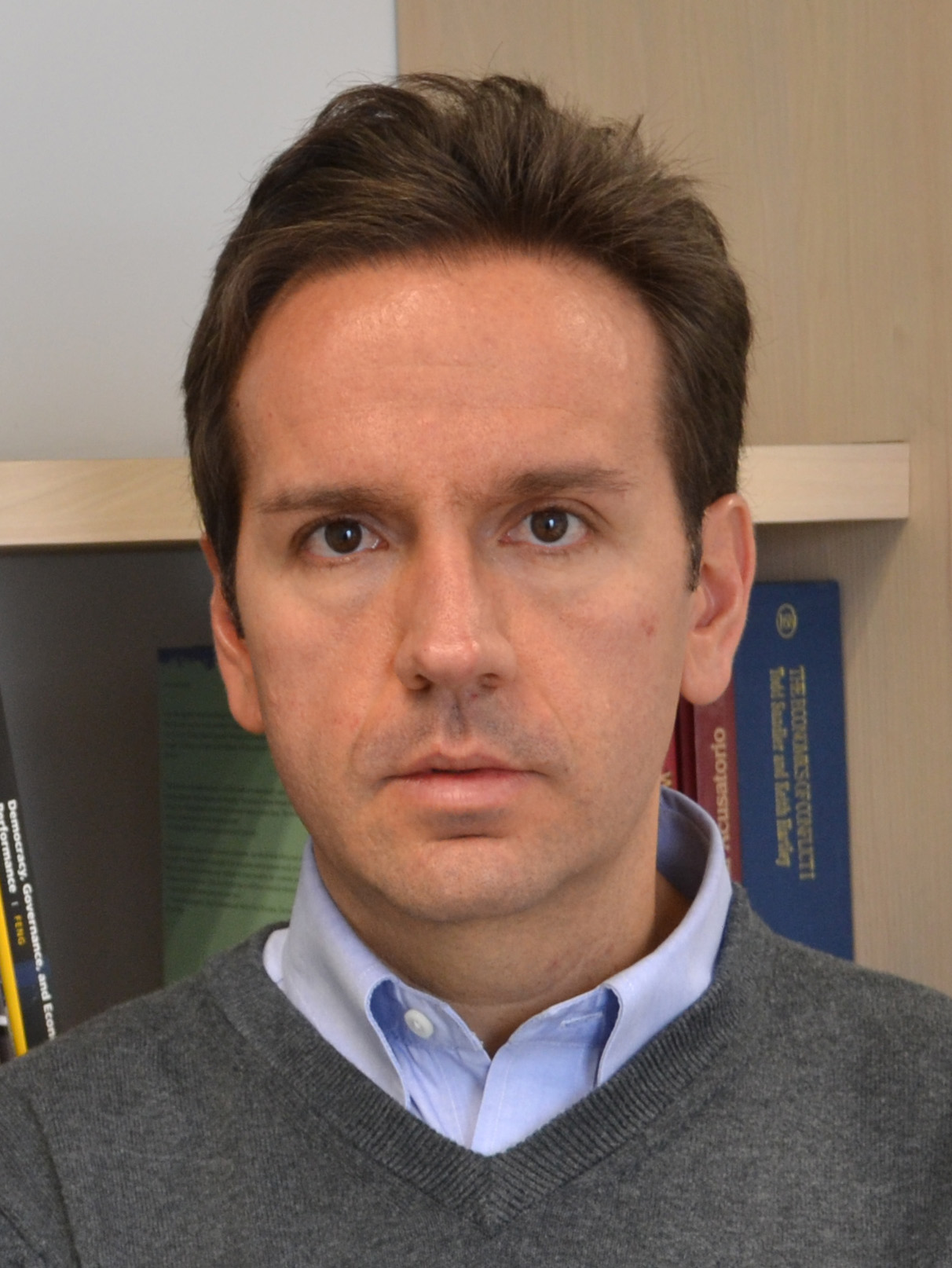
Daniel Mejia is Secretary of Security of Bogota, Colombia, where he is in charge of leading security and justice policies in the city of Bogota. Before becoming the first Secretary of Security of Bogota, Daniel was Associate Professor in the Department of Economics and Director of the Research Center on Drugs and Security (CESED) at Universidad de los Andes in Bogota, Colombia, where he taught since 2006. He received a BA and MA in Economics from Universidad de los Andes and a MA and PhD in economics from Brown University. Prior to joining Universidad de los Andes he worked as a researcher at the Central Bank of Colombia and Fedesarrollo. Daniel he has been actively involved in a research agenda whose main objective is to provide independent economic evaluations of security and anti-drug policies implemented in Colombia. In 2008 he was awarded Fedesarrollos´s German Botero de los Ríosprize for economic research. Daniel has designed and evaluated different interventions aimed at reducing crime in cities such as Medellin, Bogota and Cali. Among these, Daniel designed (together with the National Police and the Ministry of Defense) a hotspots policing intervention in Medellin and carried out an independent evaluation of this intervention. Also, he has evaluated the effects of the installation of CCTV cameras on crime in Medellin and the effects of the restriction of alcohol sales on crime in Bogota. Daniel, together with Alejandro Gaviria, published in 2013 the book “Políticas antidroga en Colombia: éxitos, fracasos y extravíos” (Anti-drug policies in Colombia: successes, failures and lost opportunities) at Universidad de los Andes, in Bogota. Between 2011 and 2012, Daniel was a member of the Advisory Commission on Criminal Policy and more recently he was the President of the Colombian Government´s Drug Policy Advisory Commission. In March 2015 Daniel was awarded the Juan Luis Londoño prize, awarded every other year to the best Colombian economist under 40.

Chris Blattman is the Ramalee E. Pearson Professor of Global Conflict Studies at The University of Chicago’s Pearson Institute and Harris Public Policy. He is an economist and political scientist who studies poverty, violence and crime in developing countries. He has designed and evaluated strategies for tackling poverty, including cash transfers to the poorest. Much of his work is with the victims and perpetrators of crime and violence, testing the link between poverty and violence. His recent work looks at other sources of and solutions to violence. These solutions range from behavioral therapy to social norm change and local-level state building. He has worked mainly in Colombia, Liberia, Uganda, Ethiopia, and Chicago’s South Side. Dr. Blattman was previously faculty at Columbia and Yale Universities, and holds a PhD in Economics from UC Berkeley and a Master’s in Public Administration and International Development (MPA/ID) from the Harvard Kennedy School. He chairs the Peace & Recovery sector at Innovations for Poverty Action (IPA) and the Crime, Violence and Conflict initiative at MIT’s Poverty Action Lab (JPAL).
This is event is co-sponsored by the Center for International Development, the Latin American Caucus and the David Rockefeller Center for Latin American Studies.