
CID Speaker Series: Shifting gears in Panama: Policy Recommendations for Sustainable and Inclusive Growth
February 2, 2018 | 1:00 pm – 2:00 pm
Speaker: Miguel Angel Santos, Adjunct Professor in Public Policy, Harvard Kennedy School and Senior Research Fellow, Center for International Development at Harvard University
About the talk: In the past decade, Panama has been one of the fastest growing economies in the world, having managed to double its income per capita. However, within this spectacular economic performance, there are warning signs that indicate to a significant income deceleration and an increase in inequality. Miguel Angel Santos will talk about CID’s research initiative aimed at exploring export diversification opportunities and understanding the potential binding constraints that Panama can run into in the process of shifting gears towards a sustainable economic growth.

About the Speaker: Miguel Angel Santos is an Adjunct Professor in Public Policy at Harvard Kennedy School of Government, and a Senior Research Fellow at the Center for International Development (CID) at Harvard University.
At CID, he has been involved in various research projects aimed at helping governments to rethink their development strategies, both at the national and sub-national levels. Since he joined CID in August 2014, he has been involved in projects at the national level in Mexico, Panama, and Venezuela, and at the sub-national level in Mexico in the states of Chiapas, Baja California, Tabasco and Campeche; and the city of Hermosillo at Sonora state. He has also performed as project manager in the projects leading to the build-up of the Mexican Atlas of Economic Complexity, and the Peruvian Atlas of Economic Complexity.
Before joining the field of international development, Miguel worked for ten years in corporate finance and business development in Latin America, performing as Director of Finance for the Cisneros Group of Companies (1997-2003), Head of Corporate Finance for Mercantil Servicios Financieros (2005-2007), and Business Vice-President for Sony Pictures and Entertainment Latin America (2008-2009). At that point, he decided to switch tracks and get involved in development economics.
He holds two Master of Science degrees in International Finance and Trade (2011) and Economics (2012) from Universitat Pompeu Fabra, a Master in Public Administration from Harvard University (2014), and a Ph.D. in Economics at Universidad de Barcelona (2016). He was the head of the Macroeconomic Policy Team for presidential candidate Henrique Capriles Radonski in the Venezuelan elections of 2012.
CID Speaker Series: Accountability in Education: Meeting our Commitments – the 2017/18 Global Education Monitoring Report
February 23, 2018 | 1:00 pm – 2:00 pm

Speaker: Priyadarshani Joshi, Research Officer at the Global Education Monitoring Report team, UNESCO
About the talk: This presentation will discuss the contents of the 2017/18 Global Education Monitoring Report – Accountability in Education: Meeting our Commitments. It will discuss progress in achieving SDG 4 on education, and key findings from the Report’s accountability analysis.
The Global Education Monitoring Report is developed by an independent team and published by UNESCO. It has the official mandate of monitoring progress in meeting the Sustainable Development Goal (SDG) 4: ensuring inclusive, equitable and good-quality education and lifelong learning for all.
The 2017/18 Report’s theme, Accountability in Education: Meeting Our Commitments, evaluates the role of accountability in global education systems. The report examines different accountability mechanisms that are used to hold governments, schools, teachers, parents, the international community, and the private sector accountable for inclusive, equitable and quality education. These include regulations, testing, monitoring, audits, media scrutiny and grass root movements. Through the analysis, the Report develops recommendations on accountability mechanisms to help build stronger education systems.
About the speaker: Priyadarshani Joshi is a Research Officer at the Global Education Monitoring Report team. Some of her core areas of interest and contribution in the team include education’s role in the Sustainable Development Goals (SDG) agenda and urban development, gender, and the role of the private sector. She has a PhD in Education Policy from the University of Pennsylvania. Her personal research agenda focuses on the consequences of private sector growth for the public sector, parental choice, and systemwide equity in lower income countries, building on her doctoral research in her home country of Nepal. She holds a Master’s in Public Administration (Economic Policy) from Princeton University, and an undergraduate degree in Economics and Chemistry from Amherst College. Her previous professional backgrounds included research positions at the IMF and consultancies at UNICEF and the World Bank. Priya also initiated, co-designed and was part of the board of an innovative mobile library project in Nepal, one of the World Bank Development Marketplace 2003 Education Sector Project winners.CID Speaker Series – Tertiary Education and the Sustainable Development Goals
February 9, 2018 | 1:00 pm – 2:00 pm
Speaker: Jamil Salmi, Global tertiary education expert
About the talk: The world of tertiary education has changed significantly in the past fifteen years. Developing countries have seen tremendous enrollment growth, especially in the private sector. Many nations are facing an exponentially rising demand as more young people graduate from high school as a result of the successful implementation of the Education for All agenda. The launch of the Sustainable Development Goals by the United Nations in September 2015 has given renewed consideration to the importance of education for development and the urgency of putting in place viable financing strategies.
Against this background the presentation will explore the crucial role played by tertiary education towards achieving the Sustainable Development Goals. It will underline that tertiary education finds itself at a crossroad today, as national systems are pulled in several directions by a combination of factors—crisis factors, rupture factors, and stimulation factors—bringing about both opportunities and challenges. How these forces in the tertiary education ecosystem play out in each country will determine the new “perils” and “promises” that are likely to shape the contribution of tertiary education to economic and social development in the years to come.
About the speaker:
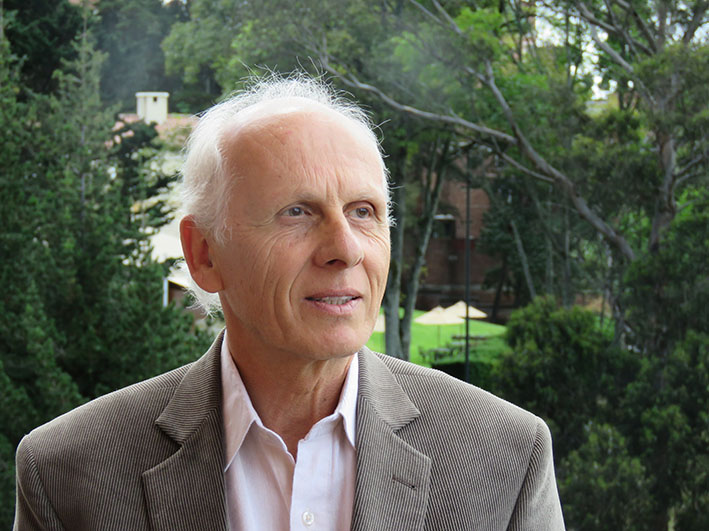
Dr. Salmi is a member of the international advisory board of several universities in Europe, Asia, Latin America and North America. He is also a member of the CHEA International Quality Group Advisory Council. Dr. Salmi is Emeritus Professor of higher education policy at Diego Portales University in Chile and Research Fellow at Boston College’s Center for Higher Education.
Dr. Salmi’s 2009 book addresses the “Challenge of Establishing World-Class Universities”. His 2011 book, co-edited with Professor Phil Altbach, was entitled “The Road to Academic Excellence: the Making of World-Class Research Universities”. His latest book, “Tertiary Education and the Sustainable Development Goals”, was published in August 2017.
CID Speaker Series: Bank Regulation meets Human Rights – Can bank regulators make the world a better place? How?
December 8, 2017 | 1:00 pm – 2:00 pm
Speaker: Daniel M. Schydlowsky, Ph.D., Superintendent of Banking, Insurance and Private Retirement Funds, Republic of Peru, 2011-2015.
About the Talk: Businesses listen to their bankers, the bankers listen to the Bank Regulators: this generates leverage. It also provides opportunity to further respect for Human Rights in a variety of ways, while lowering risk for the banking community.
About the Speaker: Dr. Daniel Schydlowsky served as Superintendent of Banking, Insurance and Private Pension Fund Administrators of Peru (SBS), August, 2011- November, 2015. He concurrently served as President of the Association of Bank Supervisors of the Americas (ASBA) and as Chairman of Governing Council of the Alliance for Financial Inclusion (AFI).
In October, 2015, he was awarded the inaugural Edward W. Claugus Award for Excellence in Regulation of Micro Finance. From 2001 to 2006, Dr. Schydlowsky served in the administration of President Alejandro Toledo as Presidential Counselor for Economic and Financial Affairs (2001-2002), as President of Peru´s Development Finance Corporation, COFIDE, (2002-2006), as member of the board of the Central Reserve Bank of Peru (2002-2006), as well as of the Andean Development Corporation (CAF), (2002-2006). He has also served as member of the Advisory Council and as Vice President of The Latin American Association of Development Finance Institutions, ALIDE. Dr. Schydlowsky has had a long and distinguished academic career.
During 2010, he was Robert F. Kennedy Visiting Professor in Latin American Studies at the Harvard Kennedy School of Government and concurrently Senior Fellow at the Mossavar-Rahmani Center for Business and Government of the Harvard Kennedy School. He was previously Professor of Economics at Boston University (1972-1990) and at The American University in Washington D.C. (1990-2001) and also a Visiting Scholar at the Hebrew University of Jerusalem. Since leaving government, he has served as consultant to the Alliance for Financial Inclusion, the Bill and Melinda Gates Foundation and the Inter-American Development Bank on matters of financial inclusion and digital finance. In earlier years, he has been a consultant to different international organizations such as the Inter-American Development Bank (IADB), the World Bank, UNDP and USAID.
He has worked in most Latin American countries as well as in Bangladesh, Indonesia, Romania and South Africa. He has published eight books and ninety-three professional articles on economic issues in numerous professional journals. Professor Schydlowsky holds a BA and MA in Economics and an LLB from San Marcos University, Peru, and an MA and PhD in Economics from Harvard. He was awarded a Doctorate honoris causa by San Marcos University, Peru, in November, 2015.
What I Learned as a Political Prisoner in Venezuela with Francisco Lara Marquez
November 13, 2017 | 5:15 pm – 6:30 pm
Join us for a conversation with Francisco Lara Marquez MPP 2012, a Venezuelan lawyer and political activist. Marquez was a political prisoner in Venezuela and later forced into exile in the United States. Tarek Masoud, Sultan of Oman Professor of International Relations will moderate. This discussion is part of the Ash Center’s Democracy in Hard Places Initiative.
Event organized by the Ash Center for Democratic Governance and Innovation, co-sponsored by the Center for International Development.
About the Speaker
Before his imprisonment in June 2016, Marquez was Chief of Staff of the Mayor of El Hatillo in Caracas starting in 2014. Previously he worked with the Lt. Governor of the State of Miranda. He obtained his Law degree in the Catholic University Andres Bello (2009) and his Master in Public Policy at the Harvard Kennedy School (2012). He is currently focusing on torture and human rights issues and researching on the erosion of democracy in Venezuela.
CID Speaker Series: A Steep Price: The Economics of Crime in Latin America and the Caribbean
October 31, 2017 | 4:30 pm – 5:30 pm
Speaker: Laura Jaitman, Research Economist, Inter-American Development Bank
About the talk: Latin America and the Caribbean is the most violent region on earth, with a homicide rate that is 4 times the global average. In this talk, first recent estimates of the economic cost of crime will be presented, and LAC high crime rates will be discussed within the Becker crime economics framework. Second, an innovative theoretical extension to this framework will be presented concerning the relationship between the production of durable goods and crime. Finally, specific policy implications for LAC countries will be explored.

Dr. Laura Jaitman is an Economist at the Research Department of the Inter-American Development Bank (IDB). She joined the IDB in 2014, where she previously coordinated the research agenda for the Citizen Security and Justice sector. Her principal area of research is the economics of crime, development economics, and the evaluation of crime prevention and crime control strategies. Before joining the IDB, she worked as a consultant at the World Bank, the IDB, and J-PAL in different developed and developing countries. Overall, Jaitman has more than a decade of working experience in the field of public policy. Jaitman holds a Ph.D. in Economics from University College London, UK. Her work has been published in international peer reviewed journals, such as the Economic Journal, and featured in international media.
CID Speaker Series: Education in Pakistan: What works to improve learning outcomes?
November 3, 2017 | 12:00 pm – 1:00 pm
Speakers: Niharika Singh, Ph.D. Student Affiiate, & Zainab Qureshi, Senior Program Manager, Evidence for Policy Design Program
About the Talk: Despite significant progress in enrollment and educational access, learning outcomes in Pakistan remain vastly substandard. At the same time, the country’s education landscape has changed dramatically with the mushrooming growth of low cost private schools, estimated to cater to 42% of school going children today. Evidence for Policy Design’s Learning and Education Achievement in Pakistan Schools (LEAPS) program is leading transformational research to understand the impacts of these changes, and examining how to catalyze innovation in the education ecosystem of Pakistan. This talk will outline the LEAPS team’s research on how to alleviate system-level constraints to improve education quality and student learning outcomes. Lead researchers on LEAPS are Tahir Andrabi (Pomona), Jishnu Das (World Bank) and Asim Khwaja (Harvard Kennedy School).
See the presentation: Education in Pakistan: What Works to Improve Learning Outcomes?
About the Speakers:
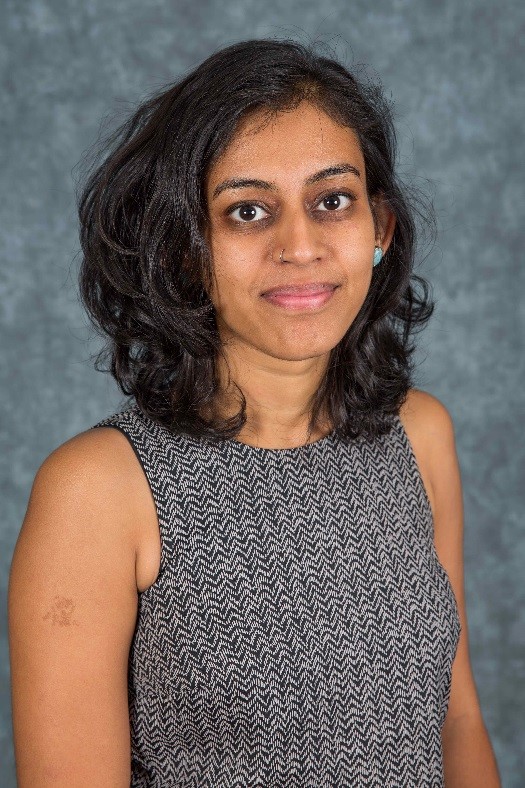
Niharika Singh is a PhD candidate in Public Policy at Harvard University and co-principal investigator on a LEAPS study examining the effects of providing unconditional cash grants to rural low cost private schools in Pakistan. Her research interests span a range of topics in development and labor economics. She received her BA in Economics from McGill University and worked as a research assistant in India and the U.S. prior to graduate school.
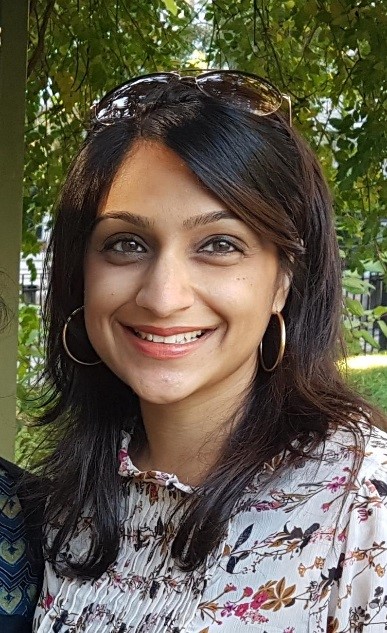
Zainab Qureshi is the LEAPS Senior Program Manager at EPoD, overseeing implementation of Education and policy research in Pakistan. She has previously worked at various organizations across the Education sector in Pakistan, implementing low cost Education delivery programs and developing an alternate model of education for low income schools. She holds a Master’s in Education (Ed.M.) from the Harvard Graduate School of Education and a BA in Economics and International Development from McGill University.
CID Speaker Series: Financial Inclusion and the Fintech Revolution: Key Trends Emerging in the New Digital World
October 27, 2017 | 12:00 pm – 1:00 pm

Speaker: Victoria White, Managing Director, Global Advisory Solutions, Accion
About the talk: Around the world, nearly 3 billion people have little to no access to the formal financial sector. They worry about how to pay school fees for their children, whether there will be enough to eat in the coming weeks, or whether they will be able to afford the medical care needed for a sick relative. For them, lacking access to financial services makes each of these basic transactions extremely challenging. For the past 55 years, Accion has been working with local financial institutions and now more recently with innovative fintech disruptors to change that. The digital revolution is changing nearly every aspect of how we live our lives, including how we bank, borrow and save. Join us for a discussion of how Accion and its partners are harnessing key digital trends to make quality financial services more accessible and cost effective to those who have been excluded.
About the Speaker: Victoria White has worked with Accion since 2000. She serves as a member of the senior management team and holds responsibility for overseeing Accion’s advisory support to its partners as Managing Director, Global Advisory Solutions. She also serves as a board director for a number of these institutions. Previously, Ms. White was Accion’s Regional Head for Asia. In this capacity, she was responsible for Accion’s management and technical services relationships with partner microfinance institutions, as well as for providing oversight of Accion’s investments in Asia. Prior to this, she supported Accion’s partners in Africa in such areas as strategic planning, bank downscaling, institutional transformation planning, and financial management.
Ms. White is co-author of Transforming Microfinance Institutions: Providing Full Financial Services to the Poor and Institutional Metamorphosis: Transformation of Microfinance NGOs into Regulated Financial Institutions, a contributing author to Commercialization of Microfinance: Balancing Business and Development, and author of A Case Study in Transformation: The Creation of Uganda Microfinance Limited.
Before working with Accion, Ms. White was a senior advisor for Calmeadow’s international operations, performing financial evaluations and transformation planning for MFIs throughout Africa. She has also worked as a program analyst for USAID’s Office of Microenterprise Development, both in Washington and in the South Africa mission. Prior to entering the microfinance field, Ms. White was a bank examiner with the Federal Reserve Bank of New York. Ms. White holds an M.A. in international affairs from the Johns Hopkins University School of Advanced International Studies (SAIS) and a B.A. in political science and French from Wellesley College.
CID Speaker Series: Does US development policy have a future under Trump?
December 1, 2017 | 1:00 pm – 2:00 pm

Speaker: Todd Moss, Senior Fellow, Center for Global Development and Former Deputy Assistant Secretary of State for African Affairs.
About the talk: Development policy has become increasingly intertwined with US national security, diplomacy, and economic policy. Yet the new administration has proposed severe budget cuts to USAID, State, and other relevant accounts. Where does development policy fit in the new administration? What will be different? Are there potential new opportunities?
About the speaker:
Todd Moss is senior fellow at the Center for Global Development where his research focuses on US-Africa relations, energy policy, and private investment. Moss is also a nonresident scholar at the Center for Energy Studies at Rice University’s Baker Institute and an adjunct professor at Georgetown.
He served as COO/VP at the Center from 2009-2016. Moss is currently working on electrification in Africa, cash transfers in new oil economies, and ideas for upgrading US development finance tools. In the past he led CGD’s work on Nigerian debt, reconstruction in Zimbabwe, the future of the World Bank’s soft loan IDA, and the African Development Bank. Moss served as Deputy Assistant Secretary in the Bureau of African Affairs at the U.S. Department of State 2007-2008 while on leave from CGD.
Previously, he has been a Lecturer at the London School of Economics (LSE) and worked at the World Bank, the Economist Intelligence Unit (EIU) and the Overseas Development Council. Moss is the author of numerous articles and books, including African Development: Making Sense of the Issues and Actors (2011) and Oil to Cash: Fighting the Resource Curse with Cash Transfers (2015).
Moss also writes an international thriller series for Penguin’s Putnam Books about a State Department crisis manager including The Golden Hour (2014), Minute Zero (2015), Ghosts of Havana (2016), and The Shadow List (forthcoming 2017).
CID Speaker Series: The Drivers of International Development
October 20, 2017 | 12:00 pm – 1:00 pm
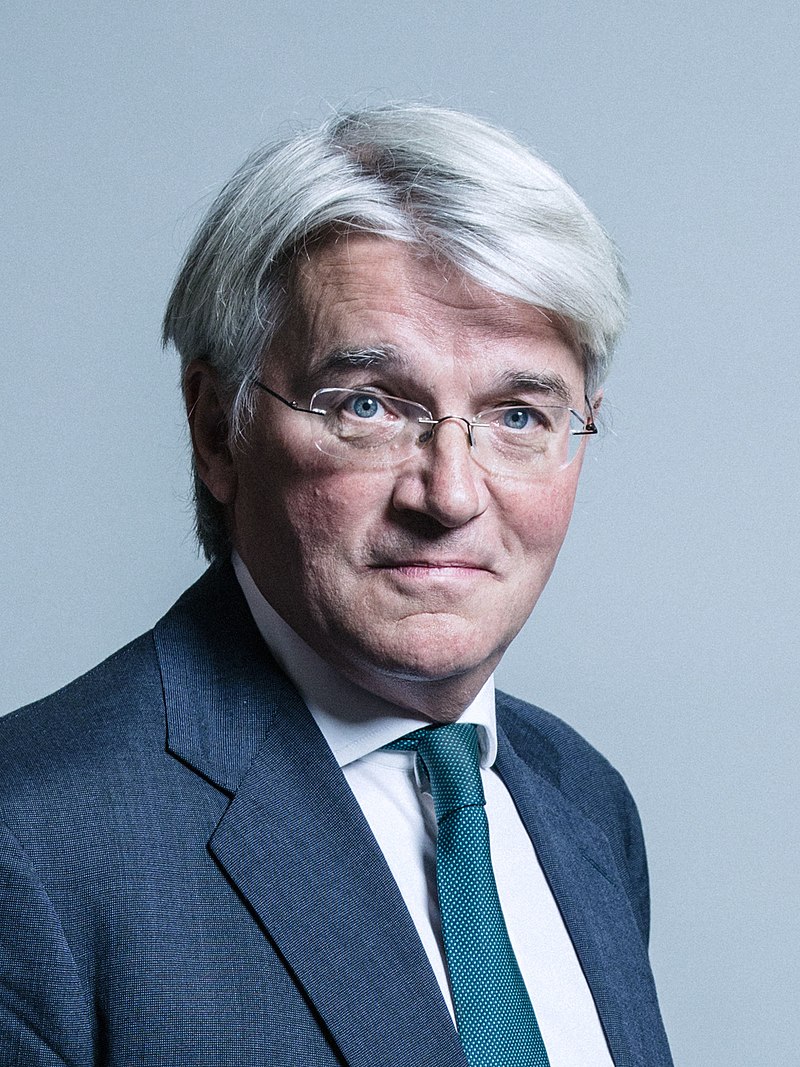
Speaker: Rt Hon. Andrew Mitchell, British MP and Former Secretary of State for International Development
About the talk: In the Globalisation era there are no longer far off places about which we know little. Our generations have the ability to do something about the colossal discrepancies of opportunity and wealth which disfigure our world. How should we grasp this opportunity? What will have the most effect? How do we reform the Rules based international system? Does international justice matter? Why we should all be optimists?
About the Speaker: Rt Hon. Andrew Mitchell is a British Conservative Party politician who has been the Member of Parliament (MP) for Sutton Coldfield since 2001. He was the MP for Gedling from 1987 to 1997. He served in the Cabinet as Secretary of State for International Development from 2010 to 2012.
Mitchell was elected President of the Cambridge Union in 1978. Before university, he served for several months as a United Nations military peacekeeper in Cyprus. He has extensive pre-government experience of the developing world, and is the founder of Project Umubano, a Conservative Party social action project in Rwanda and Sierra Leone in central and west Africa, launched in 2007.
Mitchell was returned as MP for Sutton Coldfield at the 2017 general election, with a reduced majority.