
CID Speaker Series: How did Venezuela Degenerate Into a Failed State and How Can it Recover?
October 13, 2017 | 12:00 pm – 1:00 pm
Speakers: Douglas Barrios, Research Fellow at CID; Ricardo Villasmil, Research Fellow at CID.
About the talk: In this event, we try to shed some light on Venezuela’s ongoing socioeconomic and political crisis through two complementary perspectives: the economic and the institutional. We will trace the origins of the crisis to policies taken during the oil price boom, discuss the self-destructing nature of current policies and present an agenda for democratic governance and socioeconomic recovery.
About the Speakers:

Douglas Barrios a Growth Lab Fellow at the Center for International Development at Harvard University. Before joining CID he worked in McKinsey’s Bogotá office as a Public Sector Specialist where he served public and social sector organizations throughout Latin America in a broad set of topics ranging from ICT promotion strategies to education policy design. Other previous experience include serving as an external policy adviser for local governments as well as political campaigns in Venezuela. He holds a Bachelor’s degree in Economics from the Universidad Metropolitana (Venezuela) and a Masters in Public Administration and International Development at the Harvard Kennedy School (MPA-ID 2012). His research interests are focused on urban dynamics, natural resource extraction and rent management, behavioral economics and the political economics behind policy design.

Ricardo Villasmil is a Research Fellow at the Center for International Development at Harvard University. Before joining CID, he worked in private consulting in Venezuela managing projects on a wide range of strategic and organizational issues for over a decade. His interests in development economics led him to the Andrés Bello Catholic University and to the Instituto de Estudios Superiores de Administración (IESA), where he has been teaching courses in development and macroeconomics for the past fifteen years. Ricardo’s involvement in public policy dates back to 1998, when he joined Venezuela’s Congressional Budget Office and the Ministry of Finance two years later. His interests in the practice of development prompted him to take advisory roles for Teodoro Petkoff in the 2006 runoff presidential election, for the democratic coalition between 2006 and 2012 and for presidential candidate Henrique Capriles as Head of his Public Policy Team in 2012. Ricardo holds a Master in Public Policy from IESA, a Master in Public Administration from Harvard University and a PhD in Economics from Texas A&M University.
DRCLAS Event: The Maritime Dispute Before the International Court of Justice: The Bolivian Arguments
September 25, 2017 | 4:00 pm – 6:00 pm
About the talk: For more than a century the diplomatic relationships between Bolivia and Chile have been conditioned by the Pacific war (1879-1884), where Bolivia and Peru confronted Chile. As a product of the war Bolivia lost access to the Pacific Ocean. This country has not renounced to the right of regaining sovereign access to the Ocean. In 2014, Bolivia presented a demand before the International Court of Justice (ICJ) in The Hague, Netherlands. In 2015 the ICJ declared itself legally qualified judge on the case, and the countries are now waiting for the final verdict of the Court. The former President of Bolivia, and current international spokesman of the Bolivian maritime cause in The Hague, Mr. Carlos Mesa, will expose the arguments behind the demand of his country, and the potential implications of the ICJ´s verdicts to the audience in Harvard University.
Mr. Mesa is a former constitutional President (2003- 2005) and Vice-president (2002-2003) of the Plurinational State of Bolivia. Since 2014 he is the international spokesman of the Bolivian Maritime Demand before the International Court of Justice in The Hague. Mr. Mesa is also an intellectual figure in his country. Author of more than twenty books and dozens of documentaries, many of them regarded as fundamental to understand the contemporary history of Bolivia, he won the Journalism prize “Rey de España” (1994) and National Journalism Prize of Bolivia (2012). Mr. Mesa is a regular contributor of open editorials in local and international media.
Moderator: Steven Levitsky, Professor of Government, Harvard University
This event is co-sponsored by the Harvard Kennedy School Latin American Caucus.
CID Speaker Series Seminar: Asian Development Bank’s 2017 Economic Forecast for Asia and the Pacific
October 11, 2017 | 1:00 pm – 2:00 pm
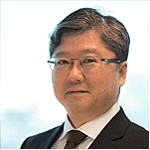
Speaker: Yasuyuki Sawada, Chief Economist and Chief Spokesperson on economic and development trends, Asian Development Bank
About the talk: The Asian Development Bank’s flagship economic publication Asian Development Outlook (ADO) provides a comprehensive analysis of macroeconomic issues in developing Asia. The ADO Update examines the prospects for developing Asia by sub-region: Central Asia, East Asia, South Asia, Southeast Asia, and the Pacific. This year’s ADO Update theme chapter, Sustaining Development Through Public-Private Partnerships, explores how Asia can use public-private partnerships (PPPs) to bolster infrastructure investment. The presentation will address:
• Economic prospects for developing Asia and the Pacific
• Key risks to the region’s outlook
• Implications of the Federal Reserve’s balance sheet normalization for Asia
• What is behind the recent uptick in trade and whether it can be sustained
• Measures governments can take to promote PPPs and ensure their success
This event is co-sponsored with:
CID Speaker Series Seminar: Leadership in the Sustainable Development Era
September 15, 2017 | 12:00 pm – 1:00 pm
Speakers: Sarmad Khan, Team Leader & Policy Advisor for Leadership Development, UN;
Ifoda Abdurazakova, Policy Specialist on Leadership Development, UN
About the talk: The global Sustainable Development Goals (SDGs) were adopted by all Member States of the United Nations General Assembly in 2015. The SDGs constitute 17 ambitious goals from ending poverty, to protecting livelihoods of people, to the climate and the environment. To meet the pace of a constantly changing world, we must equally change and adapt skillsets and leadership capabilities necessary to perform in the new era of ‘development’ type work? The event will provide an opportunity to explore leadership capabilities to respond to the complex challenges of sustainable development, and discuss how this transformation is taking shape at the United Nations.
About the Speakers:

Sarmad Khan is Team Leader and Policy Advisor for Leadership Development at the United Nations Development Operations Coordination Office in New York. At UN Headquarters, his work involves supporting the UN Development Group (UNDG) in articulating its direction to address complex, multidimensional leadership challenges of Agenda 2030 and the ‘leave no one behind’ imperative. His focus is on UN leadership policy and diversity, analyzing and building senior leadership capabilities, and designing learning strategies targeting UN field leaders and next generation leadership. He is one of the lead authors of the UNDG-endorsed UN leadership model promoting transformative and collaborative leadership, and is a member of the UN interagency steering committee charged with proposing a UN system-wide leadership framework. He previously worked with the UN System Staff College as Coordinator of its flagship programme on UN Leadership, and where he also advised global UN Country Teams on their multi-stakeholder consultations with governments and national partners on national development priorities. Prior to this, Sarmad spent over seven years working with senior leadership of UN operations in Iraq and Yemen focusing on UN development and transition strategies, and with UN Development Programme’s Crisis Prevention and Recovery Bureau in Geneva.

Ifoda Abdurazakova is a Policy Specialist on Leadership Development at the United Nations Headquarters in New York. Previously she focused on strengthening voices and leadership skills of youth activists in Uzbekistan through large-scale campaigns and establishing a young network. Ifoda led global projects on crowdsourcing, innovation and women’s economic empowerment and throughout her career, she worked with UN Women, UNDP, UN Secretariat, UN Peacekeeping Operations and non-profit organizations. She is an author of a publication promoting civic engagement and youth leadership. Ifoda is a Harvard Kennedy School alumn.
CID Speaker Series Seminar: Taking back control or losing it? An analysis of the possible economic impact of Brexit
September 25, 2017 | 4:15 pm – 5:30 pm
Speaker: María C. Latorre, member of the European Commission’s group of experts in International Trade; Professor, Universidad Complutense de Madrid.
About the talk: According to the majority of economic studies and to the European Commission’s estimations, Brexit will be far more damaging for the UK than for the European Union (EU). From the economic point of view, it seems less harmful for both to be able to negotiate a soft Brexit with rather small barriers. However, for political reasons the EU may want to deter other nations from following the UK’s path and may want to negotiate a self-damaging hard Brexit.
Brexit implies a shrinking of the EU market and, in that sense, is not good news for UK neither for EU. Firms lose profit opportunities. However, given the much larger size of EU, the process is much more harmful for UK. In fact, the EU is able to recover a sizeable part of its lost trade with the UK through the rise of intra-EU free trade. The UK has forsaken this privileged preferential access to EU, thus, negatively affecting half of its aggregate exports and imports. Overall, although Brexit may offer good prospects for some manufacturing firms coming from outside the Brexit block, at a more aggregate level benefits for outsiders seem scarce. Brexit’s scope seems confined to the EU landscape.
The negative impact of trade and foreign direct investment seems to be more important than UK’s contributions to the EU budget (with a maximum net fiscal saving of -0.53% of UK’s GDP), or reductions in the flows of migrants. However, very restrictive migration policies in the UK, such as a reduction in “all EU migrants”, “net EU migrants” or the “5-year policy” the government is talking about could be even more damaging than trade and FDI related effects of Brexit.

This event is co-sponsored by:

CID 2017 Open House
September 12, 2017 | 4:30 pm – 6:00 pm

Interested in the cutting edge research in International Development? Here’s your chance to meet CID faculty, research fellows and staff and learn about student programs and opportunities at CID’s Annual Open House.
Speakers: Matt Andrews, Faculty Associate at BSC; Andrea Carranza, CID Acting Executive Director; Asim Khwaja, Co-Director for EPoD Faculty; Ricardo Hausmann, CID Director
CID Speaker Series: Paying for Success: Innovative Designs for Social Impact
October 6, 2017 | 12:00 pm – 1:00 pm
Speaker: Max Bode, Junior Partner at Instiglio
About the talk: In the last decade, Results-Based Financing (RBF) has gained tremendous momentum in the international development space. Now, about $30 billion in funding have been disbursed through RBF mechanisms in 78 low and middle-income countries. The promise of RBF is simple: by tying the funding of social services to results, RBF drives results. It does so through aligning incentives, introducing accountability, encouraging prioritization, and allowing for learning and flexible adaptation in implementation. Anchored in Instiglio’s experience in designing impact bonds, outcomes markets, and national-to-local government transfers, Instiglio’s Junior Partner and HKS alumni Max Bode will discuss RBF’s track-record and potential to deliver on its promise of making social services more impactful. The talk will draw on a systematic review of trends in RBF, and case studies of education, workforce development, and poverty alleviation projects in India, Colombia, Morocco, and Kenya.

About the speaker: Max heads the Washington DC office’s client engagement, fundraising, talent recruitment effort, and provides strategic and technical guidance on Instiglio’s Africa portfolio. Prior to joining, Max was a civil servant and ODI Fellow in Zanzibar’s Ministry of Health, worked with Rwanda’s Ministry of Finance, and investigated the effectiveness of social interventions as a Senior Research Fellow at Harvard’s Center for International Development. Max holds an MPA/ID from the Harvard Kennedy School, a Masters from Barcelona Graduate School of Economics, and a Bachelors from Maastricht University.
CID Speaker Series Seminar: The power of attraction: the European Union’s gravitational pull for development and stabilization
September 21, 2017 | 12:00 pm – 1:00 pm
Speaker: Dr. Johannes Hahn, Commissioner for Neighbourhood Policy and Enlargement Negotiations, European Commission
About the Talk: Through its enlargement and neighborhood policies, the European Union aims at exporting stability to the Western Balkans, Eastern Europe and the Southern Mediterranean regions. With a broad policy toolbox, the EU fosters political stabilization and socioeconomic transformation, thus helping to lay the basis for the development of its partners. Commissioner Hahn, who spearheads this policy for the EU, will report on the latest successes and challenges, including the migration crisis in the Mediterranean.

This event is co-sponsored by:

CID Speaker Series: Impact Investing in Emerging Markets: Reaching its full potential
September 29, 2017 | 12:00 pm – 1:00 pm
About the talk: The most recent GIIN Annual Impact Investor Survey reports that total assets under management (AUM) for impact investing reached US$114 billion, being roughly $36 billion dedicated exclusively to emerging markets. This represents massive growth over just two years when, in 2015, the market estimate was $60 billion. This growth, coupled with numerous reports and surveys showing millennials’ strong interest in aligning values with investments, suggests money and talent are pouring into the nascent field. Despite this rapid growth, key improvements are needed before this promising field can reach its full potential. In his talk, Kusi Hornberger will present his thoughts on eight of the most pressing issues and recommendations for improvement along the impact investment cycle for emerging markets – from goal setting to reporting results.

About the Speaker: Kusi Hornberger is a Senior Project Manager in the Washington, DC office of Dalberg Global Development Advisors. Kusi has 10+ years of project management, investment and strategy experience working with a range of public, private, and non-profit clients, including the Bill and Melinda Gates Foundation, ECOM Agroindustrial Corp., World Bank Group, Starbucks, Experian and USAID.
Prior to joining Dalberg, Kusi was Vice President of Investment Research & Strategy at Global Partnerships where he oversaw the investment strategy and portfolio including analysis of investment opportunities in agriculture cooperatives, artisan retailers, cookstove and solar lamp manufacturers and distributors, private health clinics as well as integrated microfinance institutions across Central/South America and East Africa. He was also the in-house expert on agriculture finance, leading the investment appraisal and relationships for portfolio of investments in >40 rural and agriculture focused social enterprises across range of commodity value chains including coffee, cocoa, fresh vegetables and nuts. Further he was responsible for managing GP’s relationship with the Council for Smallholder Agriculture Finance (CSAF), served as an advisor to the Finance Alliance for Sustainable Trade (FAST) and Agros International and presented at numerous conferences (Cracking the Nut, FLII, SCAA, SOCAP, etc.) about GP’s approach to investing in agriculture value chains.
Kusi also has experience working as a management consultant, spending three years at Bain & Company based out of its Sao Paulo, Brazil office and serving a wide range of public, private and non-profit clients across South America including several leading agribusiness multinationals and foundations during his time there he authored a Bain Brief titled “The State of Impact Investing in Latin America” As well as working as an Investment Officer for six years with the International Finance Corporation where he spent three years based out of the Bogota, Colombia office and held lead the formation of the investment promotion agency Invest in Bogota as well as shift the strategy of Brazil’s investment and export promotion agency APEX-Brasil to a sector led approach. He also published numerous articles on private sector development and competitiveness including “Attracting FDI – How Much Does Investment Climate Matter?”. Finally, he started his career working with TechnoServe Inc. in East Africa where he was one of the early members of the coffee team working with Peets Coffee & Tea that helped transform the coffee sector in Rwanda and Tanzania. Kusi holds a Masters of Business Administration from INSEAD Business School in Singapore, a Master of Public Administration in International Development from the Harvard Kennedy School and a Bachelors of Arts from the University of Pennsylvania. He is fluent in Portuguese, Spanish and conversant in Swahili.
CID Speaker Series Seminar: Learning by Doing, Learning by Erring: Climate Resilience in the Latin American City
September 8, 2017 | 12:00 pm – 1:00 pm
Speaker: Carolina Zambrano-Barragán, Climate change and urban sustainability expert from Quito, Ecuador.
About the talk: Latin America needs new approaches to face the impacts of climate change and rapid urbanization, particularly in a context of poverty and rising inequality. Cities in the region have emerged as a central actor for social and political innovation, and urban areas offer a unique scenario to pilot transformational change. In this event, Carolina Zambrano will discuss the main opportunities and challenges for climate action in Latin American cities, with a focus on urban resilience and adaptation. She will share key insights from her personal experience in Quito, Ecuador, and discuss the importance of dynamic socio-institutional frameworks and policies for climate change management.
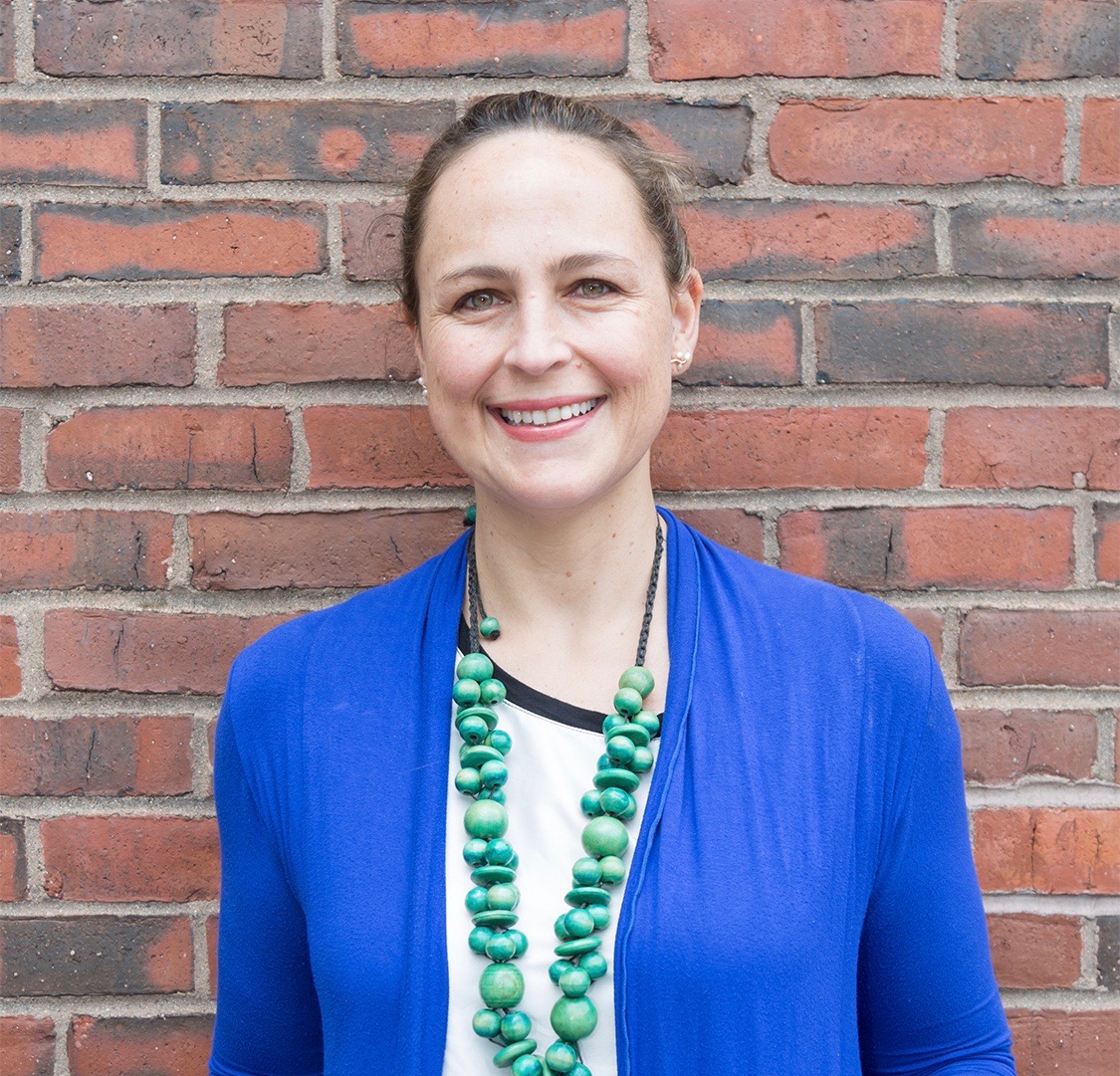
About the speaker: Carolina Zambrano-Barragán, MC/MPA 2018, is a climate change and urban sustainability expert from Quito, Ecuador. Before coming to HKS, she worked at Avina Foundation as Latin American Director of Sustainable Cities and as a professor at the Universidad Andina Simón Bolivar’s Master’s Program on Climate Change. Formerly, Carolina was Director of Environmental Policy for the city of Quito and Undersecretary of Climate Change at Ecuador’s Ministry of Environment. She has carried out several consulting and research initiatives around the world, integrating climate action with social inclusion, urban policy, and biodiversity conservation. Carolina is a Biologist and holds a Master’s on Environmental Management from Yale University.