
Development Talk: In Search of the Promised Land – Mobility and Economic Outcomes in the Age of Mass Migration
September 20, 2022 | 12:00 pm – 1:00 pm
The Growth Lab’s Development Talks is a series of conversations with policymakers and academics working in international development. The seminar provides a platform for practitioners and researchers to discuss both the practice of development and analytical work centered on policy.
Speaker: Leah Boustan, Professor of Economics, Princeton University
Moderator: Nikita Taniparti, Research Manager, Growth Lab
Prof. Leah Boustan will discuss her work, including her new book Streets of Gold: America’s Untold Story of Immigrant Success, on the mass migration from Europe to the United States in the late 19th and early 20th centuries. The discussion will address the prevailing narratives about the effects of migration and what that might suggest for policy design and debate.
Whether attending in-person or virtually, please register in advance, and contact Chuck McKenney with any questions. Non-Harvard attendees should review the HKS Visitor’s Policy.
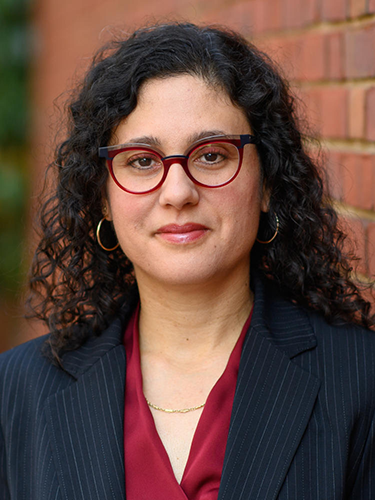
About the speaker:
Leah Boustan is a Professor of Economics at Princeton University, where she also serves as the Director of the Industrial Relations Section. Her research lies at the intersection between economic history and labor economics. Her first book, Competition in the Promised Land: Black Migrants in Northern Cities and Labor Markets (Princeton University Press, 2016) examines the effect of the Great Black Migration from the rural south during and after World War II. Her recent work, including her new book Streets of Gold: America’s Untold Story of Immigrant Success (PublicAffairs 2022), is on the mass migration from Europe to the United States in the late nineteenth and early twentieth centuries.
Professor Boustan is co-director of the Development of the American Economy Program at the National Bureau of Economic Research. She also serves as co-editor at the American Economic Journal: Applied Economics. Professor Boustan was named an Alfred P. Sloan Research Fellow in 2012 and won the IZA Young Labor Economists Award in 2019.
Development Talks: Why We Fight – The Roots of War and the Paths to Peace
July 28, 2022 | 10:00 am – 11:00 am
The Growth Lab’s Development Talks is a series of conversations with policymakers and academics working in international development. The seminar provides a platform for practitioners and researchers to discuss both the practice of development and analytical work centered on policy.
Speaker: Chris Blattman, Ramalee E. Pearson Professor of Global Conflict Studies at The University of Chicago’s Pearson Institute and Harris School of Public Policy
Chris will discuss his new book, Why We Fight: The Roots of War and the Paths to Peace. The book draws on decades of economics, political science, psychology, and real-world interventions to lay out the root causes and remedies for war, showing that violence is not the norm; that there are only five reasons why conflict wins over compromise; and how peacemakers turn the tides through tinkering, not transformation.
Moderator: José Morales-Arilla, Research Fellow, Growth Lab; Postdoctoral Fellow, Department of Politics, Princeton University
Whether attending in-person or virtually, please register in advance, and contact Chuck McKenney with any questions. Room attendance is limited to the Harvard community.

About the speaker:
Chris Blattman is the Ramalee E. Pearson Professor of Global Conflict Studies at The University of Chicago’s Pearson Institute and Harris School of Public Policy, he coleads the Development Economics Center and directs the Obama Foundation Scholars program. His work on violence, crime, and poverty has been widely covered by The New York Times, The Washington Post, The Wall Street Journal, Financial Times, Forbes, Slate, Vox, and NPR. He is an economist and political scientist who studies violence, crime, and underdevelopment. His most recent book is Why We Fight: The Roots of War and the Paths to Peace.
Research Seminar: Detection of Artisanal and Small-scale Mines
June 6, 2022 | 10:15 am – 11:30 am
The Growth Lab Research Seminar series is a weekly seminar that brings together researchers from across the academic spectrum who share an interest in growth and development.
Speaker: Mathieu Couttenier, Professor, University of Lyon and Ecole Normale Superieur
Abstract: Artisanal and small-scale mines (ASM) are on the rise. They represent a crucial source of wealth for numerous communities but are rarely monitored or regulated. The main reason being the unavailability of reliable information on the precise location of the ASM which are mostly operated informally or illegally. We address this issue by developing a strategy to map the ASM locations using a convolutional neural network for image segmentation, aiming to detect surface mining with satellite data. Our novel dataset is the first comprehensive measure of ASM activity over a vast area: we cover 1.75 million km² across 13 countries in Sub-Tropical West Africa. Our procedure is remarkably robust, which makes us confident that our method can be applied to other parts of Africa or the World, thus facilitating research and policy opportunities on this sector.
Whether attending in-person or over Zoom, please register in advance. Room attendance in WEX-434 is limited to the Harvard community only. Contact Chuck McKenney with any questions.
About the speaker:
Mathieu Couttenier obtained his PhD in Economics in 2011 at the University Paris 1 Sorbonne, Paris School of Economics. Before joining the University of Lyon and Ecole Normale Superieur (September 2018), he was Assistant Professor at the University of Geneva. He was also post-doc at the University of Lausanne, visiting researcher at the department of political sciences at Stanford and at the economic department at Sciences Po Paris. His research is filled with interactions between economics and political sciences but also cultural, institutional and geographical issues. He focuses on microeconomic questions, in particular in the field of applied political economy. His main research interests are in the understanding of violence and civil wars. He has published many academic papers on the role played by income shocks, natural resources or climate on the diffusion of conflicts over space and time. Some of his present research agenda also studies the political economy aspects of media coverage or of international economics. He has published in many leading peer-refereed journals, such as the American Economic Review, Economic Journal, Review of Economics and Statistics, Journal of the European Economic Association, Journal of Development Economics and the Journal of Comparative Economics.
Research Seminar: Land Quality
June 7, 2022 | 10:15 am – 11:30 am
The Growth Lab Research Seminar series is a weekly seminar that brings together researchers from across the academic spectrum who share an interest in growth and development.
Speaker: David N. Weil, James and Merryl Tisch Professor of Economics at Brown University
Abstract: We develop a new measure of land quality by estimating weights in a Poisson regression of population in grid cells on a vector of geographic characteristics and country fixed effects. Aggregating to the level of countries, we construct average land quality (ALQ) and quality-adjusted population density (QAPD). We establish several novel facts. First, current income per capita is positively correlated with ALQ. Second, while income today is unrelated to conventional population density, it is strongly negatively related to QAPD. Third, this negative relationship was not present in 1820 and emerged because today’s lower income countries have experienced faster population growth since then. Fourth, countries with higher average land quality began sustained modern economic growth earlier, and this earlier takeoff largely explains the ALQ-modern income relationship. We posit a framework in which higher land quality led to denser populations in Malthusian equilibrium and, via agglomeration effects, an earlier takeoff from that equilibrium. Less dense countries that took off later experienced larger multiplications of their populations over the course of the demographic transition due to the import of health technologies from countries that took off first.
Paper co-authored with J. Vernon Henderson and Adam Storeygard
Whether attending in-person or over Zoom, please register in advance. Room attendance in R-304 is limited to the Harvard community only. Contact Chuck McKenney with any questions.
About the speaker:
David N. Weil is James and Merryl Tisch Professor of Economics at Brown University, director of the James M. and Cathleen D. Stone Wealth and Income Inequality Project at Brown, and a research associate of the National Bureau of Economic Research. Weil has written widely on various aspects of economic growth, including the empirical determinants of income variation among countries, the contribution of health improvements to growth, the geographic determinants of development, the measurement of income inequality, the accumulation of physical capital, international technology transfer, population growth, and the use of satellite observation as a measurement tool. His textbook on growth has been translated into six languages. He has also written on assorted topics in demographic and health economics including the economic impacts of malaria and salt iodization, population aging, Social Security, the gender wage gap, retirement, and the relationship between demographics and house prices. He received his Ph.D. from Harvard University in 1990.
Research Seminar: Closing Regional Economic Divides
May 23, 2022 | 10:15 am – 11:30 am
The Growth Lab Research Seminar series is a weekly seminar that brings together researchers from across the academic spectrum who share an interest in growth and development.
Speaker: Gordon Hanson, Peter Wertheim Professor in Urban Policy, HKS
Abstract: How to help lagging regions create better jobs for disadvantaged workers? Traditional industrial regions have fallen behind economically across high-income countries due to globalization, new technology, and now the energy transition. We need new approaches to diagnose the causes of persistent regional economic distress and the effectiveness of alternative policies in relieving this distress.
Whether attending in-person or over Zoom, please register in advance. Room attendance in Weil Town Hall is limited to the Harvard community only. Contact Chuck McKenney with any questions.
About the speaker:
Gordon Hanson is the Peter Wertheim Professor in Urban Policy at Harvard Kennedy School. He is also a research associate at the National Bureau of Economic Research, a life member of the Council on Foreign Relations and co-editor of the Journal of Economic Perspectives. Hanson received his Ph.D. in economics from MIT in 1992 and his B.A. in economics from Occidental College in 1986. Prior to joining Harvard in 2020, he held the Pacific Economic Cooperation Chair in International Economic Relations at UC San Diego, where he was founding director of the Center on Global Transformation. Hanson previously served on the economics faculties of the University of Michigan and the University of Texas. In his scholarship, Hanson specializes in international trade, international migration and economic geography. He has published extensively in top economics journals, is widely cited for his research by scholars from across the social sciences and is frequently quoted in major media outlets. Hanson’s current research addresses how globalization in the form of immigration and expanded trade with China have affected U.S. local labor markets. In a new endeavor, he is working with a multidisciplinary team of scholars to use satellite imagery to assess the impacts of expanding transportation networks, exposure to extreme weather, and related events on urban economic activity
Research Seminar: Geographic spillovers and firm exports | Evidence from China
May 16, 2022 | 10:15 am – 11:30 am
The Growth Lab Research Seminar series is a weekly seminar that brings together researchers from across the academic spectrum who share an interest in growth and development.
Speaker: Lin Tian, Assistant Professor of Economics at INSEAD
Abstract: This paper empirically investigates geographic spillovers in the export market. We first embed a knowledge diffusion model into an open-economy heterogeneous firm framework, to provide a microfounded theory on how access to other exporters affects a firm’s export performance. Motivated by the model, we leverage the expansion of China’s high-speed rail (HSR) as a quasi-experiment to provide plausibly exogenous variation in the access to other exporters (and their insights) for Chinese firms. We find that with the HSR opening, the geographical spillovers from connected cities improve firms’ export performance both intensively and extensively. Additionally, we demonstrate that – consistent with the theory – the geographic spillover effects are heterogeneous along dimensions such as firm size, product complexity, and firm location.
Please register in advance, and contact Chuck McKenney with any questions. The seminar will be hybrid, with Lin presenting in-person for the Harvard community only in Wexner 434A.
About the speaker:
Lin Tian is an Assistant Professor of Economics at INSEAD and a CEPR research affiliate. She graduated from Carnegie Mellon University, and earned her PhD in Economics at Columbia University. Lin’s research aims at uncovering factors that contribute to the variation of economic activities across space and highlighting the socio-economic impacts of these spatial disparities.
Research Seminar: Migration and Cultural Change
May 9, 2022 | 10:15 am – 11:30 am
The Growth Lab Research Seminar series is a weekly seminar that brings together researchers from across the academic spectrum who share an interest in growth and development.
Speaker: Hillel Rapoport, Professor of Economics (and Director of International Relations) at the Paris School of Economics
Abstract: We propose a novel perspective on migration and cultural change by asking both theoretically and empirically – and from a global viewpoint – whether migration is a source of cultural convergence or divergence between home and host countries. Our theoretical model derives distinctive testable predictions as to the sign and direction of convergence for various compositional and cultural diffusion mechanisms. We use the World Value Survey for 1981-2014 to build time-varying measures of cultural similarity for a large number of country pairs and exploit within country-pair variation over time. Our results support migration-based cultural convergence, with cultural remittances as its main driver. In other words and in contrast to the populist narrative, we find that while immigrants do act as vectors of cultural diffusion, this is mostly to export the host country culture back home.
Please register in advance, and contact Chuck McKenney with any questions. The seminar will be hybrid, with Hillel presenting in-person for the Harvard community only in Weil Town Hall.
About the speaker:
Hillel Rapoport is Professor of Economics (and Director of International Relations) at the Paris School of Economics, University Paris 1 Panthéon-Sorbonne, and Senior Member of the Institut Universitaire de France (IUF) since 2021. He is also a research fellow at CEPII, IZA, CESifo, Harvard CID, Kiel Institute for the World Economy, LISER, and European Development Network (EUDN). He was a member of Bar-Ilan University until 2013 and held visiting positions at Stanford University (in 2001-03) and at the Harvard Kennedy School of Government (in 2009-11). Since 2008 he is the scientific coordinator of the “Migration and Development” annual conferences jointly organized by the World Bank and the French Development Agency. His research focuses on the growth and developmental impact of migration and on the economics of immigration, diversity, and refugees’ integration.
Development Talks – A Journey of Impact in Namibia: From the Private Sector to Policymaking
May 11, 2022 | 12:00 pm – 1:15 pm
The Growth Lab’s Development Talks is a series of conversations with policymakers and academics working in international development. The seminar provides a platform for practitioners and researchers to discuss both the practice of development and analytical work centered on policy.
Speaker: Nangula Uaandja, CEO, Namibia Investment Promotion and Development Board
Moderator: Nikita Taniparti, Research Manager, Growth Lab
Please register in advance, and contact Chuck McKenney with any questions.

About the speaker:
Nangula Uaandja is a chartered accountant by profession and is currently the CEO of the newly established Namibia Investment Promotion and Development Board. The Board, a public entity in the Presidency in Namibia, is tasked with the mandate of promoting and facilitating foreign and domestic investments as well as the development of SMEs. Until December 2020, Nangula served as Partner at PwC Namibia with more than 20 years experience in auditing, and she has also been involved in non-audit work such as consulting, fraud investigation, budgetary processes, etc. Nangula was named Namibia’s Businesswoman of the year in 2011.
Research Seminar: Mechanisms of Hardware and Soft Technology Evolution and the Implications for Low-Carbon Energy Costs
April 25, 2022 | 10:15 pm – 11:30 pm
The Growth Lab Research Seminar series is a weekly seminar that brings together researchers from across the academic spectrum who share an interest in growth and development.
Speaker: Magdalena Klemun, Assistant Professor, Division of Public Policy, Hong Kong University of Science and Technology’s Interdisciplinary Program Office; Research Affiliate, Institute for Data, Systems, and Society (IDSS) at MIT.
Abstract: Technologies typically contain both physical (‘hardware’) and non-physical (‘soft technology’) features, such as the duration of installation tasks and other services needed to deploy hardware. Both types of features contribute significantly to technology costs and performance, yet soft technology has been researched less than hardware.
In this talk, she will discuss fundamental differences between hardware and soft technology features in how these features contribute to the evolution of hardware and non-hardware (‘soft’) costs, using examples from the cost evolution of solar photovoltaic (PV) systems and nuclear fission plants. Despite divergent overall cost trajectories, the relative share of soft costs has risen in both technologies, suggesting a greater role for non-hardware innovation in future cost trends. However, past changes in soft costs were driven to a large degree by the evolution of hardware rather than soft technology features, and rising shares of soft costs do not necessarily correspond to a greater cost influence of soft technology features today. These results reveal new insight into how technology costs might be driven down in the future, through more deliberate, model-informed approaches to improving soft technology and a continued emphasis on innovation in hardware.
Please register in advance, and contact Chuck McKenney with any questions.
Brief Bio: Magdalena M. Klemun is an Assistant Professor at the Division of Public Policy at the Hong Kong University of Science and Technology’s Interdisciplinary Program Office and a Research Affiliate at the Institute for Data, Systems, and Society (IDSS) at MIT. She is also affiliated with the HKUST Energy Institute. Her research examines the dynamics of low-carbon energy innovation, with a focus on how hardware and non-hardware factors interact and shape performance evolution at the technology- and systems-level. She holds a PhD in Engineering Systems from MIT, an MS in Earth Resources Engineering from Columbia University, and a BS in Electrical Engineering and Information Technology from Vienna University of Technology. Prior to joining HKUST, she was a postdoc at IDSS.
Research Seminar: Creative Construction: Knowledge Sharing in Production Networks
April 11, 2022 | 10:15 pm – 11:30 pm
The Growth Lab Research Seminar series is a weekly seminar that brings together researchers from across the academic spectrum who share an interest in growth and development.
Speaker: Evgenii Fadeev, Ph.D. Candidate in Economics, Harvard
Paper: Creative Construction: Knowledge Sharing in Production Networks
Abstract: Knowledge flows between firms are often measured using patent citations. I show that even the most cited patents on average receive the majority of citations from one firm only, and this concentration has significantly increased since 2000. Using the movement of inventors across companies, I show that the concentration is primarily driven by firms rather than inventors. I develop a theory of knowledge sharing between firms that accounts for these citation patterns. Citations are correlated with the sharing of trade secrets that are complementary to patented technologies. They are concentrated because only a limited set of firms gets access to private knowledge of a patent owner. Firms have incentives to share their secrets with producers of complementary products such as suppliers and customers but to conceal them from competitors. In turn, competitors can obtain private knowledge from each other through their common suppliers and customers if the latter did not sign confidentiality agreements. The model predicts contractual arrangements and patterns of knowledge sharing (citations) in a production network based on the degree of industry competition and firms’ bargaining positions vis-a-vis their suppliers/customers. Using the network data for the U.S. publicly traded firms and the variation across industries in the exposure to import competition from China, I provide empirical evidence supporting the predictions of the theory.
Please register in advance, and contact Chuck McKenney with any questions.