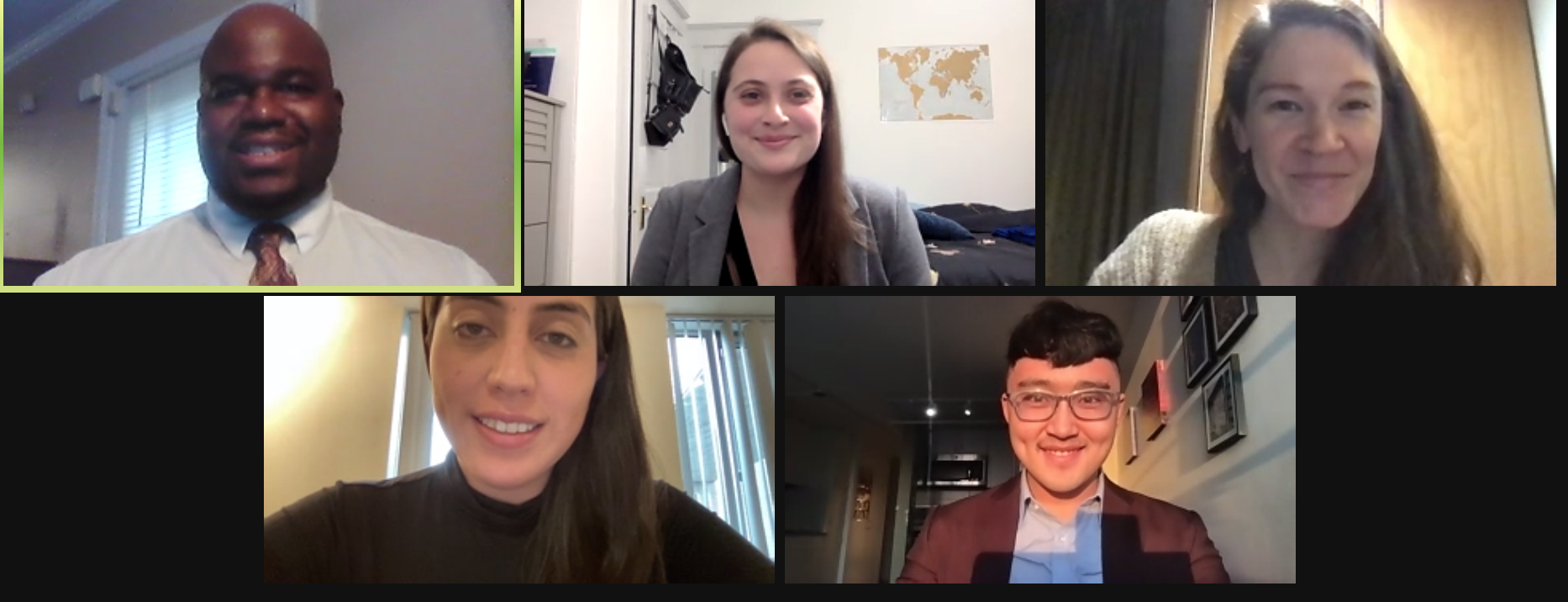
In Burien, current child-care benefits are limited and restrictive. The people who most need the benefit are not able to afford or access quality childcare leading to broader social and economic impacts on the community.
As part of MLD103M, students at HKS and HGSE spent 7 weeks working with a City Council member to better understand this problem and to help identify ideas and entry points. In this presentation the student team and their authorizer will share some of their key takeaways and recommendations from this experience.
Presenters: Crystal Collier, Doreen King, and Sasinat Chindapol, students at the Harvard Kennedy School; Kevin Schilling, Burien City Council member and Implemeting Public Policy executive program alumni. Moderator: Salimah Samji, Director of Building State Capability (BSC).
PDIA in Action: Police and Community Relations in Lancaster, PA
April 27, 2021
|
12:00 pm
–
1:00 pm
There is a divide between the police department and the community which was highlighted by the events that occurred in Lancaster in 2020 in addition to the overall climate of national tension. As part of the MLD103M course, students at the Havrard Kennedy School and Harvard Graduate School of Education spent 7 weeks working with the Director of Neighborhood Engagement for the City of Lancaster and the Chief of Police to better understand this problem and to help identify ideas and entry points. In this presentation, the student team and their authorizer will share some of their key takeaways and recommendations from this experience.
Presenters: Anne Dietterich, Awab Elmesbah, students at the Harvard Kennedy School; Amreen Bashir, Revanth Voothaluru, Seun Akinfolarin, students at the Harvard Graduate School of Education; Milzy Carrasco, Director of Neighborhood Engagement for the City of Lancaster and Implementing Public Policy executive course alumni. Moderator: Salimah Samji, Director of Building State Capability (BSC).
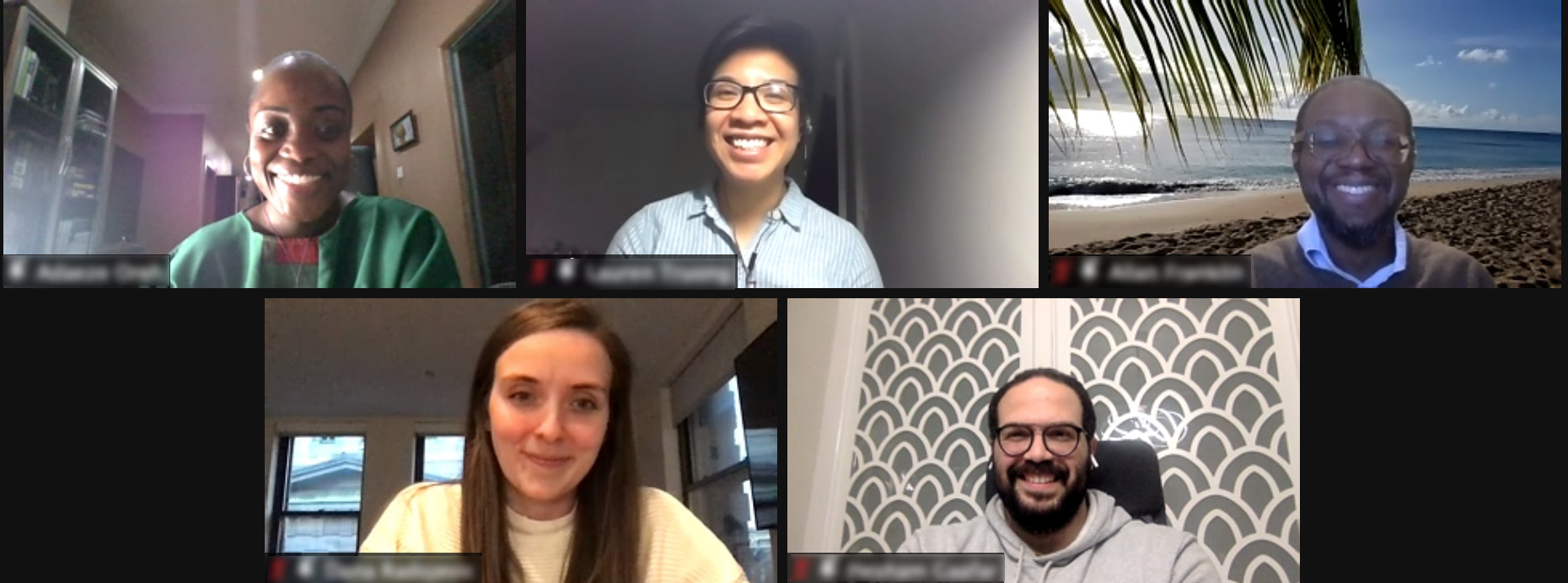
The National Blood Transfusion Service (NBTS) in Nigeria is not the sole blood collecting agency. Hospitals, clinics and private blood establishments are also able to collect blood donations and transfuse them to patients. Safe blood is still largely unavailable in hospitals and health facilities leading to infections, disease, and death.
As part of MLD103M, students at the Harvard Kennedy School and Harvard School of Public Health spent 7 weeks working with the country head of planning of the NBTS to better understand this problem and to help identify ideas and entry points. In this presentation the student team and their authorizer will share some of their key takeaways and policy recommendations from this experience.
Presenters: Allan Franklin, Dana Radojevic, Lauren Truong, students at the Harvard Kennedy School; Hesham Gaafar, student at Harvard School of Public Health); Dr. Adaeze Oreh, Country Head of Planning NBTS, Nigeria and Implementing Public Policy executive course alumni. Moderator: Salimah Samji, Director of Building State Capability (BSC).
Balance Sheets and Debt Crisis: Predicting Defaults in the 21st Century
Debt crises are more than just a story about primary balances. Sectoral balance sheets, particularly the net worth of households and banks, play an important role in determining whether an episode of increased rollover risk will deteriorate into full-blown default.
In this seminar, Gon Huertas will present on ‘Balance Sheets and Debt Crisis: Empirical Regularities for Modern Cases of Sovereign Distress‘, a research paper published by the International Monetary Fund (IMF). The paper presents the stylized facts surrounding debt crises from 1990 to 2019: the behavior of government finances, aggregate macroeconomic variables, and the accompanying changes in the net worth of the private sector. We then use a logistic model to estimate the probability of undergoing default for a panel of 75 countries, finding that the net worth of the household and banking sectors is a significant predictor in addition to the usual flow variables included in standard debt sustainability analyses.
About the Speaker: Gon Huertas is a macroeconomist working for the International Monetary Fund, and a lecturer on macroeconomics at George Washington University. His current research focuses on the spillovers of the Federal Reserve’s monetary policy on emerging markets. Previously, he worked at the Peterson Institute for International Economics and the Cabinet of Ministers of Argentina.
PDIA in Action: Reparations in Asheville, NC
April 13, 2021
|
12:00 pm
–
1:00 pm
There has been a lack of progress and consensus in designing and implementing reparation initiatives in Asheville since the passing of the reparation resolution in July 2020. As part of BSC’s MLD103M course, students at the Harvard Kennedy School and Harvard Graduate School of Education spent 7 weeks working with a former Asheville City Councilor to better understand this problem and to help identify ideas and entry points. In this presentation, the student team will share some of their key takeaways and policy recommendations from this experience.
Presenters: Bethany Dill, Student at the Harvard Graduate School of Education; Isabel Mejia Fontanot, Kent Shi, Kerianne DiBattista, Students at the Harvard Kennedy School; William Keith Young, Former Asheville, NC City Councilor and Alumni of BSC’s Implementing Public Policy Executive Education course. Moderated by Salimah Samji, Director of Building State Capability (BSC).
The Humanitarian Crisis of Venezuelan Migrants and Refugees and the Temporary Status of Migrant Protection
April 7, 2021
|
10:00 am
–
11:30 am
Speakers:Lala Lovera, Founder of the NGO “Comparte una Vida” of Colombia, she has been dedicated to the field of social work for more than 15 years. Betilde Muñoz, Director of the Department of Social Inclusion at the Organization of American States. Ana María Ibáñez, Economics Principal Advisor, Inter-American Development Bank and professor at the University of the Andes. Dany Bahar, senior fellow in the Global Economy and Development program at the Brookings Institution an associate at the Growth Lab. José Ignacio Hernández G, Fellow at the Growth Lab and professor at the Universidad Católica Andrés Bello. Moderated by David Smolansky, commissioner of the OAS Secretary-General for the Crisis of Venezuelan Migrants and Refugees.
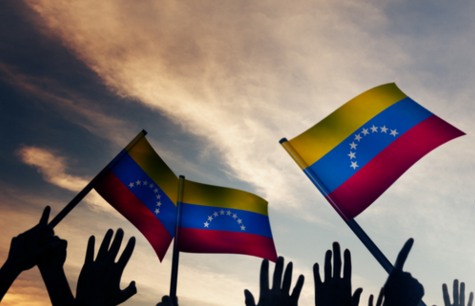
The crisis of displaced persons from Venezuela should be address from the humanitarian perspective to achieve three objectives: (i) protect the human rights of the Venezuelan migrants and refugees; (ii) facilitate a safe, orderly and regular migration to promote economic growth, and (ii) facilitate the financial international cooperation. Those are the objectives of the recently approved Decree No. 216 of 1 March 2021, issued by the Government of Colombia, and the Temporary Protected Status (TPS) granted by the United States Government on March 8, 2021.
The event will present a multi-disciplinary approach to the crisis of displaced persons from Venezuela considering its current situation in Colombia; its impact on the inclusion of vulnerable sectors; the economic impact of the Venezuelan migration; the Internacional financing of the crisis and the humanitarian standards that should be applied. Pleaseregister in advanceto secure your spot at this event.
Toward a Venezuelan Transition? Escaping a Complex Humanitarian Emergency (Part 2)
March 25, 2021
|
11:00 am
–
12:30 pm
This event is virtual and will be held in English with simultaneous Spanish translation. To register click here.
Speaker: Luis Almagro, General Secretary of the Organization of the American States (OAS); María Gabriela Ponce, Professor, and researcher of the Economic and Social Research Institute of the Catholic University “Andrés Bello”, Venezuela. Moderated by: Steven Levitsky, Professor of Government, Harvard University, Director, David Rockefeller Center for Latin American Studies; José Ignacio Hernández G., Fellow, Growth Lab at Harvard’s Center for International Development
The Venezuelan crisis is, first of all, a humanitarian one triggered by the gradual collapse of the state, the GDP collapse amidst hyperinflation, the biggest humanitarian crisis of refugees and migrants in the region, and systematic violations of human rights. The Venezuelan humanitarian crisis has been aggravated by the pandemic -a crisis within a crisis. The seminars will analyze the current dimension of the humanitarian crisis in Venezuela and the international initiatives to advance in a comprehensive solution.
Luis Almagro was re-elected for a second term as Secretary General of the OAS on March 20, 2020. He was first elected as Secretary General of the OAS on March 18, 2015, with the support of 33 of the 34 member states and one abstention. Upon taking up the leadership of the OAS, he announced that the central theme of his administration would be “more rights for more people” and that he would work “to be the voice of the voiceless.” His priority at the helm of the General Secretariat is to put the Organization in touch with people’s needs and the new realities in the Hemisphere, as well as helping to ensure greater democracy, more rights, more security, and more development and prosperity for all.
María Gabriela Ponce is a member of the research team of the National Survey of Living Conditions (ENCOVI), the leading survey that measures Venezuelan social and economic conditions, to provide timely monitoring of the living conditions of the population. Among many other works, Professor María Gabriela Ponce is the co-author of “Poverty and social expense in the Venezuela of the Bolivarian Revolution” (2015). In 2020, Professor Ponce explained the recent trends of the ENCOVI survey (2019-2020) in the 2020 Perspective seminar, organized by the Catholic University.
Steven Levitsky is a Professor of Government at Harvard University. His research interests include political parties, authoritarianism and democratization, and weak and informal institutions, with a focus on Latin America.
José Ignacio Hernández G. is a Law Professor at the Catholic University Andrés Bello in Venezuela, as well as Visiting Professor at the Castilla-La Mancha University in Spain. His research interest include rule of law and development, state capability and authoritarian-populist institutions in Latin America.
Toward a Venezuelan Transition? Escaping a Complex Humanitarian Emergency (Panel 1)
March 18, 2021
|
11:00 am
–
12:30 pm
This event is virtual and will be held in English with simultaneous Spanish translation. To register click here.
Speakers: Ricardo Hausmann, Director, Growth Lab; Rafik Hariri Professor of the Practice of International Political Economy, Harvard Kennedy School; Francisco Cox Vial, lawyer and member of the Independent International Fact-Finding Mission on the Bolivarian Republic of Venezuela, appointed by the United Nation’s Human Rights Council.
Moderated by: Steven Levitsky, Professor of Government, Harvard University, Director, David Rockefeller Center for Latin American Studies; José Ignacio Hernández G., Fellow, Growth Lab at Harvard’s Center for International Development
The Venezuelan crisis is, first of all, a humanitarian one triggered by the gradual collapse of the state, the GDP collapse amidst hyperinflation, the biggest humanitarian crisis of refugees and migrants in the region, and systematic violations of human rights. The Venezuelan humanitarian crisis has been aggravated by the pandemic -a crisis within a crisis. The seminars will analyze the current dimension of the humanitarian crisis in Venezuela and the international initiatives to advance in a comprehensive solution.
Ricardo Hausmann is the founder and Director of Harvard’s Growth Lab and the Rafik Hariri Professor of the Practice of International Political Economy at Harvard Kennedy School. Under his leadership, the Growth Lab has grown into one of the most well regarded and influential hubs for research on international development.
Francisco Cox Vial is a prominent criminal lawyer. He led the Interdisciplinary Group of Independent Experts (GIEI) appointed by the Inter-American Commission on Human Rights and the Government of President Enrique Peña Nieto to investigate the case of the 43 missing students in Ayotzinapa (Mexico). Mr. Cox litigated before the International Criminal Court, including in the case against Dominic Ongwen, in which Cox represents 2605 victims of the armed conflict in northern Uganda. Recently GRULAC nominated him to integrate the panel of five world experts that advises the Executive Committee of the Assembly of States Parties of the International Criminal Court to elect the next Prosecutor of the International Criminal Court. He studied law at Diego Portales University and then obtained a Master’s Degree (LL.M) from Columbia University. Member of the Independent International Fact-Finding Mission on the Bolivarian Republic of Venezuela, appointed by the UN Human Right Council.
Steven Levitsky is a Professor of Government at Harvard University. His research interests include political parties, authoritarianism and democratization, and weak and informal institutions, with a focus on Latin America.
José Ignacio Hernández G. is a Law Professor at the Catholic University Andrés Bello in Venezuela, as well as Visiting Professor at the Castilla-La Mancha University in Spain. His research interest include rule of law and development, state capability and authoritarian-populist institutions in Latin America.
Joining the Growth Lab as a Research Assistant: A Behind the Scenes Look
January 12, 2021
|
10:00 am
–
11:00 am
On January 12th, 2021 at 9:00 am EDT, Harvard’s Growth Lab invites you to attend “Joining the Growth Lab as a Research Assistant: A Behind the Scenes Look.” Learn more about what it’s like to be a Growth Lab Research Assistant with a panel of current RA’s Ana Grisanti and Jessie Lu. They will describe their experience in this role where they contribute to the core research agenda of the Lab while also collaborating with government leaders and development practitioners in the field to apply research to policy problems in countries like Jordan, Albania, and Venezuela. Visit our Jobs & Opportunities page to learn more about the role.
PKU-Growth Lab Workshop II: New Economic Geographies in a Changing World
November 23, 2020
|
9:00 pm
–
11:00 pm
Speakers: Frank Neffke, Research Director, Growth Lab Gary Gereffi, Emeritus Professor of Sociology; Director, Global Value Chains Center, Duke University David Rigby, Professor, University of California-Los Angeles
The long-term development paths of countries and regions are shaped by a never-ending process of restructuring, with some countries and regions achieving fast growth over longer periods while others being locked into a trajectory of relative and sometimes absolute decline. Nonetheless, in some cases, some lagging regions and countries find renewed growth and previously vibrant countries and regions may lose momentum. It appears that economic restructuring benefits some countries and regions and put others at a disadvantage. The set of existing economic, political, and social and cultural activities and functions in a countries or region is important in this regard, and will determine whether a country or region can be at the forefront of such restructurings, can position itself to benefit from new rounds of investment and innovation, and can achieve more sustainable development, or instead will lose out and become marginalized. The variety in the development of countries and regions in the context of constant restructuring in the economy defies predictions of a clear-cut convergence or divergence, and instead leads to an intricate pattern of uneven development depending on a multitude of factors. Such combined and uneven development between countries and regions has of course long been a central research topic within economic geography, regional science and urban studies.
The aim of this workshop is to think about how to better conceptualize and empirically explore the development of (and between) countries and regions. This is particularly timely for several reasons. First, countries and regions have assumed increasing prominence over the past few decades in discussions about economic development, and with this there is a renewed interest in explaining deep-rooted differences in performance. Second, evolutionary perspectives and transitions to sustainable development have established themselves as key reference points in theorizing current economic, social and environmental challenges. Yet more work needs to be done to further develop these conceptual advances for understanding the long-term development of countries and regions and the necessary spatial governance, and for working out relevant policy implications. Finally, a new round of restructuring in the world economy, triggered by the 2007/8 global economic crisis and the outbreak of COVID-19, has been taking place. Consequently, we have reached a critical juncture to rethink our conceptualization of the world economy and regional economic development. At this juncture, there also appears scope for more interaction between scholars from different parts of the world.
Visit the workshop website for more information about the agenda and speakers.