
The Social and Environmental Consequences of the Twin Energy-Digital Transition
November 20, 2024 | 11:30 pm
The Growth Lab’s Research Seminar series is a weekly seminar that brings together researchers from across the academic spectrum who share an interest in growth and development.
Speaker: Aurélien Saussay, Assistant Professorial Research Fellow, Grantham Research Institute at the London School of Economics
Whether attending in person or virtually, please register in advance.
Abstract: We analyze the labor market and environmental impacts of the concurrent diffusion of green and automation technologies using a novel dataset linking patent data to establishment-level job postings from 2010 to 2023. We develop a new measure of establishment-level technology adoption by constructing semantic similarity links between patent content and skill requirements in online job advertisements. We contribute three novel findings. First, we document substantial heterogeneity in the labor market impacts across green technology types: innovations in green ICT and buildings technologies appear labor-augmenting, while advances in green transportation and smart grids tend to be labor-saving. Over time, green innovation as a whole has become increasingly labor-saving. Second, using a shift-share instrumental variable (SSIV) empirical design, we find that increased green technology adoption leads to job creations, which are moderately skill-biased. Finally, despite potential concerns, we find no evidence that automation technology adoption weakens emissions reductions at the establishment level. Our results suggest that the twin green-digital transition may support both employment and environmental goals.
Speaker bio: Aurélien Saussay is an Assistant Professorial Research Fellow in the Grantham Research Institute at the London School of Economics. He currently holds a Leverhulme Early Career Fellowship (2022-2025). He will be visiting Harvard Kennedy School in the Fall Semester 2024. His research focuses on the interaction between economic inequality and climate change mitigation policies, in order to address the social and political acceptance challenges that hamper the implementation of effective decarbonisation. He aims to estimate the impacts of climate change mitigation on economic agents empirically to help improve the design of decarbonization policies. He was previously an economist at OFCE, Sciences Po, where he led the environmental economics team. He remains an associate researcher and is one of the main co-authors of the Multi-sector Macroeconomic Model for the Evaluation of Environmental and Energy policies (ThreeME), which is used extensively in France, the Netherlands, Mexico and Indonesia to assess the economic consequences of energy transition scenarios.
Research Seminar – Procuring Low Growth: The Impact of Political Favoritism on Public Procurement and Firm Performance in Bulgaria
November 13, 2024 | 11:30 am – 12:45 pm
The Growth Lab’s Research Seminar series is a weekly seminar that brings together researchers from across the academic spectrum who share an interest in growth and development.
Speaker: Mihaly Fazekas. Associate Professor, Central European University
Whether attending in person or virtually, please register in advance.
Authors: Mihaly Fazekas, Viktoriia Poltoratskaya, Marc Schiffbauer, and Bence Tóth
Paper Abstract: This paper assesses the impact of favoritism in public procurement on private sector productivity growth. To this end, it combines three novel microeconomic datasets: administrative data on firms including over 4 million firm-year observations and rich financial and ownership information, public procurement transactions data for 150,000 published contracts and their tenders, and a newly assembled dataset on firms’ political connections drawing on asset declarations, sanction lists, and offshore leaks. This comprehensive dataset allows us to trace the impact of favoritism in allocating government contracts to economic growth. Specifically, we find that politically connected firms are 18-32 percent more likely to win public procurement contracts due to their preferential access to uncompetitive tenders. Public procurement results in higher subsequent productivity and employment growth only if it has been awarded through competitive tenders. Firms winning contracts through uncompetitive procedures have flat growth but make higher profit margins. Consistent with these findings, we show that firms awarded uncompetitive public procurement contracts obtain rents from overpaid contracts, by 9-11 percent. The results suggest that aggregate annual TFP growth would have been 8 percent higher in the absence of favoritism in public procurement.
Speaker Bio: Mihaly Fazekas is an associate professor at the Central European University, Department of Public Policy, with a focus on using data science methods to understand the quality of government globally. He is also the scientific director of an innovative think-tank, the Government Transparency Institute. He has a PhD from the University of Cambridge where he pioneered data science methods to measure and understand high-level corruption in Central- and Eastern Europe. His research and policy interests revolve around corruption, favouritism, private sector collusion, and government spending efficiency. Methodologically, he has experience in both quantitative and qualitative methods in diverse fields such as public policy, data science, and political science. He worked at the University of Cambridge as the scientific coordinator of the Horizon 2020 funded project DIGIWHIST which used data science approaches to measuring corruption risks, administrative capacity, and transparency in public procurement in 33 European countries. His articles appeared in diverse, high-quality journals such as the American Journal of Political Science, Journal of Public Administration Research and Theory, Governance, Regional Studies, World Development, Transportation Research Part A: Policy and Practice, the Lancet, or International Journal of Data Science and Analytics. His policy reports have been published by prestigious organisations such as the World Bank, the OECD, or the European Commission. He regularly consults the European Commission, United Nations, OECD, World Bank, and a range of national governments and NGOs across the globe. In 2020, he has won the IMF’s Anti-Corruption Challenge leading an interdisciplinary team from across government and academia.
Research Seminar – Forecasting Macroeconomic Dynamics Using a Calibrated Data-Driven Agent-Based Model
November 6, 2024 | 11:30 am – 12:45 pm
The Growth Lab’s Research Seminar series is a weekly seminar that brings together researchers from across the academic spectrum who share an interest in growth and development.
Speaker: Samuel Wiese, University of Oxford
Whether attending in person or virtually, please register in advance.
Abstract: In the last few years, economic agent-based models have made the transition from qualitative models calibrated to match stylised facts to quantitative models for time series forecasting, and in some cases, their predictions have performed as well or better than those of standard models (see, e.g. Poledna et al. (2023a); Hommes et al. (2022); Pichler et al. (2022)). Here, we build on the model of Poledna et al., adding several new features such as housing markets, realistic synthetic populations of individuals with income, wealth and consumption heterogeneity, enhanced behavioural rules and market mechanisms, and an enhanced credit market. We calibrate our model for all 38 OECD member countries using state-of-the-art approximate Bayesian inference methods and test it by making out-of-sample forecasts. It outperforms both the Poledna and AR(1) time series models by a highly statistically significant margin. Our model for all 38 OECD member countries using state-of-the-art approximate Bayesian inference methods and test it by making out-of-sample forecasts. It outperforms both the Poledna and AR(1) time series models by a highly statistically significant margin. Our model is built within a platform we have developed, making it easy to build, run, and evaluate alternative models, which we hope will encourage future work in this area.
Speaker Bio: Samuel Wiese is a graduate student at the Department of Computer Science at the University of Oxford and a member of the Complexity Economics group at the Institute for New Economic Thinking (INET). Before starting his PhD, he completed a Diploma in Mathematics at the University of Leipzig and worked as a research assistant at Cornell University and at the Chebyshev Laboratory at St. Petersburg State University. He is interested in learning on random games and macroeconomic agent-based modelling.
Research Seminar – Beyond the Census: Understanding Urban Social Resilience Through Behavioral Mobility Data
October 30, 2024 | 10:30 am – 11:45 am
The Growth Lab’s Research Seminar series is a weekly seminar that brings together researchers from across the academic spectrum who share an interest in growth and development.
Speaker: Esteban Moro, Ph.D., Network Science Institute at Northeastern University
Whether attending in person or virtually, please register in advance.
Abstract: In urban studies, traditional census data provides a static snapshot of cities, often missing the dynamic, real-time interactions that shape urban life and underpin the resilience of our communities. In this talk, I will present our recent research on understanding the dynamics of our cities by analyzing massive behavioral mobility data from mobile phones, credit cards, or social media and its relationship with networked inequalities, such as experienced segregation, access to healthy food, adaptation to the recent pandemic, and public transportation interventions. I will also discuss the methodological challenges and opportunities of using these datasets for population-wide analysis, from managing potential biases to designing better causal analysis. Finally, I will comment on potential data-driven interventions to reinforce the social fabric in cities and mitigate the detrimental impacts of networked inequalities.
Speaker Bio: Esteban Moro is a full professor and director of the Social Urban Networks (SUN) group at the Network Science Institute at Northeastern University and affiliated faculty at the MIT Media Lab. He was previously a professor and researcher at the Department of Mathematics at Universidad Carlos III de Madrid, the Sociotechnical Systems Research Center at MIT, and the University of Oxford. He holds a Ph.D. in Physics. Esteban’s work lies in the intersection of big data and computational social science, with particular attention to human dynamics, collective intelligence, social networks, and urban mobility in problems like viral marketing, natural disaster management, or economic segregation in cities. He has received numerous awards for his research, and his work has appeared in major journals and is regularly covered by media outlets.
Research Seminar – The Effects of Transport Infrastructure on Housing Supply: The Role of Land-Use Regulation
October 23, 2024 | 10:30 am – 11:45 am
The Growth Lab’s Research Seminar series is a weekly seminar that brings together researchers from across the academic spectrum who share an interest in growth and development.
Speaker: Kenzo Asahi, Assistant Professor, School of Government Pontifica Universidad Católica de Chile
Whether attending in person or virtually, please register in advance.
Abstract: We study the impact of new transportation infrastructure on housing supply using historical and microdata from Santiago and exploiting instrumental variables. We find that subway and highway expansions increase residential floor space substantially, but when we account for land-use regulation, we see two contrasting dynamics in the city. In the wealthiest quintile, the effect is negligible for more than 95% of the blocks due to their initial stringent regulation. However, in blocks in the first four quintiles of wealth, the impact on housing supply is substantial and homogeneous concerning the initial regulation. We provide evidence that the transport infrastructure triggers regulation to become more permissive everywhere but in the wealthiest neighborhoods. We quantify how land-use regulation limits housing supply, thus restraining welfare gains from transport infrastructure improvements.
Speaker Bio: Kenzo Asahi is an Assistant Professor at the School of Government. His research focus is on the intersection of urban economics and labor economics. His research explores the effect of physical and human space on the human and economic development of city dwellers. He holds a PhD in Social Policy from the London School of Economics and Political Science (LSE), a Master in Research (MRes) in Economics from University College London, a Master of Public Administration in International Development (MPA/ID) from Harvard University, a Master of Science in Engineering from UC, and a civil engineer from UC.
Research Seminar – Using Trademarks to Measure Innovation and Capabilities: Opportunities and Challenges
October 16, 2024 | 10:30 am – 11:45 am
The Growth Lab’s Research Seminar series is a weekly seminar that brings together researchers from across the academic spectrum who share an interest in growth and development.
Speaker: Carolina Castaldi, Ph.D., Professor in Geography of Innovation at Utrecht University
In this talk, Prof. Castaldi will review an emerging strand of empirical research using trademarks as data to measure innovation and capabilities. After discussing the specific properties of trademark data, she will show how they are both complementary and substitutes to patent data in their potential for measuring innovation and capabilities, at different levels of analysis, including firms, regions and countries.
Whether attending in person or virtually, please register in advance.
Research Seminar – Workers and the Green-Energy Transition: Evidence from 300 million Job Transitions
October 9, 2024 | 10:30 am – 11:45 am
The Growth Lab’s Research Seminar series is a weekly seminar that brings together researchers from across the academic spectrum who share an interest in growth and development.
Speaker: Mark Curtis, Ph.D., Reynolds Professor of Economics and Associate Professor at Wake Forest University
Whether attending in person or virtually, please register in advance.
Paper Abstract (Mark Curtis, Layla O’Kane and Jisung Park): Using microdata representing more than 130 million online work profiles, we explore transitions into and out of jobs most likely to be affected by a transition away from carbon-intensive production technologies. Exploiting detailed textual data on job title, firm name, occupation, and industry to focus on workers employed in carbon-intensive (“dirty”) and non–carbon-intensive (“green”) jobs, we find that the rate of transition from dirty to green jobs is rising rapidly, increasing 10-fold over the period 2005–21, including a significant uptick in electric vehicle–related jobs in recent years. Overall, however, less than 1% of all workers who leave a dirty job appear to make the transition to a green job. We find that the persistence of employment within dirty industries varies enormously across local labor markets; in some states, more than half of all transitions out of dirty jobs are into other dirty jobs. Older workers and those without a college education appear less likely to make transitions to green jobs and more likely to other dirty jobs, other jobs, or nonemployment. When accounting for the fact that green jobs tend to have later start dates, it appears that green and dirty jobs have roughly comparable job durations.
About the Speaker: E. Mark Curtis is the Reynolds Professor of Economics and associate professor at Wake Forest University. He received his Ph.D. in economics from Georgia State University, his M.A. in economics from Duke University, and his B.A. from Furman University. His primary fields of research are environmental, public, and labor economics with a particular focus on program evaluation, taxes, and environmental policy. His research has been widely published and seeks to understand the implications of public policies for firms and workers.
Development Talk: Solving the Impossible Problem of Sovereign Debt Restructuring
October 30, 2024 | 12:00 pm – 1:00 pm
The Growth Lab’s “Development Talks” is a series of conversations with policymakers and academics working on economic growth and development in countries, regions, states and cities in the US and around the world. The seminar provides a platform for practitioners and researchers to discuss both economic growth and development and analytical work centered on policy.
Speaker: Gregory Makoff, M-RCBG Senior Fellow, Author
Moderator: José Ignacio Hernandez, Former Visiting Fellow, Growth Lab
About the Talk: Mossavar-Rahmani Center for Business and Government Senior Fellow Gregory Makoff will talk about sovereign debt restructuring. Drawing lessons from Argentina’s 15-year battle with its creditors following its 2001 default on $100 billion on debt, Dr. Makoff will discuss the two central challenges of sovereign debt: the “holdout creditor problem” and the problem of designing an effective resolution system while respecting the sovereignty of the country. He will also discuss his current research into whether the current informal system of sovereign debt restructuring is adequate or whether a formal international debt court will eventually be needed.
Whether attending in person or online, please register in advance. Room attendance is limited to the Harvard community. Buffet lunch will be served. Seating availability is based on a first-come, first-served basis. The Zoom webinar is open to the public.
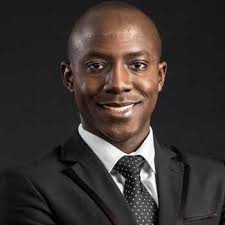
About the Speaker: Gregory Makoff is the author of Default: The Landmark Court Battle over Argentina’s $100 Billion Debt Restructuring. Prior to writing the book Gregory was an investment banker specializing in liability management and debt restructuring (1993-2014) and worked as a Senior Policy Advisor at the U.S. Treasury (2015-2016). Currently, he is a senior fellow at the Mossavar-Rahmani Center for Business and Government at the Harvard Kennedy School and, since 2015, has been a non-resident senior fellow writing about sovereign debt at the Centre for International Governance Innovation (CIGI), a think tank based in Waterloo Canada. Gregory holds a Ph.D. in physics from the University of Chicago (1993) and B.Sc. degrees from the Massachusetts Institute of Technology in physics and political science (1986). Gregory is also a CFA® charter holder.
Research Seminar: Did the 2022 Global Energy Crisis Accelerate the Diffusion of Low-Carbon Technologies?
September 25, 2024 | 10:30 am – 11:45 pm
The Growth Lab’s Research Seminar series is a weekly seminar that brings together researchers from across the academic spectrum who share an interest in growth and development.
Speaker: Jacob Greenspon, Ph.D. Candidate in the University of Oxford
Coauthored with Paulo Bastos, Katherine Stapleton, and Daria Taglioni (World Bank)
Location: Democracy Lab R-414 AB / Zoom
Whether attending in person or online please register in advance.
Speaker Bio: Jacob is a doctoral student in Economics at the University of Oxford and Research Coordinator at the Harvard Kennedy School Reimagining the Economy Project. He has consulted on energy transition research at Resources for the Future, the World Bank, and the Institute for Research on Public Policy and worked as an economist for several think tanks and governments in the US and Canada.
Paper Abstract: This paper develops measures of the diffusion of a comprehensive range of low-carbon technologies in 35 countries from 2019 to 2022 using text analysis of job postings and earnings calls transcripts. It documents a rapid acceleration in the diffusion of low-carbon technologies in 2022–with hiring in related roles doubling from 2019–that is driven by technologies related to renewable energy, vehicles, thermal performance, and electrical generation and storage. Rapid growth occurred in three quarters of the countries studied and 228 of 300 subnational regions, although was fastest in Europe. It studies the role of the global energy crisis in triggering this accelerated technology diffusion, focusing on 16 advanced economies. It finds that establishments in countries that had a higher pre-crisis dependence on imports of natural gas, and were thus more exposed to the price shock, differentially increased hiring for low-carbon technology related roles from March 2022 onwards. Within more exposed countries, establishments with a higher pre-crisis energy intensity also saw a differential increase in hiring relative to less energy intensive ones.
Research Seminar: The Emergence and Diffusion of Green Technologies: Firm-level Evidence from Textual Analysis of Patents and Corporate Reports
September 18, 2024 | 10:30 am – 11:45 am
The Growth Lab’s Research Seminar series is a weekly seminar that brings together researchers from across the academic spectrum who share an interest in growth and development.
Speaker: Lucio Castro , Ph.D. , The World Bank
Location: Perkins Conference Room R-429-B / Zoom
Whether attending in person or online please register in advance.
Speaker Bio: Lucio Castro is a Senior Economist in the Global Investment Climate Unit of the World Bank Group’s Finance, Competitiveness, and Innovation Global Practice. Previously, he worked at IFC Economic and Market Research and Impact Evaluation Departments. Prior to joining the World Bank Group, he served in various roles, including Vice-Minister in the Ministry of Production of Argentina, Alternate Executive Director at the Interamerican Development Bank (IDB), and Director of Economic Development at CIPPEC. He was a visiting scholar and research fellow at Harvard’s Center for International Development (CID), receiving the Fulbright Nexus Scholarship. He worked as economic advisor in Latin America, Africa, Asia, and the Middle East for the IDB, European Commission, DfID, GDN, CAF, and national and sub-national governments. Lucio is also Associated Professor at Universidad Austral and Affiliated Researcher with Innovations for Poverty Action (IPA) SME Initiative. He holds a PhD in Economics from the University of Sussex and a Masters from Columbia University.
Paper Abstract: We draw on the textual analysis of patents and corporate reports matched with multi-country, firm-level panel data for the period 2012-2021 to uncover new stylized facts on the emergence and diffusion of green technologies across countries, sectors, and firms. We document a growing importance of green technologies after 2019, Among initially high-emissions firms, those that mentioned green technologies tend to observe a decline in carbon emissions in subsequent years. Buyer-supplier relationships and innovation partnerships with these firms, especially when they had high-emissions intensity, are systematically linked with the diffusion of green technologies.