
Development Talk: Using Economic Complexity for Policymaking – The Case of Córdoba, Argentina
July 23, 2024 | 11:00 am – 12:00 pm
The Growth Lab’s “Development Talks” is a series of conversations with policymakers and academics working on economic growth and development in countries, regions, states and cities in the US and around the world. The seminar provides a platform for practitioners and researchers to discuss both economic growth and development and analytical work centered on policy.
This event is online only. Please register in advance.
Speakers:
Andrés Michel, Secretary of Economic Policy in the Government of the Province of Córdoba
Paula Luvini, Researcher in the Data Science Area at Fundar
Matías Gutman, Coordinator in the Productive Policy Area at Fundar
About the talk: Córdoba, the second largest city in Argentina, is a major tech and education hub with significant potential to attract new industries. However, the complexity of the city’s export basket is an important question. The Government of Córdoba and the think tank Fundar conducted a study to explore opportunities for designing a productive development strategy and policy for the city. Economic Complexity is a key tool in this process, helping to identify sectors with the most potential and to create evidence-based public policies. To achieve this goal, new data on provincial exports and local firms was used. Using secondary sources and web scraping, a new geolocated database of export firms and their goods was created. This database was then used to recalculate the complexity indexes at the city level. As a result, 28 products with potential for Córdoba were selected and grouped into three categories: Machinery, Food and Beverages, and others. The Economic Complexity approach is valuable, leveraging current export data to formulate a concrete plan for future growth. It highlights existing sectors that need improvement and modernization, as well as strategic sectors that are currently underrepresented but have potential to contribute.
Research Seminar – Economic implications of the Inflation Reduction Act: A Dynamic Analysis
June 13, 2024 | 2:30 pm – 4:00 pm
The Growth Lab’s Research Seminar series is a weekly seminar that brings together researchers from across the academic spectrum who share an interest in growth and development.
Speakers:
María C. Latorre, Associate Professor at Universidad Complutense of Madrid
David Suárez-Cuesta, Faculty Member at Universidad Complutense of Madrid
Location: Wexner-102 / Zoom
Whether attending in person or online please register in advance.
Abstract: We expand a dynamic Computable General Equilibrium (CGE) model to analyze the economic impact of the U.S. Inflation Reduction Act (IRA). This approach allows for a comprehensive economic analysis, considering both macro and microeconomic implications. The IRA encompasses a range of policy measures, both expansionary and contractionary, implemented between 2022 and 2031. By employing a combination of tax incentives and reforms, the IRA leads to a modest overall increase in U.S. GDP, reaching its peak in the mid-decade. However, these positive effects are tempered by inflationary pressures, resulting in reduced export competitiveness, except in sectors directly affected by the IRA, such as Motor Vehicles and Electrical Equipment. Additionally, the tax reforms aimed at financing the IRA primarily target corporations, leading to a significant contractionary effect on the economy. This results in a slight reduction in employment demand but an increase in real wages. We extend beyond the initial estimations provided by the Congressional Budget Office, which projected $393 billion in tax credits, by simulating two additional scenarios: 1) accounting for the uncapped effect of tax credits, considering that private investment announcements resulting from the IRA already exceed the $393 billion threshold in the first year of implementation; and 2) exploring an alternative funding approach through taxes on workers.
About the Speakers:
María C. Latorre is Associate Professor at Universidad Complutense of Madrid (Spain) and Member of the Group of Experts in Trade of the European Commission. She is Co-chair of the research groups in Data Science and Global Governance both from Real Colegio Complutense (RCC) at Harvard University and Research Fellow from this institution. She leads the “Una Europa Global Governance Research Group.”
David Suárez-Cuesta is a Faculty Member at Universidad Complutense of Madrid (Spain) and Project Operation Manager of the Global Governance Research Group and Member of the Study Group in Data Science from RCC at Harvard University.
Research Seminar – Extraversion and Development: The Logic of Industrial Policy in Post-Liberation Africa
April 25, 2024 | 2:30 pm – 4:00 pm
The Growth Lab’s Research Seminar series is a weekly seminar that brings together researchers from across the academic spectrum who share an interest in growth and development.
Speaker: Nicolas Lippolis, Postdoctoral Researcher at Columbia Climate School
Location: R414-B / Zoom
Whether attending in person or online please register in advance.
Speaker Bio: Nicolas obtained his doctorate (DPhil) in Politics from the University of Oxford. Prior to the doctorate, Nicolas earned an MSc in Economics for Development and a BA in Philosophy, Politics and Economics, both from Oxford University. He has taught at Oxford, Sciences Po Paris, and the University of Paris 1 Panthéon-Sorbonne. He has also consulted with the World Bank, and previously worked in emerging markets macroeconomic research at Goldman Sachs in London. Nicolas is a native of Rio de Janeiro, Brazil.
Research Seminar: Labor Markets & Green Industrial Policy
April 10, 2024 | 10:00 am – 11:30 am
The Growth Lab’s Research Seminar series is a weekly seminar that brings together researchers from across the academic spectrum who share an interest in growth and development.
Speaker: Christophe Combemale, Assistant Research Professor, Engineering and Public Policy at Carnegie Mellon University
Location: WEXNER W-434 A.B. (Harvard Community) / Zoom
Whether attending in person or online please register in advance.
About the Speakers:
Christophe Combemale’s research focuses on the implications of technology choices and process design for skill demand, and on workforce supply chain levers to meet industry skill demand needs. He is interested in how regional and national labor supply may constrain economic productivity and innovation, and solutions that enhance outcomes for workers and firms.
He co-leads the Workforce Supply Chains Initiative at the Block Center for Technology and Society. Last year, he was the workforce research lead for an NSF-funded pilot program seeking to develop a National Network for Critical Technology Assessment. The program developed assessment capabilities for critical technologies for U.S. competitiveness, to offer insights to U.S. legislators and other policy stakeholders.
Combemale is also the CEO of Valdos Consulting, a firm specializing in techno-economic modeling to support market, technology, and workforce strategy. Combemale and team currently apply these domains on behalf of federal, academic and private clients in health and human services, technology services as well as advanced manufacturing including semiconductors, robotics, electric vehicles, and defense industrial applications.
Development Talk – Banking on Colombia’s Development: Innovation and Growth at Bancoldex
April 22, 2024 | 12:00 pm – 1:00 pm
The Growth Lab’s “Development Talks” is a series of conversations with policymakers and academics working on economic growth and development in countries, regions, states and cities in the US and around the world. The seminar provides a platform for practitioners and researchers to discuss both economic growth and development and analytical work centered on policy.
Speaker: Javier Díaz Fajardo, President and CEO of Bancóldex
Moderator: Juan Jimenez, Lecturer in Public Policy, HKS
This session will focus on Innovation and Growth at Bancoldex, Colombia’s entrepreneurial development and export-import bank.
Whether attending in-person or virtually, please register in advance. Room attendance is limited to the Harvard community. Seating availability is based on a first-come, first-served basis. Boxed lunch will be provided after the event. The Zoom webinar is open to the public.
Speaker Bio: Javier Díaz Fajardo has thirty years of experience in financial markets. His work in this field includes management positions in New York, Washington and Colombia. He has been president of Bancóldex, Colombia’s business development bank, since 2019. During this time, he has led the growth of the entity, exceeding $10 billion in total assets, and has transformed the entity’s business model, going from being a second-tier bank for commercial banking to one that provides direct credit to Colombian companies with an emphasis on innovation, sustainability and digital transformation.
In October 2023, he was appointed co-president of the Development Banks Club (IDFC), an organization made up of 26 development institutions from around the world. Previously, he was CEO of Renta 4 Global Fiduciaria, an asset management startup (subsidiary of the Spanish bank Renta4). Until 2017 he was Commercial Vice President and Vice President Corporate of the Colombian Stock Exchange, where he designed and completed the initial financing for a2censo, a fintech that allows Colombian micro, small and medium-sized companies to issue bonds to investors through crowdfunding.
Diaz Fajardo holds a Master’s degree in International Business from The Fletcher School at Tufts University and a law degree from the Universidad de los Andes in Colombia. In addition, he is a member of the Society of Kauffman Fellows, the main venture capital and entrepreneurship network in Silicon Valley, and is a founding member of the Colombian Institute of Corporate Governance. He has served on 10 boards of directors and taught the class “Financial System: History, Strategy and Leadership” at CESA, Colombia’s main business school. He also served as Vice President of Investor Relations at Grupo Aval, Colombia’s largest financial group, and was a director of Andes Capital, a Colombian venture capital fund that he co-founded.
Research Seminar: Property Rights and Innovation Dynamism: The Role of Women Inventors
March 27, 2024 | 10:00 am – 11:30 am
The Growth Lab’s Research Seminar series is a weekly seminar that brings together researchers from across the academic spectrum who share an interest in growth and development.
Speaker: Ruveyda Gozen, Ph.D. – London School of Economics.
Location: Online only. Please register in advance.
Paper: https://drive.google.com/file/d/1K5C4dMtp1toJ7AKAHnORAEZYgX5q84I5/view
Abstract: How do stronger property rights for disadvantaged groups affect innovation? Dr. Ruveyda Gozen investigates the impact of strengthened property rights for women on U.S. innovation by analyzing the Married Women’s Property Acts, which granted equal property rights to women starting in 1845 in New York State. She examines the universe of granted patents from 1790 until 1901, exploiting the staggered adoption of the laws over time across states. The strengthening of women’s property rights led to a 39% increase in patenting activity among women in the long run, with effects peaking about a decade after the laws were introduced. Importantly, women’s innovations were not of lower quality (as measured by a novelty index based on patent text analysis), without generating negative effects on innovations by men. Therefore, these findings suggest that there does not appear to be an equity and efficiency trade-off. Finally, she shows that the main mechanism was through innovation incentives, and higher human capital accumulation among women inventors rather than an increase in participation in STEM fields, labor force participation, or relieving financial frictions.
Speaker Bio: Dr. Ruveyda Gozen is a research economist at the London School of Economics (LSE) at the Programme of Innovation and Diffusion (POID) directed by John Van Reenen. She is an applied microeconomist with a focus on economics of innovation, growth, entrepreneurship, institutions, inequality, and technological progress.
Faculty Webinar: Strategies for Inclusive Growth
March 4, 2025 | 4:00 pm – 5:00 pm
Join Ricardo Hausmann and Matt Andrews for a one-hour webinar on the rapidly evolving paths to economic prosperity and how rethinking economic policy, from design to implementation, can advance shared prosperity for all.
This webinar will include topics covered in the upcoming executive program Strategies for Inclusive Growth.
Speakers:Ricardo Hausmann is the Rafik Hariri Professor of the Practice of International Political Economy at HKS, and director of the Growth Lab.
Matt Andrews is the Edward S. Mason Senior Lecturer in International Development at HKS, and director of Building State Capability.
Please register in advance. The webinar will be recorded and distributed to all attendees. This presentation does not qualify for a certificate.
Research Seminar: Contracting Frictions, Geography, and Multinational Firms: Evidence from Mexico
March 20, 2024 | 10:00 am – 11:30 am
The Growth Lab’s Research Seminar series is a weekly seminar that brings together researchers from across the academic spectrum who share an interest in growth and development.
Speaker: Luis M. Espinoza Bardales, Ph.D. candidate in Economics from University of Michigan
Location: Online only. Please register in advance.
Abstract: This paper explores how contracting frictions and geography influence the trade costs faced by multinationals’ affiliates located in Mexico relative to domestic firms. Luis documents two key facts. First, distance to firm’s home countries influences firms’ sourcing patterns. Second, sectors with a larger presence of foreign affiliates are more intensive in relationship-specific inputs. He develops a small open economy model with multiple sectors, imperfect contracting, input relationship-specificity, global sourcing and multinational production. Luis computes a set of counterfactual equilibria to gauge the relative importance of contracting frictions, trade costs, and productivity in the price advantage of multinationals over domestic firms. He finds small median differences between foreign and domestic firms regarding inward trade and contracting costs, with high variability across industries and home countries.
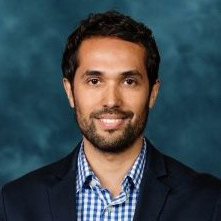
About the Speaker: Luis Espinoza is a Ph.D. candidate in Economics from University of Michigan. He is also a former Growth Lab Fellow (2014-2016) and holds a MPAID (2014) degree from HKS. He will be joining the International Affairs faculty at the Bush School of Government and Public Service at Texas A&M this Fall. Luis’ research interest lies at the intersection of trade and development. His research focuses on economic development from a sectorial/macro perspective, with an eye on potential lessons for policy.
Development Talk: Economic Gardening and Capitalism’s Conundrum
March 27, 2024 | 12:00 pm – 1:00 pm
The Growth Lab’s “Development Talks” is a series of conversations with policymakers and academics working on economic growth and development in countries, regions, states and cities in the US and around the world. The seminar provides a platform for practitioners and researchers to discuss both economic growth and development and analytical work centered on policy. This event is co-sponsored with the Taubman Center for State & Local Government.
Speaker: Christian Gibbons, founder of the National Center for Economic Gardening (NCEG) and creator of “Economic Gardening,” an entrepreneurial approach to economic development.
Moderator: Lara Gale, Economic Development Program Manager, Taubman Center for State & Local Government.
This session will be an interactive discussion of capitalism’ conundrum and the role of Economic Gardening- an entrepreneurial, grow-your-own approach to economic development. Economic Gardening is based in part on the science of complex adaptive systems, systems theory and Stage 2 companies with a focus on commodity traps.
Whether attending in-person or virtually, please register in advance. Room attendance is limited to the Harvard community. Seating availability is based on a first-come, first-served basis. Lunch will be provided. The Zoom webinar is open to the public.
Speaker Bio: Chris Gibbons is the founder of the National Center for Economic Gardening (NCEG). He is the creator of “Economic Gardening,” an entrepreneurial approach to economic development. The program, created in Littleton CO in 1987, is widely regarded as introducing the first entrepreneurial element into economic development. It is a major strategy used in many economic development programs today.
From the period 1990 to 2010 the number of jobs in Littleton doubled from 15,000 to 30,000 and sales tax revenues more than tripled from $6 to $21 million. The city did not recruit one business during this period, nor did it offer one cent in incentives or tax rebates. The NCEG was created in 2012 to assist communities across the country to start and operate Economic Gardening programs.
Research Seminar: Economic Complexity, Regional Development, and Smart Diversification: Evidence from Brazil
February 29, 2024 | 11:00 am – 12:30 pm
Speakers: João Romero and Gustavo Britto, Professors at the Department of Economics at Universidade Federal de Minas Gerais (UFMG)
Location: HYBRID L-324 FAINSOD, HKS / Zoom
Whether attending in person or virtually, please register in advance.
Paper Abstract.
Following the increasing upsurge in the works that use economic complexity indicators (ECI) to devise smart diversification strategies, this paper proposes a new method – Smart Diversification Score (SDS) – to be used by policymakers to rank promising activities for short, medium and long-term diversification. After reporting the positive impact of regional complexity, calculated using employment data, on employment and GDP per capita growth for Brazilian regions, the paper assesses the potential of SDS to increase ECI in the municipal level. Looking backwards (to data from 2007 and 2018), the paper finds that SDS can predict up to 39.4% of the diversification activities that happened in 1033 Brazilian cities that have increased their complexity. Looking forward, the paper calculates the SDS for the city of Belo Horizonte, suggesting a balanced portfolio of related and unrelated activities for diversification and estimates the potential gains to be obtained following different development paths. The main contribution of this paper is to conceive of a new method, test its validity in the municipal level and exemplify its use for policy purposes.
Gustavo Britto is a full-time professor at the Department of Economics, Universidade Federal de Minas Gerais (UFMG). Awarded a PhD degree in Regional Growth, Land Economy Department from the University of Cambridge in 2008. Vice-Director at the Center for Development and Regional Planning (Cedeplar-UFMG) (2018-2023), Editor of Nova Economia Journal (2018-2023), and a member of the board of Graduate Studies of the Postgraduate Programme in Economics at Cedeplar-UFMG (2014-2023). Researcher at the Center for Development and Regional Planning (Cedeplar). His main investigation theme is the multidimensional relationship between structural change and economic development over time and across the territory. Research results can be found in journals such as the Cambridge Journal of Economics, Metroeconomica, Structural Change and Economic Dynamics, Scientometrics, Journal of Cleaner Production, Journal Post Keynesian Economics, Journal of Political Economy, PSL Quarterly Review, and Cepal Review, among others. General Coordinator of the DataViva project. Currently working as a visiting scholar at SOAS (University of London).
João Romero is a full-time professor at the Department of Economics at Universidade Federal de Minas Gerais (UFMG). PhD in Applied Economics from the University of Cambridge (2015), his PhD thesis was awarded the BRICS Economic Research Award in 2016, promoted by the Exim Bank of India. He was also twice winner of the Brazilian National Confederation of Industry Award, in 2009 and 2015. He was Assistant Editor of Nova Economia Journal between 2018 and 2023. He is currently the coordinator of the International Economic Relations undergraduate course at UFMG. He is a member of the Cambridge Center for Economic and Public Policy (CCEPP), coordinator of the Research Group on Public Policies and Development (GPPD), at the Center for Regional Development and Planning (Cedeplar), and Research Coordinator of the DataViva project. His research is focused on the areas of economic complexity, regional development, international trade, and economic growth. He has published in journals such as World Development, Structural Change and Economic Dynamics, Cambridge Journal of Economics, Metroeconomica, Journal of Political Economy and Cepal Review, among others.