
Firms in Product Space: Adoption, Growth and Competition
November 13, 2023 | 11:00 am – 12:15 pm
The Growth Lab’s Research Seminar series is a weekly seminar that brings together researchers from across the academic spectrum who share an interest in growth and development.
Speaker: John Morrow, Reader in Economics at King’s Business School
Whether attending in person or virtually, please register in advance.
Paper Abstract: Which products are potentially produced together? Can any firm eventually supply any new demand? Using multi-product production patterns within and across firms, we recover a continuous cost based distance between products and firms. Product distance implies a product adoption path, with each rank of distance decreasing adoption frequency. When export demand for unproduced products induces domestic adoption, closer firms supply them. Counterfactual production costs imply measures of Revenue Potential and Competitive Pressure. These predict firm sales growth, scope growth and core focus. If all firms produced all products linked by co-production, consumer welfare would increase by 20-30%.
About the Speaker: John Morrow is a Reader in Economics at King’s Business School and is affiliated to the Centre for Economic Performance and Centre for Economic Policy Research. His main research studies firm responses to economic changes such as trade or industrial policies and the consequences for productivity and efficiency, especially in developing countries. John completed a PhD at the University of Wisconsin-Madison and is a recipient of the FIW Young Economist Award and ETSG Chair Jacquemin Prize. John has taught at Kent State University, London School of Economics, University of Essex and Birkbeck College.
Research Seminar: The Growing Use of Economic Complexity in EU Policy
November 6, 2023 | 11:00 am – 12:15 pm
The Growth Lab’s Research Seminar series is a weekly seminar that brings together researchers from across the academic spectrum who share an interest in growth and development.
Speaker: Pierre-Alexandre Balland (Utrecht University & AI Toulouse Institute)
In this hybrid seminar, Pierre-Alexandre Balland will review the growing use of economic complexity within different sections of the European Commission, EU member states, and EU regions. He will then highlight existing limitations and blindspots that the field seriously needs to address. Finally, Pierre-Alex will delve into new policy use cases that could benefit from a complexity angle in the near future.
Whether attending in person or virtually, please register in advance.
Paper Abstract: Economic complexity offers a powerful paradigm to understand key societal issues and challenges of our time. By focusing on the underlying structure of the economy and systemic interactions it offers new insights on growth, technological change, regional evolution, or inequality. As a result, policy makers around the world are increasingly using economic complexity heuristics and metrics to guide their decisions.
Research Seminar: New U.S. Industrial Innovation Policies
November 1, 2023 | 10:00 am – 11:15 am
The Growth Lab’s Research Seminar series is a weekly seminar that brings together researchers from across the academic spectrum who share an interest in growth and development.
Speaker: William B. Bonvillian, Lecturer at MIT, and Senior Director for special projects at MIT’s Office of Open Learning
Despite longstanding opposition from mainstream economists and neoliberal perspectives to industrial policy, the United States, confronted by advanced technology competition from China, climate change, and a global pandemic, adopted from 2020-2022 a series of major industrial policy programs. Although the U.S. Defense Department has long practiced industrial policy approaches, and the U.S. has followed industrial economic policies in its agriculture, transportation, electric power and healthcare sectors, the new programs focused on promoting technology innovation, so can be labeled “industrial innovation policy.” The large scale of these efforts amounted to a new step for the U.S. in non-defense sectors.
This talk will review six major examples of new U.S. industrial innovation policies. All involve federal government interventions into the post-research phases of innovation, from development to prototyping, testing, demonstration, and production.
Whether attending in person or virtually, please register in advance.

William B. Bonvillian is a Lecturer at MIT, and Senior Director for special projects at MIT’s Office of Open Learning, leading research projects on workforce education and technology issues. From 2006 until 2017, he was director of MIT’s Washington Office, supporting MIT’s longstanding role in science policy at the national level. He served as an advisor to MIT’s major cross-campus national policy initiatives on advanced manufacturing, energy technology, life science convergence and online education. He was an MIT representative to President Obama’s industry-university Advanced Manufacturing Partnership (AMP) which formed U.S. manufacturing policies in the 2011-2016 period. He teaches courses on innovation systems and science and technology policy at MIT in the and Science Technology and Society and Political Science Departments. Previously, he worked for over 15 years on science and innovation issues as a senior advisor in the U.S. Senate, and earlier was a Deputy Assistant Secretary of Transportation.
Development Talk: Building Inclusive Cities
October 30, 2023 | 2:00 pm – 3:00 pm
The Growth Lab’s “Development Talks” is a series of conversations with policymakers and academics working on economic growth and development in countries, regions, states and cities in the US and around the world. The seminar provides a platform for practitioners and researchers to discuss both economic growth and development and analytical work centered on policy.
Speaker: Carel Kleynhans, CEO of Divercity Property Group
Moderator: LaChaun Banks, Ash Center Director for Equity and Inclusion
Divercity Property Group is South Africa’s leading investor in well-located affordable housing precincts: Divercity invests in affordable rental housing in well-located urban precincts with scale. In this talk, Carel Kleynhans will discuss specifically what Divercity does in South Africa and why they think that a new vision for urban development that is scalable and commercially viable can really be an instrumental part of addressing any one of the UN Sustainable Development Goals or any other developmental outcome.
Location: HYBRID W434 A.B, HKS / Zoom
Whether attending in-person or virtually, please register in advance. Room attendance is limited to the Harvard community. Seating availability is based on a first-come, first-served basis. Refreshments will be provided. The Zoom webinar is open to the public.
Navigating Crisis and Leading Change in Moldova with Former Prime Minister Natalia Gavrilita
October 24, 2023 | 12:00 pm – 1:00 pm
The Growth Lab’s “Development Talks” is a series of conversations with policymakers and academics working on economic growth and development in countries, regions, states and cities in the US and around the world. The seminar provides a platform for practitioners and researchers to discuss both economic growth and development and analytical work centered on policy.
Speaker: Natalia Gavrilita, Former Prime Minister of Moldova
Moderator: Karen Donfried, Senior Fellow at the Belfer Center for Science and International Affairs and former Assistant Secretary of State for European and Eurasian Affairs
Whether attending in-person or virtually, please register in advance. Room attendance is limited to the Harvard community. Seating availability is based on a first-come, first-served basis. Lunch will be provided. The Zoom webinar is open to the public.
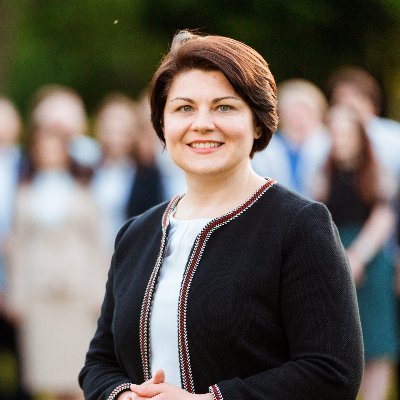
About the Speaker:
Natalia Gavrilița is a member of the Supervisory Board of the National Bank of Moldova, as well as member of the ECFR Board. Natalia Gavrilița served as the 15th Prime Minister of Moldova between August 2021 and February 2023. She led the Government through multiple overlapping crises caused by the war in neighbouring Ukraine, while also advancing ambitious anti-corruption, economic, and governance reforms. During her time in office, Moldova received the largest influx of Ukrainian refugees of any European country, managed to diversify its energy market away from Russian gas, and became a candidate country to the European Union. Gavrilița has had a long history in economics and politics. She served as finance minister from June 2019 to November 2019 when President Maia Sandu was Prime Minister. Earlier in her career, she was Managing Director at the London-based Global Innovation Fund, a hybrid investment fund supporting social innovation in developing countries. She has also worked within the Ministry of Education, Ministry of Economy and for Oxford Policy Management. Throughout her career, she has worked in a number of countries across Africa, Central and South Asia. Gavrilița graduated from Moldova State University with a bachelor’s degree in International Law and also earned a master’s degree in Public Policy from Harvard University.
The Wild, Wild West: What Can We Learn From The Cowboy State?
October 23, 2023 | 6:00 pm – 7:00 pm
The Growth Lab’s “Development Talks” is a series of conversations with policymakers and academics working on economic growth and development in countries, regions, states and cities in the US and around the world. The seminar provides a platform for practitioners and researchers to discuss both economic growth and development and analytical work centered on policy.
Speaker: Gov. Mark Gordon (R-Wyoming)
Governor Gordon serves as the current chair of the Western Governors’ Association, which includes 19 western states and three U.S. territories in the Pacific region, working across a range of policy issues to advance western priorities in a bipartisan way. Governor Gordon’s initiative as WGA Chair is entitled “Decarbonizing the West,” and this initiative follows in a tradition of initiatives focused on energy opportunities, effective land and water management, and reimagining the rural west.
This discussion is co-sponsored by the Growth Lab and its Pathways to Prosperity research engagement with the State of Wyoming. The conversation is expected to touch upon numerous challenges and opportunities facing Wyoming and western states.
Moderator: Jeff Liebman, Director of the Taubman Center for State and Local Government
Please register if you would like the possibility of attending the Forum in person. If a seat is unavailable or you will not be attending in person, viewers can stream the event live via the IOP’s YouTube page. You do not need to register for virtual attendance.
About the speaker:

Mark Gordon was elected Wyoming’s 33rd Governor in 2018 and is now serving in his second term. In 2022, Governor Gordon received 79% of the vote, the largest margin of victory of any gubernatorial candidate in Wyoming’s history and the largest vote margin among governors elected in that year. Having successfully led Wyoming through some historically difficult times including the COVID-19 pandemic, Governor Gordon is spearheading efforts to diversify Wyoming’s economy and continue to set Wyoming on a sustainable fiscal path — which he helped to strengthen as Wyoming State Treasurer from October 2012 to January 2019. He and his wife, Jennie, are dedicated to making Wyoming the best place in the nation to raise a family.
Having grown up on a family ranch in Kaycee, Wyoming, worked in the oil and gas industry, and ran several businesses spanning ranching, outdoor recreation, and tourism, Governor Gordon is acutely aware of the challenge of global climate change and has been outspoken about the “climate opportunity” in Wyoming and across the West. He promotes an all-of-the-above energy strategy, as Wyoming is a leader in coal, wind, oil, gas and uranium production. At a recent Conservative Climate Summit, Governor Gordon was quoted as saying, “As a mountaineer, I know that glaciers are disappearing. As a rancher, I can see what’s happening to our farms. As someone who cares about the world for our future, as a conservative, I feel very strongly that this country needs to get off its butt and do so with honesty and a respect for what’s happening.”
Research Seminar: Dancing With the Stars -Innovations through Interactions
October 11, 2023 | 10:00 am – 11:30 am
The Growth Lab’s Research Seminar series is a weekly seminar that brings together researchers from across the academic spectrum who share an interest in growth and development.
In this hybrid seminar, Santiago Caicedo, an Associate Professor at the Economics Department and Finance Group at Northeastern University will discuss his research on innovation, which uses a new large-scale panel dataset on European inventors matched to their employers and patents.
Whether attending in person or virtually, please register in advance.
Paper Abstract: An inventor’s own knowledge is a key input in the innovation process. This knowledge can be built by interacting with and learning from others. This paper uses a new large-scale panel dataset on European inventors matched to their employers and patents. We document key empirical facts on inventors’ productivity over the life cycle, inventors’ research teams, and interactions with other inventors. Among others, most patents are the result of collaborative work. Inter- actions with better inventors are very strongly correlated with higher subsequent productivity. These facts motivate the main ingredients of our new innovation-led endogenous growth model, in which innovations are produced by heterogeneous research teams of inventors using inventor knowledge. The evolution of an inventor’s knowledge is explained through the lens of a diffusion model in which inventors can learn in two ways: By interacting with others at an endogenously chosen rate; and from an external, age-dependent source that captures alternative learning channels, such as learning-by-doing.
About the Speaker: Santiago Caicedo is an Associate Professor at the Economics Department and Finance Group at Northeastern University. He graduated with a Ph.D. in Economics from the University of Chicago. His research connects microdata with economic theory to study social interactions, human capital formation, economic growth, and innovation.
Research Seminar: Money, Time, and Grant Design
October 4, 2023 | 10:00 am – 11:30 am
The Growth Lab Research Seminar series is a weekly seminar that brings together researchers from across the academic spectrum who share an interest in growth and development.
Speaker: Wei Yang Tham is a Research Scientist at the Laboratory for Innovation Science at Harvard (LISH) and Harvard Business School
Abstract: The design of research grants might be a useful tool for incentivizing more socially valuable science. To better understand the value of grant design as a policy instrument, we conduct two sets of thought experiments in a nationally representative survey of academic researchers. First, we test whether grants with randomized attributes induce different research strategies. Longer grants increase researchers’ willingness to take risks, but only amongst tenured professors, suggesting that job security and grant duration are complementary incentives. Larger grants increase researchers’ willingness to expand ongoing projects, while smaller grants increase researchers’ focus on starting new projects. In our second experiment, we estimate researchers’ willingness to trade off grant size and duration. We find that researchers are relatively unwilling to trade off the amount of funding a grant provides in order to extend the duration of the grant — more money is much more valuable than more time.
Whether attending in-person or online, please register in advance. Room attendance is limited to the Harvard community. Seating is available on a first-come, first-served basis. Zoom attendance is open to the public.

About the speaker:
Wei Yang Tham is a Research Scientist at the Laboratory for Innovation Science at Harvard (LISH) and Harvard Business School. He completed his PhD in Economics at Ohio State University in 2019. Dr. Tham studies innovation and knowledge production in the context of science. His recent work includes eliciting researchers’ preferences and responses to grant design, studying how funding delays affect the movement of human capital across sectors and borders, and estimating the knowledge production function to better understand the optimal distribution of resources in research.
Global and Regional Green Steel Transition: From Resource Potential to Supply Chain Re-configuration
September 27, 2023 | 10:00 am – 11:30 am
The Growth Lab Research Seminar series is a weekly seminar that brings together researchers from across the academic spectrum who share an interest in growth and development.
Speakers:
Alli Devlin is a DPhil in Engineering Science Candidate at the University of Oxford.
Aidong Yang is a Professor of Engineering Science and a Fellow of Green Templeton College, Oxford.
Today’s steel industry is one of the top industrial emitters, responsible for ~8% of global carbon emissions. Decarbonising steelmaking is thus attracting significant attention of industrial players and policymakers, with the green transition already gaining momentum in some countries (e.g., Sweden), although most steel production is still deeply reliant on fossil fuels. This transition will be a huge undertaking, with great challenges in resource, technology, and economics to overcome. In this seminar, the authors will focus on the physical aspects of green steelmaking, sharing recent and ongoing mathematical modelling work on (1) understanding global resource potential for deploying green steel facilities, particularly addressing the availability of renewable energy and suitable iron ore, and (2) exploring potentially favourable supply chain (re-) configurations at the regional scale, taking into account a wide range of technological options and their geographical allocation. The results highlight key opportunities and challenges from technical perspectives, which will hopefully provide useful input to wider discussions about the green steel transition involving economics, policies and development agendas.
This seminar is online only. Please register in advance.
Fighting for Growth: Labor Scarcity and Technological Progress During the British Industrial Revolution
September 20, 2023 | 10:00 am – 11:15 am
The Growth Lab Research Seminar series is a weekly seminar that brings together researchers from across the academic spectrum who share an interest in growth and development.
This session is online only. Please register in advance.
In this seminar, Bruno Caprettini will discuss new data and present new evidence on the effects of labor scarcity on the adoption of labor-saving technology in industrializing England. Where the British armed forces recruited heavily, more machines that economized on labor were adopted. For purposes of identification, we focus on naval recruitment. Using warships’ ease of access to coastal locations as an instrument, exogenous shocks to labor scarcity led to technology adoption. The same shocks are only weakly associated with the adoption of non-labor saving technologies. Importantly, there is also a synergy between skill abundance and labor scarcity boosting technology adoption. Where labor shortages led to labor-saving machine adoption, technology afterwards improved more rapidly.
About the Speaker: Bruno Caprettini is Assistant Professor at the University of St Gallen, where he is affiliated with the Swiss Institute for International Economics and Applied Economic Research (SIAW). He holds a PhD from Universitat Pompeu Fabra (Barcelona). He is interested in the determinants of long-term growth, both economic and political. Some of his work appeared on AER, QJE and AER-Insights.