
Research Seminar: Superstar Teams- The Micro Origins and Macro Implications of Coworker Complementarities
February 13, 2023 | 11:15 pm – February 14, 2023 | 12:30 am
Speaker: Lukas Freund, PhD candidate in Economics and Gates scholar at the University of Cambridge
Abstract: Modern production frequently involves teamwork among employees specialized in different tasks. I develop a model of teams in which firms assign tasks to workers who are heterogeneous in their overall quality and whose efficiency varies across different tasks. In addition to productivity gains, the division of labor endogenously generates coworker complementarities: the marginal productivity of one employee’s quality is increasing in other team members’ quality. This interdependence is stronger when variation in worker-task specific efficiencies is high. In frictional labor markets, coworker complementarities carry macroeconomic implications for both productivity and inequality. Coworker quality mismatch lowers team productivity, leading employers to search for workers of similar quality. In equilibrium, firms with “superstar teams” pull away in terms of productivity and pay. I validate the model’s key mechanisms using administrative micro data. Paralleling a shift in the nature of tasks, a theory-informed measure of coworker complementarities has doubled since 1990. A structural estimation exercise suggests that this rise explains between one quarter and one half of the increase in the between-firm share of wage inequality in Germany (1990-2010).
Whether attending in-person or virtually, please register in advance. Room attendance is limited to the Harvard community. Seating availability is based on a first-come, first-served basis. The Zoom webinar is open to the public.
About the Speaker: Lukas Freund is a PhD candidate in Economics and Gates scholar at the University of Cambridge, visiting Princeton University during the academic year 2022/2023. His research focuses on macro- and labor economics and has been published in the Journal of Monetary Economics and the Review of Economics Dynamics. In addition, he is a consultant for the Organisation for Economic Co-operation and Development and has previously visited the Bank of England and Deutsche Bundesbank. Prior to the PhD, he completed undergraduate and master degrees at the University of Oxford.
Development Talk: Order Without Design / Rethinking the Role of Government in City Development
February 21, 2023 | 1:00 pm – 2:00 pm
The Growth Lab’s Development Talks is a series of conversations with policymakers and academics working in international development. The seminar provides a platform for practitioners and researchers to discuss both the practice of development and analytical work centered on policy.
Speaker: Alain Bertaud, Senior Fellow, New York University’s Marron Institute of Urban Management; Distinguished Visiting Fellow, Mercatus Center, George Mason University.
Moderator: Diane E. Davis, Charles Dyer Norton Professor of Regional Planning and Urbanism, Harvard’s Graduate School of Design.
Whether attending in-person or virtually, please register in advance. Room attendance is limited to the Harvard community. Seating availability is based on a first-come, first-served basis. The Zoom webinar is open to the public.
Lunch will be provided. Please arrive at 11:45 am to allow for lunch, seating, and a prompt start at 12 pm.

About the speaker:
Alain Bertaud is a Senior Fellow at New York University’s Marron Institute of Urban Management and Distinguished Visiting Fellow at the Mercatus Center at George Mason University. From 2014 to 2020, he taught a graduate course at NYU in urban economic planning, “Markets, Design, and the City.” In his book, “Order without Design: How Markets Shape Cities,” published by MIT Press in November 2018, he argues that a city’s chief attraction resides first in the people already living in it. People and firms, through markets, create a spontaneous order. The top-down design infrastructure that serves this spontaneous order, not the other way around. Cities are primarily labor markets that form the substructure on which all the other social amenities are built. Bertaud previously held the position of principal urban planner at the World Bank, where he worked on developing housing projects in India, Pakistan, and Bangladesh.
Research Seminar: Academic Science and Corporate Innovation
January 30, 2023 | 11:15 am – 12:30 pm
The Growth Lab Research Seminar series is a weekly seminar that brings together researchers from across the academic spectrum who share an interest in growth and development.
Speaker: Seungryul Ryan Shin, Post-Doctoral Researcher at Cornell University.
Abstract: This study examines how academic science shapes the dynamics of corporate innovation. An experiment that as-good-as-randomly exposes academic science to corporate inventors reveals that such exposure increases the corporate inventors’ science-based inventions as well as inventions using novel technological approaches. Furthermore, exposure to academic science increases the number of inventions on the extremes, i.e., inventions with no future impact and inventions that are highly impactful. The findings point to the role of academic science as a map in both scientific and technological search, albeit one whose guidance may lead to a dead-end or a promising destination.
Whether attending in-person or virtually, please register in advance. Room attendance is limited to the Harvard community. Seating availability is based on a first-come, first-served basis. The Zoom webinar is open to the public.
About the Speaker: Seungryul Ryan Shin is a Post-Doctoral Researcher at Cornell University. His research interests lie in innovation from both aspects of management and economics. His recent work investigated the impact of high-skilled human capital on regional entrepreneurship, the role of patents filed by government scientists in the diffusion of government science, and how academic science shapes corporate innovation.
Research Seminar: Author Location & Attention on Open Science Platforms / Evidence from COVID-19 Preprints
January 23, 2023 | 11:15 am – 12:30 pm
The Growth Lab Research Seminar series is a weekly seminar that brings together researchers from across the academic spectrum who share an interest in growth and development.
Speaker: Megan MacGarvie, Associate Professor, Boston University/Research Associate at the National Bureau of Economic Research
Abstract: Online platforms such as preprint servers have become an important way to disseminate new scientific knowledge prior to peer review. However, little is known about how attention to preprints may vary across authors from different locations, particularly relative to evaluation in expert-controlled systems such as scientific journals. This study explores how readers allocated attention across preprints in the initial months of the COVID-19 pandemic, a time when there was an increase in demand for new research and a corresponding increase in the use of preprint platforms around the world. We find that, after controlling carefully for article quality and topic as well as the prominence of the preprint’s ultimate publication outlet, preprints with authors from Chinese institutions receive less attention, and preprints with authors from US institutions receive more attention, than preprints with authors from the rest of the world. In an exploration of potential mechanisms driving the observed effects, we find evidence that when evaluation is more constrained, in terms of lack of knowledge or expertise and increase in time pressure, audiences tend to make greater use of preprint authors’ country as a proxy for quality or relevance. The results suggest that geographic biases may persist or even be exacerbated on platforms designed to promote unfettered access to early research findings.
Whether attending in-person or virtually, please register in advance. Room attendance is limited to the Harvard community. Seating availability is based on a first-come, first-served basis. The Zoom webinar is open to the public.
About the Speaker: Megan MacGarvie is Associate Professor in the department of Markets, Public Policy and Law at the Questrom School of Business at Boston University, and a Research Associate at the National Bureau of Economic Research, Cambridge, MA. Her research focuses on the economics of innovation and intellectual property. Recent work has analyzed the impact of international mobility of US-trained STEM doctoral recipients on research productivity, collaboration, and knowledge diffusion; entrepreneurship and innovation among foreign-born STEM doctoral recipients and post-docs; and the impact of US immigration policy on the return migration choices of foreign-born scientists in the U.S.
Firm-Level Production Networks: What Do We (Really) Know?
December 12, 2022 | 11:15 am – 12:30 pm
The Growth Lab Research Seminar series is a weekly seminar that brings together researchers from across the academic spectrum who share an interest in growth and development.
Speaker: François Lafond
Abstract: Firm-level datasets on production networks are often confidential and arise from different data collection methods, making it difficult to determine stylized facts. Are standard network properties similar across all available datasets, and if not, why? We provide benchmark results from two administrative data sets (Ecuador and Hungary) which are exceptional in that there are no reporting thresholds. We compare these networks to a leading commercial data set (FactSet), and a systematic synthesis of published results. The administrative data sets with no reporting thresholds have remarkably similar properties, but differ substantially from non-administrative sources, or from administrative datasets with higher reporting thresholds. Our results provide a roadmap for a distributed micro-data project, offer insights into the direction of biases on key metrics when using partial datasets, and have wide implications for reconstructing the global firm-level production network and for modelling heterogeneity in macro. (Joint work with Andrea Bacilieri, András Borsos, and Pablo Astudillo-Estevez).
The seminar will be on Zoom. The link to the registration page is: https://harvard.zoom.us/j/640145716?pwd=bTUxOXRad0o2ZTJtbWRxTGpta1BlQT09
About the Speaker: François Lafond is deputy director of the Complexity Economics group at the Institute for New Economic Thinking, University of Oxford, and an associate member of Nuffield college, Oxford. His main areas of research are in the economics of innovation and productivity, environmental economics, networks and complex systems, applied econometrics and forecasting.
Green Technological Diversification: The Role of International Linkages in Leader and Follower Countries
December 5, 2022 | 11:15 am – 12:30 pm
The Growth Lab Research Seminar series is a weekly seminar that brings together researchers from across the academic spectrum who share an interest in growth and development.
Research Seminar: Electoral Turnovers
November 28, 2022 | 11:15 am – 12:30 pm
The Growth Lab Research Seminar series is a weekly seminar that brings together researchers from across the academic spectrum who share an interest in growth and development.
Speaker: Vincent Pons, Associate Professor, Harvard Business School
Abstract: In most national elections, voters face a key choice between continuity and change. Electoral turnovers occur when the incumbent candidate or party fails to win reelection. To understand how turnovers affect national outcomes, we study the universe of residential and parliamentary elections held since 1945. We document the prevalence of turnovers over time and estimate their effects on economic performance, trade, human development, conflict, and democracy. Using a close-elections regression discontinuity design (RDD) across countries, we show that turnovers improve country performance. These effects are not driven by differences in the characteristics of challengers, or by the fact that challengers systematically increase the level of government intervention in the economy. Electing new leaders leads to more policy change, it improves governance, and it reduces perceived corruption, consistent with the expectation that recently elected leaders exert more effort due to stronger reputation concerns.
Whether attending in-person or virtually, please register in advance. Room attendance is limited to the Harvard community. Seating availability is based on a first-come, first-served basis. The Zoom webinar is open to the public.

About the speaker:
Vincent Pons is an Associate Professor at Harvard Business School, and affiliated with the National Bureau of Economic Research (NBER), the Center for Economic and Policy Research (CEPR), and the Abdul Latif Jameel Poverty Action Lab (J-PAL).
Across the world, dissatisfaction with elected governments is at all-time highs. His research aims to understand why representative democracies can fail to deliver leaders, policies and outcomes aligned with people’s preferences. His work has appeared in journals such as Econometrica, the American Economic Review, the Quarterly Journal of Economics, and the American Political Science Review. It has been covered by The New York Times, The Economist, PRI’s The World, the Huffington Post, le Monde, and BFM Business among others.
Export Diversification Strategy: The Case of Knowledge-Intensive Services in Costa Rica
December 1, 2022 | 1:00 pm – 2:00 pm
The Growth Lab’s Development Talks is a series of conversations with policymakers and academics working in international development. The seminar provides a platform for practitioners and researchers to discuss both the practice of development and analytical work centered on policy.
Speaker: Andres Valenciano, John F. Kennedy Fellow, HKS MC/MPA ’23
Moderator: Alejandro Rueda-Sanz, Research Fellow, Growth Lab
Whether attending in-person or virtually, please register in advance. Room attendance is limited to the Harvard community. Seating availability is based on a first-come, first-served basis. The Zoom webinar is open to the public.
Lunch will be provided. Please arrive at 11:45 am to allow for lunch, seating, and a prompt start at 12 pm.
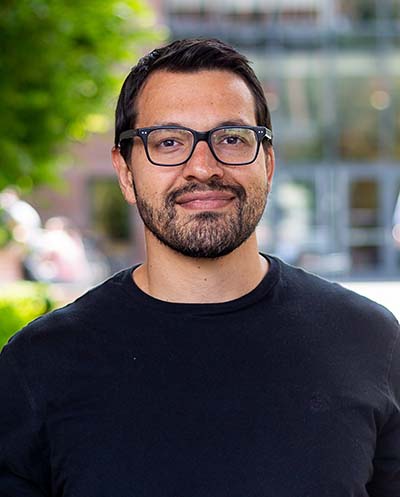
Andres is currently a John F. Kennedy Fellow at the MC/MPA program at Harvard Kennedy School. Previously he was the Minister of Foreign Trade of Costa Rica, responsible for Costa Rican foreign trade policies, export promotion, and attraction of foreign investment, as well as the official representation before several multilateral organizations, such as the World Trade Organization (WTO). During his tenure, he was responsible for leading the final stage of the accession process for Costa Rica to become the 38th member of the OECD. In this period, Costa Rica became the number one country in the world in greenfield foreign direct investment (FDI) attraction.
Before becoming Minister, Andres was the Executive President of the Instituto Nacional de Aprendizaje, where he oversaw technical and vocational education in Costa Rica and led the most important and far-reaching transformation the organization has undergone since its foundation in 1965. Previously, he was Executive Director of local and international NGOs, and worked in education, health, social housing, and economic development projects in over 12 countries in 3 continents, in partnership with IADB, UNDP, PAHO, ILO, among others.
Andres is an Industrial Engineer from the University of Costa Rica, with a Master’s degree in International Business from The Fletcher School – Tufts University, and a Lee Kuan Yew School Senior Fellow from the National University of Singapore.
Why Follow the Fed? Monetary Policy in Times of US Tightening
November 21, 2022 | 11:15 am – 12:30 pm
The Growth Lab Research Seminar series is a weekly seminar that brings together researchers from across the academic spectrum who share an interest in growth and development.
Speaker: Gonzalo Huertas, Economist, International Monetary Fund
Abstract: I conduct interviews with 32 Central Bankers from Emerging Markets and present five unifying themes that explain their behavior when reacting to a U.S. monetary tightening. I then estimate the impulse response functions of their two main monetary tools, the policy rate and foreign exchange interventions, to an increase in the U.S. rate, using the answers from the interviews as a guide for the best econometric specification. I find that most Central Banks react to a U.S. tightening by raising domestic rates, regardless of the exchange rate regime, but their reasons for doing so vary — from controlling inflation to preventing capital outflows.
Whether attending in-person or virtually, please register in advance. Room attendance is limited to the Harvard community. Seating availability is based on a first-come, first-served basis. The Zoom webinar is open to the public.

About the speaker:
Gonzalo Huertas is an economist at the International Monetary Fund. He specializes in international macroeconomics, with a focus on monetary policy, capital flows, and debt sustainability. Previously, he conducted research at the Peterson Institute for International Economics, and has worked in policy at the Ministry of Finance of Mexico and the National Cabinet of Ministers of Argentina.
Heterogeneous Trade Agreements: Evidence from Apparel Trade
November 14, 2022 | 11:15 am – 12:30 pm
The Growth Lab Research Seminar series is a weekly seminar that brings together researchers from across the academic spectrum who share an interest in growth and development.
Speaker: Dr. Raymond Robertson, Director of the Mosbacher Institute for Trade, Economics, and Public Policy, Professor, and Helen and Roy Ryu Chair in Economics and Government, the Bush School of Government and Public Service, Texas A&M
Abstract: In this paper, we revisit and assess the heterogeneous effects of RTAs on trade flows. Using the Poisson Pseudo maximum likelihood (PPML) estimator with high-dimensional fixed effects, we account for multiple characteristics of the trading partners, including their membership in other RTAs, and the problem of incidental parameters. Our main focus is on apparel trade, which is politically sensitive and tends to have heterogeneous Rules of Origin (ROOs) within RTAs. Studies show that ROOs can restrict trade if they are either complicated or narrowly specified (Cadot and de Melo 2007, Angeli et al. 2020) and we show that the variance of the estimated effect of RTAs on apparel trade is significantly higher than the variance for total trade. In addition to contributing to trade agreement heterogeneity, apparel also plays a pivotal role in economic development and reducing emigration by drawing workers from agriculture and informality because apparel production has lower start-up costs and pays higher wages than other domestic alternatives for similar workers (Robertson et al. 2020 and 2022). Together our results suggest that understanding trade agreement heterogeneity, especially in the apparel sector, can have significant policy implications. Focusing on the Dominican Republic-Central America Free Trade Agreement (CAFTA-DR), for example, suggests that updating ROOs could significantly reduce migration from Central America.
Please register in advance.
About the speaker:
Dr. Raymond Robertson is Professor and holder of the Helen and Roy Ryu Chair in Economics and Government in the Departments of International Affairs at the Bush School of Government and Public Service and the Director of the Mosbacher Institute for Trade, Economics, and Public Policy. He is a research fellow at the Institute for the Study of Labor in Bonn, Germany, and a senior research fellow at the Mission Foods Texas-Mexico Center. He was named a 2018 Presidential Impact Fellow by Texas A&M University. Robertson earned a BA in political science and economics from Trinity University in San Antonio, Texas, and an MS and PhD in economics from the University of Texas at Austin. He has taught at the Maxwell School of Citizenship and Public Affairs at Syracuse University and was a Visiting Professor in the Department of Economics at the Graduate School of Administration, Monterrey Institute of Technology’s Mexico City campus. Widely published in the field of labor economics and international economics, Robertson previously chaired the US Department of Labor’s National Advisory Committee for Labor Provisions of the US Free Trade Agreements and served on both the State Department’s Advisory Committee on International Economic Policy and the Center for Global Development’s advisory board.