
Reversing Fortunes of German Regions, 1926–2019: Boon and Bane of Early Industrialization?
November 7, 2022 | 11:15 am – 12:30 pm
The Growth Lab Research Seminar series is a weekly seminar that brings together researchers from across the academic spectrum who share an interest in growth and development.
Speaker: Sebastian Braun, Professor of Economics, University of Bayreuth
Abstract: This paper shows that 19th-century industrialization is an important determinant of the significant changes in Germany’s economic geography observed in recent decades. Using novel data on economic activity in 163 labor market regions in West Germany, we establish that nearly half of them experienced a reversal of fortune between 1926 and 2019, i.e., they moved from the lower to the upper median of the income distribution or vice versa. Economic decline is concentrated in North Germany, economic ascent in the South. Exploiting plausibly exogenous variation in access to coal, we show that early industrialization turned from an advantage for economic development to a burden after World War II. The dominant position of heavy industry, supported by the local political-administrative system, limited regional adaptability when the old industries fell into crisis. Today, the early industrialized regions suffer from low innovation and deindustrialization. The (time-varying) effect of industrialization explains most of the decline in regional inequality observed in the 1960s and 1970s and about half of the current north-south gap in economic development.
Whether attending in-person or virtually, please register in advance. Room attendance is limited to the Harvard community. Seating availability is based on a first-come, first-served basis. The Zoom webinar is open to the public.
About the speaker:
Sebastian Braun is Professor of Economics at the University of Bayreuth where he holds the chair for Quantitative Economic History. He is also a Visiting Research Fellow at IZA – Institute of Labor Economics. Before joining the University of Bayreuth, he was an Associate Professor at the University of St Andrews and a Senior Researcher at the Kiel Institute for the World Economy. Sebastian works at the intersection of international and regional economics, labor economics, and quantitative economic history. His main current research is on the economic effects of immigration and the causes of regional differences in economic development, with a focus on Germany in the 19th and 20th century. His current work on the long-term effects of industrialization on regional economic development in Germany is supported by a grant of the German Science Foundation.
Development Talk: Culture, Psychology and Economic Development
November 8, 2022 | 1:00 pm – 2:00 pm
The Growth Lab’s Development Talks is a series of conversations with policymakers and academics working in international development. The seminar provides a platform for practitioners and researchers to discuss both the practice of development and analytical work centered on policy.
Speaker: Joseph Henrich, Ruth Moore Professor, Department of Human Evolutionary Biology, Harvard University
Moderator: Eliana La Ferrara, Professor of Public Policy, Harvard Kennedy School
Whether attending in-person or virtually, please register in advance. Room attendance is limited to the Harvard community. Seating availability is based on a first-come, first-served basis. The Zoom webinar is open to the public.
Lunch will be provided. Please arrive at 11:45 am to allow for lunch, seating, and a prompt start at 12 pm.
About the speaker:

The Impact of Automation and the Covid-19 Pandemic on the Labor Market and the Causes of the Great Resignation
October 31, 2022 | 10:15 am – 11:30 am
The Growth Lab Research Seminar series is a weekly seminar that brings together researchers from across the academic spectrum who share an interest in growth and development.
Speaker: R. Maria del Rio Chanona, Postdoctoral Research Fellow, Complexity Science Hub Vienna
Abstract: In the first part of this talk, we present a non-equilibrium and data-driven network model for understanding how workers adapt to changes in labor demand. In this model, workers move through an empirically derived occupational mobility network in response to automation scenarios. We find that the network structure is essential in determining unemployment levels, with occupations in particular areas of the network having few job transition opportunities. In the second part, we discuss how the Covid-19 pandemic affected the economy and how it led to the Great Resignation (i.e., the U.S. record high quit rates reached 2021) in the longer term. We use Reddit data and text analysis to show that mental health concerns have increased among the job quitting discourse since the start of the pandemic, likely contributing to the rise in quits.
Whether attending in-person or virtually, please register in advance. Room attendance is limited to the Harvard community. Seating availability is based on a first-come, first-served basis. The Zoom webinar is open to the public.
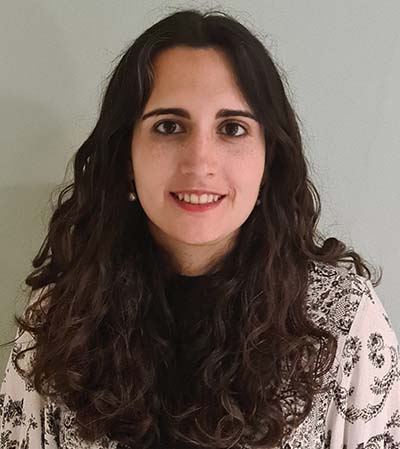
About the speaker:
Maria del Rio-Chanona has been a JSMF (James S. McDonnell Foundation) Postdoctoral Fellow at the Complexity Science Hub Vienna since June 2021 and affiliate at the Growth Lab at Harvard University’s Center for International Development (CID) for the Fall semester 2022. Maria has a PhD in mathematics from Oxford University, where she was part of the complexity economics group of the Institute for New Economic Thinking, Oxford Martin School. She has worked alongside international policy organizations, including the International Monetary Fund and the International Labour Organisation. Maria did her undergraduate studies in physics at UNAM, Mexico. Maria’s research draws from network science, natural language processing, and agent-based modeling and focuses on the future of work, green transition, Great Resignation, and the economic impact of the Covid-19 pandemic.
Development Talk: Political Favoritism and Regime Stability – Why Bad Policy is Almost Always Good Politics
November 2, 2022 | 12:00 pm – 1:00 pm
The Growth Lab’s Development Talks is a series of conversations with policymakers and academics working in international development. The seminar provides a platform for practitioners and researchers to discuss both the practice of development and analytical work centered on policy.
Speakers:
Bruce Bueno de Mesquita, Silver Professor; Professor of Politics, New York University
Alastair Smith, Bernhardt Denmark Professor of International Relations, New York University
Moderator: José Morales-Arilla, Research Fellow, Growth Lab; Postdoctoral Fellow, Department of Politics, Princeton University
Whether attending in-person or virtually, please register in advance. Room attendance is limited to the Harvard community. Seating availability is based on a first-come, first-served basis. The Zoom webinar is open to the public.
Lunch will be provided. Please arrive at 11:45am to allow for lunch, seating, and a prompt start at 12pm.
About the speakers

Bruce Bueno de Mesquita is an emeritus senior fellow at the Hoover Institution and the Silver Professor of Politics at New York University (NYU). An expert on foreign policy and nation building, his current research focuses on political institutions, economic growth, and political change. He is also known for his research on policy forecasting for national security and for business concerns.
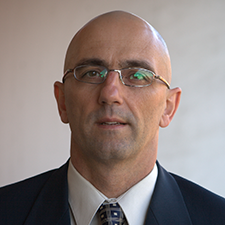
Alastair Smith is the Bernhardt Denmark Chair of International Relations at New York University and a professor of political science in the Wilf Family Department of Politics. He has a PhD in political science from the University of Rochester and a BA in Chemistry from the University of Oxford.
Hyperspecialization and Hyperscaling: A Resource-based Theory of the Digital Firm
October 24, 2022 | 10:15 am – 11:30 am
The Growth Lab Research Seminar series is a weekly seminar that brings together researchers from across the academic spectrum who share an interest in growth and development.
Speaker: Gianluigi Giustiziero, Assistant Professor of Strategy, IE Business School
Abstract: Digital firms tend to be both narrow in their vertical scope and large in their scale. We explain this phenomenon through a theory about how attributes of firms’ resource bundles impact their scale and specialization. We posit that highly scalable resource bundles entail significant opportunity costs of integration (versus outsourcing), which simultaneously drive “hyperspecialization” and “hyperscaling” in digital firms. Using descriptive theory and a formal model, we develop several propositions that align with observed features of digital businesses. We offer a parsimonious modeling framework for resource-based theorizing about highly scalable digital firms, shed light on the phenomenon of digital scaling, and provide insights into the far-reaching ways that technology-enabled resources are reshaping firms in the digital economy.
Please register in advance, and contact Chuck McKenney with any questions.

About the speaker:
Gianluigi Giustiziero is an Assistant Professor of Strategy at IE Business School. He received his PhD in Strategy from the University of Michigan. Inspired by the classical work of Adam Smith and George Stigler, Gianluigi studies the impact of resource attributes and demand characteristics on the division of labor. At the time of their writing Adam Smith drew insights from butchers, bakers and brewers in the Highlands of Scotland in 1776, and George Stigler from the Lancashire textile industry in 1951; nowadays the productive system in developed economies is mainly devoted to the tertiary and quaternary sectors. Moving with the times, Gianluigi applies and extends the classic theories to service and high-tech industries.
Development Talk: The Role of Business in South Africa’s Future
October 31, 2022 | 12:00 pm – 1:00 pm
The Growth Lab’s Development Talks is a series of conversations with policymakers and academics working in international development. The seminar provides a platform for practitioners and researchers to discuss both the practice of development and analytical work centered on policy. This event is co-sponsored by Harvard’s Center for African Studies.
Speaker: Ann Bernstein, Executive Director, Centre for Development and Enterprise, South Africa
Moderator: Soraya Mohideen, Harvard South Africa Fellow, HKS Mid-Career MPA ’23
Whether attending in-person or virtually, please register in advance. Room attendance is limited to the Harvard community. Seating availability is based on a first-come, first-served basis. The Zoom webinar is open to the public.
Lunch will be provided. Please arrive at 11:45am to allow for lunch, seating, and a prompt start at 12pm.

About the speaker:
Ann Bernstein heads the Centre for Development and Enterprise, South Africa. An independent think tank CDE is South Africa’s leading development policy centre, with a special focus on growth, jobs, education, cities and the role of business. Member of the Transition Team, then the Board of the Development Bank of Southern Africa (1994 – 2001). Fellow, National Endowment for Democracy, Washington DC (2005). Public Policy Scholar, Woodrow Wilson Center, Washington DC, 2013. Board member Brenthurst Foundation 2007-2017. In 2008 and 2009 invited African faculty member, World Economic Forum, Davos. Invited Fellow Bellagio Center, Rockefeller Foundation 2016. Her book, The Case for Business in Developing Economies (Penguin 2010) received favourable reviews in South African media, the Economist, Financial Times, Forbes and elsewhere. The book won the Sir Anthony Fisher Award 2012, Atlas Research Foundation, Washington DC.
The Value of Skills: New Evidence From Apprenticeship Plans
October 17, 2022 | 10:15 am – 11:30 am
The Growth Lab Research Seminar series is a weekly seminar that brings together researchers from across the academic spectrum who share an interest in growth and development. This seminar is co-sponsored by the Project on Workforce at Harvard University.
Speaker: Christina Langer, PhD candidate at KU Eichstaett-Ingolstadt, Visiting Research Fellow at HKS, Associate at the Growth Lab
Abstract: We construct novel measures of worker skills that are directly relevant on the labor market, objective, and highly detailed. To do so, we exploit the unique setting of the German apprenticeship system, which mandates that the same skills are developed in a particular apprenticeship regardless of the training location. Skill requirements of apprenticeships are codified in state-approved, nationally standardized apprenticeship plans. These plans not only provide information on the skill content of apprenticeships, containing almost 20,000 different skills, but also on the exact duration a specific skill is learnt. We link the skill measures to administrative labor market data covering more than 40 years. Following apprenticed workers over their careers, we find that workers who completed an apprenticeship that provides higher cognitive, social, or digital skills earn higher wages over long-run horizons. The returns to an additional month of learning these skills amounts to one-tenth to one-fifth of the return to a full year of schooling. Exploiting the long time coverage of our administrative data, we document that particularly returns to digital skills have soared since the 1990s. Returns to social skills have also increased strongly over time, while the increase in returns to cognitive skills is more muted.
Whether attending in-person or virtually, please register in advance. Room attendance is limited to the Harvard community. Seating availability is based on a first-come, first-served basis. The Zoom webinar is open to the public.
Contact Chuck McKenney with any questions.
Development Talk: Gambling on Development / The Role of Local Elites in a Growth-based Future
October 19, 2022 | 12:00 pm – 1:00 pm
The Growth Lab’s Development Talks is a series of conversations with policymakers and academics working in international development. The seminar provides a platform for practitioners and researchers to discuss both the practice of development and analytical work centered on policy.
Speaker: Stefan Dercon, Professor of Economic Policy, Oxford’s Blavatnik School of Government
Moderator: Clement Brenot, Research Manager, Growth Lab
Prof. Dercon’s latest book, Gambling on Development: Why some countries win and others lose draws on his academic research as well as his policy experience across three decades and 40-odd countries, exploring why some countries have managed to settle on elite bargains favoring growth and development, and others did not.
Please register in advance, and contact Chuck McKenney with any questions.

About the speaker:
Stefan Dercon is Professor of Economic Policy at the Blavatnik School of Government and the Economics Department, and a Fellow of Jesus College. He is also Director of the Centre for the Study of African Economies.
He combines his academic career with work as a policy advisor, providing strategic economic and development advice, and promoting the use of evidence in decision making. Between 2011 and 2017, he was Chief Economist of the Department of International Development (DFID), the government department in charge with the UK’s aid policy and spending. Between 2020-2022, he was the Development Policy Advisor to successive Foreign Secretaries at the UK’s Foreign, Commonwealth and Development Office.
His research interests concern what keeps some people and countries poor: the failures of markets, governments and politics, mainly in Africa, and how to achieve change.
Betting on Green: Namibia’s Green Hydrogen Agenda
Speaker: James Mnyupe, Economic Advisor to the President, Republic of Namibia
Moderator: Daniel Schrag, Sturgis Hooper Professor of Geology at Harvard University, Professor of Environmental Science and Engineering, and Director of the Harvard University Center for the Environment
Whether attending in-person or virtually, please register in advance, and contact Chuck McKenney with any questions.
Room attendance is limited to the Harvard community. Seating availability is based on a first-come, first-served basis. The Zoom webinar is open to the public.
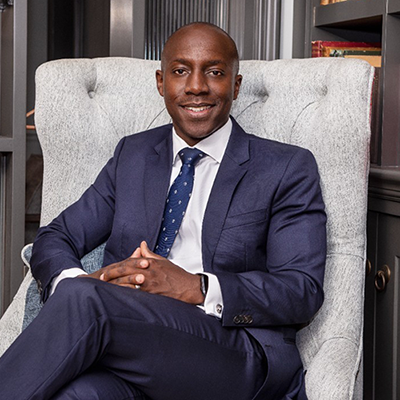
About the speaker:
Mr. Mnyupe is a multidisciplinary financial professional with a background in accounting, asset management and wealth management. A graduate of UNAM and Rhodes University, Mr. Mnyupe plied his trade in the private sector for over a decade auditing a wide variety of companies in all 3 sectors of the Namibian economy and undertook extensive research on listed securities on the local stock exchange. He led one of Namibia’s prominent asset management firms for 5 years, was the Founding Chair of the Namibia Savings and Investment Association, was appointed to the High Level Panel on the Namibian Economy in 2019 by His excellency Hage Geingob and holds the CA, CFA and CFP designations.
Development Talks: Charting the Future of MENA – Q&A with UAE’s Minister of Economy
September 14, 2022 | 3:00 pm – 4:00 pm
The Growth Lab’s Development Talks is a series of conversations with policymakers and academics working in international development. The seminar provides a platform for practitioners and researchers to discuss both the practice of development and analytical work centered on policy.
Speaker: HE Abdullah bin Touq Al Marri, Cabinet Member & UAE Minister of Economy
Moderator: Ricardo Hausmann, Director, Growth Lab; Rafik Hariri Professor of the Practice of International Political Economy, HKS
Room attendance is limited to the Harvard community. Seating availability is based on a first-come, first-served basis. The Zoom webinar is open to the public. Whether attending in-person or virtually, please register in advance. Contact Chuck McKenney with any questions.
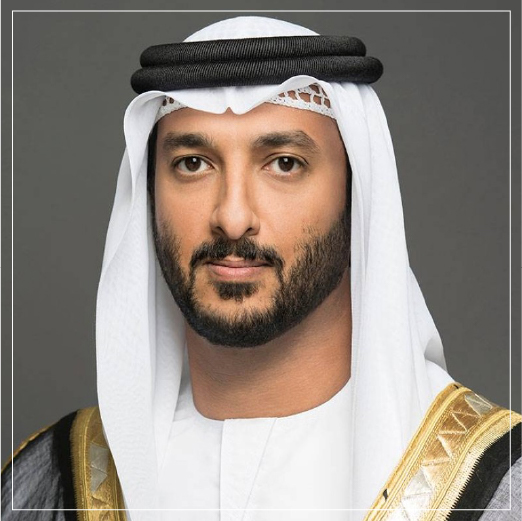
About the speaker:
H.E. Abdulla Bin Touq Al Marri was appointed Minister of Economy of the United Arab Emirates (UAE) under the new government structure approved in July 2020. He is chairman of the General Civil Aviation Authority, UAE International Investors Council, and CSR UAE Fund’s Board of Trustees.
Prior to his appointment, H.E. Al Marri held important positions in the government as a senior, top-ranking official. He was the Secretary General of the UAE Cabinet since 2017, during which he was instrumental in strengthening the interdependence between the federal and local governments. In this role, he also spearheaded many initiatives to get the pulse of the people and know their sentiments, as well as build the UAE’s long-lasting relations with international organizations such as the World Economic Forum.