
About Us
The Growth Lab is a multidisciplinary research organization driven to unlock the secrets of shared prosperity. We do this by pushing the frontiers of economic growth and development policy research, collaborating with policymakers to design actions, and sharing our insights through teaching, tools, and publications.
Housed at Harvard Kennedy School and led by Ricardo Hausmann, our teams combine pioneering academic research on the determinants of growth and its social, political, and environmental sustainability, along with place-based engagements that apply these methods to expand opportunity across the world.
Jump To
OUR PHILOSOPHY
Teaching Hospital
At the Growth Lab, we believe that public policy is to economics what medicine is to biology. Advances in economics, like discoveries in biology, deepen our understanding of how the world works. However, policymaking, like medicine, is about changing the outcomes we observe in the world; this requires a set of knowledge that is complementary yet fundamentally different. This type of knowledge can only be acquired at the crux of theory meeting the complexity of real cases. In medicine, this happens through hands-on experience with patients in teaching hospitals. Public policy needs the same kind of hands-on training.
The Growth Lab aims to be a “teaching and research hospital” for economic growth. Our “patients” are governments and other local stakeholders seeking to diagnose and treat the deep-rooted causes of economic malaise. Like doctors in training, our researchers and fellows learn by working alongside policymakers and senior faculty, developing context-relevant therapeutics that promote sustainable and inclusive growth and identifying gaps in existing knowledge that demand advancements in fundamental research.
Through this model, we cultivate the next generation of economic practitioners who can diagnose economic issues and design effective and transformative economic policies. We support current policymakers in navigating the most pressing challenges they’re facing and build capacity within their teams. We are constantly developing new diagnostic tools, methodologies, and analytical frameworks to address the most important economic policy questions, support their application in the field, and refine them through practical experience, creating a continuous feedback loop between research and application. We document what we learn and we share these findings in our courses, publications, and public tools, shaping the views of current and prospective leaders across the world.
Just as medical teaching hospitals advance the practice of medicine, the Growth Lab seeks to advance the craft of economic public policy, helping societies around the world build stronger, more prosperous economies.
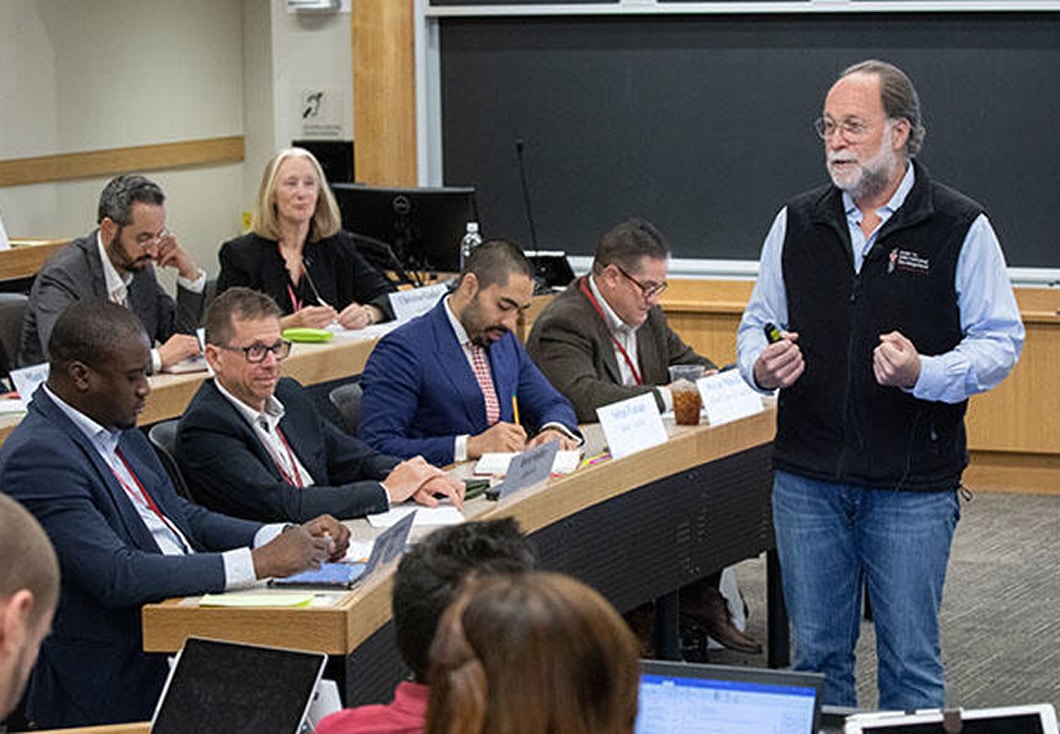
The Growth Lab aims to be a “teaching and research hospital” for economic growth… Our “patients” are governments and other local stakeholders seeking to diagnose and treat the deep-rooted causes of economic malaise.
Our Trademark Methodologies
Economic Complexity
Economic Complexity is a measure of the amount of capabilities and knowhow that goes into the production of any given product.
Products are made out of knowledge. To make a shirt, one needs to design it, make the fabric, cut it, sew it, pack it, brand it, market it and distribute it. For a country to produce shirts, it needs people who have expertise in each of these areas. Each of these tasks involves many more capabilities than any one person can master. Only by combining knowhow from different people can any one product be made.
Read More About Economic Complexity
How do countries accumulate productive knowhow they did not previously have? If the product is new it may require knowhow that nobody in the country possesses. If this involves too many different people, such a product may not be feasible. As a consequence, countries tend to move from the products they know how to make to others that are not too far away in terms of knowhow. The Product Space is a theoretical concept in which the distance between any two products is related to the distance in the capabilities required to make them. As a tool, it can help us determine which products require productive knowhow that is similar to the knowhow a country already possesses.
Using network science algorithms, the Product Space connects nearly 900 products across 9 sectors. The Atlas of Economic Complexity: Mapping Paths to Prosperity and The Atlas online present this set of maps for every country illustrating where the economic opportunities for each country reside. More specifically, the Product Space is a visualization of the ‘capability distance’ between products. If a country makes one product, we estimate how easy it is to obtain the knowhow it will need in order to make another. The resulting space is the visualization of these connections between products based on the capabilities they share. Using the Product Space, we can predict the evolution of growth.
Watch our brief video tutorials:
Growth Diagnostics
Growth Diagnostics is a methodology developed by Ricardo Hausmann, Dani Rodrik and Andrés Velasco to determine the obstacles to a country’s capacity to grow.
It is a unified framework for identifying the binding constraints to growth, which is key to formulating growth strategies. The main idea is that each country may be bumping against different potential constraints but each constellation of constraints must be giving off a different collection of symptoms or signals. These symptoms can then be used to perform a differential diagnosis.
Read More About Growth Diagnostics
Potential constraints are scrutinized systematically using a decision tree. The researchers need then to come up with a syndrome that can account for the identified constellation of symptoms and can account for their persistence. By using Growth Diagnostics, policymakers can develop a clearer theory of change by designing policies that can take the country out of (or workaround) its current syndrome and relax its most binding constraints.
The Growth Lab has conducted growth diagnostic exercises in many locations, most recently in Albania, Jordan, Namibia, Panama, Sri Lanka, and Western Australia. View all of our Growth Diagnostic research.
Engage With Us
For Researchers
Access to Publications & Tools
The Growth Lab publishes its research papers in several open-access repositories: the Growth Lab Working Paper Series, the HKS Faculty Research Working Paper Series, Harvard DASH, and RePEc. All Growth Lab faculty, fellows, and associates with related research are eligible to publish in the Growth Lab series. All of the Growth Lab’s digital tools are publicly available and accessible via the Viz Hub.
Research Seminar Series
This weekly seminar series brings together researchers from across the academic spectrum who share an interest in growth and development. The seminar emphasizes interdisciplinary exchanges between the social and natural sciences, and speakers are welcome to present early-stage or mature work on a wide range of topics, including migration, local markets, structural change, innovation and the dynamics of technology, models of combinatorial growth, economic history, social and cultural evolution, the environmental impacts of growth, and trade. Learn more
Visiting Fellows & Scholars
The Growth Lab annually accepts a small number of visiting scholars to join the lab and pursue common research efforts. Applicants must bring their own funding sources. A typical stay at the Growth Lab is between 6 and 12 months (with a minimum of 3 months). Apply
For Practitioners
Policy Engagements
The Growth Lab’s policy research teams work to understand the specific dynamics of economic growth and structural change in different contexts. Our project engagements provide local stakeholders with insights on the policies needed to unleash the growth potential of their economies.
Publications & Tools
Our working papers, policy briefs, and other publications are available in many open-access repositories. Our digital design and development team translates research and insights into online web applications and interactive storytelling, all made publicly available and used by a global community of policymakers, scholars, investors, and journalists.
Development Talks
This series of conversations with policymakers and academics working in economic development provides a platform for practitioners and researchers to discuss both the practice of development and analytical work centered on policy.
Teaching
We teach and train economic development practitioners around the world. Our Leading Economic Growth Executive Education program provides a framework for understanding economic growth, as well as sophisticated tools for diagnosis, decision making, and implementation.
For Students
The Growth Lab offers many opportunities for all students to engage with our faculty and fellows, and contribute to our mission.
Events
The Growth Lab’s Research Seminar Series (interdisciplinary exchanges between the social and natural sciences, and speakers are welcome to present early-stage or mature work) and Development Talks (a series of conversations with policymakers and academics working in economic development) are open to all students. We hosted more than 30 events and 1,600 attendees in 2025.
Internships
The Growth Lab regularly recruits Master’s level students for its Summer Internship Program. The students are embedded in our policy projects, working at various government ministries and closely with senior officials to conduct research as well as policy analysis.
Meet the 2025 interns | Read their blogs
Courses
As a research program, the Growth Lab does not confer degrees or offer classes. Prospective students interested in studying international development should consider the Kennedy School’s MPA/ID degree program or its Executive Education programs. Growth Lab director Ricardo Hausmann teaches courses in both programs and incorporates our methodologies, research insights, and tools.
For Donors
The Growth Lab relies on the generous support of individuals, organizations, and foundations to fund our academic research and policy projects, the tools that translate our research insights into public goods; and our greatest assets, our team, who are dedicated to fulfilling our mission of inclusive prosperity.
If you would like to learn more about the Growth Lab and the ways you can support us, email Andrea Carranza, or call (617) 384-5734.
People

Our Team
We are a multidisciplinary research organization with 60 faculty, fellows, and staff from 20 countries.

Jobs & Opportunities
We’re actively recruiting research fellows and postdoctoral fellows.