
Student Stories: Designing a Teaching Pilot in Bolivia
John Steenrod is a second-year MPA/ID student at Harvard Kennedy School. He was accepted into the Growth Lab’s 2026 Summer Internship program and was a Visiting Scholar at Universidad Católica Bolivia “San Pablo” in La Paz, Bolivia.
Why did you apply to the Growth Lab Summer Internship?
For my summer internship, I wanted a chance to engage with education policy research, design, and implementation. I was initially intrigued by the opportunity to teach at UCB while working on a research project, and decided to apply when I found out that the project would relate to education.
What did you work on?
Along with Veronica Rosich (a fellow Growth Lab intern from HGSE), we began designing a Teaching at the Right Level (TaRL) pilot for implementation in Bolivia. The Growth Lab team’s previous work in Bolivia found foundational learning gaps and identified TaRL as a potential policy solution. TaRL programs have been effectively implemented in many countries and contexts around the world. We connected with local and international stakeholders, researched the Bolivian education system to better understand the local context, and even had a chance to visit some schools to meet with students, teachers, and administrators.
In what ways were you challenged?
Bolivia had a moment of political crisis right before the start of the internship, which resulted in the resignation, among others, of the previous Minister of Education, who had been expected to play a driving role in the design of the TaRL pilot. As the ministry underwent a leadership transition and the country’s priorities were being reassessed, we had to determine how our work could best support future efforts to strengthen the country’s education system and, therefore, contribute to positive change for Bolivian students and communities. This uncertainty was challenging at times, but I ended up working on a project I never would have imagined before the summer and ultimately learned a lot about education policy, adaptability, and my own capacity to contribute in uncertain circumstances.
What was your most exciting/surprising experience?
We had the opportunity to visit local schools, sit in on classes, meet with teachers and administrators, and present our plans for TaRL implementation. It was a great chance to get stakeholder feedback on our design and see what changes needed to be made to give the project a good chance of success. But the most surprising moment was when, after our presentation, the meeting turned into a lunch party with everyone we had met that day. At the end, they even gave us baskets full of local produce to take home!
What advice would you give to future interns?
Embrace the chance to shape your own internship experience. I arrived expecting a more traditional research project, but some of the most fulfilling parts of my internship experience came from taking the chance to push the research forward into design and implementation.
What’s next for you?
I’m excited to start my second year in the MPA/ID program at HKS! I’m still figuring out what comes after that, but I’m sure that my experiences in Bolivia will continue to shape my search.
Learn more about the Growth Lab’s research collaboration with Universidad Católica Boliviana.
How do you finance the world’s newest nation? A dispatch from Bougainville
By Niklas Piringer, MPA/ID 2026, Harvard Kennedy School, and Growth Lab Research Associate
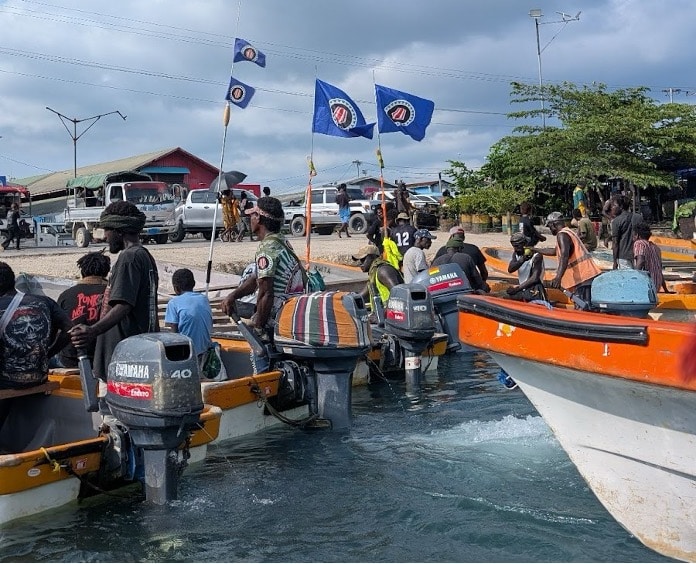
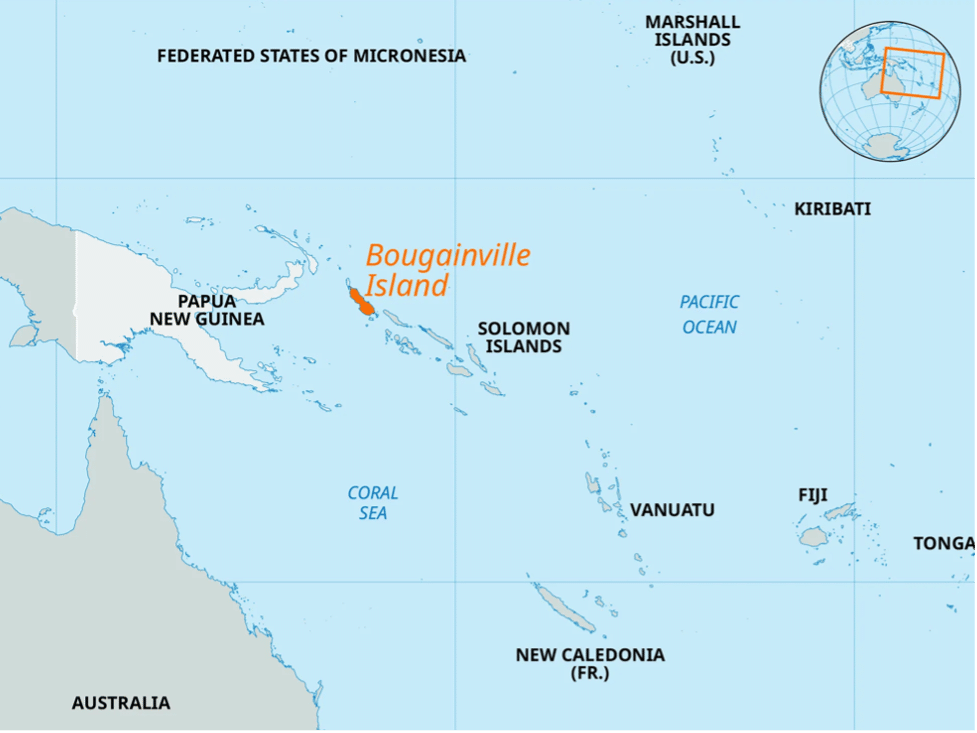
The thrum of outboard motors carries across the water as I board a small boat in the Buka Passage, the narrow strait that separates Bougainville’s main island from its northern tip. Nearly every vessel around me flies the Bougainvillean flag. The national colors of Papua New Guinea are nowhere to be seen. In 2019, 98% of Bougainvilleans voted for independence in a referendum widely regarded as free and fair, one of the most decisive democratic mandates in recent history. The target date for formal sovereignty is September 2027. But voting for a country and financing one are two very different things.
A $400 million challenge
Bougainville is a region of 367,000 people with a GDP of roughly $275 million and a per capita income of around $750. Today, less than 7% of government spending is domestically financed; the rest comes from Papua New Guinea transfers and donor grants. Running a fully sovereign state would cost an estimated $350 to $485 million annually: Bougainville would have to fund its own courts, police, health care, education, foreign affairs, basic infrastructure, and more. My master’s thesis, co-authored with Anna Christina Thorsheim and advised by Professor Ricardo Hausmann, estimates that even under optimistic assumptions about economic growth and improved tax collection, non-mining revenues could cover only 15-25% of what independence requires. Cocoa, fisheries, tuna licensing, and tourism all have potential, but none come close to closing the gap.
There is one source that could substantially close it: the Panguna copper and gold mine, shuttered since 1989, and the source of the conflict that defined a generation.
A mine that built, and broke, a nation
From 1972 to 1989, Panguna was operated by Rio Tinto and accounted for 45% of Papua New Guinea’s exports and 17% of its national tax revenues. But the revenues were largely not shared with Bougainville. Rio Tinto discharged billions of tonnes of waste rock and copper-laced tailings into the Jaba and Kawerong river systems, contaminating waterways that communities depended on for drinking water and fishing. Bougainville’s land is almost entirely under customary ownership, about 98%, yet compensation to landowners was poorly calibrated to this reality, leaving communities bearing severe environmental costs while receiving little in return.
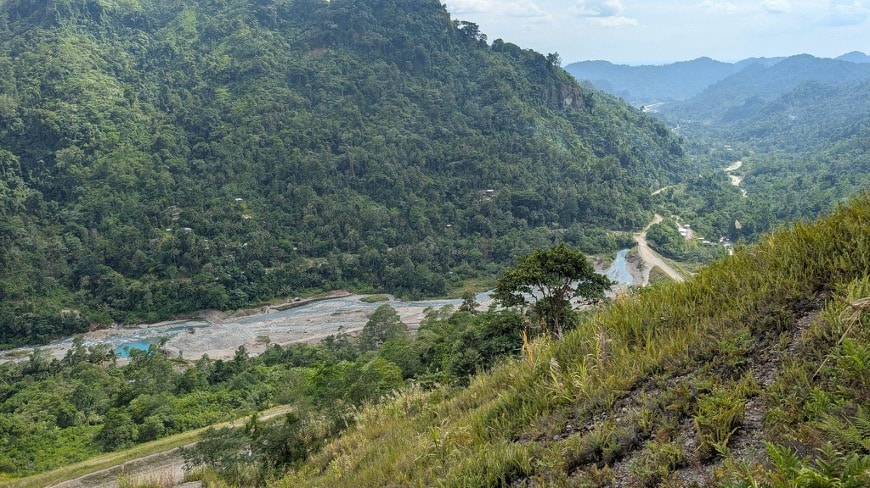
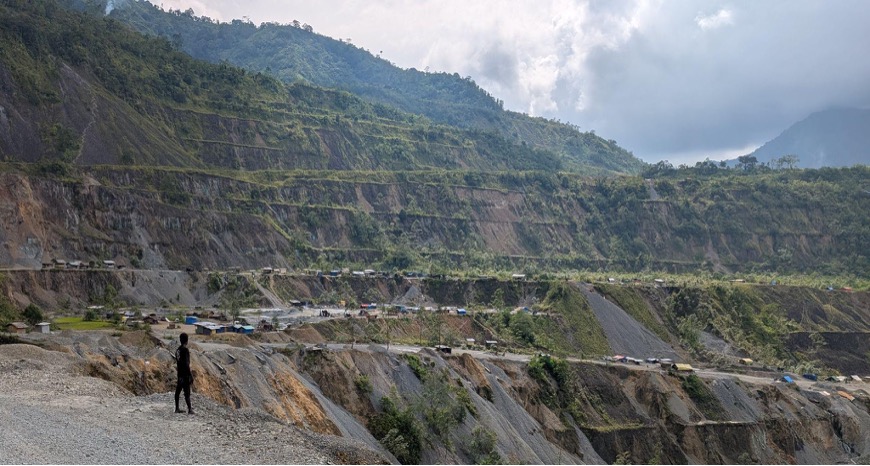
An armed insurrection shut the mine in 1989. The decade-long civil war that followed claimed roughly 15,000 lives – the deadliest conflict in the Pacific since World War II. A 2001 Peace Agreement ended the fighting and established autonomous governance. But Panguna has never reopened. Today, the pit is home to hundreds of informal miners – entire families working without permits, exposed to mercury and heavy metals, surviving in an extralegal economy born of necessity.
The economics of getting it right
Panguna contains an estimated 5 billion tonnes of copper and 19 million ounces of gold – a total mineral valuation of $60-80 billion. But reopening it requires approximately $8.2 billion in upfront capital investment in today’s money, among the highest for any copper mine globally. Bougainville cannot raise this independently and lacks the knowhow to run a major mine. It needs an international mining partner.
This is where project risk becomes decisive. The tax revenues that Bougainville can capture depend directly on how risky investors perceive the project to be. When investors see high risk, they require higher returns to justify the investment, which means a larger share of revenues must flow back to the developer rather than to the government. Our modelling shows that at high risk levels – reflecting Bougainville’s conflict history, regulatory uncertainty, and a civil service of roughly 400 people – a reopening could fail to generate any substantial revenue for the government. The developer would need to retain nearly all cash flows just to service the $8.2 billion investment. A single-grade improvement in country risk, secured with the help of multilateral development bank guarantees or credible arbitration frameworks, could increase government revenues by around $150 million per year.
The policy choices that Bougainville’s government makes in the next few years will therefore shape what the mine is worth to its people for the next two decades.
Niklas Piringer, MPA/ID 2026
The precedent for sound policy exists: when Ghana discovered the Jubilee oil field in 2007, it immediately sought technical assistance – from the World Bank, Norwegian petroleum advisors, and Brazil’s Petrobras – not just to license a developer, but to build the regulatory institutions and negotiating capacity needed to govern the sector in the public interest.
A different kind of mine
What made the original mine politically unsustainable was not mining itself, but who bore its costs and who captured its benefits. Our thesis recommends a joint venture between local Bougainvillean stakeholders and a foreign developer, with landowner equity stakes, environmental remediation costs embedded in capital expenditure from the outset, and transparent revenue-sharing arrangements. Our findings from the ground indicate that this is not merely a financing question, but a prerequisite for political viability. Landowner opposition was the proximate cause of the 1989 conflict. Unified consent is essential before any reopening can succeed.
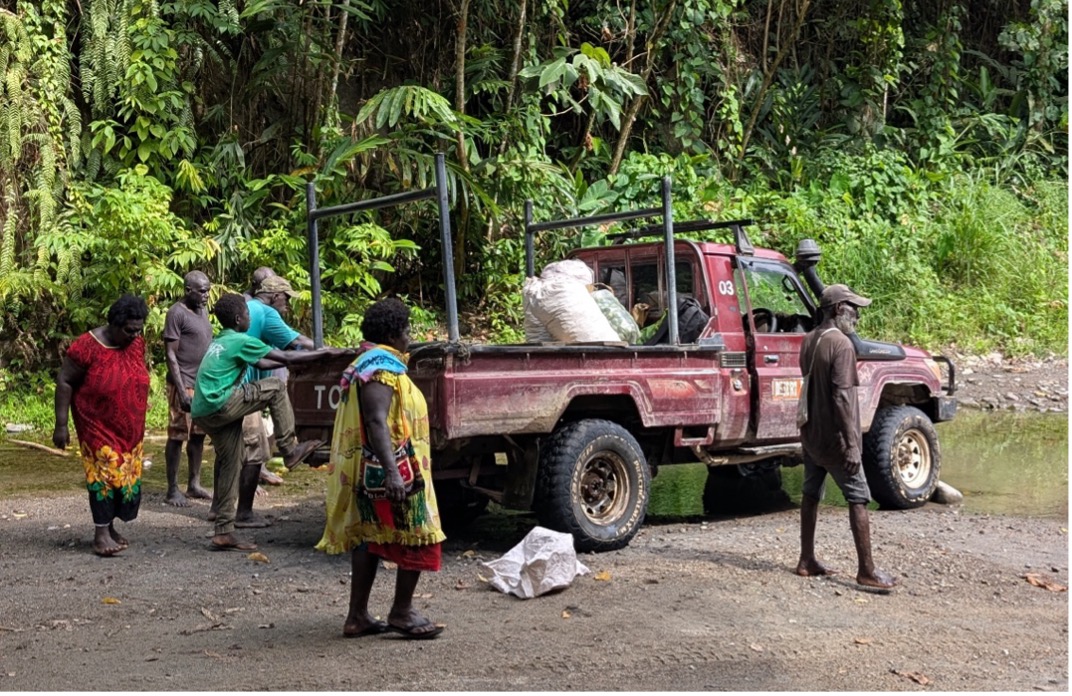
Even with everything in place, Bougainville’s timeline is unforgiving. Mine construction takes at least four years. Meaningful revenues are unlikely before the early 2030s – meaning Bougainville likely cannot sustain independence for several years after the 2027 independence target. And Bougainville will need unusually high fiscal discipline: a hard annual spending cap and a sovereign savings mechanism to ensure that when revenues arrive, they build a durable state rather than fuel a short-term boom.
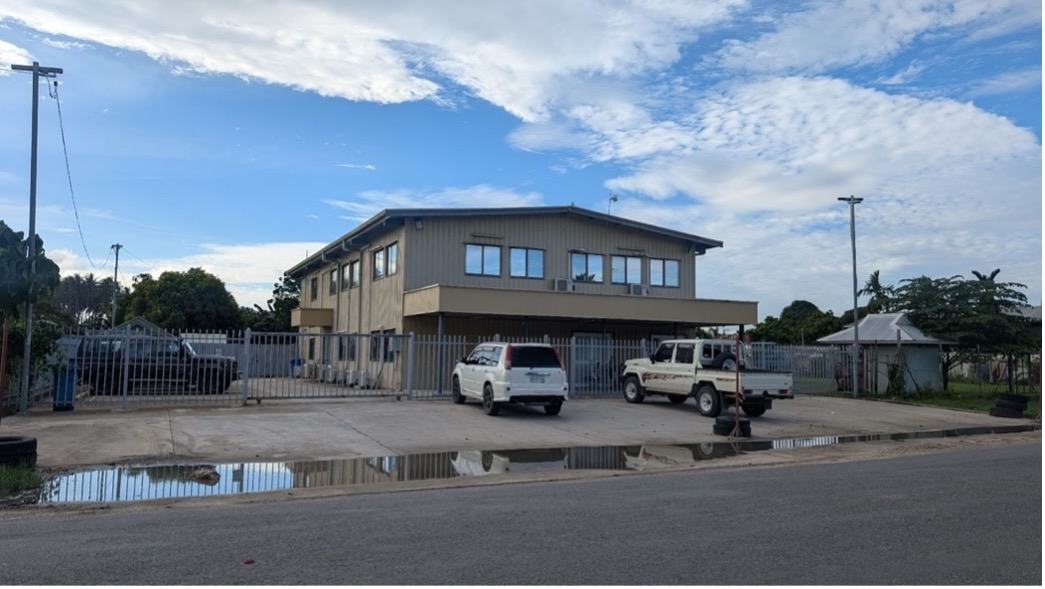
On my last afternoon in Buka, I passed the Department of Treasury and Finance – a modest two-story building, no larger than a suburban house. It is difficult to picture the team inside overseeing the fiscal architecture of a newly sovereign state: negotiating a mining contract worth billions, designing a wealth fund, and managing relationships with international creditors. But things can change remarkably quickly in this sleepy town. After all, thirty years ago, this island was a blockaded war zone. Bougainville’s flags are flying. The rest is yet unknown.
From Informality to Insight: Rethinking Economic Growth in Peru
Guest blog by Jennifer Infantas Paz de Noboa, LEG ’25
Over the past ten weeks, this course challenged the way I understand economic growth, public policy, and the hidden mechanics that keep countries like Peru stuck. I came in thinking our biggest challenge was “informality.” I leave understanding that informality is not the problem, but a symptom of deeper constraints, institutional gaps, and missing know-how.
Ideas That Shifted My Thinking
Idea 1: Growth is Not About Doing More — It’s About Doing What Matters
I used to view growth strategies as long lists of reforms. The course flipped that logic: successful countries focus on the binding constraint, the one bottleneck holding the system back. For Peru, it’s not all labor regulation, education gaps, credit barriers, and informality at once — it’s the specific institutional and coordination failures that make formalization unprofitable.
Idea 2: Knowhow Moves Through People, Not Policies
This single insight broke a huge misconception for me. We can train forever, legislate endlessly, or invest in schools. Yet new know-how spreads through migrated talent, diaspora networks, firm spinoffs, and private-sector problem-solvers, not classrooms. That explains why Peru’s informal economy struggles to upgrade — the know-how does not flow where it is needed.
Idea 3: Economic Complexity Is a Compass, Not a Scoreboard
Before the course, I read complexity indicators as static “rankings.” Now I understand them as guiding maps that help identify feasible diversification paths. Peru’s problem is not only low complexity — it is that we are stuck on the periphery of the product space, making small moves instead of strategic leaps.
Idea 4: A Binding Constraint Is Revealed Through Prices, Not Wish Lists
Ricardo Hausmann’s insistence on price signals reshaped how I interpret data. High interest rates for small firms, high costs of compliance, and the wage-productivity gap are all price hints of scarcity — not failures of effort. Prices tell the truth that policy narratives are often obscure.
Idea 5: Change Happens Through Iteration, Not Master Plans
This was the biggest mindset shift. Instead of designing the perfect reform, the course taught me to design learning-driven strategies, test ideas at a small scale, engage many actors, and build solutions adaptively. Growth is not a blueprint — it is a process of discovery.
Taken together, these five ideas left me with one powerful conclusion: Peru will not grow by trying harder — it will grow by learning faster.
Progress on My Growth Challenge: What Changed in 10 Weeks
I began with a broad goal: reducing informality to boost productivity. As the weeks passed, this challenge became clearer, sharper, and grounded in real diagnostics.
Week 1–3: Breaking Down the Problem
Building the fishbone diagram forced me to deconstruct informality into its underlying causes: weak institutions, costly regulations, low trust, lack of know-how, disconnected skills, and inadequate infrastructure. I learned that informality persists because it is often rational for workers and firms under current constraints.
Week 4–6: Identifying Binding Constraints
Using Atlas data and price-based logic, I found the binding constraint is not low skills or lack of credit per se, but weak institutional coordination and a high-cost, low-value regulatory environment that makes formalization unattractive. This insight reframed the growth challenge.
Week 7–8: Defining Entry Points
I realized that countries win by choosing specific green niches and developing ecosystems around them. For Peru, this means leveraging existing strengths (minerals, biodiversity, energy potential) while investing in know-how to move up green value chains. The key insight from these weeks were that the transition is fundamentally a competition for capabilities, and early movers can turn it into long-term productive transformation.
Week 9–10: Building a Strategy
I learned that measurement is a strategic tool that guides learning and course-correction, not an administrative task. What matters is detecting early signs of transformation—new capabilities, greener production, stronger networks, more sophisticated exports. These weeks taught me that progress must be measured through evolving capabilities, not static indicators.
In short, the challenge I started with became a strategic agenda grounded in problem-driven, evidence-based learning.
Using What I Learned: Five Practical Applications
1. Designing Policies as Experiments, Not Decrees
I will advocate for small pilots to test reforms before scaling them, especially in labor formalization.
2. Using Complexity Maps to Guide Sectoral Policy
Sector diversification efforts will focus on adjacent possible products where Peru already has partial knowhow.
3. Building High-Bandwidth Teams
I now understand which institutions are low vs. high bandwidth and how to help them work as learning systems.
4. Using Diaspora and Private Networks to Move Knowhow
Instead of relying solely on public training, I will push for strategies that bring people with knowhow into Peru, especially for green industries, digital services, and advanced manufacturing.
5. Measuring Inclusion and Productivity Together
I will combine complexity indicators with labor informality, wage-productivity gaps, and firm productivity metrics to monitor Growth + Inclusion.
As I move forward, I find myself grappling with a set of interconnected questions that will shape how I continue exploring economic growth and public policy. I wonder how policymakers can design interventions that remain adaptive in environments defined by uncertainty, limited state capacity, and political volatility—and, just as importantly, how evidence can be translated into decisions when institutions struggle to absorb complexity. This leads me to ask whether behavioral insights, incentive design, and implementation science can meaningfully close the persistent gap between policy intention and real-world outcomes.
At the same time, I am curious about how countries like mine can foster innovation and productivity while confronting structural barriers such as informality, governance limitations, and uneven access to opportunities.
Finally, I keep returning to a broader, unresolved question: how can we balance the pursuit of growth with social legitimacy, ensuring that reforms not only generate economic value but also earn the trust and participation of citizens? These questions will guide my next stage of learning, pushing me to move beyond frameworks and toward a deeper understanding of what it truly takes for societies to grow.
This course changed the way I see Peru, growth, and the role of government. I now understand that growth is not a matter of political will, financial resources, or designing the right reform package. Growth is a process of discovery, fueled by collective learning, new know-how, and the capacity to adapt.
I leave this experience convinced that Peru has the potential to grow — but only if we build institutions capable of listening, experimenting, coordinating, and iterating. The path to prosperity is not linear. It is a network of opportunities waiting to be uncovered by teams who learn faster than the problems evolve.
Economic growth is not something we impose on a country. It is something we learn our way together.
This is a blog series written by the alumni of the Leading Economic Growth Executive Education Program at the Harvard Kennedy School. 63 Participants successfully completed this 10-week online course in December 2025. To read more learning journey stories, visit the Building State Capability program blog.
Reversing New Mexico’s Brain Drain Through Economic Diversification
Guest blog by Rita Gaurin, LEG ’25
Over the past ten weeks, I’ve immersed myself in understanding one of New Mexico’s most pressing challenges: the persistent out-migration of our educated workforce and the struggle to diversify our economy beyond extractive industries. This journey has fundamentally shifted how I think about economic development, moving me from viewing problems through a single lens to understanding the intricate web of factors that either enable or constrain regional growth.
At the start of this journey, we were told “your group is your gift,” and those words proved profoundly true. Working alongside teammates from China, Morocco, and Nigeria revealed that while our contexts differed, the fundamental challenges of regional economic growth connected us all. This cross-continental collaboration reinforced that solutions to local problems can arise from examining how others navigate similar complexities in vastly different settings.
My first major insight came from recognizing that New Mexico’s growth challenges aren’t simple problems with straightforward solutions. The state faces “complicated and complex problems” with issues involving multiple stakeholders, evolving circumstances, and interconnected systems.
New Mexico’s per capita income has consistently lagged the national average, and economic growth has remained slow and inconsistent for decades. As of 2024, the state’s per capita personal income ranked as the fourth lowest of all 50 states, at 87.3% of the US level. This isn’t just about numbers; it represents real families struggling to build prosperous lives in their communities.
The PDIA Approach vs. Traditional Methods
One of my most transformative learnings came from understanding Problem-Driven Iterative Adaptation (PDIA) as an alternative to the Solution- and Leader-Driven Change (SLDC) model. The PDIA method resonated deeply because it requires continuous learning, rapid experimentation, and the ability to pivot when strategies don’t work. It’s messy, iterative, and fundamentally more honest than pretending we have all the answers upfront. Living in New Mexico, the Land of Enchantment, I find myself embracing the “enchantment of the unknown” through PDIA.
The Binding Constraint Framework
Learning to identify binding constraints transformed how I analyze policy options. Rather than pursuing a scattered “laundry list” of reforms, effective strategy requires pinpointing the single most restrictive factor holding back growth—then relentlessly focusing resources there.
For New Mexico, I’ve come to believe the binding constraints include:
- Limited know-how and workforce development due to an insufficiently diversified economy
- Weak partnerships between universities and local employment needs
- Quality of life factors, including inadequate urban amenities and limited social infrastructure
- Negative perception fueled by narratives suggesting better opportunities exist elsewhere
Reframing the Problem
Initially, I viewed the challenge simply as “graduates leaving the state.” Through the course, I evolved to see it as “retaining talent through economic diversification” and recognizing that we can’t just convince people to stay; we must create compelling reasons for them to remain.
The data tells a sobering story. Since 2010, nearly 19,000 educated professionals have left New Mexico—a devastating loss for a small-population state. The economic impact extends far beyond individual departures. Each leaving graduate represents lost tax revenue, missed entrepreneurial ventures, and fewer role models for the next generation. This know-how drain creates a “self-perpetuating cycle”: fewer skilled workers mean fewer companies locate here, which means even fewer opportunities, accelerating further outmigration.
From Problems to Entry Points
Using the fishbone diagram, the course taught me to think about “entry points”—where to begin engaging the system to create momentum. Additionally, the practice of repeatedly asking “why” will be a valuable tool in my problem analysis. Each answer digs deeper, uncovering the real root cause rather than stopping at the symptoms. I identified five accessible entry points:
- Fostering university-industry partnerships through existing infrastructure like Los Alamos National Lab
- Development projects in downtown areas to enhance community vibrancy
- Implementing targeted initiatives like speaker series and success story campaigns
- Developing tax incentives for companies hiring and retaining recent graduates
- Establishing regional talent retention task forces with cross-sector stakeholders
These entry points share a common thread: they can be initiated without extensive legislative hurdles and generate visible momentum while building coalition support for larger structural changes.
Building Information-Intensive Organizations
One powerful insight involved rethinking how government organizes around talent retention. Rather than housing initiatives within siloed institutions, there is tremendous value in creating collaborative teams with representatives from education, business, and government sectors. This team would have authority to allocate resources based on evidence identifying effective graduate retention strategies.
Implementing a dashboard to monitor outcomes—graduate migration patterns, employer demands, intervention effectiveness—would provide the continuous feedback loop essential for adaptive strategy. This moves us from guessing to knowing, from ideology to evidence.
The Iterative Strategy Approach
The course emphasized an action-learning framework that I’ve found extremely valuable. Rather than developing perfect five-year plans destined for shelves, the iterative approach involves:
- Rapid learning through small experiments that test assumptions
- Fostering new interactions between previously disconnected stakeholders
- Collaborative problem-solving that surfaces local knowledge
- Quick pivots when strategies aren’t working
- Uncovering hidden opportunities through continuous discovery
The iterative method’s greatest strength is that it minimizes risks while maximizing learning. Quick feedback enables course corrections before significant resources are wasted. It creates early buy-in from stakeholders who feel ownership over solutions they’ve helped create. However, we need to be prepared for potential challenges, as some stakeholders may resist uncertainty and favor more predictable outcomes. The iterative approach could be viewed as a failure if there isn’t a strong political commitment to experimentation. If progress isn’t maintained, initiatives risk losing their momentum and support.
An important concept learned was the notion of the “sense of us.” The collective identity and shared purpose that binds a community or region together. Without a strong sense of us, regions may struggle to coordinate, build trust among stakeholders, and sustain the collaborative efforts needed for long-term development. As Professor Haussman pointed out, the term “us” carries a profound beauty, with its meaning often understood implicitly among those engaged in the conversation. The individuals involved inherently grasp who is included in that collective “us”. The concept is like a vital ingredient in a recipe; without it, the intended flavor cannot be achieved.
For New Mexico, this insight hit home. Perhaps the brain drain isn’t about better job opportunities elsewhere; perhaps it reflects a missing “sense of us,” an imagined community, where educated workers don’t see themselves as part of New Mexico’s future story. Building prosperity requires cultivating this essential ingredient where diverse communities, industries and individuals see their fates as interconnected and the state’s success as their own.
This course has convinced me that reversing New Mexico’s brain drain and achieving economic diversification requires moving beyond traditional approaches. We need:
- Evidence-based iteration rather than ideological commitment to predetermined plans
- Cross-sector collaboration that brings education, business, and government into genuine partnership
- Determining the binding constraint rather than scattered initiatives
- Continuous learning that embraces experimentation and honest assessment of what works
The path forward isn’t about finding the “one solution” but about building adaptive capacity—creating systems that can learn, adjust, and continuously improve. It’s about fostering an environment where young professionals see New Mexico not as a place to settled for, but as a place offering vibrant arts, safe neighborhoods, competitive salaries, diverse career paths, and communities worth staying for.
New Mexico has a unique opportunity to achieve both economic diversification and workforce retention simultaneously through a “grey to green” energy transition. With significant solar, wind, geothermal potential, and copper mining the state can leverage existing energy infrastructure and expertise while evolving towards clean energy. Going from grey to green addresses core challenges: it diversifies the state’s economy beyond extractive industries, creates competitive careers that give young professionals a reason to stay, and builds on capabilities that the state already has.
New Mexico is the “Land of Enchantment.” My hope is that through strategic, iterative, collaborative economic development, we can help the current and next generations discover economic opportunities they haven’t yet imagined right here in our own backyard. Opportunities that not only match but surpass those available in other states, making the choice to stay in New Mexico not just feasible, but truly enchanting!
This is a blog series written by the alumni of the Leading Economic Growth Executive Education Program at the Harvard Kennedy School. 63 Participants successfully completed this 10-week online course in December 2025. To read more learning journey stories, visit the Building State Capability program blog.
Student Stories: Climate, Conservation, and Women’s Financial Empowerment in India
Dana Yoo is a second-year MPP student at Harvard Kennedy School. She was accepted into the Growth Lab’s 2025 Summer Internship Program and contributed to an ongoing project in Meghalaya, India.
Why did you apply to the Growth Lab Summer Internship?
I was genuinely excited about the Growth Lab’s approach of applying research and theory to real-world development challenges. Meghalaya also felt personally meaningful to me because my mentee from the Beyond Boundaries mentoring program is from the state. I was curious to better understand the region. At the same time, Meghalaya is known for pioneering Payment for Ecosystem Services (PES) in India – an incentive-based conservation model that compensates communities for protecting natural resources. As someone eager to learn more about climate change responses, I found the state particularly compelling to work in.
What did you work on?
My internship had two main pillars. The first was climate, where I worked on revising a water-conservation law that had been in place for decades but had never been implemented due to feasibility issues. Rather than relying on penalties for enforcement, I focused on fostering a sense of stewardship in local communities so that people would voluntarily protect their water resources.
The second pillar was the intersection of gender and climate. I worked on ways to improve women farmers’ livelihoods by supporting natural farming practices. Natural farming, which avoids the use of chemical fertilizers, is carried out by women. It not only protects the environment but also serves as a pathway for women’s financial empowerment. I identified barriers to scaling up natural farming, collected scattered and undocumented field data, and outlined a new five-year strategic plan. I also proposed two pilot programs to improve market access – one of the greatest challenges limiting women farmers’ income gains.
In what ways were you challenged?
It was common for government schemes to be implemented in a fragmented way by multiple agencies, which made it difficult to obtain comprehensive data. Through interviews with various departments, I learned about the challenges of overlap and duplication. Based on those findings, I suggested convening a steering committee to bring all stakeholders together to share information and coordinate efforts.
What was your most exciting/surprising experience?
Northeast India, including Meghalaya, is strikingly different from the rest of the country – geographically, culturally, and even in food traditions. For example, more than 70% of Meghalaya’s population is Christian, and unlike most parts of India, vegetarianism is uncommon. Living there allowed me to take a step closer to understanding the region’s unique history and culture. Another fascinating experience was seeing how decentralized governance works: in a state of just over three million people, there are around 7,000 villages, each with its own councils. These councils play an active role in community decision-making, which gave me a new perspective on participatory governance.
What advice would you give future Growth Lab interns?
Go with a clear idea of the area you want to focus on, and once you arrive, learn the organizational structure and ongoing programs quickly. Then, don’t hesitate to ask to work in the area that interests you most. Because the internship is only about two months, you will gain more if you approach it as independent research rather than trying to fully integrate as a regular staff member.
What’s next for you?
I am about to begin my second year in the MPP program. I hope to deepen my focus on gender empowerment and the environment, while also broadening my exposure to other fields of development. After graduation, I’d like to continue working in development, ideally in Africa.
How Cheyenne’s Housing Reforms are Easing Wyoming’s Housing Crisis
By Eric Protzer
Cheyenne is the capital of Wyoming, with a population of approximately 65,000. The state of Wyoming as a whole has faced a durable shortage of housing, and like any supply shortage, this has led to inflated prices. Yet in recent years, Cheyenne has enacted several important housing reforms that allow the market to more flexibly create the supply that people demand. This has led to a surge in housing permits and construction, which is set to ease the underlying market pressures behind housing unaffordability.
Figure 1 exhibits a map of housing supply elasticity in the US, with Wyoming highlighted. Elasticity is a key metric that economists use to determine how responsive supply is to demand. In this case, it measures the ratio of supply to price growth during periods of sustained local price growth. In dark areas of the map (including Wyoming), elasticity is low, and thus, housing supply doesn’t increase very much at all when prices increase. In brighter areas of the map, conversely, supply increases more substantially when prices rise. This is crucial because increased supply helps to mitigate price pressures.
Figure 1. Map of US Housing Elasticity, with Wyoming Highlighted
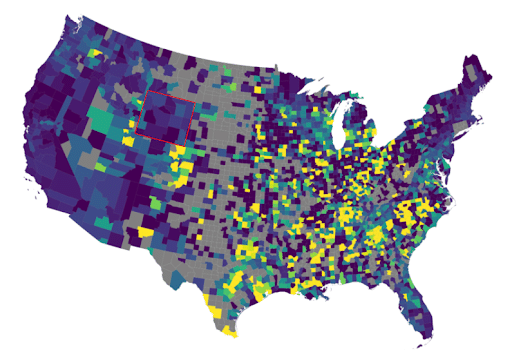
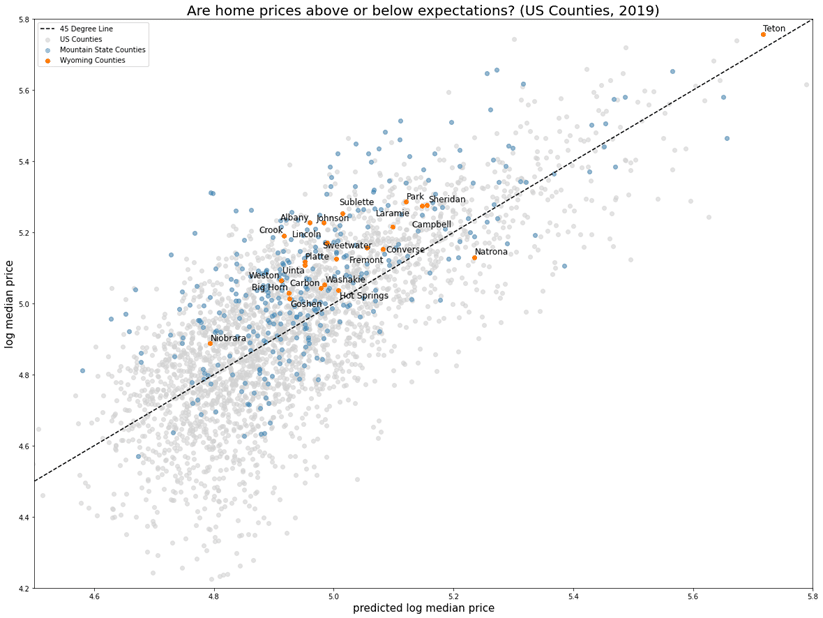
Figure 2 shows that Wyoming’s home prices in 2019 were generally above expectations given economic fundamentals such as population, income, and remoteness. This is an unsurprising conclusion: supply shortages lead to high prices.
Figure 2. Actual vs. Statistically-Expected Home Prices by US County
Many economists would argue that the leading cause of housing supply shortages across important parts of the US is the presence of high regulatory barriers to housing development. The costs of financing, labor, and materials are not terribly different between California and Texas, for example, but Texas builds a lot more housing (see Figure 1) because of a much more free-market regulatory environment.
More specifically, American towns with housing shortages often have strict zoning codes that make it very difficult to develop dense housing, such as starter homes with small yards that are suitable for young families, or apartment buildings suitable for young adults, at prices the average person can afford. Such restrictions can include maximum building heights, minimum lot sizes, minimum setbacks, minimum parking space requirements, zoning that disallows multi-family housing, and more. Lengthy approval processes, which can require multiple public hearings and town council votes, further compound costs by creating delays and uncertainty.
Examples of economic research linking housing regulatory restrictions to unaffordability include:
- Zabel and Dalton (2011) find that minimum lot sizes in Massachusetts increase housing prices by 20% – 40%.
- Hilber and Vermeulen (2016) find that the South East of England would have had 25% lower housing prices if it had followed the lower regulatory burden of the North East.
- Molloy et al. (2022) find that a one standard deviation increase in regulatory supply constraints leads to 10% faster house price growth.
Intuitively, these regulations are influential because they force renters and homebuyers to pay for things they don’t want. In turn, this dramatically reduces supply and increases the price of housing. For example, some US towns impose large minimum lot sizes. These require large yards for all homes, which can look nice, but are expensive due to the cost of land. Young families often prefer more affordable homes with significantly smaller yards, yet regulations prevent the market from building the type of housing supply that is in fact demanded.
The alternative approach is to let the market decide these issues by not regulating them. For example, France has not had any minimum lot sizes nationwide since 2013.
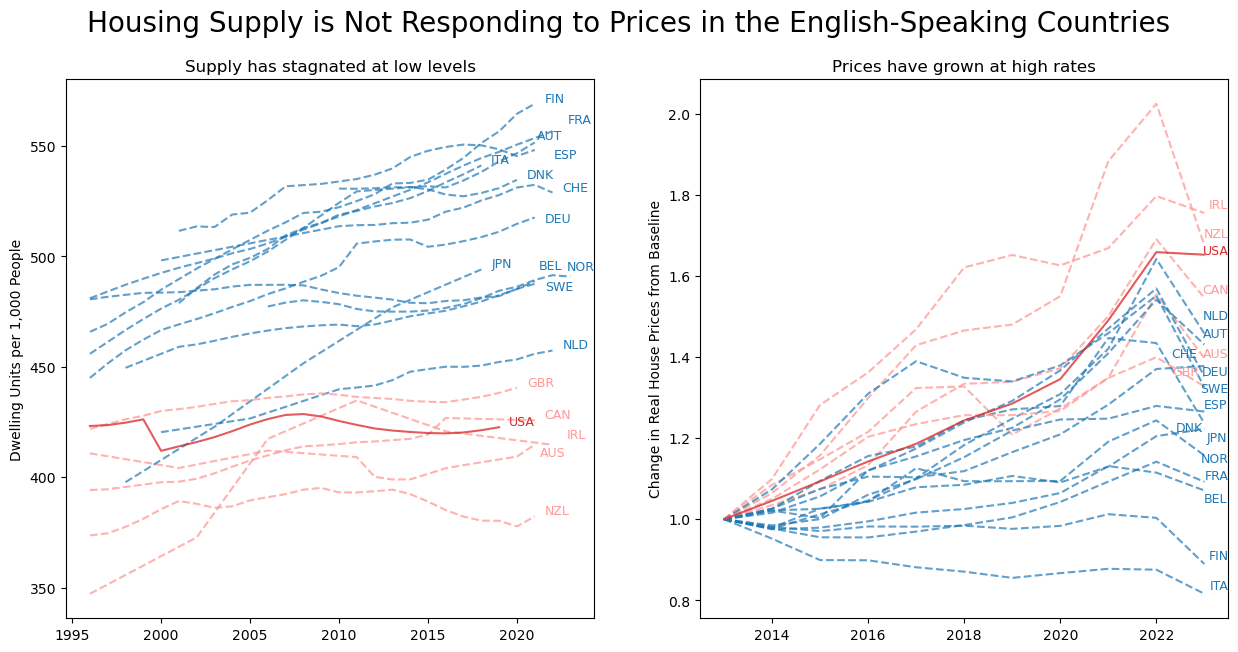
The regulatory problem can, in fact, be so severe that it is evident at the national level. Figure 3 shows that English-speaking countries have stagnated at low levels of housing supply per capita, while the growth of their housing prices has far exceeded that of other high-income countries. Again, the costs of major inputs such as financing, labor, and materials are not enormously different across high-income countries. But English-speaking countries have much higher regulatory barriers to dense housing development, which stem from their common-law legal institutions.
Figure 3. Housing Supply and Prices among High-Income Countries
In light of these dynamics, it is highly notable that Cheyenne has significantly reduced regulatory barriers to new housing supply. Key reforms since 2020 include:
- The creation of “urban loft” uses in commercially-zoned areas of town, which allow the development of apartments.
- Allowed multi-family residential and mixed-use buildings in the primary commercial zone district (Community Business).
- The maximum lot coverage ratio was increased to 80% for several uses, including standard and large lot size multi-family buildings. This allows a larger share of the land area to be used for the building footprint and parking, as opposed to being left as empty space or landscaping. In turn, this effectively reduces the amount of extra unused land and increased perimeter infrastructure (streets, sidewalks, utilities, etc.) that each renter must pay for, which considerably improves affordability.
- Removed required lot area per multi-family unit, which was previously 1,600 sq ft per unit or 1,000 sq ft per unit if above three stories. This similarly reduces the amount of unused land that each renter must pay for, which dramatically improves affordability. For example, a five-story, 50-unit apartment with a building footprint of roughly 10,000 square feet would previously have had to pay for nearly an extra acre of unused land, which in central parts of town can become very expensive.
- Removed all residential minimum lot sizes. This also helps save on the costs of unused land, which is crucial for both multi-family developments and starter homes with small yards.
- Created an urban use overlay that allows for building heights up to 65 feet, lot coverage ratios from 90% – 100%, no minimum setbacks (except on one particular street), and removed minimum parking requirements. This enables especially dense development west of Cheyenne’s downtown, which allows people to live within walking distance to work and provides enhanced foot traffic for local businesses.
- Reduced minimum parking space requirements from 1.5 spaces to 1 space for studio and one-unit multi-family dwelling units.
- Removed luxury material requirements for multifamily building facades and display window requirements for multi-family dwellings.
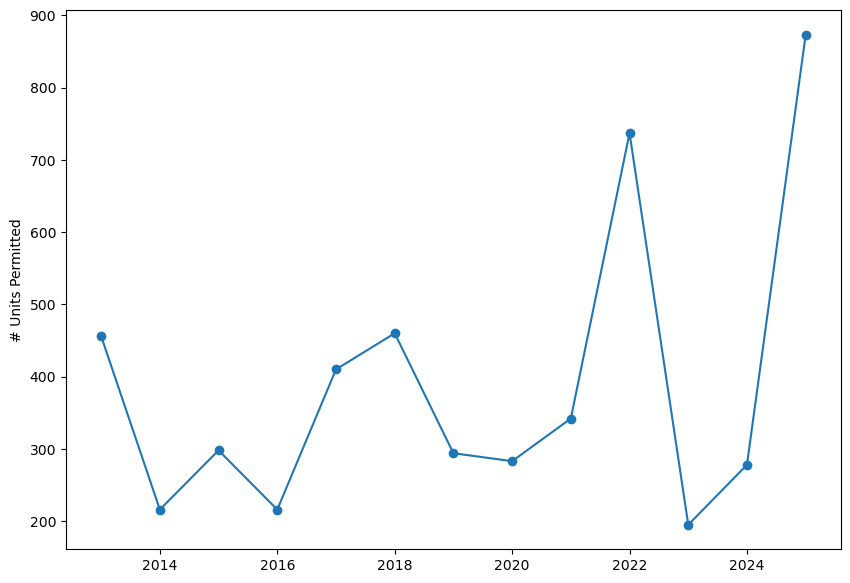
Since this reform effort kicked off circa 2020, Cheyenne has enjoyed bumper years of enhanced housing supply growth (Figure 4). The number of units permitted in 2025 is approximately 2.6 times the annual average from 2013-2019.
Figure 4. Number of Housing Units Permitted Annually in Cheyenne
As matters stand, Cheyenne is especially competitive with nearby towns on lot area requirements (Table 1). Further reform could be enacted in some instances, for example, to further reduce certain multi-family parking space requirements.
Table 1. Housing Regulations in Cheyenne vs. Nearby Towns
| Cheyenne, WY | Laramie, WY | Casper, WY | Fort Collins, CO | |
| Range of minimum lot sizes for residential zones1 | None | 2,000 to 8,000 sq ft | 4,000 to 9,000 sq ft | 0 to 2.29 acres |
| Largest required lot area per multi-family unit | None | 1,250 sq ft per unit | 2,420 sq ft per unit | 3,630 sq ft per unit |
| Largest minimum setback | 50 ft | 60 ft | 18 ft | 80 ft |
| Smallest maximum multi-family building height | 3-4 stories2 | 40 ft | 40 ft | 28 ft |
| Largest minimum parking space requirement per multi-family unit | 1.5 spaces per unit | 1.5 spaces per unit | 1 space per unit | None |
On the whole, Cheyenne has made impressive efforts to reduce regulatory barriers to housing and is seeing a surge of housing supply as a result. Other small towns around America should learn from this example and reduce their regulatory barriers to dense housing accordingly.
1 Excluding zones for agriculture or manufactured homes
2 Some usages allow garden-level units, which may not count as a story depending on interpretation
Student Stories: Understanding the Challenges Facing Rural Areas in New Mexico
Andrea Vega is a Master’s in Public Policy student at Harvard Kennedy School. She was accepted into the Growth Lab’s 2025 Summer Internship program and contributed to the ongoing project with New Mexico.
Why did you apply to the Growth Lab Summer Internship?
When I started applying for summer internships, I knew I wanted to gain real, on-the-ground experience. When I learned about the Growth Lab’s program, I realized it aligned with my goals and would provide a unique opportunity to step out of my comfort zone and apply what I had learned so far in the program.
What did you work on?
During my time in Silver City, I developed various Comprehensive Plans and an Economic Development Plan for villages in the county. This involved visiting the villages, working closely with the mayor’s office, and attending community meetings. I also had the opportunity to participate in meetings with various actors, including the Lieutenant Governor and the Governor herself, which gave me a broader understanding of how local governments operate and provided valuable experience.
In what ways were you challenged?
I was born and raised in Mexico City, so transitioning from a large city to a small town was a significant adjustment. The first couple of weeks were challenging as I adapted to a different lifestyle. However, having this immersive experience helped me gain a deeper understanding of the issues the community faces, which I was then able to reflect that in my work.
What was your most exciting/surprising experience?
I was surprised by the strong sense of community in the region. Whether it was someone smiling at me at the supermarket or offering to check in my bags at the airport so I wouldn’t have to pay extra, people were always eager to help. That spirit of cooperation is reflected in how the local government works: collaboration and a constant focus on improving as a region, rather than focusing only on individual goals. I was also surprised by the unique blend of American and Mexican cultures.
I also had the opportunity to visit a military and first responders facility, which was one of the most shocking experiences I’ve ever had. Witnessing the resources available and the current research they are conducting was remarkable.
What advice would you give to future interns?
Embrace the unexpected and go beyond the internship requirements. Engaging in different activities outside of work will not only enrich your experience but also help you better understand the culture and everyday challenges that people face. Try talking to locals about their daily lives and the challenges and opportunities they see in their town. There is no better way to learn than by hearing first-hand stories.
What’s next for you?
I am excited to begin my second year at Harvard Kennedy School. As for what comes after completing the program, I look forward to opportunities that allow me to keep learning and contribute meaningfully to the well-being of society.
Photo caption: Growth Lab intern Andrea Vega (center) with New Mexico Gov. Michelle Lujan Grisham (right) and Lt. Gov. Howie Morales (left).
Student Stories: How Pioneering Farmers are Overcoming Barriers in Azerbaijan
Palakshi Nerkar is a second-year MPP student at the Harvard Kennedy School. She was accepted into the Growth Lab’s 2025 Summer Internship Program and contributed to ongoing research in Azerbaijan.
Why did you apply to be a Growth Lab intern?
I was particularly interested in expanding my current on-ground field experience by exploring agricultural policies on a broader scale. The Growth Lab’s work in Azerbaijan specifically appealed to me as it allowed me to merge my interests in agriculture with economic development and real-world policy engagement. The experience helped me understand why some producers thrive in tough ecosystems and how governments can scale those bright spots into a larger economic transformation.
What did you work on this summer?
I researched “positive deviants”- producers or exporters in Azerbaijan who succeeded against all odds- and analysed global case studies that could leverage these positive deviants to cause a significant positive impact. I also collaborated with the Growth Lab team in Azerbaijan to analyse interviews of various stakeholders involved, from producer pioneers to research centres and ministries. This study helped narrow down drivers and barriers to scaling the success of these unique cases to a national level.
In what ways were you challenged?
Coming from a tech-focused background, a deep dive into the world of economics was initially intimidating. Moreover, analysing a full value chain across unfamiliar crops and regions was a big leap from my earlier fieldwork with smallholder farmers in India. I had to understand logistics, certification bottlenecks, export finance gaps, and post-harvest constraints within weeks, all the while accounting for insights from stakeholder interviews. The biggest challenge was translating very diverse qualitative field data into a coherent policy narrative that is locally grounded but also nationally relevant.
What was your most exciting/surprising experience?
My experience was filled with small but meaningful surprises. It was incredibly exciting to discover stories of farmers and exporters who took massive leaps of faith, and even more fulfilling to see them succeed through innovative thinking. I also didn’t expect to enjoy mapping regional logistics corridors or analyzing the melon diaspora trade routes as much as I did! Every meeting with my Growth Lab team taught me something new, and I truly enjoyed those collaborative moments.
What advice would you give future Growth Lab interns?
I’d advise all incoming interns to make the most out of the experience and knowledge of their Growth Lab colleagues. They are incredibly knowledgeable on their respective regional projects and were a treasured resource for me! I’d also recommend researching the country and its social and professional norms thoroughly, especially when engaging with local stakeholders outside the Growth Lab team.
What’s next for you?
This experience reaffirmed my commitment to working on agricultural transformation from various angles. I am deeply devoted to improving the livelihoods of agrarian communities in a sustainable, regenerative manner. As I return to HKS for my final year of the MPP program, I hope to use these lessons and build on my knowledge at the intersection of agriculture and climate, and contribute via public service.
Student Stories: Supporting Morocco’s Industrial Sector from the Inside
Adin Becker is a third-year Master in Public Administration and Master in Urban Planning dual-degree student at the Harvard Kennedy School and the Harvard Graduate School of Design. He was accepted into the Growth Lab’s 2025 Summer Internship Program and contributed to an ongoing project with the OCP Group in Morocco.
Why did you apply to the Growth Lab Summer Internship?
Before I applied to the internship program, I had heard from countless classmates and professors about the Growth Lab’s strong reputation on campus for combining rigorous economic analysis with meaningful in-country engagement. For me, it felt like the ideal opportunity to apply the international experience and skills I’ve been building over the past few years. I’ve led climate resilience work in Zimbabwe, supported grassroots economic development in India, and engaged with government officials and communities in more than a dozen countries, developing a passion for helping communities strengthen capabilities while advancing environmental and economic goals. The Morocco project offered an excellent opportunity to build on this experience.
What did you work on?
My work was mainly focused on mapping and strengthening Morocco’s supplier ecosystem in collaboration with OCP Group, the largest phosphate producer in the world and one of the country’s most strategic enterprises. My work included creating a detailed, sector-by-sector matrix of national support programs for companies in electrical, mechanical, and facility services, tailored to firm size and industry. I also analyzed supplier contract data, financing programs, and industrial policy tools from initiatives such as Maroc PME, Finéa, Fonds Hassan II, and the Bank of Africa’s Supply Chain Finance.
In what ways were you challenged?
Given that we were working within OCP, most of the relevant data we needed was proprietary. It took quite a bit of time, effort, and relationship-building to gain access to it. We also started with only a broadly defined objective, which meant spending the first few weeks narrowing down specific objectives while still ensuring we could deliver a meaningful report at the end. Ten weeks go by quickly when you’re defining your scope and executing at the same time! Another challenge was navigating Morocco’s industrial support landscape. There is a wealth of programs, which often overlap in scope, target different firm sizes, and use complex eligibility criteria. Producing a clear, practical tool required filtering and categorizing large amounts of data. Overcoming these hurdles improved my ability to work with ambiguity and transform complex data into actionable insights.
What was your most exciting/surprising experience?
One of the most memorable moments was the tour of JFC 4, one of OCP’s massive fertilizer production facilities. I had never been inside an industrial site of that scale before. Walking through vast halls filled with machinery, along catwalks over vats of acid, and into control rooms that monitored every aspect of the production process made me appreciate the level of coordination and engineering behind the enterprise. Reading about industrial capacity is very different from experiencing it on the factory floor. I was also struck by the extent to which OCP is woven into Morocco’s social and economic fabric. Many aspects of our daily lives in El Jadida related to the company in one way or another. We lived in an OCP apartment complex with hundreds of neighbors who were OCP employees or their families, and even the water used throughout the city was desalinated by OCP.
Outside of work, I took every opportunity to travel the country. It wasn’t my first time in Morocco, but its variety and beauty continue to amaze me. One could spend years exploring Morocco’s vast deserts, rugged mountains, jagged coastlines, and lush forests. The people are equally remarkable: endlessly generous, optimistic about the future, and eager to share their country’s history, cuisine, and traditions.
What advice would you give to future interns?
Ask a lot of questions. It might feel repetitive or even annoying at times, but gaining clarity from host-country counterparts early on will save you significant time and work in the long run. Reach out to as many relevant stakeholders as you can in the first weeks. Meetings can lead to valuable data, and stakeholders often refer you to others. But by week nine, there’s no time to act on those referrals.
Don’t be afraid to talk to people outside of work. A conversation with someone on the corniche may yield insights that deepen your understanding of the local context. Also, if possible, get in touch with counterparts before your arrival, but also embrace the work culture once you’re on the ground. Part of being successful in development work is learning to go with the flow: adapting to local rhythms and approaches.
What’s next for you?
I’m returning to Harvard for my final year of the MPA/MUP program, where I’ll be continuing my research on ecological sovereignties, examining how nations can leverage natural resources, ecosystems, and biodiversity as strategic assets. I’ll also continue my work with the Building State Capability program, supporting global practitioners in applying adaptive approaches to complex development challenges. In addition, I’ll be writing my thesis and leading the Climate, Energy, and Environment Professional Interest Council (CEEPIC). I will also be searching for post-graduation opportunities, likely in international development or climate resilience with governments, multilateral institutions, or research institutes. In the long term, I aim to help countries navigate the dual challenge of promoting sustainable development while adapting to and mitigating climate change.
Student Stories: A Policy Lens on Electricity Affordability and Life in Nigeria
Chu Fang is a second-year MPA/ID student at the Harvard Kennedy School. He was accepted into the Growth Lab’s 2025 Summer Internship Program and contributed to ongoing research in Nigeria.
Why did you apply to the Growth Lab Summer Internship?
Coming from a background in diplomacy and development, I was drawn to the Growth Lab’s rigorous, policy-oriented approach to economic growth. I saw the internship as an opportunity to apply both my experience in international cooperation and the analytical tools I’ve gained through the MPA/ID program, particularly in diagnostics and data analysis, to a real-world reform challenge. Nigeria’s electricity sector, currently undergoing significant transformation under the Electricity Act 2023, offered the ideal context to engage with complex policy issues on the ground.
What did you work on?
I worked on an electricity affordability study for Nigeria, conducting the preliminary analysis of electricity expenditure patterns, tariff structures, and subsidy policies in the context of ongoing sector reforms. As part of the project, I also conducted a cross-country comparative analysis of selected African and Global South countries, examining their energy pricing frameworks, tariff policies, and cost-recovery mechanisms. The goal was to identify best practices for affordable energy access and distill relevant lessons for Nigeria’s electricity sector reform. My internship supports the groundwork for future diagnostic efforts by the Nigerian Economic Summit Group, aimed at informing pricing reform, targeted subsidies, and consumer protection as the country transitions toward a decentralized electricity market.
In what ways were you challenged?
One of the challenges was the limited availability of granular data, which is critical for designing effective affordability frameworks. Nigeria’s low penetration of smart meters and inconsistent electricity usage tracking make it difficult to assess consumption patterns, especially for low-income households. Funding constraints have also limited the scope and frequency of household-level data collection. As I worked on developing a diagnostic framework, I had to navigate these gaps by carefully reviewing existing household surveys and proposing ways to improve future data collection. This experience pushed me to think creatively about how to design affordability metrics and policy recommendations that are both data-informed and implementation-feasible in a resource-constrained environment.
What was your most exciting/surprising experience?
Spending the summer in Lagos was a deeply eye-opening experience. It was my first time on the African continent, and it left a lasting impression. I had the chance to connect with local colleagues, share meals, and explore the city together. These personal connections made the experience richer and more meaningful. I also witnessed the day-to-day realities of electricity affordability: from frequent outages disrupting businesses and households, to the constant hum of petrol generators filling in the gaps. These observations brought a human dimension to the policy challenges I had been studying, reminding me that affordability isn’t just a theoretical issue, but one that shapes livelihoods, productivity, and quality of life in very tangible ways.
What advice would you give to future interns?
Immerse yourself in the local culture and daily life. Meaningful insights not only come from reports or datasets, but also from conversations at lunch, walks through the neighborhood, and observing how people navigate everyday challenges. Try the local dishes, explore the city, and spend time with colleagues outside of work. These experiences will deepen your understanding of the context in which you’re working and make your internship personally enriching and unforgettable.
What’s next for you?
This internship has inspired my Second Year Policy Analysis, where I will delve deeper into electricity affordability in Nigeria and develop actionable policy recommendations to inform pricing and subsidy reforms. I hope to build on this foundation through further research and, after graduation, pursue opportunities in energy and infrastructure policy.