
CID Thanked at World Bank Signing Ceremony
With soaring ceilings, bright red walls and large prints of historic Albanian maps, the “Map Room” of the Prime Minister’s office is an impressive sight. It was here that a small ceremony was held on May 30 for the official signing of a US $220 million loan agreement between the World Bank and the Government of Albania. The CID team working in Albania was invited to attend the ceremony along with the Council of Ministers, World Bank, Bank of Albania and representatives from the private sector.
“Today, by signing this agreement another page of a new chapter opens,” stated Albanian Prime Minister Edi Rama.

The Prime Minister was quick to acknowledge that this agreement goes beyond his government. “Our merit,” he stated, “is that we have managed to build a team spirit with our partners.” He thanked the World Bank for making the agreement possible and went on to also thank Professor Ricardo Hausmann and his Harvard team, as well as the Bank of Albania and Albanian entrepreneurs for their part in bringing stability and growth to the country.
The agreement is significant for the government of Albania both for the recognition it shows of the economic reforms already set in place by the current government and for the confidence it places in this government’s ability to continue with its agenda of reform and growth over the coming years.
“The World Bank has ramped up its engagement in Albania commensurate with [Albania’s] reform effort,” stated Ms. Laura Tuck, World Bank Vice President for Europe and Central Asia. “We look at Albania and see a country with tremendous growth potential and a population determined to succeed.”
Ms. Tuck praised the great strides made thus far in Albania and the “decisive leadership” of the government, but noted the challenges the country still faces.
“The macro-fiscal stabilization which you have undertaken this year will need to be sustained over the medium-term,” she cautioned. “Key structural reforms will need to be pursued with vigor, especially deepening restructuring of the energy sector, creating a more attractive investment climate and enhancing the quality of public service delivery.”
For the Government of Albania, the agreement with the World Bank represents the spirit of openness and collaboration they are trying to build.
“For us this is an opportunity to govern together with all stakeholders and all other factors of development,” stated Prime Minister Rama. “The presence here in this room of many ministers, representatives of the World Bank and of the governor of the Bank of Albania, businessmen and bankers, but also of the newly-arrived team of master students of Harvard University … are an indicator of a new opening and attempt to make the next steps together in a country which, first of all needs a new culture of governance.”

“Once more, I would like to thank our newest friends of Professor Hausmann’s team,” stated Prime Minister Rama in closing the ceremony, “who… have brought many terrific experiences from different countries where they have worked in key positions.”
About the author: Karen Vanderwillik is a summer intern for the Economic Growth in Albania project.
If you build it, they will come?
Not necessarily… Albania has had designated industrial zones for several years now, but they have yet to attract investors and many remain empty. The CID project in Albania is working to support an increase in the country’s exports, and developing industrial zones is a key strategy in this effort. CID is working with a team of experts from the government to determine why these zones have not attracted development and what measure can be taken to change this.
He (Charlie) Tian, one of the CID interns working in the Ministry of Economic Development, Trade and Entrepreneurship, recently visited the Spitalle Free Zone (photo below) in Durres. Measuring 500 hectares with potential to expand to 800 hectares, the site is a good size and ideally located next to the Port of Durres and a major highway that connects the area to the capital. The Port of Durres is an ideal location for an export-oriented industrial zone. It is the largest port of Albania and covers more than 80% of the country’s maritime transport.
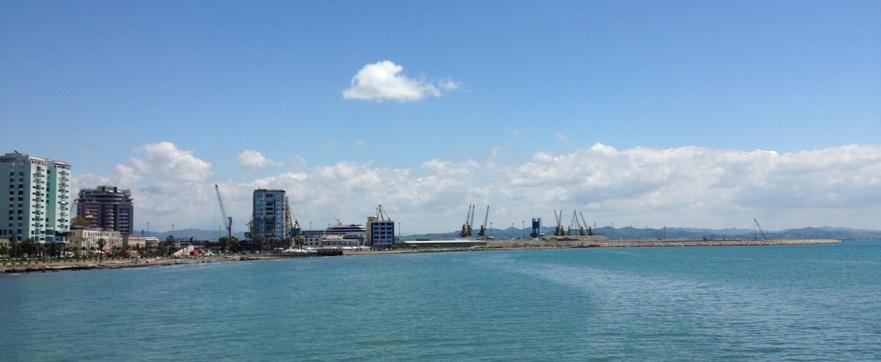
Spitalle is also next to a small energy park that could potentially provide opportunities for synergy between the two sectors, however there is currently no infrastructure developed on the site. “The Spitalle Free Zone in Durres remains an almost empty piece of land,” notes Tian. “In China it only takes a couple months for empty land to develop into industrial zones but here negotiations with developers have been delayed due to ongoing discussions within the government regarding laws and incentives.”
The Ministry of Economic Development will meet with potential investors this week to discuss the development of this site. Some of the industries that this site has potential to support include:
- Energy production: Energy product exports are increasing quickly and there is potential for more mineral manufacturing and refining.
- Fashion (textiles and footwear) production: Albania has a significant cost advantage in terms of human capital. Factories already exist around Tirana and Durres in this sector, but coordination could be improved by clustering them.
- Services and Trade industry: Importers and exporters could set up in the free zone to avoid tariffs and customs payments and therefore increase efficiency.
“It could be the very first industrial park/free zone that functions in Albania,” says Tian, “and we are supporting the Ministry in preparation of the presentation for investors.”
One of the complications the government now faces in developing these zones is dealing with the numerous illegal constructions that are currently using the space. For example, in Spitalle a local university was been built right in the middle of the industrial zone land.
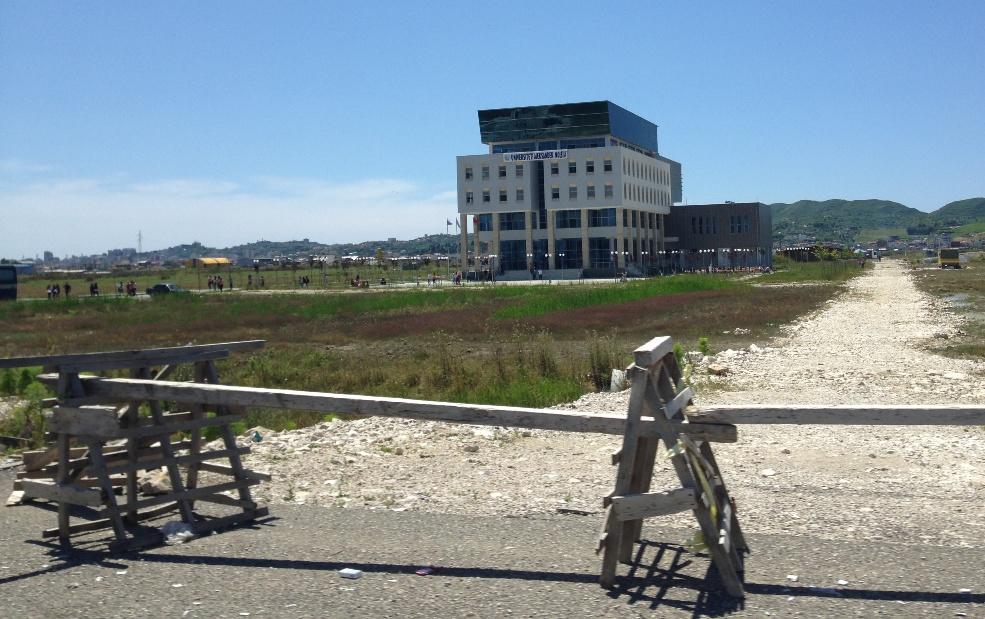
It will take time and also compensation to remove illegal constructions from the land, which is one of the major concerns of potential investors. This is just one of the many challenges the CID team will be tackling along with the government of Albania in an effort to support the development and growth of these existing resources.
About the author: Karen Vanderwillik is a summer intern for the Economic Growth in Albania project.
CID meets Albania
Just off a busy street in the heart of downtown Tirana close to 20 Harvard students, faculty and staff gathered at the historic home of the former Albanian dictator, Enver Hoxha, for a welcome reception with H. E. Prime Minister Edi Rama and several Cabinet Ministers.
 “[Hoxha] would have hated that you are here,” joked the Prime Minister in his welcoming speech. And rightly so, as Rama’s government is moving the country in a new direction from that of the former dictator and his communist party, and has sought the support of Harvard University to do so. The Harvard Kennedy School faculty and students are part of a large project that the Center for International Development (CID), with financial support from the Open Society Foundation, has undertaken to support economic growth in Albania.
Albania is one of the poorest countries in Europe but seems to be brimming with potential. Located on the Adriatic and Ionian Seas bordered by Montenegro, Kosovo, Macedonia and Greece, it remained in isolation during 46 years of communist rule. While democracy was established in 1991 the country has since faced severe problems of high unemployment, inadequate infrastructure and fiscal mismanagement. When Rama’s Socialist Party came to power on September 10, 2013, they came with a desire to implement strategic and innovative policies to address some of the country’s greatest challenges.
Immediately following the June 2013 parliamentary elections, Prime Minister Rama invited Prof. Ricardo Hausmann, Director of the Center for International Development, to Albania. He came with Research Fellows Brad Cunningham and José Ramón Morales to meet with the new Prime Minister and discuss some of the challenges facing the government as it took office. This initial meeting has developed into the largest initiative ever undertaken by CID with another government, involving:
- 5 Harvard professors
- 3 Research Fellows
- 2 external experts
- 13 graduate students
After 10 years in the opposition, Rama’s party has a lot they want to accomplish, and this affiliation with Harvard aims to support them in their efforts.
The welcome reception provided the team with the opportunity to meet the Prime Minister in person, along with many of the key government ministers and high-level officials.
“It is rare that a team of foreign scholars is greeted at the highest political level,” noted Konstantine Kintsurashvili, who worked in Georgia as Deputy Finance Minister and is now a Master’s student at the Harvard Kennedy School. “Our welcome reception was hosted by H.E. Prime Minister of Albania with all the key economic portfolio ministers in attendance. I think this added a lot of enthusiasm to our summer engagement in Albania.”
This summer graduate students will spend two months working alongside counterparts in six different ministries, including Energy, Tourism, Agriculture, and Education.
“These are not just students,” explained Hausmann when introducing the group to the Prime Minister and government officials. “They are also professionals with years of experience prior to studying at Harvard.”
The students that make up “Team Albania” have worked in industrial policy, finance, engineering, agriculture, labor market policy and the education sector and have experience with the World Bank, the United Nations, international consulting firms and various Ministries within their own governments. They are an incredibly diverse team, coming from Asia, Europe, Latin America and the Middle East, and their combined experience in on-the-ground government implementation and rigorous academic analysis places them in a unique position to provide innovative advice and support to their Albanian counterparts.
“Innovation is a keyword for this government” stated an official from the Prime Minister’s office, and they hope the team from Harvard will bring new ideas and initiatives to the country. Under the leadership of Prof. Ricardo Hausmann and in collaboration with Harvard Kennedy School Faculty Matt Andrews, Robert Lawrence, Francisco Monaldi and Eduardo Lora, Harvard Business School Faculty Noel Maurer, Research Fellows Ljubica Nedelkoska, Brad Cunningham and José Ramón Morales, and external experts Paula Marra and Gustavo Grobocopatel (Los Grobo), the students will be working on some of the most critical issues facing the country. Already the Center for International Development has supported the government in stabilizing macroeconomic issues and they are now working on improving productivity in key sectors, including tourism, agriculture and light manufacturing, as well as improving the government’s access to resources through energy, oil and the bond market.
For their part, the students are eager to get started. At the reception many had the opportunity to speak one on one with ministers and deputy ministers to discuss the ways they may be able to contribute to project planning and implementation.
“[The Deputy Minister of the Economy] knows a lot about the subject we are working on,” commented Hanieh Mohammadi, a Master’s student at Harvard Kennedy School who already holds an MBA and has experience in the public and private sector. “They are very proactive and have achieved a lot already but they are looking for new perspectives.”
In speaking to the team at the welcome reception, the Prime Minister said: “I do know you will not be bored.” As the students begin to incorporate into the various ministries that are spread around Skanderbeg Square in downtown Tirana, they are quickly discovering both opportunities and challenges that they will face throughout what will likely be an interesting and educational summer.

About the author: Karen Vanderwillik is a summer intern for the Economic Growth in Albania project.