
Global Launch of Metroverse: The Growth Lab’s Urban Economy Navigator
June 2, 2021 | 12:00 pm – 1:00 pm

Join us for the global launch of our new data visualization tool, Metroverse: The Growth Lab’s Urban Economy Navigator. The platform is designed to provide policymakers, businesses, and civil society with unprecedented economic data for more than 1,000 cities in 79 countries. The insights are centered on five key questions:
- What is the economic composition of my city?
- What does my city specialize in?
- What cities are similar to my city?
- What is my city’s position in the Industry Space?
- What are the growth opportunities?
This platform builds upon the Growth Lab’s Atlas of Economic Complexity, which maps the productive capabilities of about 200 countries and their capacity for growth and development. With Metroverse, we explore at the level where many of a nation’s capabilities reside: its cities and local workforces. The tool vividly illustrates the technological capabilities that underpin a city’s economy and its’ opportunities for future growth and diversification.
The event will feature a presentation by Growth Lab Director Ricardo Hausmann, Frank Neffke, and Annie White, who will conduct a demonstration of how to utilize the tool and provide insights into the research and technology behind the tool. We look forward to showcasing the new tool to you and ask that you register in advance if you plan to attend.
PDIA in Action: Exploring Trade between Kenya and Canada
May 18, 2021 | 12:00 pm – 1:00 pm
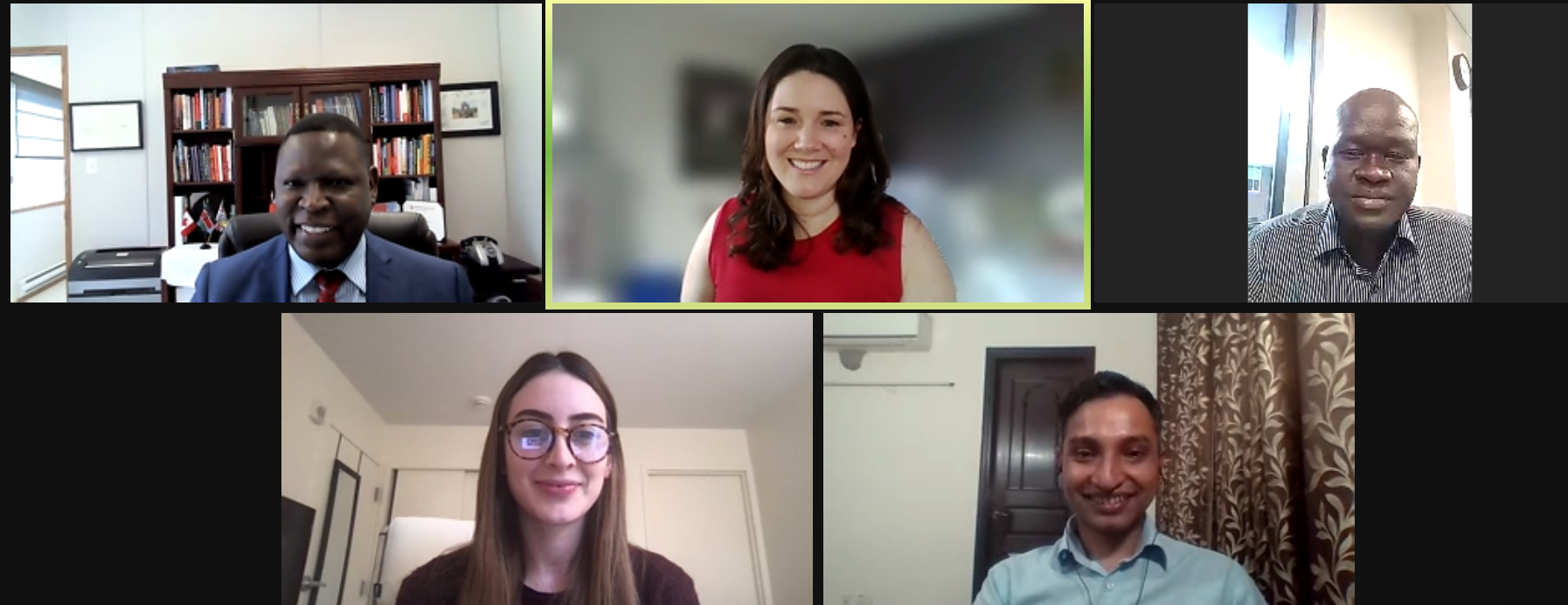
As part of MLD103M, Harvard students spent 7 weeks working with the Honorary Consul General to better understand the absence of bilateral trade agreements between Kenya and Canada, and to help identify ideas and entry points. In this presentation the student team and their authorizer will share some of their key takeaways and recommendations from this experience.
Presenters: John Diing, Mayra Hoyos, students at the Harvard Kennedy School; Bishal Belbase student at the Harvard School of Public Health; Stephanie Shalkoski, student at the Harvard Business School; Dr. George Imbenzi, Honorary Consul General of Kenya to Canada and Implementing Public Policy executive program alumni. Moderator: Salimah Samji, Director of Building State Capability (BSC).
Please register in advance to attend this event.
PDIA in Action: Legal Education Reform in Ukraine
May 11, 2021 | 12:00 pm – 1:00 pm

The supply side of Ukraine’s legal system is inadequate for fulfilling the role and responsibilities of the legal profession contributing to the legal system’s self-perpetuating failure to ensure the rule of law and deliver justice in Ukrainian society. As part of MLD103M, students at HKS spent 7 weeks working with a Legal specialist to better understand this problem and to help identify ideas and entry points. In this presentation, the student team and their authorizer will share some of their key takeaways and recommendations from this experience.
Presenters: Frederick Tarantino, Ilhom Aliyev, Manoj Kumar, Mike Ramirez, Yousuf Folathi Alkhoori, students at the Harvard Kennedy School; Artem Shaipov, Legal specialist, USAID New Justice Program and Implementing Public Policy program alumni. Moderator: Salimah Samji, Director of Building State Capability (BSC).
Please register in advance to attend this event.
PDIA in Action: Access to Childcare in Burien, WA
May 4, 2021 | 12:00 pm – 1:00 pm

In Burien, current child-care benefits are limited and restrictive. The people who most need the benefit are not able to afford or access quality childcare leading to broader social and economic impacts on the community.
As part of MLD103M, students at HKS and HGSE spent 7 weeks working with a City Council member to better understand this problem and to help identify ideas and entry points. In this presentation the student team and their authorizer will share some of their key takeaways and recommendations from this experience.
Presenters: Crystal Collier, Doreen King, and Sasinat Chindapol, students at the Harvard Kennedy School; Kevin Schilling, Burien City Council member and Implemeting Public Policy executive program alumni. Moderator: Salimah Samji, Director of Building State Capability (BSC).
Please register in advance to attend this event.
PDIA in Action: Police and Community Relations in Lancaster, PA
April 27, 2021 | 12:00 pm – 1:00 pm

There is a divide between the police department and the community which was highlighted by the events that occurred in Lancaster in 2020 in addition to the overall climate of national tension. As part of the MLD103M course, students at the Havrard Kennedy School and Harvard Graduate School of Education spent 7 weeks working with the Director of Neighborhood Engagement for the City of Lancaster and the Chief of Police to better understand this problem and to help identify ideas and entry points. In this presentation, the student team and their authorizer will share some of their key takeaways and recommendations from this experience.
Presenters: Anne Dietterich, Awab Elmesbah, students at the Harvard Kennedy School; Amreen Bashir, Revanth Voothaluru, Seun Akinfolarin, students at the Harvard Graduate School of Education; Milzy Carrasco, Director of Neighborhood Engagement for the City of Lancaster and Implementing Public Policy executive course alumni. Moderator: Salimah Samji, Director of Building State Capability (BSC).
Please register in advance to attend this event.
PDIA in Action: Tackling Blood Safety in Nigeria
April 20, 2021 | 12:00 pm – 1:00 pm
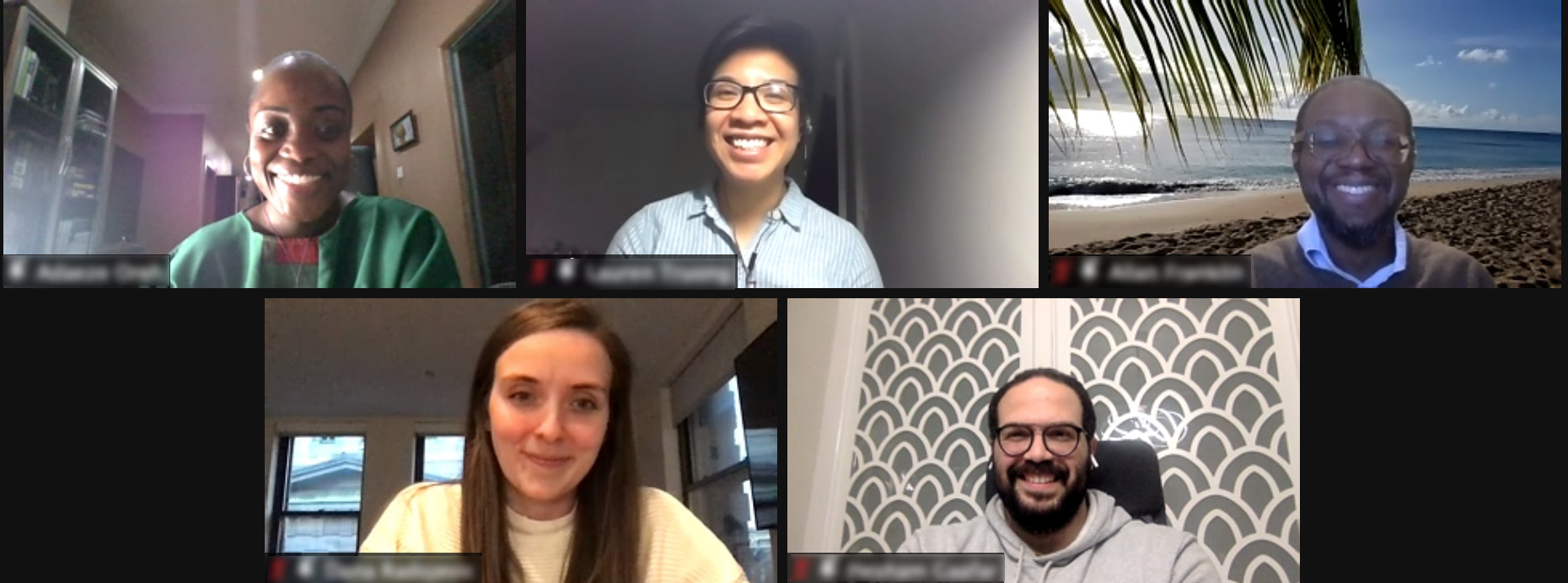
The National Blood Transfusion Service (NBTS) in Nigeria is not the sole blood collecting agency. Hospitals, clinics and private blood establishments are also able to collect blood donations and transfuse them to patients. Safe blood is still largely unavailable in hospitals and health facilities leading to infections, disease, and death.
As part of MLD103M, students at the Harvard Kennedy School and Harvard School of Public Health spent 7 weeks working with the country head of planning of the NBTS to better understand this problem and to help identify ideas and entry points. In this presentation the student team and their authorizer will share some of their key takeaways and policy recommendations from this experience.
Please register in advance to secure your spot at this event.
Presenters: Allan Franklin, Dana Radojevic, Lauren Truong, students at the Harvard Kennedy School; Hesham Gaafar, student at Harvard School of Public Health); Dr. Adaeze Oreh, Country Head of Planning NBTS, Nigeria and Implementing Public Policy executive course alumni. Moderator: Salimah Samji, Director of Building State Capability (BSC).
Balance Sheets and Debt Crisis: Predicting Defaults in the 21st Century
Debt crises are more than just a story about primary balances. Sectoral balance sheets, particularly the net worth of households and banks, play an important role in determining whether an episode of increased rollover risk will deteriorate into full-blown default.
In this seminar, Gon Huertas will present on ‘Balance Sheets and Debt Crisis: Empirical Regularities for Modern Cases of Sovereign Distress‘, a research paper published by the International Monetary Fund (IMF). The paper presents the stylized facts surrounding debt crises from 1990 to 2019: the behavior of government finances, aggregate macroeconomic variables, and the accompanying changes in the net worth of the private sector. We then use a logistic model to estimate the probability of undergoing default for a panel of 75 countries, finding that the net worth of the household and banking sectors is a significant predictor in addition to the usual flow variables included in standard debt sustainability analyses.
Please register in advance to secure your spot at this event.
About the Speaker: Gon Huertas is a macroeconomist working for the International Monetary Fund, and a lecturer on macroeconomics at George Washington University. His current research focuses on the spillovers of the Federal Reserve’s monetary policy on emerging markets. Previously, he worked at the Peterson Institute for International Economics and the Cabinet of Ministers of Argentina.
PDIA in Action: Reparations in Asheville, NC
April 13, 2021 | 12:00 pm – 1:00 pm
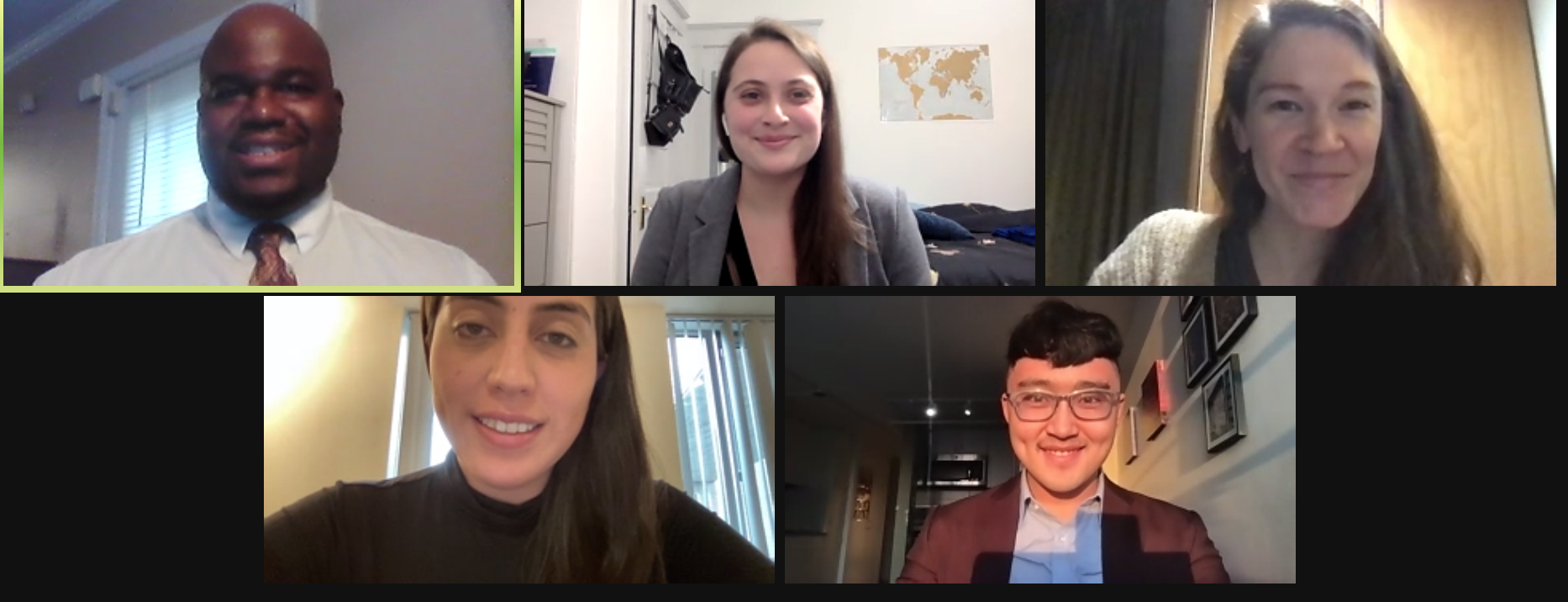
There has been a lack of progress and consensus in designing and implementing reparation initiatives in Asheville since the passing of the reparation resolution in July 2020. As part of BSC’s MLD103M course, students at the Harvard Kennedy School and Harvard Graduate School of Education spent 7 weeks working with a former Asheville City Councilor to better understand this problem and to help identify ideas and entry points. In this presentation, the student team will share some of their key takeaways and policy recommendations from this experience.
Presenters: Bethany Dill, Student at the Harvard Graduate School of Education; Isabel Mejia Fontanot, Kent Shi, Kerianne DiBattista, Students at the Harvard Kennedy School; William Keith Young, Former Asheville, NC City Councilor and Alumni of BSC’s Implementing Public Policy Executive Education course. Moderated by Salimah Samji, Director of Building State Capability (BSC).
Please register in advance to secure your spot at this event.
The Humanitarian Crisis of Venezuelan Migrants and Refugees and the Temporary Status of Migrant Protection
April 7, 2021 | 10:00 am – 11:30 am
Speakers: Lala Lovera, Founder of the NGO “Comparte una Vida” of Colombia, she has been dedicated to the field of social work for more than 15 years. Betilde Muñoz, Director of the Department of Social Inclusion at the Organization of American States. Ana María Ibáñez, Economics Principal Advisor, Inter-American Development Bank and professor at the University of the Andes. Dany Bahar, senior fellow in the Global Economy and Development program at the Brookings Institution an associate at the Growth Lab. José Ignacio Hernández G, Fellow at the Growth Lab and professor at the Universidad Católica Andrés Bello. Moderated by David Smolansky, commissioner of the OAS Secretary-General for the Crisis of Venezuelan Migrants and Refugees.
The crisis of displaced persons from Venezuela should be address from the humanitarian perspective to achieve three objectives: (i) protect the human rights of the Venezuelan migrants and refugees; (ii) facilitate a safe, orderly and regular migration to promote economic growth, and (ii) facilitate the financial international cooperation. Those are the objectives of the recently approved Decree No. 216 of 1 March 2021, issued by the Government of Colombia, and the Temporary Protected Status (TPS) granted by the United States Government on March 8, 2021.
The event will present a multi-disciplinary approach to the crisis of displaced persons from Venezuela considering its current situation in Colombia; its impact on the inclusion of vulnerable sectors; the economic impact of the Venezuelan migration; the Internacional financing of the crisis and the humanitarian standards that should be applied. Please register in advance to secure your spot at this event.
Toward a Venezuelan Transition? Escaping a Complex Humanitarian Emergency (Part 2)
March 25, 2021 | 11:00 am – 12:30 pm
This event is virtual and will be held in English with simultaneous Spanish translation. To register click here.
Speaker: Luis Almagro, General Secretary of the Organization of the American States (OAS); María Gabriela Ponce, Professor, and researcher of the Economic and Social Research Institute of the Catholic University “Andrés Bello”, Venezuela.
Moderated by: Steven Levitsky, Professor of Government, Harvard University, Director, David Rockefeller Center for Latin American Studies; José Ignacio Hernández G., Fellow, Growth Lab at Harvard’s Center for International Development
The Venezuelan crisis is, first of all, a humanitarian one triggered by the gradual collapse of the state, the GDP collapse amidst hyperinflation, the biggest humanitarian crisis of refugees and migrants in the region, and systematic violations of human rights. The Venezuelan humanitarian crisis has been aggravated by the pandemic -a crisis within a crisis. The seminars will analyze the current dimension of the humanitarian crisis in Venezuela and the international initiatives to advance in a comprehensive solution.
Luis Almagro was re-elected for a second term as Secretary General of the OAS on March 20, 2020. He was first elected as Secretary General of the OAS on March 18, 2015, with the support of 33 of the 34 member states and one abstention. Upon taking up the leadership of the OAS, he announced that the central theme of his administration would be “more rights for more people” and that he would work “to be the voice of the voiceless.” His priority at the helm of the General Secretariat is to put the Organization in touch with people’s needs and the new realities in the Hemisphere, as well as helping to ensure greater democracy, more rights, more security, and more development and prosperity for all.
María Gabriela Ponce is a member of the research team of the National Survey of Living Conditions (ENCOVI), the leading survey that measures Venezuelan social and economic conditions, to provide timely monitoring of the living conditions of the population. Among many other works, Professor María Gabriela Ponce is the co-author of “Poverty and social expense in the Venezuela of the Bolivarian Revolution” (2015). In 2020, Professor Ponce explained the recent trends of the ENCOVI survey (2019-2020) in the 2020 Perspective seminar, organized by the Catholic University.
Steven Levitsky is a Professor of Government at Harvard University. His research interests include political parties, authoritarianism and democratization, and weak and informal institutions, with a focus on Latin America.
José Ignacio Hernández G. is a Law Professor at the Catholic University Andrés Bello in Venezuela, as well as Visiting Professor at the Castilla-La Mancha University in Spain. His research interest include rule of law and development, state capability and authoritarian-populist institutions in Latin America.
Presented in collaboration with the David Rockefeller Center for Latin American Studies.