Growth Lab’s COVID-19 Task Force: Strategy and Resources
In response to COVID-19, Growth Lab Director Ricardo Hausman brought together a task force, including members of our academic and applied research teams, to support our project counterparts worldwide. This team worked quickly to understand the dynamics of the virus by connecting with experts across Harvard University.
Our team shared new insights and offered strategic guidance on economic and epidemiological policy decisions with project counterparts in Albania, Ethiopia, El Salvador, Honduras, Peru, Namibia, South Africa, and Saudi Arabia. In addition, the team responded to requests from other governments around the world to share its learnings.
Jump To
Research
Journal Articles
COVID-19 and emerging markets: A SIR model, demand shocks and capital flows
Journal of International Economics, 145
We quantify the macroeconomic effects of COVID-19 for a small open economy. We use a two-country framework combined with a sectoral SIR model to estimate the effects of collapses in foreign […] We quantify the macroeconomic effects of COVID-19 for a small open economy. We use a two-country framework combined with a sectoral SIR model to estimate the effects of collapses in foreign demand and supply. The small open economy (country one) suffers from domestic demand and supply shocks due to its own pandemic. In addition, there are external shocks coming from the rest of the world (country two). Aggregate exports of the small open economy decline when foreign demand goes down, and aggregate imports suffer from lockdowns in the rest of the world. We calibrate the model to Turkey. Our results show that the optimal policy, which yields the lowest output loss and saves the maximum number of lives, for the small open economy, is an early and globally coordinated full lockdown of 39 days.
Working Papers
Pretending to be the Law: Violence to Reduce the COVID-19 Outbreak
Did the COVID-19 pandemic create an opportunity to earn population control through illegal violence? We argue that criminal groups in Colombia portray as de facto police by using mass killings […] Did the COVID-19 pandemic create an opportunity to earn population control through illegal violence? We argue that criminal groups in Colombia portray as de facto police by using mass killings to reduce the COVID-19 outbreak. They used massacres as a threat to enforce social distance measures in places they considered worth decreasing mobility. Our results from an Augmented Synthetic Control Method model estimated that commuting to parks fell 20% more in areas with massacres than in places without mass killings. In addition, we do not find a decline in mobility to workplaces and COVID-19 deaths after the first mass killing. These findings are congruent with the hypothesis that illegal armed groups used fear to enforce mobility restrictions without hurting economic activities and their sources of revenue. However, violence slightly impacted the virus’ spread. Treated areas had a decline of 35 cases per 100,000 inhabitants four months after the first massacre.
Working Papers
An Integrated Epidemiological and Economic Model of COVID-19 NPIs in Argentina
We added a multi-sectoral economic framework to a SVEIR epidemiological model, combining the economic rationale of the DAEDALUS model with a detailed treatment of lockdown fatigue and declining compliance with […]We added a multi-sectoral economic framework to a SVEIR epidemiological model, combining the economic rationale of the DAEDALUS model with a detailed treatment of lockdown fatigue and declining compliance with Public Health and Social Measures reported in recent empirical work, to quantify the epidemic and economic benefits and costs of alternative lockdown and PHSM policies, both in terms of intensity and length. Our calibration replicates key features of the case and death-curves and economic cost for Argentina in 2021. The model allows us to quantify the short-term policy trade-off between lives and livelihoods and show that it can be significantly improved with targeted pharmaceutical policies such as vaccine rollout to reduce mainly severe disease and the death toll from COVID-19, as has been highlighted by previous studies.Working Papers
Global Supply Chain Pressures, International Trade, and Inflation
We study the impact of the Covid-19 pandemic on Euro Area inflation and how it compares to the experiences of other countries, such as the United States, over the two-year […]We study the impact of the Covid-19 pandemic on Euro Area inflation and how it compares to the experiences of other countries, such as the United States, over the two-year period 2020-21. Our model-based calibration exercises deliver four key results: 1) Compositional effects – the switch from services to goods consumption – are amplified through global input-output linkages, affecting both trade and inflation. 2) Inflation can be higher under sector-specific labor shortages relative to a scenario with no such supply shocks. 3) Foreign shocks and global supply chain bottlenecks played an outsized role relative to domestic aggregate demand shocks in explaining Euro Area inflation over 2020-21. 4) International trade did not respond to changes in GDP as strongly as it did during the 2008-09 crisis despite strong demand for goods. These lower trade elasticities in part reflect supply chain bottlenecks. These four results imply that policies aimed at stimulating aggregate demand would not have produced as high an inflation as the one observed in the data without the negative sectoral supply shocks.
Reports
Accelerating Growth in Albania through Targeted Investment Promotion
The investment promotion process in Albania is underperforming versus its potential. Between 2014 and 2018, the Albanian economy saw accelerating growth and transformation, which has been tied to the arrival […]The investment promotion process in Albania is underperforming versus its potential. Between 2014 and 2018, the Albanian economy saw accelerating growth and transformation, which has been tied to the arrival of foreign companies. However, Albania has the potential to realize much more and more diversified foreign direct investment (FDI), which will be critical to accelerating growth in the period of global recovery from the COVID-19 pandemic. As the Albanian economy weathers the storm of COVID-19, it is critical to look to the future by enhancing the investment promotion process to be more targeted and proactive such that Albania can attract transformative global companies aligned with the country’s comparative advantages. This is not only a critical step toward faster and more resilient economic growth in Albania; it also happens to have very high returns in comparison to the limited fiscal spending required to implement the actions required.
The targeted investment promotion approach discussed in this note would capitalize on Albania’s many existing comparative advantages for attracting efficiency-seeking FDI. It would not displace Albania’s Strategic Investment Law nor the activities of the Albanian Investment Corporation (AIC), which aim to expand the country’s comparative advantages. Efficiency-seeking FDI — global companies that expand into Albania to serve global markets because it makes them more productive — do not need extensive tax incentives, regulatory exemptions, or other subsidies. In fact, an overreliance on these approaches can crowd out firms that do not want or need to rely on government support. Adding targeted investment promotion to Albania’s growth strategy would lead to more jobs, better quality jobs, more inclusive job growth, faster convergence with the income levels of the rest of Europe, and ultimately less outmigration.
This note summarizes the Growth Lab’s observations of the investment promotion process in Albania, over the last year in particular, and lays out recommendations to capture widespread opportunities for economic transformation that have been missed to date. The recommendations provided at the end of this note provide a roadmap for building an enhanced network for targeted investment promotion that is specific to Albania’s context. These recommendations recognize the current constraints that the COVID-19 pandemic creates but also look past the pandemic to prepare for opportunities that will emerge during the global recovery.
Working Papers
What Will It Take for Jordan to Grow?
This report aims to answer the critical but difficult question: “What will it take for Jordan to grow?” Though Jordan has numerous active growth and reform strategies in place, they […]This report aims to answer the critical but difficult question: “What will it take for Jordan to grow?” Though Jordan has numerous active growth and reform strategies in place, they do not clearly answer this fundamental question. The Jordanian economy has experienced more than a decade of slow growth. Per capita income today is lower than it was prior to the Global Financial Crisis as Jordan has experienced a refugee-driven population increase. Jordan’s comparative advantages have narrowed over time as external shocks and responses to these shocks have changed the productive structure of Jordan’s economy. This was a problem well before the country faced the COVID-19 pandemic. The Jordanian economy has lost productivity, market access, and, critically, the ability to afford high levels of imports as a share of GDP. Significant efforts toward fiscal consolidation have further constrained aggregate demand, which has slowed non-tradable activity and the ability of the economy to create jobs. Labor market outcomes have worsened over time and are especially bad for women and youth. Looking ahead, this report identifies clear and significant opportunities for Jordan to strengthen new engines of export growth that would enable better overall job creation and resilience, even amidst the continued unpredictability of the pandemic. This report argues that there is need for a paradigm shift in Jordan’s growth strategy to focus more direct attention and resources on activating “agents of change” to accelerate the emergence of key growth opportunities, and that there are novel roles that donor countries can play in support of this.Journal Articles
Horrible trade-offs in a pandemic: Poverty, fiscal space, policy, and welfare
World Development, 153
We analyze how poverty and a country’s fiscal space impact policy and welfare in times of a pandemic. We introduce a subsistence level of consumption into a tractable heterogeneous agent […] We analyze how poverty and a country’s fiscal space impact policy and welfare in times of a pandemic. We introduce a subsistence level of consumption into a tractable heterogeneous agent framework, and use this framework to characterize optimal joint policies of a lockdown and transfer payments. In our model, a more stringent lockdown helps fighting the pandemic, but it also deepens the recession, which implies that poorer parts of society find it harder to subsist. This reduces their compliance with the lockdown, and may cause deprivation of the very poor, giving rise to an excruciating trade-off between saving lives from the pandemic and from deprivation. Transfer payments help mitigate this trade-off. We show that, ceteris paribus, the optimal lockdown is stricter in richer countries and the aggregate death burden and welfare losses smaller. We then consider a government borrowing constraint and show that limited fiscal space lowers the optimal lockdown and welfare, and increases the aggregate death burden during the pandemic. This is particularly true in societies where a larger fraction of the population is in poverty. We discuss evidence from the literature and provide reduced-form regressions that support the relevance of our main mechanisms. We finally discuss distributional consequences and the political economy of fighting a pandemic.
Book Chapter
Lack of progress cannot be solved by a redistributive strategy
Latin America: The Post-Pandemic Decade, 75-87.
Section II, “Policies for sustainable growth”, includes dialogues with Mauricio Cárdenas, Marcela Eslava, Ricardo Hausmann, Rodrigo Valdés and Alejandro Werner. Returning to sustained growth is a key challenge for Latin […]
Section II, “Policies for sustainable growth”, includes dialogues with Mauricio Cárdenas, Marcela Eslava, Ricardo Hausmann, Rodrigo Valdés and Alejandro Werner.
Returning to sustained growth is a key challenge for Latin American economies. This section discusses the causes of the dismal performance of Latin America and the post-Covid policies needed to change this reality. Contributors in this section suggest that the region will witness important rebounds during 2021-2022. The recovery that started in the second half of 2020 gained strength as the economies gradually reopened following rising vaccination rates. Some countries will be reaching 2019 GDP levels in 2021; others, in 2022. However, the concern is that these recoveries will be short-lived. And if global financial conditions become less supportive, the next decade could be quite demanding.
In the medium term, Latin America is expected to exhibit significant scars from Covid, as growth is expected to be permanently below the levels anticipated before the pandemic. But the severe problem of the limited growth potential of the region predates the crisis. And, even for countries that grew more than the Latin American average, the post-pandemic future looks bleaker. The contributors highlight several reasons behind this modest performance. The first and the most commonly cited is macroeconomic mismanagement (high inflation, financial fragility leading to balance-of-payments crises). However, even countries that successfully achieved macroeconomic stabilisation failed to achieve sustained growth. It follows that the forces behind low growth are more complex: the business environment has been feeble; there is a lack of appropriate governance; the natural resource curse applies in some countries, with weak institutions and short-sighted governments with the perception that there is no need for further effort; there are social, political and institutional factors that complicate the building of a consensus around an economic policy framework that sets the foundations for medium-term inclusive growth. In addition, relatively slow technological progress widens the region’s technological gap with the advanced world. Moreover, while the lack of social progress cannot be solved merely with a redistributive strategy, the region’s regressive income distribution and structural poverty are detrimental to growth through their impact on the expected sustainability of economic regimes, as well as, on occasions, pure expropriation risk arising from social tensions. In the meantime, local talent remains undiscovered and undernourished for lack of opportunities.
Most doubt the possibility of implementing successful industrial policies in the region, sceptical that Latin American policymakers could efficiently substitute for the right market signals and incentives, and propose that the development strategy should be largely based on horizontal policies. But some see a role for the state to address the many unexploited externalities, arguing that public goods do not possess the market’s invisible hand to signal where the information about what is needed, the incentives to provide these public goods, and the allocation of resources.
Working Papers
New Avenues for Colombia’s Internationalization: Trade in Tasks
One of the consequences of COVID-19 is the recognition that many tasks can be done from home. But anything that can done remotely, can be done from abroad. Given large […]One of the consequences of COVID-19 is the recognition that many tasks can be done from home. But anything that can done remotely, can be done from abroad. Given large salary differences between white collar workers across countries, it would make sense for value chains to try to exploit them. This opens an opportunity for Colombia to further promote its integration into the world global value chains and access new markets.
This paper explores the possibility of exporting teleworkable services from Colombia. The goal is to provide useful information to guide strategic interventions to speed-up the development of such service industries in Colombia.
We first introduce a definition of teleworkable jobs and describe its occupations and industries along different dimensions. We show that there are many teleworkable jobs in the US, representing a significant share of industry costs. Then, we show that many industries intensive in teleworkable jobs are currently traded across borders. To quantify Colombia’s advantage providing teleworkable services, we study the cost structure of industries and quantify the potential savings in overall costs if the tasks were performed by Colombians. Given Colombia’s current presence and the density around teleworkable industries we can calculate a proxy of the latent advantage in teleworkable services. We propose an index that summarize these dimensions and rank the potential gains from including telework from Colombia in an industry. We end with a set of policy recommendations to move this agenda forward.
Working Papers
The Devil’s in the Dance: Elements of a Growth Diagnostic in Bolivia
Bolivia’s economy stands at a crossroads. Weakened by the fiscal and external imbalances triggered by the 2014 fall in gas prices and exacerbated by the COVID-19 pandemic, the country faces […]Bolivia’s economy stands at a crossroads. Weakened by the fiscal and external imbalances triggered by the 2014 fall in gas prices and exacerbated by the COVID-19 pandemic, the country faces a complex challenge: how to reignite economic growth while restoring macroeconomic stability. This paper applies the Growth Diagnostic methodology to identify the most binding constraints to growth in Bolivia and proposes pathways forward for policy reform.
The paper presents Bolivia’s growth syndrome as “La Diablada” or the dance of the devil—a dance between opposing priorities. On one side lies the need for fiscal consolidation to address mounting imbalances; on the other, an urgent need to stimulate demand and support recovery after the COVID-19 shock. This collision of policy needs creates a situation where missteps in either direction could be highly disruptive, risking either prolonged stagnation or macroeconomic crisis.
The paper finds that Bolivia’s current growth model—heavily reliant on commodity-led rents and public sector-led investment—has reached its limits. The economic challenge is that the historical engine of growth in Bolivia—net government spending fueled by rising gas prices—cannot drive growth in the current period. Even a short-run recovery in gas prices belies the structural challenges in demand for gas exports in Argentina and Brazil, along with the supply of gas, in the lack of investments in new discovery. Structural weaknesses also include a rising wage bill dominated by public employment, the lack of foreign investment, and a lack of economic diversification into higher complexity sectors. Political uncertainty and institutional inefficiencies, especially among state-owned enterprises (SOEs), further erode the country’s fiscal space and growth potential.
To manage current macroeconomic imbalances and lay the groundwork for inclusive growth, the government must prioritize the sequencing of actions across four key policy fronts:
- Fiscal Response: Focus on increasing fiscal space to allow for stimulus to drive economic recovery, including smart fiscal consolidation, cutting unproductive spending—especially in loss-making SOEs and an inflated wage bill, while guarding against the recessionary pressures of fiscal consolidation.
- External Finance Response: Maximize access to external finance while balancing debt sustainability. Foreign reserves risk not being able to cover medium-term debt obligations, if no action is taken.
- Monetary Response: Restore confidence in monetary policy by preparing for a gradual move toward a more flexible exchange rate regime, supported by stronger institutions and clearer communication. Not addressing the overvalued boliviano risks a currency crisis, a balance of payments crisis, or both.
- Private Sector Response: Shift the growth model by enabling private sector-led diversification, removing investment bottlenecks, and targeting support to export-oriented, higher-complexity sectors.
At stake is whether Bolivia can shift from managing crises to enabling a more resilient, inclusive, and sustainable future.
Last updated on 05/20/2025
Web Articles
What Economic Complexity Theory Can Tell Us about the EU’s Pandemic Recovery and Resilience Plans
Growth Lab / European Politics and Policy
A little over a year ago, the EU’s political leaders agreed on an unprecedented fiscal package – dubbed ‘Next Generation EU’ – to aid Europe’s recovery from the pandemic. Ricardo […]A little over a year ago, the EU’s political leaders agreed on an unprecedented fiscal package – dubbed ‘Next Generation EU’ – to aid Europe’s recovery from the pandemic. Ricardo Hausmann, Miguel Angel Santos, Corrado Macchiarelli and Renato Giacon write that economic complexity theories can provide a useful tool for evaluating whether the recovery and resilience plans submitted by EU member states to receive this funding are well-designed. Assessing the case of Greece, they argue that investments should be tailored toward export-oriented sectors and aim to help close the country’s product complexity gap with other EU states.
Working Papers
Lockdown Fatigue: The Diminishing Effects of Quarantines on the Spread of COVID-19
Non-Pharmaceutical Interventions (NPIs) have been for most countries the key policy instrument utilized to contain the impact of the COVID-19 pandemic. In this article, we conduct an empirical analysis of […]Non-Pharmaceutical Interventions (NPIs) have been for most countries the key policy instrument utilized to contain the impact of the COVID-19 pandemic. In this article, we conduct an empirical analysis of the impact of these policies on the virus’ transmission and death toll, for a panel of 152 countries, from the start of the pandemic through December 31, 2020. We find that lockdowns tend to significantly reduce the spread of the virus and the number of related deaths. We also show that this benign impact declines over time: after four months of strict lockdown, NPIs have a significantly weaker contribution in terms of their effect in reducing COVID-19 related fatalities. Part of the fading effect of quarantines could be attributed to an increasing non-compliance with mobility restrictions, as reflected in our estimates of a declining effect of lockdowns on measures of actual mobility. However, we additionally find that a reduction in de facto mobility also exhibits a diminishing effect on health outcomes, which suggests that lockdown fatigues may have introduce broader hurdles to containment policies.
Podcast: Do Lockdowns Work? Eduardo Levy Yeyati discusses the research with Sam Munson of the Octavian Report.
Book Chapter
Economics of Covid-19 in three sub‑Saharan African countries: Ethiopia, Namibia and South Africa
Shaping Africa’s Post-Covid Recovery, 195-214.
With the exception of some flashpoints in Northern and Southern Africa, the continent has been largely spared from the direct health effect of Covid-19. However, the African economy has been […]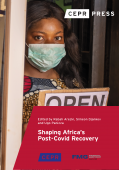 With the exception of some flashpoints in Northern and Southern Africa, the continent has been largely spared from the direct health effect of Covid-19. However, the African economy has been significantly hurt by the economic consequences. This eBook summarises recent research on the economic effect of the Covid-19 pandemic in the continent covering a wide array of topics focusing on the response of firms, households, governments, and international organisations.
Working Papers
The Economic Case for Global Vaccinations: An Epidemiological Model with International Production Networks
COVID-19 pandemic had a devastating effect on both lives and livelihoods in 2020. The arrival of effective vaccines can be a major game changer. However, vaccines are in short supply as of […]COVID-19 pandemic had a devastating effect on both lives and livelihoods in 2020. The arrival of effective vaccines can be a major game changer. However, vaccines are in short supply as of early 2021 and most of them are reserved for the advanced economies. We show that the global GDP loss of not inoculating all the countries, relative to a counterfactual of global vaccinations, is higher than the cost of manufacturing and distributing vaccines globally. We use an economic-epidemiological framework that combines a SIR model with international production and trade networks. Based on this framework, we estimate the costs for 65 countries and 35 sectors. Our estimates suggest that up to 49 percent of the global economic costs of the pandemic in 2021 are borne by the advanced economies even if they achieve universal vaccination in their own countries.Journal Articles
Knowledge Diffusion in the Network of International Business Travel
Nature Human Behaviour, 4
We use aggregated and anonymized information based on international expenditures through corporate payment cards to map the network of global business travel. We combine this network with information on the […]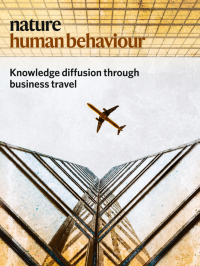
We use aggregated and anonymized information based on international expenditures through corporate payment cards to map the network of global business travel. We combine this network with information on the industrial composition and export baskets of national economies. The business travel network helps to predict which economic activities will grow in a country, which new activities will develop and which old activities will be abandoned. In statistical terms, business travel has the most substantial impact among a range of bilateral relationships between countries, such as trade, foreign direct investments and migration. Moreover, our analysis suggests that this impact is causal: business travel from countries specializing in a specific industry causes growth in that economic activity in the destination country. Our interpretation of this is that business travel helps to diffuse knowledge, and we use our estimates to assess which countries contribute or benefit the most from the diffusion of knowledge through global business travel.
Additional content:
Working Papers
Horrible Trade-offs in a Pandemic: Lockdowns, Transfers, Fiscal Space, and Compliance
In this paper, we develop a heterogeneous agent general equilibrium framework to analyze optimal joint policies of a lockdown and transfer payments in times of a pandemic. In our model, […]In this paper, we develop a heterogeneous agent general equilibrium framework to analyze optimal joint policies of a lockdown and transfer payments in times of a pandemic. In our model, the effectiveness of a lockdown in mitigating the pandemic depends on endogenous compliance. A more stringent lockdown deepens the recession which implies that poorer parts of society find it harder to subsist. This reduces their compliance with the lockdown, and may cause deprivation of the very poor, giving rise to an excruciating trade-off between saving lives from the pandemic and from deprivation. Lump-sum transfers help mitigate this trade-off. We identify and discuss key trade-offs involved and provide comparative statics for optimal policy. We show that, ceteris paribus, the optimal lockdown is stricter for more severe pandemics and in richer countries. We then consider a government borrowing constraint and show that limited fiscal space lowers the optimal lockdown and welfare, and increases the aggregate death burden during the pandemic. We finally discuss distributional consequences and the political economy of fighting a pandemic.
Additional readings:
EventS
Lockdowns, Epidemiology, and Lessons Learned Across the World
As part of Harvard’s Worldwide Week, Growth Lab Director Ricardo Hausmann and our COVID-19 Task Force members discussed the research we’ve conducted around the pandemic and its potential impacts. We also highlighted how the Growth Lab integrated this research into country-specific projects (Ethiopia, Honduras, Jordan, Saudi Arabia, and South Africa), focusing on our work in developing government response and economic recovery plans.
News
People
Task Force Members
-

-

Person
Miguel Angel Santos
Dean, School of Government and Public Transformation, Tecnológico de Monterrey
-

-

-

-

-

-

-

-